 Whatcom County
 Exterior Work Built for Fairhaven's Waterfront Climate
Fairhaven sits close enough to Bellingham Bay that salt air is a fact of life, not an occasional nuisance. Add Whatcom County's long wet season, frequent driving rain off the water, and the deep shade many of the neighborhood's older lots carry from mature trees, and you get an exterior environment that punishes the wrong materials fast. Paint fails early. Untreated wood trim softens at the edges. North-facing walls and anything tucked under tree cover stay damp long enough to grow moss, algae, and eventually rot. None of this is unusual for the neighborhood — it's just what happens to a house sitting a few blocks from saltwater in a marine climate, year after year, without exterior materials chosen specifically for that exposure.
We work on homes throughout Whatcom County, and Fairhaven's combination of salt exposure, rain volume, and shade is one of the more demanding profiles we see locally. That's exactly the kind of environment our approach to siding, roofing, windows, and decks is built around.
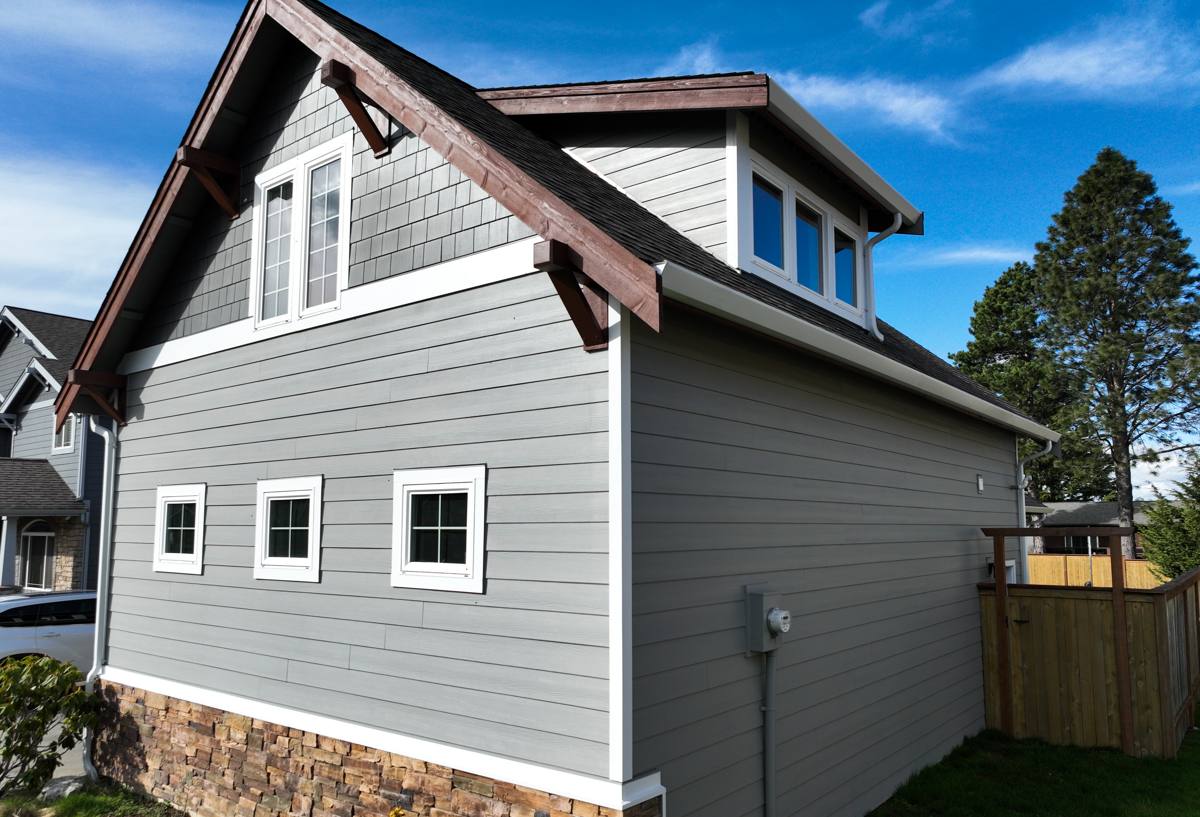
What Salt Air, Rain, and Moss Actually Do to a House
Salt Air
Airborne salt from the bay settles on exterior surfaces and accelerates corrosion of fasteners, flashing, and any unprotected metal. It also breaks down cheaper paint films faster than an inland home would experience, which is why houses near the water often look tired years before their inland counterparts do.
Driving Rain
Wind off the water doesn't just drop rain straight down — it drives it sideways into walls, under trim, and around window and door openings. A house can have adequate siding material and still take on water damage if the water-resistive barrier, flashing details, and caulking weren't installed with that wind-driven exposure in mind.
Moss and Algae Season
Whatcom County's wet season runs long, and shaded, north-facing, or tree-covered walls and roofs stay damp for extended stretches. That moisture supports moss and algae growth on roofing, siding, and decking. Beyond the cosmetic issue, sustained dampness against wood-based siding or trim is one of the more common paths to rot we see on older homes in shaded neighborhoods like this one.
Why We Install James Hardie Fiber Cement — And Only Hardie
We made a deliberate decision as a company to install James Hardie fiber cement siding exclusively. We don't install vinyl, LP SmartSide, Cemplank, Allura, primed spruce, or cedar. That's not a sales position — it's a standard we hold because of what we've seen these materials do, and not do, in exactly this kind of coastal, wet, shaded climate.
Fiber cement is non-combustible and dimensionally stable, meaning it doesn't expand and contract with moisture the way wood-based products do. That matters directly in a salt-air, high-rain environment: wood-based siding products absorb moisture at cut edges and panel joints, and once that moisture cycle starts, no amount of touch-up paint fully stops it. Hardie's ColorPlus factory finish is baked on under controlled conditions, which gives it better adhesion and UV resistance than field-applied paint — an advantage that shows up over the long run on a house that takes direct salt spray and sun off the water.
James Hardie also engineers specific product lines (their HZ5 line, for example) for harsher, wetter climate zones, which the Pacific Northwest generally falls into. That's a meaningful difference from a one-size-fits-all siding product — the material is specified for the moisture load it's actually going to face here.
To be fair to the alternatives: vinyl is inexpensive and low-maintenance in the sense that it doesn't need painting, but it can warp under close heat exposure and its seams and thinner profile show their age faster in constant wet-dry cycling. LP SmartSide, Cemplank, and Allura are reasonable engineered products, and cedar has real aesthetic appeal — but wood-based and lower-grade fiber cement alternatives generally carry more maintenance burden, more moisture sensitivity at cut edges, or less robust factory finishes than what we've standardized on. We'd rather install one product well, back it with a strong transferable warranty, and stand behind it, than offer a menu of materials with very different long-term outcomes in this climate.
How We Approach a Fairhaven Siding Project
Assessment
We start by looking at the whole exterior envelope, not just the visible siding condition. That includes checking for soft trim, moss buildup patterns (which tell us where moisture is lingering longest), flashing condition around windows and doors, and how the current water-resistive barrier is performing.
Installation Details That Matter Near the Water
- Correct fastener spacing and type to handle the additional corrosion exposure from salt air
- Proper flashing and weather barrier detailing at every window, door, and penetration — the areas most vulnerable to wind-driven rain
- Manufacturer-specified panel gaps and caulking to allow for the region's humidity swings without trapping moisture
- Attention to ground clearance and drainage planes so siding isn't sitting in a moisture trap at grade
Hardie siding is only as good as its installation. A correctly specified product installed to a loose standard can still fail early — which is why we treat the flashing, fastening, and drainage details as seriously as the siding choice itself.
Roofing, Windows, and Decks: The Rest of the Envelope
Siding doesn't work in isolation. A house near the water needs its whole exterior system pulling in the same direction.
Roofing
Roofs in Fairhaven deal with the same moss and algae pressure as siding, plus more direct exposure to driving rain at ridges, valleys, and flashing points. Regular moss removal and correctly detailed flashing go a long way toward avoiding the slow leaks that show up years after a poor roofing job.
Windows
Older windows in coastal homes are a common source of hidden water intrusion — not because the glass fails, but because the flashing and seals around the frame degrade under constant wind-driven rain. When we replace windows, we treat the surrounding flashing and integration with the siding as part of the job, not an afterthought.
Decks
Decks take the moss and moisture problem head-on since they're horizontal, exposed, and often shaded. Material choice, fastener corrosion resistance, and drainage/spacing between boards all affect how long a deck holds up before it needs major repair.
Cost Factors for a Fairhaven Exterior Project
| Factor | Why It Matters Here |
|---|---|
| Home size and wall complexity | More corners, gables, and trim details mean more flashing and cutting labor |
| Current condition of the water barrier | Hidden rot or a failed barrier found during tear-off adds repair scope |
| Siding profile and trim selection | Lap width, trim style, and accent choices affect material cost |
| Access and site conditions | Tree cover, tight lots, and slope common in Fairhaven can affect staging and labor time |
| Scope — siding only vs. combined with roofing/windows | Bundling work can reduce redundant setup and staging costs |
We give firm numbers after an in-person look at the house — broad estimates before that aren't useful to you and we'd rather not guess.
Signs a Fairhaven Home May Need Exterior Attention
- Moss or algae established on north-facing or shaded siding, trim, or roofing
- Paint that's peeling, bubbling, or chalking faster than a few years after the last paint job
- Soft or spongy trim boards, especially near window sills, corners, or the base of walls
- Visible gaps, caulk failure, or staining around window and door edges
- A musty smell or discoloration on interior walls that back up to exterior walls
- Siding panels that appear warped, cupped, or separated at the seams
Any one of these on its own isn't necessarily an emergency, but in a salt-air, high-rain neighborhood like Fairhaven they tend to compound quickly if left alone through another wet season.
Why a Local Crew Matters
A contractor who works across Whatcom County regularly sees how differently the same siding product performs in a shaded Fairhaven lot near the water versus a sunnier, more inland property elsewhere in the county. That local pattern recognition shapes real decisions — where to add extra flashing attention, which walls need closer moisture monitoring, and how to sequence a project around the region's rain windows instead of fighting them. It also means warranty and follow-up service come from a crew that's actually familiar with your street's climate conditions, not a general description of "Pacific Northwest weather."
Get a Free, No-Pressure Estimate
If your Fairhaven home is showing signs of wear from salt air, rain, or moss, or you're planning ahead for a siding, roofing, window, or deck project, we're happy to take a look and walk you through honest options — no pressure, no obligation. Use the form below to request a free estimate.