 Whatcom County
 Siding in Blaine: Built for Salt Air, Wind-Driven Rain, and a Long Moss Season
Blaine sits at the northwest corner of Whatcom County, right on Semiahmoo Bay and a short drive from the Canadian border. That location is part of what makes the town appealing, and it's also exactly what makes exterior siding here a harder job than it looks. Homes close to the water deal with salt-laden air that accelerates corrosion on fasteners and trim. Winter storms roll in off the Strait of Georgia with enough wind to drive rain sideways under poorly flashed siding. And the mild, wet Pacific Northwest climate means moss and algae have most of the year to get established on north-facing walls and anything shaded by trees or eaves.
None of that is unusual for Whatcom County generally, but Blaine's coastal exposure makes it a bit more intense than siding work we do further inland. We've built our approach around those specific conditions rather than treating every job the same.
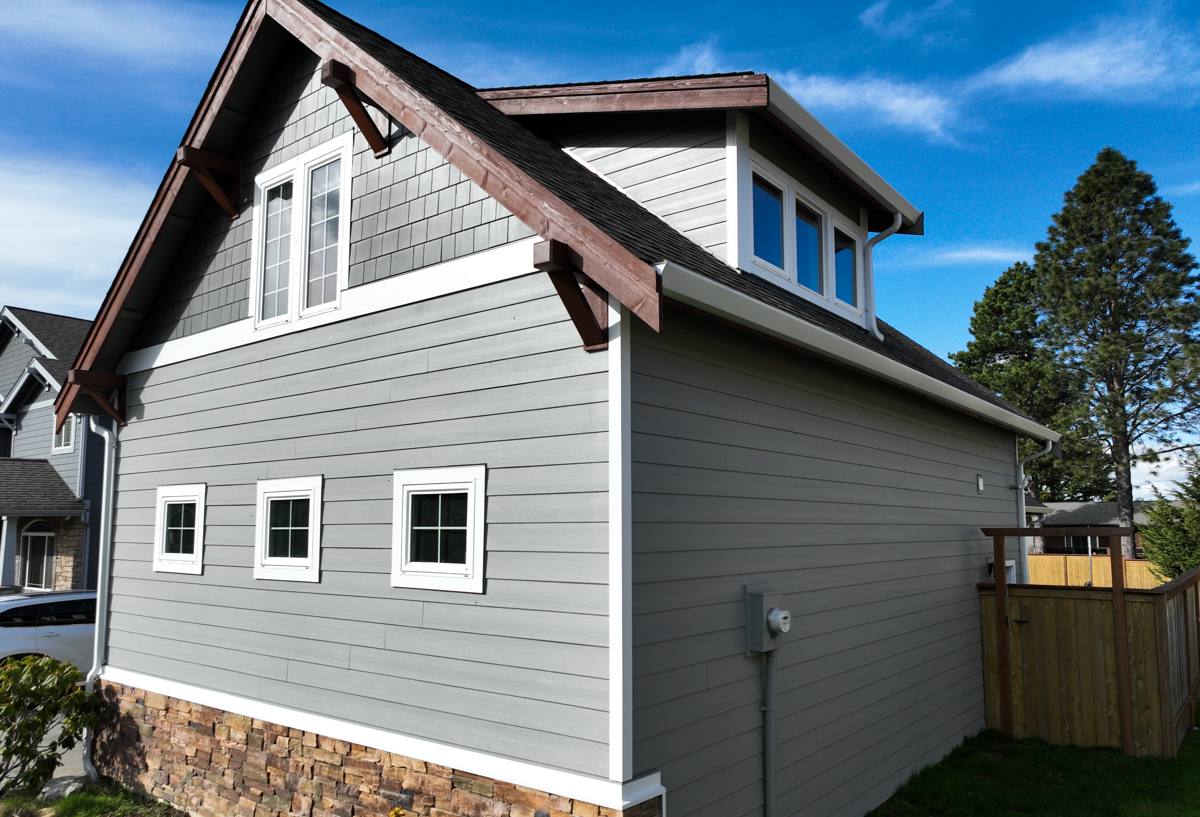
What Blaine Homes Are Up Against
Salt Air and Metal Fatigue
Proximity to saltwater means airborne salt settles on exterior surfaces and accelerates the breakdown of unprotected metal — fasteners, flashing, trim caps, and hardware. Over years, this shows up as rust streaking, corroded nail heads telegraphing through paint, and premature failure of cheaper trim components. It's a slow process, but it's constant, and it's one of the first things we account for when specifying materials for a home near the water.
Driving Rain and Wind Exposure
Storms coming off the water don't just drop rain straight down — wind pushes it sideways and up under laps, around window and door openings, and behind poorly sealed trim. This is a flashing and installation-detail problem more than a siding-material problem. A great product installed with weak flashing at penetrations, window heads, and butt joints will still let water in. It's why we spend as much time on water management details as we do on the siding itself.
Moss, Algae, and Shade
Whatcom County's wet season stretches long, and Blaine's marine climate keeps humidity elevated even on drier days. Shaded walls, north exposures, and anything under tree cover stay damp longer than homeowners expect, which gives moss and algae a real foothold. Siding that holds moisture — or that's finished with a coating prone to mildew growth — will show green and black staining faster here than it would in a drier inland town.
Temperature Swings and Material Movement
Blaine doesn't see extreme heat, but it does get real seasonal swings and cold snaps blowing down from the north in winter. Siding materials expand and contract with temperature and moisture changes. Products that aren't dimensionally stable can develop gaps, buckling, or fastener stress over time, which then becomes an entry point for water.
Why We Install Only James Hardie Fiber Cement
We made a decision as a company to install James Hardie fiber cement siding exclusively — not vinyl, not LP SmartSide, not Cemplank, not Allura, not primed spruce or cedar. That's a narrower stance than most siding contractors take, and we think it's the right one for homes in this climate, including Blaine's.
Fiber cement is non-combustible, which matters to insurers and to homeowners thinking about wildfire exposure inland during dry summer stretches. It doesn't feed moss and mildew the way wood-based products can, it holds its shape better than vinyl in temperature swings, and it doesn't carry the moisture-related failure modes that engineered wood siding has struggled with historically. James Hardie backs its ColorPlus factory-applied finish with a real, transferable warranty, and the company engineers regional HZ5 product formulations specifically for climates like ours — Pacific Northwest wet-cold conditions rather than a one-size-fits-all national product.
We're not going to tell you every other product is junk — vinyl is cheap and easy to install, engineered wood has real fans, and cedar has genuine aesthetic appeal. But we've seen enough of the long-term maintenance calls, the moisture callbacks, and the premature repaints to standardize on one product system we trust to hold up on homes near the water, in the shade, and through decades of Whatcom County winters.
How We Install for This Climate
- Correct starter strip, weep screed, and drainage plane behind every install — not optional add-ons
- Stainless or coated corrosion-resistant fasteners appropriate for coastal salt exposure
- Careful flashing at every window, door, and roof-to-wall intersection, sealed before siding goes on, not after
- Manufacturer-specified gaps and fastening patterns so panels can move without stressing joints
- Rainscreen or proper ventilation gap where wall assembly and code call for it, to let incidental moisture dry out
- ColorPlus factory finish installed per Hardie's guidelines to preserve the warranty and avoid field-painted touch-up mismatches
Good material choice and good installation detail aren't separable. A Hardie board installed with sloppy flashing will still leak. That's why our crews treat the water-management work — the parts you don't see once the siding is up — as the part of the job that actually determines how the house performs in ten or twenty years.
Beyond Siding: Roofing, Windows, and Decks
Most of the homes we work on in Blaine need more than one exterior system addressed at the same time, since the same weather that wears out siding is working on the roof, windows, and any exterior decking simultaneously.
Roofing
A roof that's shedding granules, showing moss growth, or has aging flashing is often letting water into the same wall assemblies we're trying to protect with new siding. We look at roof condition as part of any full exterior estimate, because ignoring it undercuts the siding work.
Windows
Old, poorly sealed windows are one of the most common paths for wind-driven rain to get behind a wall. When we're already opening up siding around window openings, it's frequently the right time to also address failing seals, foggy glass, or rotted sills before they cause bigger damage.
Decks
Decks in this climate take the same driving-rain and moss exposure as siding, plus standing water and foot traffic. We build and repair decks with drainage and material choices suited to the same wet Pacific Northwest conditions we're already accounting for on the walls.
Cost Factors for a Blaine Siding Project
| Factor | Why It Matters Here |
|---|---|
| Home size and wall complexity | More corners, dormers, and trim details mean more flashing and cut work |
| Existing siding removal | Tear-off and disposal of old material, especially if there's hidden water damage underneath |
| Sheathing or framing repair | Coastal moisture exposure sometimes means rot repair is discovered once old siding comes off |
| Trim and accessory selection | Corrosion-resistant fasteners and trim add cost but matter more near saltwater |
| Access and site conditions | Waterfront lots, slopes, and mature landscaping can affect staging and labor time |
| Paint/finish selection | ColorPlus factory finish vs. field-applied paint affects both cost and long-term warranty coverage |
We don't quote a job without seeing the house. Anyone giving you a firm number over the phone for a Blaine property, sight unseen, is guessing.
Why a Local Crew Matters
Whatcom County's exterior conditions aren't identical from neighborhood to neighborhood — a home a few blocks from Semiahmoo Bay faces more direct salt and wind exposure than one set back and shielded by trees, even within the same town. A crew that works this county regularly recognizes those differences on sight: where moss problems tend to concentrate, which wall orientations take the worst weather, and where drainage and grading issues commonly show up around older homes. That local pattern recognition shapes real decisions on the job, from fastener selection to flashing detail, rather than applying a generic install approach everywhere.
What to Check When Hiring a Siding Contractor
- Washington state contractor license and current insurance, verifiable on request
- Manufacturer training or certification specific to the siding product being installed
- A written scope that details flashing, house wrap or drainage plane, and fastening — not just "siding installed"
- Willingness to explain why they use the products they use, not just what's cheapest
- A real local presence and references from work done in this climate, not just generic reviews
- A clear, written warranty covering both material and workmanship
Get a Free Estimate
If your Blaine home's siding is showing moss staining, gaps at the trim, chalky or peeling paint, or you're just planning ahead for a project, we're glad to take a look. There's no pressure and no obligation — just a straight assessment of what your home's exterior actually needs given its exposure, orientation, and age. Use the form below to request a free estimate.