 Whatcom County
 Why Siding Estimates Vary So Much Around Here
Ask three siding contractors in Whatcom County to price the same house and you'll often get three different numbers. That's not because someone's padding the bid — it's because siding replacement isn't a single product with a single price tag. It's a bundle of decisions: what material you choose, what's underneath your current siding, how complicated your home's shape is, and how much prep work a house near Bellingham Bay or out toward Lynden actually needs before new siding can go on. This page walks through the real factors that move the number, without inventing prices we can't stand behind.
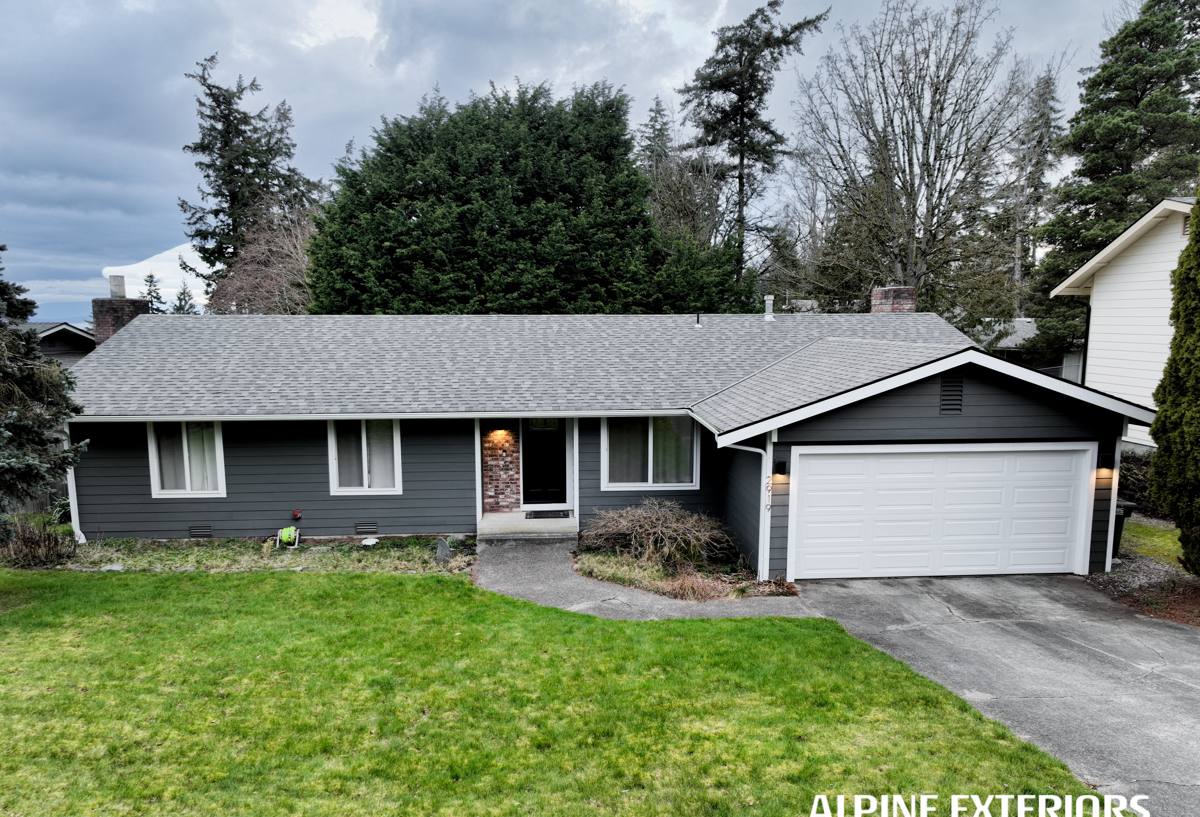
The Big Cost Drivers, In Order of Impact
Most homeowners assume square footage is the whole story. It's a major factor, but it's rarely the deciding one. Here's how the major drivers typically rank in terms of how much they can swing a bid:
| Factor | Why It Matters |
|---|---|
| Condition behind the old siding | Rot, mold, or failed sheathing found during tear-off adds real repair cost that can't be quoted sight-unseen |
| Material selected | Vinyl, engineered wood, and fiber cement have different material, fastening, and finishing costs |
| Home shape and trim detail | Dormers, bay windows, multiple gables, and lots of corner trim take more labor than a simple rectangular footprint |
| Tear-off vs. overlay | Full removal costs more up front but avoids trapping moisture behind a second layer |
| Access and site conditions | Steep lots, tight setbacks, and multi-story walls slow crews down and add scaffolding or lift costs |
| Finish type | Factory-applied color systems versus field painting after installation carry different cost and maintenance profiles |
Square Footage and Home Shape
A straightforward two-story box with few windows sides faster and cheaper, square foot for square foot, than a home with several roof pitches, window bump-outs, and decorative trim. Whatcom County has plenty of both — newer development homes with simpler massing, and older farmhouses and craftsman-style homes around Bellingham and Lynden with more architectural detail. Detail looks good, but it's labor, and labor is most of what you're paying for in a siding job.
Tear-Off vs. Overlay
Some contractors will offer to install new siding directly over old siding to save money. We don't do this, and most reputable contractors in this region won't either, because it traps whatever moisture is already in the wall behind two layers instead of one. Given how much rain this area sees, that's not a shortcut worth taking. Full tear-off costs more because there's demolition, disposal, and often more prep, but it's the only way to actually see — and fix — what's happening at the sheathing and framing level before you close the wall back up.
Hidden Damage Behind the Old Siding
This is the factor that turns a tidy estimate into a change order, and it's the one no contractor can honestly price before tear-off. Once old siding comes off, it's common to find soft sheathing around window flashing, staining from long-term slow leaks, or moss and mildew staining that's worked its way into seams. Homes that have sat with aging or improperly flashed siding through a lot of Whatcom County winters are more likely to have this kind of damage, particularly at window heads, deck ledger connections, and lower wall sections near grade. A contractor who tells you the price is locked before ever removing a board either hasn't done this work long, or isn't planning to look closely.
Material Choice Changes the Math
The siding material you choose affects not just the sticker price, but the labor to install it, the finish work, and what you'll spend on it over the next twenty years.
Vinyl
Vinyl is usually the lowest material cost and installs quickly, which is why it's popular on a budget. The trade-off is that it's a thin plastic product that can crack in impact, fade and become brittle with UV exposure over time, and it doesn't hold up to wind-driven rain intrusion at seams the way a heavier-bodied product does. In a region that gets consistent driving rain off the Salish Sea, that seam performance matters more than in a drier climate.
LP SmartSide and Engineered Wood
Engineered wood siding products offer a wood-grain look at a lower cost than real wood or fiber cement, and the material itself has improved over the years. But it's still a wood-based product at its core, which means its long-term performance depends heavily on unbroken paint film and sealed cut edges. In a climate with a genuine moss season and near-constant damp shade under trees and eaves, any gap in that protective layer is an opening for moisture to get into the substrate. We don't install engineered wood products for this reason — not because the product is poorly made, but because the maintenance margin for error is thinner than we're willing to put our name behind in this climate.
Fiber Cement (James Hardie)
Fiber cement costs more in materials and requires more specialized installation — proper fastening patterns, clearances, and joint treatment matter more than with vinyl. That's reflected in the price. What you get for it is a non-combustible product that doesn't rot, doesn't feed moss and mildew the way wood-based products can, and holds a factory-baked color finish (ColorPlus) that's engineered to resist the fading and cracking that shows up on field-painted siding after a few Whatcom County winters. It's the only siding material we install, and it's a deliberate standard, not a default.
Labor, Access, and Site Conditions
Labor is the largest line item on most siding jobs, and it's driven by things a homeowner might not think to mention when getting a quote. A single-story rambler on a flat lot is straightforward. A three-story home on a slope near Chuckanut, or a home with tight side-yard clearance in an older Bellingham neighborhood, takes longer to scaffold, stage material, and safely work around. Steep or wet roofs also affect how crews can move around the exterior during a wet-season install, which is a real consideration for a good chunk of the year here.
What Whatcom County's Climate Adds to the Equation
Three regional conditions specifically affect siding cost and material decisions here:
- Salt air: Homes closer to Bellingham Bay and the coastline deal with airborne salt that accelerates corrosion on fasteners and metal flashing — corrosion-resistant fastening becomes a non-negotiable, not an upgrade.
- Driving rain: Wind-driven storms push water sideways into seams and laps, which puts a premium on correct flashing details and water-resistive barrier work, not just the siding material itself.
- Moss season: Long stretches of damp, shaded weather feed moss and mildew growth on north-facing walls and under eaves, which is hardest on porous or wood-based siding materials and their paint films.
None of these conditions make siding replacement impossible or unusually expensive on their own — but they do mean the prep work, fastening, and material choice matter more here than they would in a drier inland climate, and cutting corners on any of them shows up faster in this weather than it would somewhere else.
Factory-Applied Finish vs. Field Painting
Some siding materials are painted after installation; James Hardie's ColorPlus lines are finished at the factory under controlled conditions before they ever reach the job site. Factory finishing costs more up front but typically holds color and resists moisture intrusion at the surface better than a field-applied coat, and it comes with its own finish warranty. Field-painted siding will eventually need repainting — factor that recurring cost into any long-term comparison, not just the install price.
Permits, Disposal, and Other Line Items
A full, honest estimate should also account for a few things that are easy to overlook:
- Permit fees, where required by your local jurisdiction
- Disposal and hauling of old siding and any removed damaged sheathing
- House wrap or water-resistive barrier replacement
- Trim, corner boards, and flashing replacement or repair
- Any carpentry repair for rot or damage found during tear-off
A quote that's missing several of these isn't necessarily dishonest — it may just be incomplete, and incomplete quotes are where surprise costs come from later.
Getting an Accurate Quote: What to Ask For
Whatever material or contractor you're considering, a few questions will tell you a lot about how solid an estimate really is:
- Does the quote include full tear-off, or does it assume overlay?
- What happens to the price if rot or moisture damage is found once old siding comes off?
- Is the water-resistive barrier being replaced, repaired, or reused?
- What fastener type is specified, and is it rated for coastal/salt-air exposure?
- Is the finish factory-applied or will it need field painting, and what's covered under warranty?
- Is disposal and permitting included in the number, or billed separately?
Why We Only Install James Hardie
We could offer vinyl or engineered wood at a lower price point — plenty of contractors in Whatcom County do, and for some budgets that's a reasonable call. We've chosen not to install those products because we're the ones standing behind the work, and this climate doesn't leave much room for a siding system with a thin margin for moisture error. James Hardie's fiber cement holds up to salt air, driving rain, and moss season better than the alternatives we'd otherwise be installing, and it comes with a strong transferable warranty that reflects the manufacturer's confidence in it. That's the standard we've set, and it's the reason our quotes look the way they do.
If you're weighing a siding replacement and want a straight answer on what your specific home would actually cost — not a generic range — we're happy to walk the exterior with you and put together a free, no-pressure estimate.