 Whatcom County
 An Honest Answer to a Question We Get a Lot
Homeowners in Whatcom County ask us to bid vinyl siding jobs fairly often, and we turn most of them down. Not because vinyl is a scam or because we think less of anyone who has it on their house right now — plenty of vinyl-sided homes around Bellingham, Ferndale, and Lynden are doing just fine. We turn the work down because after years of tearing old siding off local homes and seeing what's underneath, we don't think vinyl is the right long-term answer for this particular climate, and we'd rather explain why than just say no and leave you guessing.
This page is that explanation. We'll give vinyl its due, walk through the specific trade-offs that matter here on the water, and tell you plainly what we install instead and why.
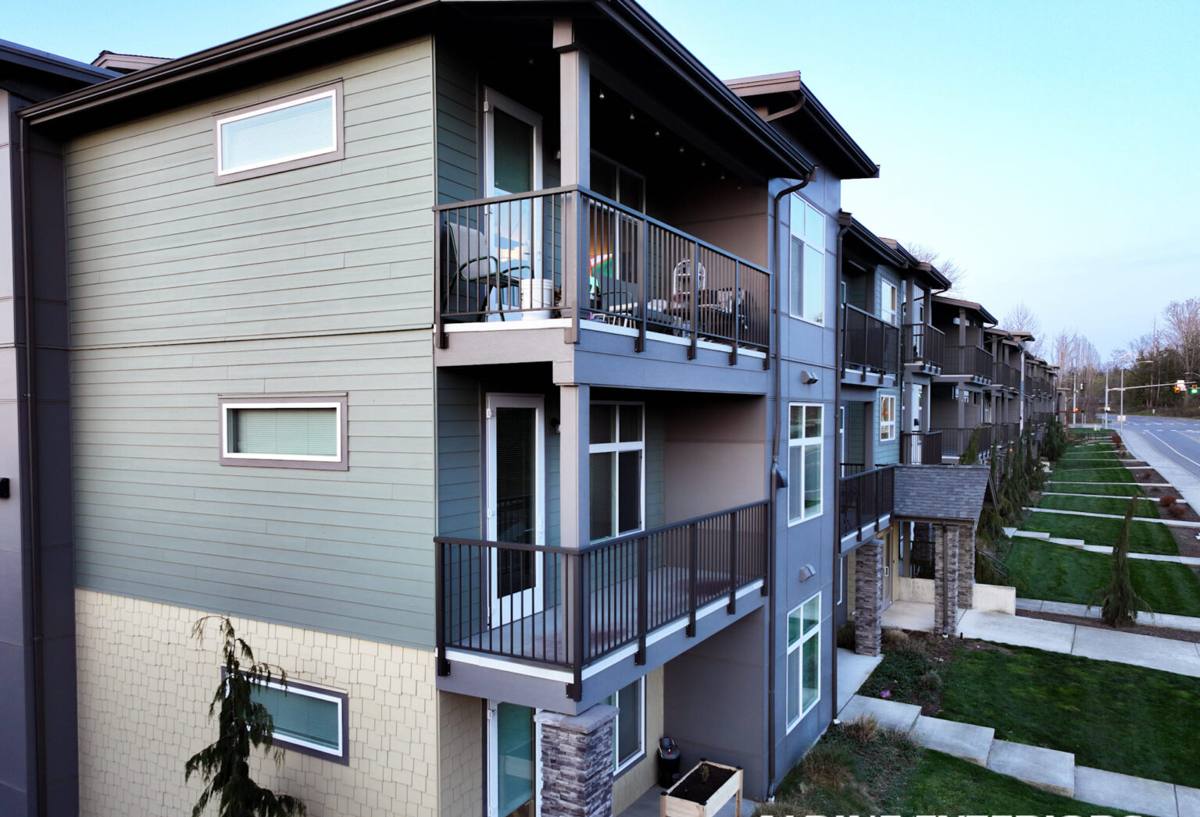
What Vinyl Siding Actually Gets Right
It's worth saying clearly: vinyl siding is not a bad product in the abstract. It has real strengths, and they're the reason it's the most-installed siding material in the country.
- Low upfront cost. Material and installation costs less than almost any other siding option, which matters on a tight renovation budget.
- No painting. The color is molded through the panel, so there's no paint film to maintain on the surface itself.
- Fast installation. Panels go up quickly, which keeps labor costs down.
- Wide color and style range. Manufacturers offer a lot of profiles, from clapboard to shake-look panels.
If you're in a dry climate with mild temperature swings and you're planning to sell in a few years, vinyl can be a perfectly sensible choice. Whatcom County is not that climate, and that's where our concerns start.
Why We Don't Install It Here
It's a Rain Screen, Not a Water Barrier
Vinyl siding is designed to shed most water but is not watertight — it relies on the weather-resistive barrier and flashing underneath to do the real work, with vinyl acting more like a loose screen than a sealed shell. That's a reasonable system in a lot of the country. But Whatcom County gets sustained driving rain off the Strait of Georgia and Bellingham Bay, often wind-driven, for months at a stretch. Water finds its way behind vinyl panels at seams, corners, and penetrations more easily than it does with a rigid, tightly fastened material, and once it's behind the panel it needs somewhere to go.
It Moves a Lot With Temperature
Vinyl expands and contracts significantly with temperature swings — noticeably more than fiber cement. Installers have to nail it loosely, in slots, to let it float. Done correctly by an experienced crew, that's manageable. Done even slightly wrong — nailed too tight, wrong fastener spacing, wrong course overlap — panels buckle, warp, or pop loose over a few winters. We've replaced a lot of vinyl that failed not because the material was bad, but because the installation didn't respect how much it needs to move.
Impact and Cold-Weather Brittleness
In cold weather, vinyl becomes noticeably more brittle and can crack from an impact — a ladder, a branch, a stray baseball — that wouldn't touch fiber cement. Once a panel cracks, it's a full-panel replacement, and matching the color on an older home that's faded can be difficult since manufacturers change formulations and colors over time.
Salt Air and UV Fading
Homes closer to the water — which describes a lot of Whatcom County, from Semiahmoo down through Birch Bay and Bellingham's waterfront neighborhoods — deal with salt-laden air that accelerates fading and chalking on vinyl's surface over time. Because the color is only skin-deep in the material, once it fades or chalks, there's no refinishing option short of replacement. You either live with it or tear it off.
The Moss Season Problem
This is a very Pacific Northwest issue and it deserves its own section. Whatcom County's long, wet, mild winters are close to ideal growing conditions for moss and algae on exterior surfaces. Vinyl's textured, low-gloss finish and the slight gaps at panel laps give moss and algae plenty to grip onto, especially on north-facing walls and anywhere shaded by trees or a neighboring structure. Once established, it's a recurring maintenance chore — pressure washing vinyl too aggressively can crack panels or drive water behind them, so cleaning has to be done carefully and it comes back within a season or two in the shadier, damper spots common on wooded lots here.
Installation Sensitivity: A Fair Comparison
A lot of vinyl's real-world problems trace back to how forgiving — or unforgiving — a material is of installation shortcuts, which matters a great deal in a region where crews are busy and turnover happens fast.
| Factor | Vinyl Siding | James Hardie Fiber Cement |
|---|---|---|
| Tolerance for minor install errors | Low — improper nailing causes buckling or blow-off | Higher — rigid material holds shape and fasteners well |
| Behavior in high wind | Can be pulled loose at edges and corners | Heavier, fastened tighter to structure |
| Moisture management | Depends heavily on correct house-wrap and flashing detail | Same requirement, but material itself resists water better if compromised |
| Cold-weather handling | Becomes brittle, harder to install cleanly below ~40°F | Stable across our winter temperature range |
| Impact resistance | Cracks under sharp impact, especially when cold | Resists dents and cracking under normal impact |
None of this means every vinyl job fails — plenty don't. But it means the margin for error is thinner, and we'd rather build in margin than hope a crew nails every detail perfectly on every wall, every time.
Cost Over Time, Not Just Cost Upfront
Vinyl wins on day-one price, and we won't pretend otherwise. Where the math shifts is over a 20-30 year ownership window, which is the timeframe most homeowners here actually care about.
| Consideration | Vinyl | James Hardie |
|---|---|---|
| Upfront material + labor | Lower | Higher |
| Painting needed | No (color is in the panel) | ColorPlus factory finish holds color for years; field-painted Hardie can be repainted like any siding |
| Panel replacement risk | Moderate — cracking, fading, wind damage | Low when installed to spec |
| Fire resistance | Combustible; can melt or deform near heat sources | Non-combustible fiber cement |
| Typical warranty structure | Prorated after early years in many manufacturer policies | Strong transferable limited warranty |
Read your warranty paperwork carefully on any siding product before you sign a contract — prorated coverage means the payout for a failure shrinks the older the siding gets, which matters if you're planning to be in the home long-term.
What We Install Instead, and Why
We're a James Hardie-only contractor. Not because it's the cheapest thing to sell, but because after years of exterior work in this specific climate — salt air, driving rain, moss season, occasional cold snaps — it's the material that holds up with the least drama.
Fiber cement is non-combustible, holds a factory-baked ColorPlus finish that resists the fading and chalking we see on vinyl near the water, and Hardie's HZ5 product line is engineered specifically for climates like ours with heavy moisture exposure. It's heavier and more rigid than vinyl, so it doesn't buckle with temperature swings the same way, and it stands up to moss and algae growth better than a lot of alternatives, though no siding is completely immune and periodic gentle cleaning still helps. It also carries a strong transferable warranty, which matters to buyers if you sell the home down the road.
It costs more upfront and it's less forgiving to install badly, which is exactly why installation quality matters as much as material choice — a mediocre Hardie job can still underperform a well-done vinyl job. We only take on work we can do to spec.
Questions Worth Asking Before You Choose a Siding Material
- How many years do you plan to stay in this home?
- Is your lot shaded, wooded, or near the water — all of which increase moss and moisture exposure?
- Do you want to avoid repainting entirely, or are you open to a factory finish that can be refreshed later?
- What does the manufacturer's warranty actually pay out after year 10 or 15, not just what it promises in year one?
- Is the contractor bidding the job actually experienced with the specific material, or defaulting to whatever they install most often?
Talk to Us Before You Decide
We're not trying to talk every homeowner in Whatcom County out of vinyl siding — it's a legitimate product with a real place in the market. We're telling you why we, specifically, don't install it, so you can make an informed call with a full picture of the trade-offs rather than a sales pitch. If you're weighing vinyl against fiber cement for a home in Bellingham, Ferndale, Lynden, or anywhere else in the county, we're happy to walk your specific house, talk through exposure, sun, shade, and wind on your particular lot, and give you a straight answer — even if that answer points you somewhere other than a Hardie install. Reach out for a free, no-pressure estimate and we'll give you the same honest rundown in person.