 Whatcom County
 Siding Built for the Columbia Area's Coastal Climate
Homes in the Columbia area of Whatcom County sit in a genuinely tough climate for exterior building materials. It's not dramatic weather in the sense of extreme heat or hurricane-force wind — it's the slow, steady combination of salt-laden air, driving rain that comes in sideways off the water, and a moss season that can stretch for most of the year. Individually, none of these are unusual for western Washington. Together, over years, they're exactly the conditions that separate siding products that hold up from siding products that don't.
We install James Hardie fiber cement siding exclusively, and we've built our process around what actually works in Whatcom County conditions — not a national average climate, but this one specifically.
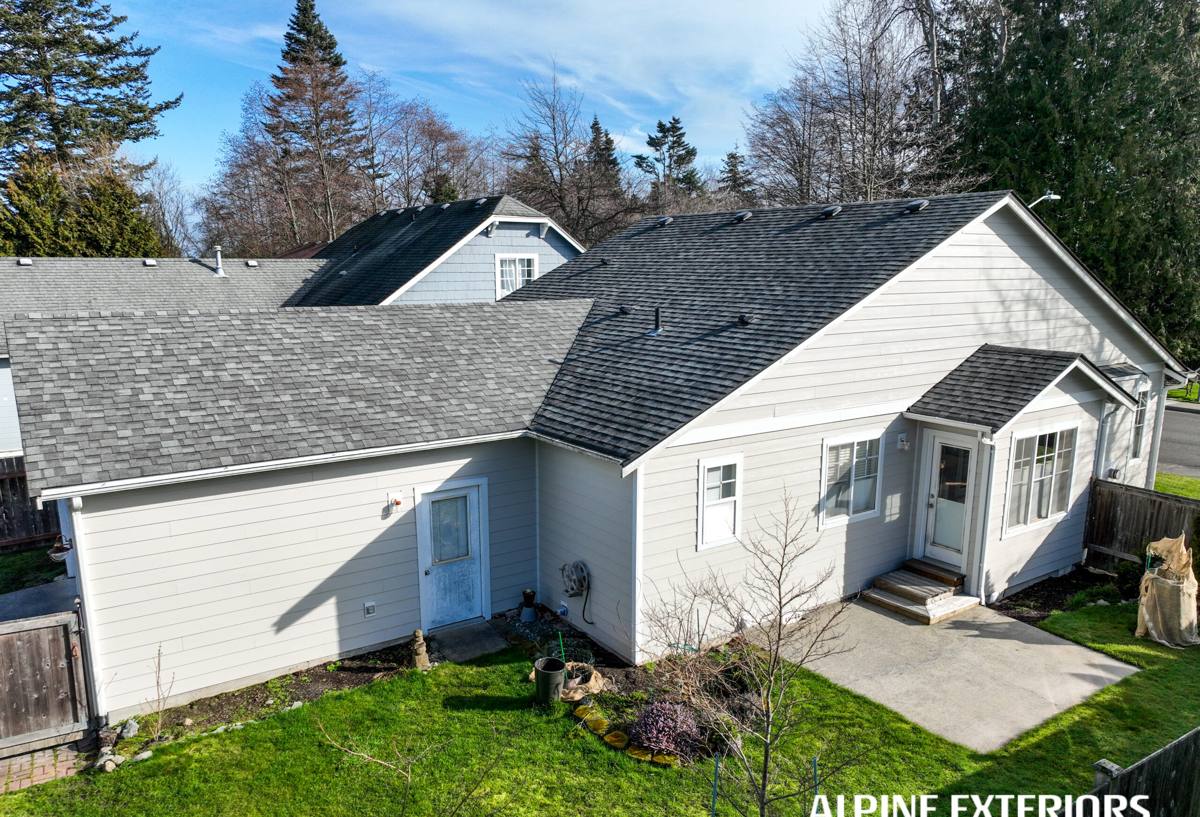
What Local Homes Are Actually Up Against
Salt Air and Coastal Moisture
Proximity to Puget Sound and the Salish Sea means airborne salt is a constant, low-level factor on siding, trim, fasteners, and paint film. Salt exposure doesn't destroy a wall overnight — it works slowly, pulling moisture into materials that aren't designed to shed it, and accelerating corrosion on anything metal that isn't rated for a marine environment. Over a decade or two, that steady exposure is often the difference between a wall system that still looks tight and one that's chalking, swelling, or rusting at the fasteners.
Driving Rain
Whatcom County doesn't just get rain — it gets wind-driven rain that hits walls at an angle instead of falling straight down. That matters more than most homeowners realize, because it means water is pushed into laps, seams, and penetrations that would stay dry in a calmer climate. A siding system's water management — how it sheds water at horizontal joints, how it's flashed around windows and doors, how it drains at the bottom — matters as much as the material itself.
Moss, Algae, and Extended Damp Season
With mild temperatures and long stretches of overcast, damp weather, moss and algae growth is close to a year-round concern here rather than a seasonal one. North-facing walls and anything shaded by trees or roof overhangs are especially prone to green staining and organic growth if the surface stays damp for long periods. Some siding materials absorb moisture into the substrate itself, which gives moss and mildew something to root into. Others shed water at the surface and resist that growth far better.
Why We Install Only James Hardie Fiber Cement
We made a deliberate decision years ago to stop installing a range of siding products and standardize on James Hardie. That wasn't a marketing choice — it was a response to what we kept seeing on service calls and tear-offs across Whatcom County: siding that looked fine going up but didn't hold up to this specific climate.
James Hardie fiber cement is engineered from cement, sand, and cellulose fiber. It doesn't absorb water the way wood-based or wood-fiber products can, it's non-combustible, and it's manufactured with climate zones in mind — Hardie's HZ product lines are formulated specifically for regions with high moisture exposure, which describes the Pacific Northwest well. It also holds paint and factory finish differently than wood-based substrates, which matters directly for salt air and UV exposure over time.
The ColorPlus factory-finish system is a meaningful part of that. Instead of field-painting siding after installation, ColorPlus baked-on finishes are applied and cured in a controlled factory environment, which gives more consistent coverage and better long-term color and finish retention than most site-applied paint jobs — especially in a climate where damp, cool conditions can slow or compromise field painting for much of the year.
Hardie also backs its siding with a strong transferable product warranty, which matters to homeowners who may sell within the ownership window and want that protection to carry to the next owner.
What We Don't Install, and Why
We don't install vinyl, LP SmartSide, Cemplank, Allura, primed spruce, or raw cedar siding. That's not a claim that these products can't work anywhere — it's that after years of installing and later servicing exterior siding in this specific coastal, high-moisture climate, we concluded they carry trade-offs (moisture sensitivity, field-finish maintenance burden, or combustibility characteristics) that we're not willing to build our reputation on. Fiber cement, installed correctly, is the product we're confident standing behind for the long term in Whatcom County.
How Correct Installation Prevents the Problems We Get Called About
Most siding failures we see aren't material failures — they're installation failures. Fiber cement performs the way it's supposed to only when the details behind it are done right. In a driving-rain, salt-air climate, that means:
- Proper weather-resistive barrier and rain-screen or drainage gap behind the siding, so any moisture that gets past the surface has somewhere to go
- Correct flashing at every window, door, and roof-to-wall transition — the majority of moisture intrusion starts at penetrations, not open wall area
- Manufacturer-specified fastener spacing, type, and corrosion-resistant fasteners suited to a marine-influenced environment
- Proper clearance between siding and grade, decks, and roof lines so water and debris don't sit against the bottom edge
- Caulking and sealant only where Hardie's installation instructions call for it — sealing the wrong joints can trap moisture instead of shedding it
This is also where a lot of the "moss and algae" complaints homeowners bring us actually trace back to a wall assembly that isn't drying out between rain events, not to the siding surface itself. Getting the water management right the first time avoids most of that down the road.
Beyond Siding: Roofing, Windows, and Decks as One System
Siding doesn't work in isolation — it's one part of the building envelope, and in this climate the connections between systems matter as much as any single component. We also handle roofing, windows, and decks, which means when we're on a Columbia-area home we're looking at how the roof edge sheds water onto the wall below, how window flashing integrates with the new siding, and how a deck ledger or rail attachment penetrates the wall system. A siding-only contractor who isn't thinking about those intersections can leave a homeowner with a great-looking wall that still leaks at the window head or the deck attachment. Treating the whole envelope as one connected system is part of why we handle all four trades rather than sub out the details that matter most.
What a Siding Project Typically Involves
Every home is different, but the factors that most affect scope, timeline, and cost on a Whatcom County fiber cement project are fairly consistent:
| Factor | Why It Matters Here |
|---|---|
| Existing siding removal | Old material and any hidden moisture or rot damage underneath adds labor and sometimes sheathing repair |
| Home size and wall complexity | Dormers, gables, and multiple stories increase both material cuts and access/scaffolding needs |
| Trim and window detailing | Proper flashing at every opening is where most of the weatherproofing work happens |
| Moisture barrier and drainage plane | Correct rain-screen setup is what lets the wall dry out between storms |
| Siding profile and finish selection | Lap width, texture, and ColorPlus color affect material cost and appearance |
| Access and site conditions | Slopes, tight lots, and mature landscaping common in this area affect staging and scaffolding |
We walk through each of these during a free, in-person estimate so a homeowner sees exactly what's driving the number before committing to anything.
Why a Local Crew Matters in Whatcom County
Climate knowledge is only useful if it's applied consistently, and that's harder for crews that split time across very different regions or subcontract out the detail work. A crew that works this county regularly knows how local wind exposure, tree cover, and rain patterns tend to play out on a wall, and has usually already seen how a given detail holds up five or ten years later on a similar home nearby. That kind of feedback loop is hard to replicate with a crew that isn't consistently working the same coastal conditions.
What to Ask Before Hiring
- Are you a manufacturer-certified James Hardie installer, and can you explain your fastening and flashing approach for this climate?
- Do you carry current general liability and workers' compensation coverage, and can you provide proof?
- Will the same crew that quotes the job also install it, or is work subcontracted out?
- What does your written estimate include — tear-off, moisture barrier, flashing, trim, and cleanup — and what's excluded?
- What warranty coverage applies to both the material and your labor, and is it transferable if the home sells?
Maintaining Fiber Cement Siding in a Marine Climate
Fiber cement with a factory ColorPlus finish is low-maintenance compared to field-painted materials, but "low-maintenance" isn't "no-maintenance" in a climate like this. A periodic rinse to clear salt residue, pollen, and organic buildup helps the finish perform as designed, and it's worth checking caulked joints and flashing periodically for any separation, especially after a hard winter storm season. Keeping gutters clear and vegetation trimmed back from walls reduces the moisture and shade that moss and algae need to take hold. None of this is heavy labor — it's the kind of basic upkeep that extends the life of any exterior system, and it matters more here than in a drier climate.
Get a Straight Answer on Your Home
If you're weighing a siding replacement for a home in the Columbia area, we're happy to take a look, walk the exterior with you, and give you a straightforward assessment — what's driving wear on your current siding, what correct installation looks like for your specific home, and what it would cost. There's no pressure and no obligation. Use the form below to request a free estimate.