 Whatcom County
 Why Board & Batten Keeps Coming Up in Whatcom County
Board and batten has a long history in the Pacific Northwest, and it's easy to see why homeowners in Whatcom County keep asking for it. The vertical lines suit farmhouse, craftsman, and modern builds alike, and it reads as substantial from the road in a way that horizontal lap siding sometimes doesn't. But the look is only half the story. This is a siding profile that lives or dies on the material behind it and the details underneath it, especially in a climate that throws salt air off the Sound, driving rain off the Pacific, and a moss season that can run eight months out of the year.
This page walks through what board and batten actually is, why the substrate matters more than the style, and what it takes to get a board and batten install that still looks straight and tight ten or fifteen years from now.
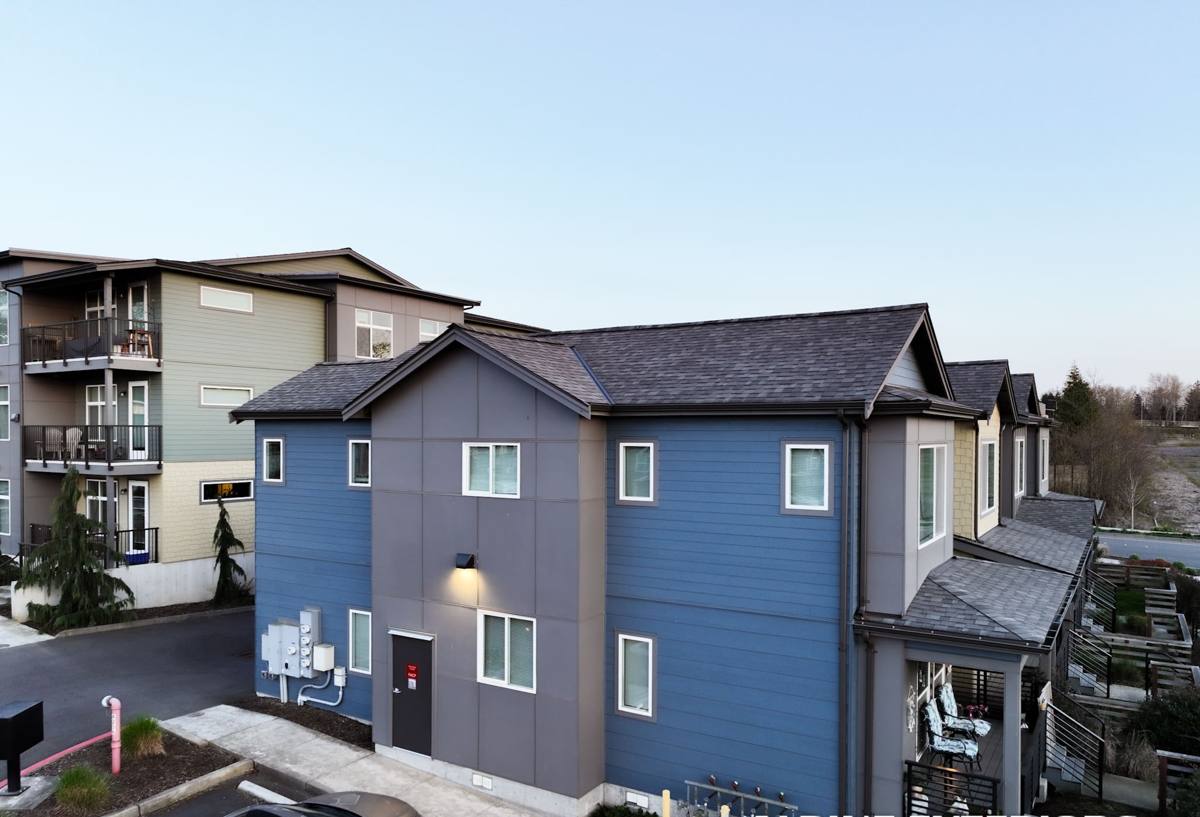
What "Board and Batten" Actually Means
Board and batten is a vertical siding pattern: wide flat panels (the "boards") installed side by side, with narrower strips (the "battens") covering the seams between them. Historically it was a barn and outbuilding detail, built from rough-sawn boards with gaps that were expected to move with the seasons. Modern board and batten borrows the look but is expected to perform like a finished exterior wall system — weathertight, dimensionally stable, and low-maintenance.
That gap between the rustic origin of the style and the performance expectations homeowners have today is exactly where problems show up if the wrong material or the wrong crew is behind it.
The Two Ways It Gets Built
- Panel-and-batten: Large flat panels installed vertically with battens over the seams. This is the more common modern approach and what most James Hardie board and batten installs use.
- Board-on-board or true batten strips: Individual boards with battens fastened over every joint, closer to the historical method. More labor, more fasteners, more seams for water to find.
Why the Substrate Choice Matters More on Vertical Siding
Vertical siding has a structural disadvantage that horizontal lap siding doesn't: every horizontal seam (top and bottom of each panel, and any butt joints) is a place where water can sit and try to work its way in, rather than shed downward like it does off a lapped horizontal board. That makes the material behind the batten more important on a board and batten job than almost any other siding style.
This is a big part of why we standardized on James Hardie fiber cement and don't install LP SmartSide, vinyl, Cemplank, Allura, primed spruce, or cedar as board and batten systems. Each of those products has real strengths, but each also has a specific weak point that gets magnified once you turn the panel vertical and start stacking horizontal seams up a wall that faces Whatcom County's rain and salt air for months at a time.
How the Common Alternatives Actually Behave
| Material | What it does well | Where board & batten exposes its weak point |
|---|---|---|
| Primed spruce / solid wood | Classic look, easy to cut and shape on site | Wood swells and shrinks across seasons; vertical joints open up and paint fails at the gaps first |
| Cedar | Natural grain, traditional Pacific Northwest material | Needs ongoing sealing/staining; moss and moisture retention are a real issue in our climate; costly to maintain over decades |
| Vinyl | Low upfront cost, no painting | Vertical vinyl panels can bow or oil-can in temperature swings; battens are often just cosmetic snap-on trim, not a real water-managed detail |
| LP SmartSide (engineered wood) | Lighter weight, easier to install than fiber cement | Wood-strand core is still moisture-sensitive at cut edges and seams; long-term performance depends heavily on caulking and paint upkeep |
| Cemplank / Allura (other fiber cement) | Similar core material to Hardie, competitive pricing | Different manufacturing process and factory finish; warranty terms and regional engineering (moisture, freeze-thaw) differ from Hardie's HZ5 formulation for our climate zone |
| James Hardie fiber cement | Non-combustible, dimensionally stable, factory-baked ColorPlus finish, HZ5 formulation engineered for wet climates | Requires correct fastening and flashing detail — the material is only as good as the install |
What Correct Installation Actually Involves
A board and batten job can use the best material available and still fail if the installer treats it like a cosmetic exercise. The details that separate a job that lasts from one that doesn't are almost all invisible once the siding is up.
The Non-Negotiables
- Rainscreen or drainage gap behind the panel — a furring strip or engineered drainage wrap so any moisture that gets behind the siding has somewhere to go besides the sheathing.
- Correct fastener pattern and spacing — Hardie panel installation specifies fastener placement, edge distance, and spacing; skipping studs or over-driving nails voids the warranty and creates stress cracks.
- Horizontal joint flashing — every seam where one panel ends and another begins needs a Z-flashing detail, not just caulk. Caulk is maintenance; flashing is the actual water management.
- Proper batten fastening — battens need to be fastened independently into the studs, not just nailed through the board joint, so the seam isn't relying on a single fastener line to hold two pieces together.
- Clearance at grade and roof lines — Hardie's own installation instructions call for minimum clearances from grade, roofing, and decks; this is one of the most commonly skipped details on rushed jobs.
- Factory-finished ColorPlus panels where possible — field-painted cut edges should be sealed with Hardie's touch-up product, not generic paint, to maintain the warranty and color match.
James Hardie's Board & Batten Options
Hardie offers board and batten through both its panel products and its specific vertical siding lines. The main choice homeowners make is between a smooth or a cedar-textured finish, and between factory ColorPlus finish or primed-for-paint.
Finish Options
- Smooth finish — clean, contemporary look, common on modern farmhouse and craftsman exteriors.
- Cedar/select cedarmill texture — mimics rough-sawn wood grain for a more traditional or rustic look without the wood maintenance.
- ColorPlus Technology — a factory-applied, baked-on finish that resists fading and chipping better than field-applied paint, and carries its own finish warranty separate from the product warranty.
Salt Air, Rain, and Moss: The Whatcom County Factor
Whatcom County's exterior conditions are demanding in a specific combination: coastal and Sound-adjacent salt air that accelerates corrosion on fasteners and trim, long stretches of driving rain that test every seam and flashing detail, and a moss season that can stretch most of the year on north-facing and shaded walls. Board and batten's vertical seams and battens are exactly the features that either hold up to that combination or don't, depending on what's behind them.
Salt-laden air is hard on standard fasteners and metal flashing — corrosion-resistant, hot-dip galvanized or stainless fasteners matter more here than in drier inland climates. Sustained rain finds any gap in flashing or caulk over time, which is why the drainage plane behind the siding isn't optional. And moss thrives on organic materials that hold moisture — cedar and untreated wood siding are far more prone to moss growth and the surface staining and rot risk that comes with it than a factory-finished fiber cement product.
Maintenance Reality Check
No siding is truly zero-maintenance, but the maintenance burden differs a lot between materials, and board and batten's extra seams make that gap wider.
What Homeowners Should Expect
- Rinse siding annually to clear salt residue and organic buildup, especially on north- and west-facing walls.
- Inspect caulking at trim and penetration points every year or two, regardless of siding material.
- With ColorPlus-finished Hardie, expect to go many years without repainting; with wood or engineered wood board and batten, expect a repaint or refinish cycle on a shorter timeline.
- Check battens periodically for any sign of movement or loose fasteners, particularly after a hard freeze-thaw stretch.
Cost Factors to Understand Before You Get Quotes
| Factor | Why it moves the price |
|---|---|
| Board width and reveal pattern | Narrower boards and battens mean more seams, more flashing, more labor per square foot |
| Existing wall condition | Sheathing repair or added drainage plane adds cost but is not optional if it's needed |
| Story height and access | Second-story and steep-site work requires more scaffolding/staging time |
| Finish choice | Factory ColorPlus finish costs more upfront than primed-for-paint but avoids a repaint cycle |
| Trim complexity | Corner boards, window trim, and transitions around a vertical pattern take more precise cutting than lap siding |
Questions Worth Asking Before You Sign a Contract
- Will there be a drainage gap or rainscreen behind the panels, and how is it detailed at the seams?
- What fastener type and spacing will be used, and are they corrosion-resistant for coastal exposure?
- How are horizontal panel joints flashed — mechanically, or caulk-only?
- What clearance will be maintained at grade, roof lines, and decks?
- Is the crew factory-certified to install the specific Hardie product being quoted?
Board and batten can be one of the best-looking and longest-lasting siding choices for a Whatcom County home, but only when the material and the installation both hold up their end. If you're weighing board and batten for a new build or a full re-side, we're happy to walk your home, talk through the options honestly, and put together a free, no-pressure estimate.