 Whatcom County
 Siding Built for Barkley's Corner of Whatcom County
Homes in the Barkley area sit close enough to the water and the surrounding hills that they take on a specific mix of weather stress: salt-tinged air drifting in off Bellingham Bay, driving rain that comes in sideways during fall and winter storms, and a moss season that can stretch from October well into spring. None of that is unusual for Whatcom County, but it adds up differently depending on how a home is sited, how old its siding is, and what that siding is made of. A house tucked under mature trees in a shaded pocket of Barkley deals with more moss and slower drying than a home a few blocks away that gets more sun and wind exposure. Good siding work here starts with understanding that a house-by-house look at exposure, not a one-size-fits-all approach.
We install and service siding, roofing, windows, and decks for homes throughout Whatcom County, and Barkley is one of the areas we're in regularly. That matters more than it might sound like — a crew that works this specific stretch of the county knows which streets sit in more shade, which lots collect more wind-driven rain, and which older homes are more likely to be hiding moisture damage behind their original siding.
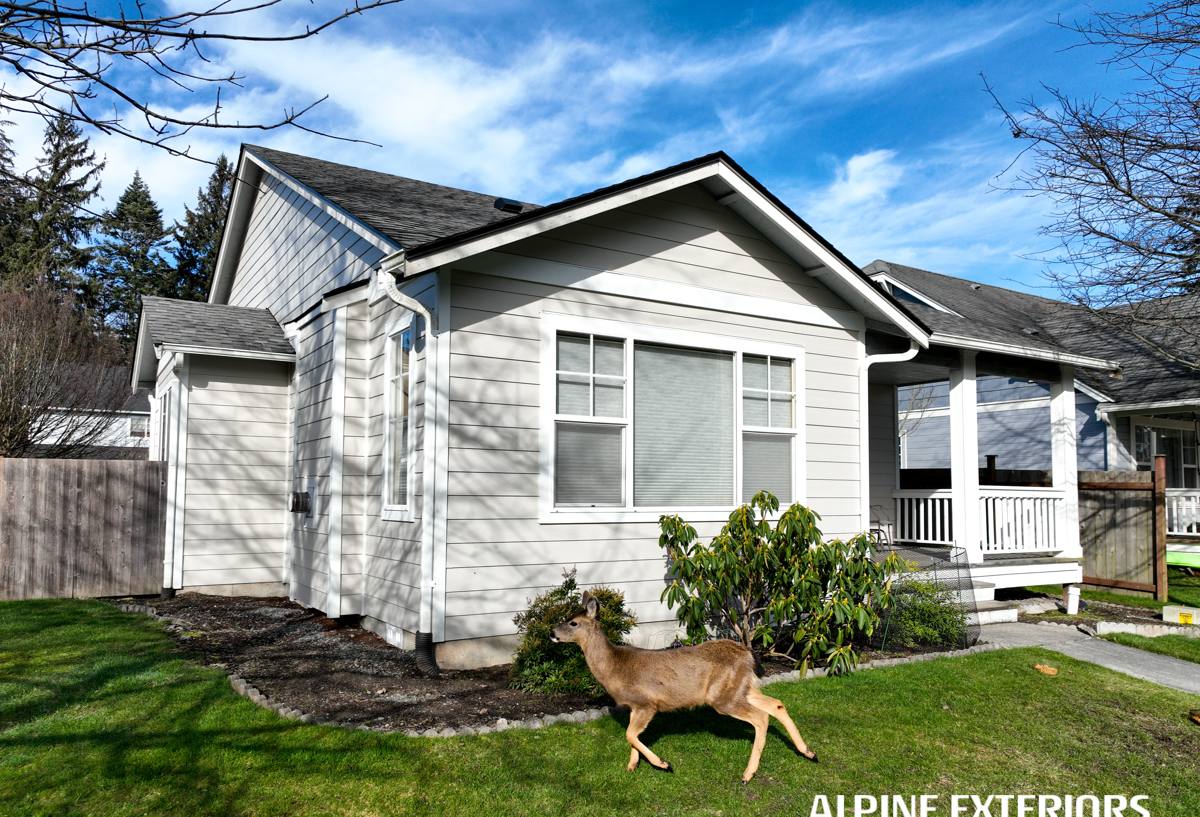
What Salt Air, Rain, and Moss Actually Do to a House
Salt Air and Metal Fasteners
Proximity to Bellingham Bay means a light but steady presence of salt in the air, especially on breezier days. Salt air accelerates corrosion on exposed metal — nail heads, flashing, hinges, and any fastener that isn't properly coated or covered. On siding specifically, this shows up as rust streaking down from nail heads, corroded trim fasteners, and premature failure of hardware that wasn't rated for coastal-adjacent exposure. It's a slow process, but it's constant, and it's one of the reasons fastener choice and installation detail matter as much as the siding material itself.
Driving Rain
Whatcom County doesn't just get a lot of rain — a good share of it arrives horizontally during fall and winter frontal systems, pushed by wind off the Strait of Georgia and the bay. Driving rain finds every gap, lap, and seam that isn't detailed correctly. It gets behind poorly flashed windows, into butt joints that weren't caulked or capped properly, and under siding that's lost its factory seal. Once water gets behind the cladding, the sheathing and framing underneath are what actually suffer — and that damage is invisible until it's expensive.
The Long Moss Season
Shade, moisture, and mild temperatures are a perfect combination for moss and algae growth, and Barkley's mix of mature landscaping and marine-layer humidity gives moss plenty of time to establish itself on north-facing walls, under eaves, and anywhere airflow is limited. Moss holds moisture directly against a surface for extended periods. On roofing this is well understood; on siding, it's just as real a concern, particularly for wood-based or wood-look products that can absorb and hold that moisture rather than shedding it.
Why We Standardized on James Hardie Fiber Cement
We install James Hardie fiber cement siding exclusively. We don't install vinyl, LP SmartSide, Cemplank, Allura, primed spruce, or cedar. That's not a marketing position — it's a decision we made after years of seeing how different siding materials actually hold up in this specific climate, not in a showroom or a spec sheet.
Fiber cement is non-combustible, dimensionally stable, and doesn't absorb moisture the way wood-based products do. In a climate defined by sustained dampness rather than occasional hard rain, that moisture behavior is the whole ballgame. Hardie's HZ5 product line is engineered specifically for climates with freeze-thaw cycles and sustained moisture exposure, which describes Whatcom County well. The ColorPlus factory finish is baked on under controlled conditions and backed by its own finish warranty, which matters in an area where UV exposure is moderate but moisture cycling is constant — factory-cured finishes hold up more consistently than field-applied paint over years of that cycling.
What We're Not Installing, and Why
- Vinyl siding: Lightweight and inexpensive, but it expands and contracts significantly with temperature swings, can warp near heat sources, and its seams and butt joints are a common entry point for driving rain if not installed with real precision.
- LP SmartSide, primed spruce, and cedar: Wood-based products can perform well when maintained rigorously, but they depend on an intact factory or field coating to resist moisture. Any breach — a scratch, a missed caulk joint, a spot where paint has worn thin — gives moisture a path in, and in a marine climate with a long wet season, that margin for error is thin.
- Cemplank and Allura: Both are fiber cement products and share fiber cement's core moisture advantages. We standardized on Hardie specifically for its HZ climate-engineered lines, the depth of its ColorPlus color and texture options, and the strength and transferability of its warranty — factors that matter over the 30-plus year timeline homeowners are actually planning around.
How We Approach a Barkley Siding Job
Inspection First
Before we talk about products or pricing, we look at the house — the age of the current siding, the condition of the sheathing underneath where accessible, flashing details around windows and doors, and any visible signs of moss, staining, or rust. On older Barkley homes, this step often reveals moisture issues that have been quietly developing behind the original siding for years, especially on the north and west-facing walls that see the most shade and driving rain.
Correct Installation Detail
James Hardie siding performs the way it's engineered to only when it's installed to spec — proper clearances, correct fastener patterns and materials, flashing integration at every penetration, and caulking only where Hardie's own installation guidelines call for it. A lot of the siding problems we get called out to inspect on other companies' installs trace back to shortcuts at this stage, not the material itself.
One Crew, Four Trades
Because we handle siding, roofing, windows, and decks, we can look at a Barkley home's full exterior envelope at once rather than treating siding as an isolated project. A roof that's shedding water onto a wall in the wrong place, a window that's not flashed correctly, or a deck ledger board that's trapping moisture against the house all affect how new siding performs. Coordinating those trades under one crew means fewer gaps between contractors and fewer excuses when something doesn't line up.
Comparing Siding Options for This Climate
| Factor | James Hardie Fiber Cement | Vinyl | Wood-Based (LP, Cedar, Primed Spruce) |
|---|---|---|---|
| Moisture resistance | High — engineered HZ5 line for wet, freeze-thaw climates | Moderate — doesn't absorb water, but seams are vulnerable | Depends entirely on coating integrity |
| Combustibility | Non-combustible | Combustible | Combustible |
| Finish durability | Factory-baked ColorPlus, separate finish warranty | Color molded in, can fade/chalk over time | Field or factory paint, requires ongoing maintenance |
| Maintenance burden | Low — periodic washing | Low | Higher — repainting, caulk inspection, moss monitoring |
| Typical lifespan when installed to spec | 30+ years | 20-30 years | Variable, maintenance-dependent |
Signs a Barkley Home May Need Siding Attention
- Persistent moss or dark streaking on north- or west-facing walls that comes back shortly after cleaning
- Soft spots, bubbling, or visible warping in siding panels or trim
- Rust staining running down from nail heads or trim fasteners
- Paint that's peeling or bubbling rather than just fading evenly
- Gaps opening up at butt joints, corners, or around window and door trim
- A musty smell near exterior walls, which can indicate trapped moisture behind the cladding
What to Expect from an Estimate
A siding estimate should start with someone actually looking at the house — walking the exterior, checking problem areas, and asking about anything you've already noticed like moss buildup or drafty spots near windows. From there, a straightforward estimate covers the scope of work, the Hardie product line and profile that fits the home, and a realistic cost range based on square footage and the condition of what's underneath. It shouldn't require high-pressure tactics or same-day-signature discounts to be worth your time.
Why a Local Crew Matters in Whatcom County
Siding contractors who work outside this region can install a technically correct product and still miss the details that matter here — the extra attention driving rain demands at flashing points, the moss-prevention considerations for shaded elevations, or the corrosion-resistant fastener choices that salt air exposure calls for. A crew that works Whatcom County regularly, including the Barkley area, has already seen how these conditions play out on real homes over real winters, not just in a training manual.
If you're noticing moss buildup, staining, or aging siding on a Barkley-area home, we're happy to take a look and put together a straightforward estimate — no pressure, no obligation. Use the form below to get started.