 Whatcom County
 Siding Built for Edgemoor's Waterfront Climate
Edgemoor sits close enough to Bellingham Bay that the air itself becomes part of the maintenance conversation. Homes here don't just deal with Pacific Northwest rain — they deal with salt-laden air drifting off the water, wind-driven rain that hits siding at an angle instead of running straight down, and a moss season that can stretch from fall through spring in shaded, north-facing exposures. Any exterior product installed on a home in this pocket of Whatcom County has to hold up to all three at once, year after year, not just look good on installation day.
We're a local crew that works siding, roofing, windows, and decks across Whatcom County, and Edgemoor is one of the areas where we see the clearest case for choosing exterior materials carefully. A siding choice that works fine forty miles inland doesn't necessarily perform the same way three blocks from the bay.
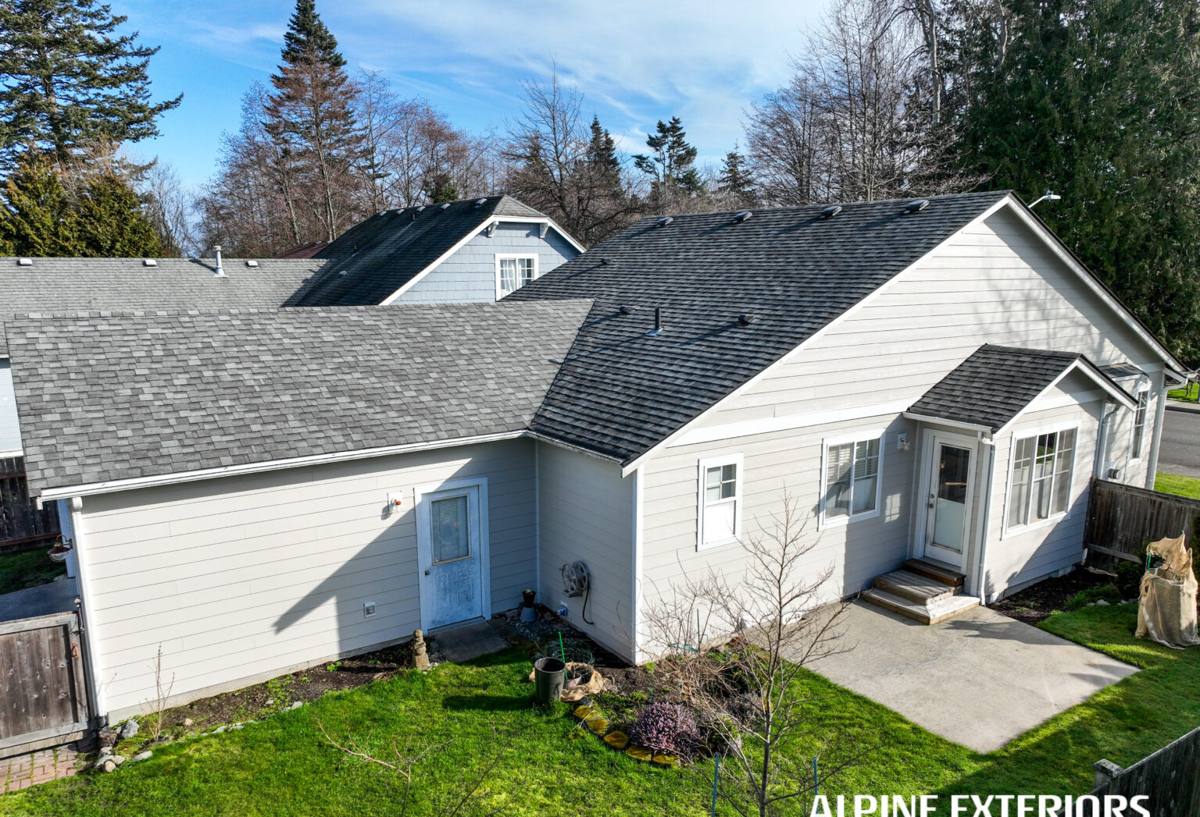
What Salt Air Actually Does to a House
Salt air isn't just a coastal talking point — it's a chemical and physical reality for exterior materials. Airborne salt is hygroscopic, meaning it pulls moisture out of the air and holds it against whatever surface it lands on. That has a few practical effects on a home:
- Metal fasteners, flashing, and hardware corrode faster than they would inland, especially if lower-grade materials were used originally
- Paint and coatings on wood-based siding break down quicker, since the salt film keeps the surface damp longer between rain events
- Caulking and sealant joints see more expansion and contraction stress from the combination of moisture and temperature swings off the water
- Any wood-based product with exposed or damaged edges absorbs moisture more readily once salt has degraded its surface protection
None of this means a bayfront home is doomed to constant repairs. It means the materials and installation details matter more here than they do in a drier, more sheltered part of the county.
Driving Rain and Wind Exposure
Open exposure toward the water also means wind-driven rain — rain that hits siding horizontally instead of falling straight down. That changes how water behaves at every seam, corner, and penetration on the exterior. Lap siding depends on properly lapped courses and correctly flashed windows and doors to shed that kind of rain; a product or installation that's only built for vertical rainfall can let water track sideways behind the cladding, where it does damage you don't see until it's already advanced.
The Long Moss Season
Moss and algae growth is a fact of life in this climate, but Edgemoor's tree cover and proximity to the water can extend the season on shaded walls and north-facing elevations. Moss holds moisture against a surface for extended periods, which is a slow but steady stressor on siding, trim, and roofing alike. On roofs it can lift shingles and hold water at the edges. On siding, it keeps the surface damp longer between dry spells, which matters most for products that aren't dimensionally stable or well-protected when wet.
Why We Only Install James Hardie Fiber Cement
We don't install vinyl, LP SmartSide, or wood-based products like primed spruce or cedar lap — and in a climate zone like Edgemoor's, that's not a marketing position, it's a practical one. Here's the honest breakdown of why:
| Material | How it holds up near salt air & driving rain | Long-term consideration |
|---|---|---|
| Vinyl siding | Doesn't rot, but can warp or fade with UV and temperature swings; seams and panels can allow wind-driven rain intrusion if not detailed carefully | Thinner profiles can look and perform inconsistently over decades in exposed coastal wind |
| LP SmartSide / wood-strand products | Engineered wood with a resin binder — better than raw wood, but still wood-based, so edge and cut-end sealing is critical in a wet, salty climate | Any breach in the factory coating opens the door to moisture absorption and swelling |
| Primed spruce / cedar | Natural wood is workable and attractive, but it's the most moisture-sensitive option in this environment | Repainting cycles come faster; moss and mildew take hold quicker in shaded, damp areas |
| James Hardie fiber cement | Cement-based composition doesn't rot, warp, or swell from moisture; factory-applied ColorPlus finish resists fading and doesn't rely on field painting for protection | Requires correct installation (clearances, flashing, fastening) to perform to spec — installation quality is what makes or breaks any siding here |
To be fair to the alternatives: vinyl is inexpensive and low-maintenance in the right setting, LP SmartSide has real engineering behind it, and cedar has a look plenty of homeowners genuinely prefer. We're not claiming those products are defective. We've simply made a standard: in a climate that combines salt exposure, driving rain, and a long moss season, we want every job we put our name on built with a material that's engineered specifically for these conditions — and that's fiber cement.
Hardie's Climate-Specific Engineering
James Hardie makes region-specific product formulations under its HZ5 designation for areas with more freeze-thaw cycling, and HZ10 for wetter, milder coastal climates like Western Washington. That distinction matters — it means the board itself is formulated for the moisture pattern of a place like Edgemoor, not just painted to look good and hope for the best. Combined with the factory-baked ColorPlus finish, the color and protective layer are cured under controlled conditions rather than applied on-site where weather, temperature, and technique can vary.
How Correct Installation Protects Against Local Conditions
The material is only half the equation. In an area with wind-driven rain and salt air, installation details are what actually keep water out over the long run:
- Proper clearances between siding and grade, decks, and roof lines so water has somewhere to go instead of wicking into the bottom edge of the board
- Correct fastening with corrosion-resistant fasteners appropriate for a coastal-adjacent environment
- Flashing at every penetration — windows, doors, hose bibs, light fixtures — since these are the spots where wind-driven rain finds its way behind cladding
- Rainscreen or drainage gap detailing where appropriate, giving incidental moisture a path to drain and dry instead of sitting against the back of the siding
- Caulking and sealant joints sized and placed to handle the expansion and contraction stress of temperature swings near the water
Any siding product, including Hardie, can underperform if these details are skipped. That's why we treat installation as seriously as material selection — a great board installed poorly will still fail early in this climate.
Roofing, Windows, and Decks in the Same Environment
Siding doesn't work in isolation. On a home exposed to salt air and driving rain, the roof, windows, and any exterior deck are dealing with the same stressors, and problems in one area often show up as damage in another — a leaking roof valley can saturate wall framing behind siding, and a failed window seal can let water track down into a wall cavity long before it's visible from outside.
Roofing Considerations
Moss management, proper underlayment, and edge metal that resists corrosion all matter more in a coastal-influenced microclimate. Roofs here need attention to valleys, penetrations, and shaded areas where moss and debris accumulate.
Windows
Window flashing integration with the siding plane is one of the most common failure points on any home, coastal or not. When we replace windows, we treat the flashing tie-in with the surrounding siding as part of the same waterproofing system, not a separate task.
Decks
Decks facing open exposure toward the water take more direct sun, wind, and rain than decks tucked against a house. Material choice and proper ledger flashing where the deck meets the house are the two details that most affect a deck's lifespan in this setting.
Why a Local Crew Matters Here
Whatcom County covers a lot of climate variation — inland valleys, foothill areas, and bayfront neighborhoods like Edgemoor all see different combinations of wind, moisture, and sun exposure. A crew that works across this county regularly develops a feel for which details matter most in which pockets. That's not something a general contractor from outside the region typically has dialed in, and it's not something you can fully substitute with a product spec sheet. Knowing that a particular street tends to get more wind-driven rain, or that certain lots hold moss longer because of tree cover, changes how we approach flashing, clearances, and material selection on a given job.
What to Check Before Hiring an Exterior Contractor in This Area
- Ask what siding material they install and why — a contractor who installs everything usually isn't specializing in what performs best in your specific microclimate
- Confirm they carry proper licensing and insurance for work in Washington State
- Ask how they handle flashing and clearances specifically for salt-air or high-moisture exposure, not just a generic installation answer
- Request references or examples of similar coastal-adjacent work in Whatcom County
- Get a written scope that specifies fastener type, clearance details, and warranty terms — not just a total price
Getting Started
If you're weighing a siding, roofing, window, or deck project on your Edgemoor home, we're happy to take a look and talk through what your home's specific exposure calls for — no pressure, no obligation. Reach out for a free estimate using the form below.