 Whatcom County
 Why Blaine Roofs Wear Differently Than Roofs Inland
Blaine sits at the far northwest corner of Whatcom County, right where Puget Sound weather meets the Canadian border, and that location puts a specific set of stresses on a roof that inland Whatcom County homes don't deal with nearly as much. Salt-laden air off the water accelerates corrosion on exposed metal fasteners, flashing, and vent stacks. Wind-driven rain off the Strait pushes water sideways under shingle tabs and around penetrations that would stay dry in a calmer, drier climate. And the long, damp shoulder seasons here mean moss and algae get a head start every fall and don't fully let go until well into spring.
None of that means asphalt shingles are a poor choice for Blaine — they remain the most practical, cost-effective roofing material for the vast majority of homes here. It means the installation details matter more than they would somewhere drier, and the shingle product itself needs to be matched to what this specific stretch of coastline throws at it.
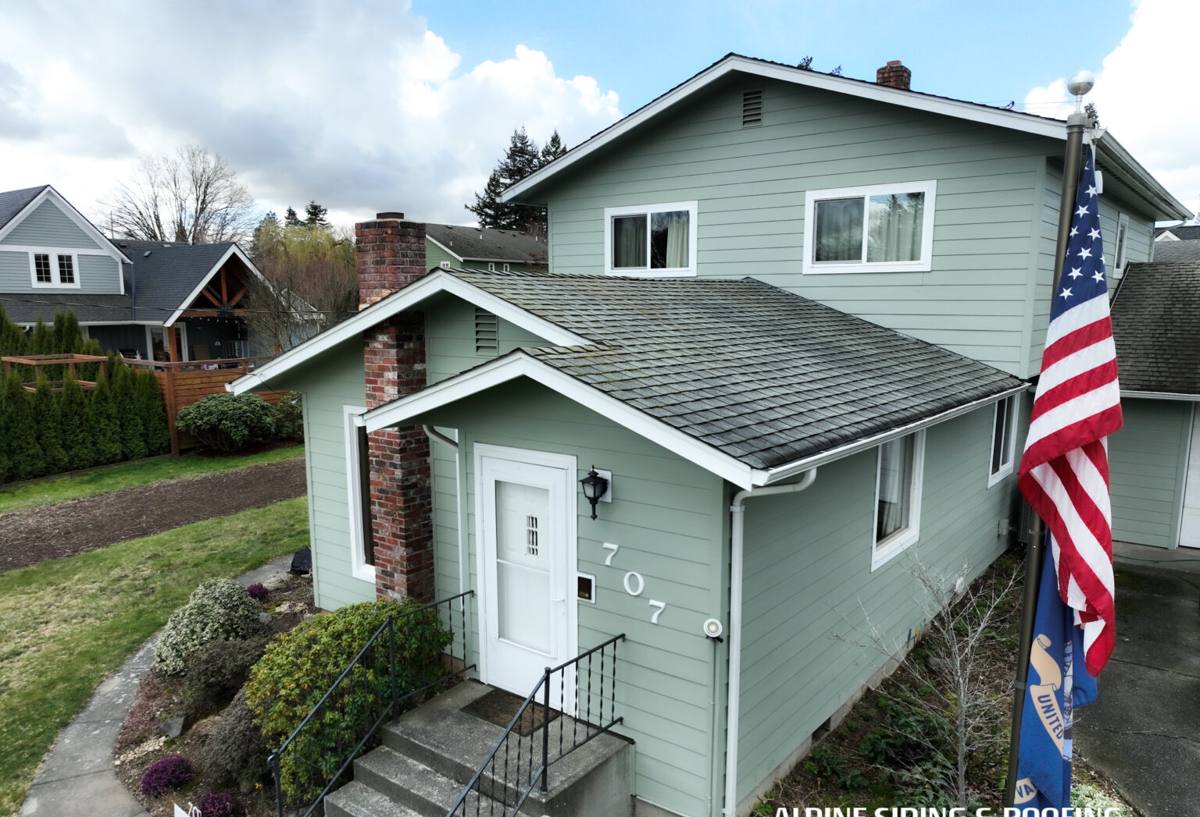
What Blaine's Climate Actually Does to a Shingle Roof
Salt Air and Corrosion
Homes within a mile or two of the water see faster breakdown of unprotected metal. Nails that back out slightly, exposed flashing edges, and older galvanized components corrode faster than the same materials would twenty or thirty miles inland. This is why fastener and flashing material choice on a Blaine job isn't a minor spec — it's one of the first things we look at.
Wind-Driven, Sideways Rain
A lot of the rain that hits Blaine roofs doesn't fall straight down. Storms moving through the Strait of Georgia and Boundary Bay push moisture at an angle, which means it can work its way under shingle tabs, around chimneys, and into valleys that would shed water fine in a vertical rainstorm. Sealant strips and nailing patterns that meet minimum code in a calmer climate can still leak here if they're not installed with wind uplift in mind.
Moss, Algae, and the Long Shoulder Season
Whatcom County's wet season runs long, and Blaine's proximity to the water keeps humidity elevated even on days without rain. Moss spores land on shaded, north-facing slopes and shaded valleys and get comfortable fast. Once moss takes hold, it holds moisture against the shingle surface, lifts tabs, and shortens the roof's life — well before the shingles themselves would otherwise have worn out.
What a Correct Asphalt Shingle Job Includes Here
A roof that's going to hold up in Blaine needs more than shingles nailed to plywood. The components underneath and around the shingles do most of the actual water management work.
- Ice-and-water shield at eaves, valleys, and around all penetrations — not just the code minimum, but extended coverage in the areas most exposed to wind-driven rain
- Synthetic underlayment across the full deck as a second line of defense, since shingles alone aren't a complete waterproofing system
- Corrosion-resistant flashing at chimneys, skylights, sidewalls, and roof-to-wall transitions — standard galvanized flashing degrades faster this close to salt air
- Proper nailing pattern matched to the shingle manufacturer's high-wind specification, not just the minimum four-nail pattern
- Balanced attic ventilation (intake at the eaves, exhaust at the ridge) so moisture from inside the house doesn't condense against the underside of the deck
- Algae-resistant shingle granules on any roof with shaded or north-facing slopes
Skip any one of these and the roof may still look fine going up — the problems show up two, five, or ten years later, usually as a leak that traces back to a flashing detail or a ventilation gap that should have been addressed during installation.
Choosing the Right Shingle for a Blaine Roof
Not every asphalt shingle product is built the same way, and for a coastal Whatcom County home the differences matter more than they would in a milder inland climate.
| Shingle Type | How It Handles Blaine's Climate | Trade-Offs |
|---|---|---|
| 3-tab (economy) | Lower wind rating, less resistant to sideways rain penetration under tabs | Lowest upfront cost, shortest realistic lifespan on this coastline |
| Standard architectural (laminate) | Better wind resistance, thicker profile sheds wind-driven rain more effectively | Mid-range cost, good balance for most Blaine homes |
| Algae-resistant architectural | Copper-infused granules resist moss and algae growth on shaded slopes | Slightly higher cost, worthwhile on north-facing or tree-shaded roofs |
| High-wind / impact-rated | Highest wind uplift rating, best sealant bond for exposed, waterfront-adjacent sites | Highest cost, best suited to fully exposed lots near the water |
For most Blaine properties that aren't directly on the waterfront, a standard or algae-resistant architectural shingle rated for high wind strikes the right balance of cost and durability. For homes closer to the water or fully exposed to prevailing wind, stepping up to a high-wind-rated product is worth the difference.
Our Process for a Blaine Roofing Job
1. On-Site Assessment
We walk the roof, check the attic for ventilation and moisture signs, and look at slope orientation to identify which areas are most exposed to wind-driven rain and which are most prone to moss. This tells us where to spend extra attention — not every square foot of a roof needs the same level of detail.
2. Honest Scope and Written Estimate
We give you a written estimate that spells out the shingle product, underlayment, flashing materials, and ventilation work — not just a lump-sum number. If your existing deck has soft spots or rot, we'll flag it before tear-off starts, not after, so there are no surprise change orders mid-project.
3. Tear-Off and Deck Inspection
Full tear-off lets us actually see the deck, not guess at its condition from underneath. Any damaged sheathing gets replaced before anything goes back down — covering over a soft deck just hides a problem that will resurface as a leak.
4. Underlayment, Flashing, and Ventilation
This is where a coastal roof earns its lifespan. Ice-and-water shield, synthetic underlayment, and corrosion-resistant flashing go in first, along with any ventilation corrections needed to keep the attic dry from the inside out.
5. Shingle Installation
Shingles go down following the manufacturer's high-wind nailing specification, with extra attention to valleys, eaves, and any wall-to-roof transitions where wind-driven rain concentrates.
6. Final Walkthrough
We walk the finished roof with you, review what was done and why, and go over basic maintenance — including moss prevention — so you know what to expect over the next several years.
Maintenance That Actually Matters in Blaine
A well-installed shingle roof still benefits from a bit of upkeep in this climate. The checklist below covers what's worth doing and how often.
- Have moss and debris cleared from shaded or north-facing slopes at least once a year, ideally before the wet season sets in
- Keep gutters clear so water isn't backing up under the eave edge during heavy rain
- Trim back overhanging branches that keep sections of the roof shaded and slow to dry
- After major windstorms, do a visual check (from the ground, with binoculars if needed) for lifted or missing shingles
- Have flashing around chimneys and vents inspected every few years, since these are the first points to show wear from salt air exposure
Cost Factors for a Blaine Roofing Project
Every roof is different, but a few factors consistently move the price up or down on jobs in this area:
| Factor | Effect on Cost |
|---|---|
| Roof size and number of slopes/valleys | More complexity means more flashing, cutting, and labor time |
| Deck condition underneath old shingles | Rotted sheathing found during tear-off adds material and labor |
| Shingle tier chosen | Economy to high-wind/impact-rated products span a meaningful price range |
| Ventilation corrections needed | Adding intake or exhaust venting is more involved on some roof designs than others |
| Site exposure | Fully exposed, waterfront-adjacent roofs often warrant upgraded wind-rated materials |
We won't quote a number without seeing the roof first — anyone who does is guessing, and that guess tends to turn into change orders once the tear-off starts.
Why a Crew That Already Works Blaine Matters
Roofing crews who mostly work drier, inland areas sometimes install to code minimums that are fine there but leave gaps here. A crew that regularly works Whatcom County's coastal edge already knows which slopes on a typical Blaine roof collect moss first, where wind-driven rain tends to find its way in, and which flashing details need upgrading because of the salt air. That local pattern recognition shows up in fewer callbacks and fewer surprise leaks two or three winters down the road — not because the materials are different, but because the installation accounts for conditions a generic spec sheet doesn't.
If you're weighing a repair against a full replacement, or just want a straight answer on what your current roof needs, we're happy to take a look. Reach out for a free, no-pressure estimate using the form below.