 Whatcom County
 Windows in Bellingham Take a Different Kind of Beating
Bellingham sits right where marine air off the Salish Sea meets a wet, mild, moss-friendly climate that barely lets a house dry out for months at a time. That combination is hard on windows in ways that don't show up in a showroom. Salt-laden air accelerates corrosion on hardware, fasteners, and unprotected metal flashing. Driving rain, pushed sideways by wind off the water, finds every gap in a window's flashing and trim that a calm-weather install would never expose. And a long moss season means constant moisture sitting against siding, trim, and sills for weeks on end, feeding rot wherever water has a place to collect.
None of this means Bellingham homes need exotic windows. It means the installation has to respect the climate a homeowner actually lives in, not the climate a manufacturer's spec sheet was written for. A window that's installed correctly for a dry inland climate can still fail here in five to eight years if the water management details were skipped.
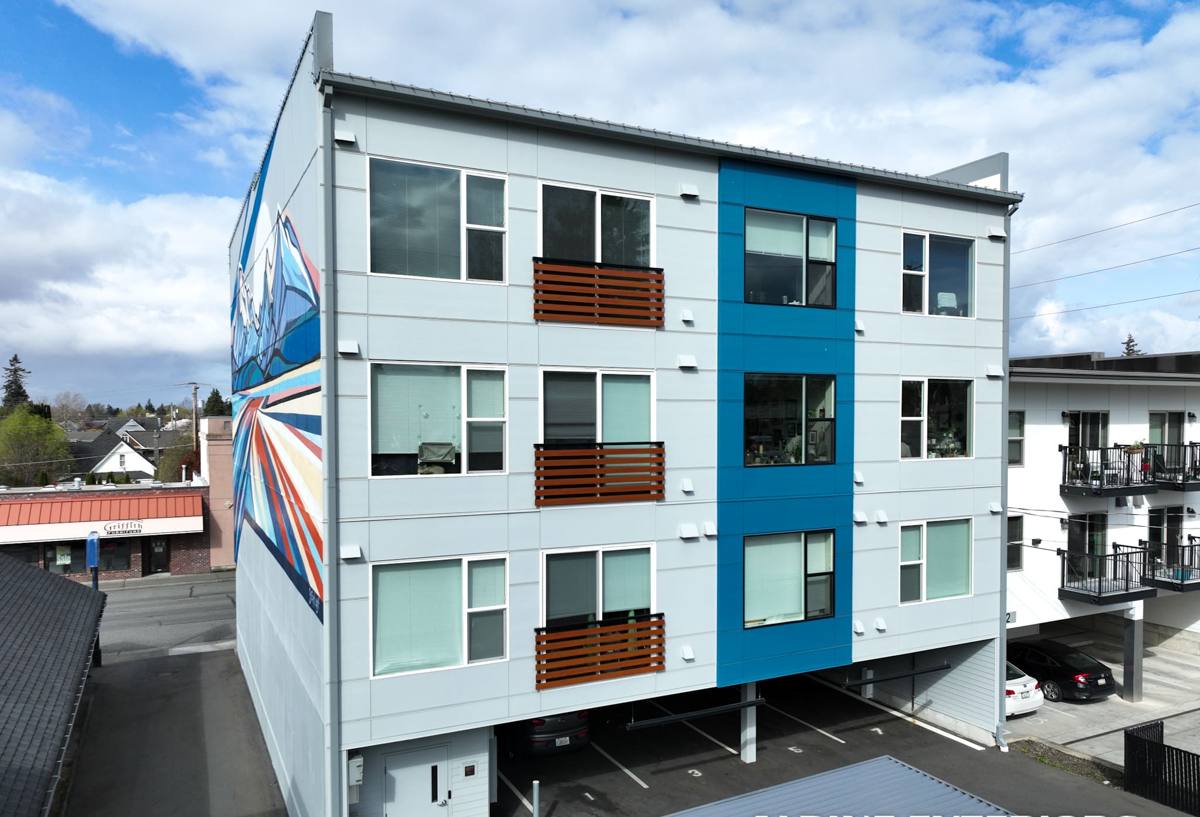
What a Correct Window Installation Actually Involves
Swapping a window sounds simple: take the old one out, put the new one in, caulk the edges. That approach is exactly how leaks start. A correct installation is mostly about what happens before and around the window unit itself.
Flashing and Water Management
Every opening needs a flashing sequence that sheds water downward and outward, layered shingle-style so each piece overlaps the one below it. Sill pan flashing at the bottom of the opening is non-negotiable in a climate like ours — it gives any water that does get past the window a way out instead of a place to pool against the framing. Head flashing above the window needs to tie into the house wrap correctly, not just get caulked over the top.
Sealants, Fasteners, and Hardware
Caulk is a backup, not a strategy. We use it to seal gaps, not to substitute for proper flashing. Fasteners and hardware exposed to salt air benefit from corrosion-resistant materials, and we pay attention to how trim details are finished so bare wood or end-grain cuts aren't left exposed to sit wet through the fall and winter.
Signs Your Current Windows Are Losing the Battle
Whatcom County's climate doesn't destroy windows overnight — it wears them down slowly, and homeowners often adjust to small problems without realizing they're symptoms. Here's what we look for during an inspection:
- Fogging or a hazy film between panes of double-pane glass — a sign the seal has failed and the insulating gas has escaped
- Visible moss or dark streaking on the sill, trim, or siding directly below a window
- Soft or discolored wood at the sill or jamb when pressed with a thumb
- Persistent drafts even with the window fully latched
- Difficulty opening, closing, or locking that wasn't there a few years ago
- Paint or finish bubbling or peeling on the interior or exterior trim
- Noticeably higher heating bills without another clear cause
Any one of these can be minor on its own. Two or three together, especially near the same window, usually point to a flashing or seal problem that's been letting moisture in for a while.
Choosing Window Materials for a Wet, Salty Climate
There's no single "right" window material for every Bellingham home — it depends on the house, the exposure, and the budget. What matters is understanding the honest trade-offs.
| Material | How It Handles Our Climate | Maintenance | General Cost Tier |
|---|---|---|---|
| Vinyl | Doesn't rot or corrode; performs well against moisture but can expand/contract with temperature swings | Low — occasional cleaning | $ |
| Fiberglass | Very stable dimensionally, resists moisture and salt air well over the long term | Low | $$–$$$ |
| Wood-clad (metal or vinyl exterior, wood interior) | Good performance if cladding and flashing are installed correctly; the interior wood adds warmth but isn't the weak point — the exterior seal is | Moderate | $$$ |
| Aluminum | Conducts cold and can corrode in salt air over time without proper coatings; we're selective about where we recommend it here | Moderate | $$ |
We're candid with homeowners about why we lean toward vinyl and fiberglass for most Bellingham replacement projects: they hold up against sustained moisture exposure with the least ongoing upkeep, which matters in a climate that doesn't give siding and trim much time to dry out between storms. That's a maintenance and moisture-behavior judgment on our part, not a knock on any manufacturer — plenty of window lines perform well when the installation detailing matches the climate.
New Construction Windows vs. Replacement Windows
These are two different jobs with different failure points, and it matters that a crew treats them differently instead of using one approach for both.
New Construction (Nail-Fin) Windows
Used when the wall is open to the studs — new builds, additions, or a siding tear-off project. The window's nailing fin gets integrated directly into the house wrap and flashing layers before siding goes back on. This is the more thorough approach when it's available, because every layer of the water management system is accessible.
Replacement (Pocket or Insert) Windows
Used when the existing frame is sound and the surrounding siding and trim are staying in place. The new window unit installs into the old frame. This is faster and less invasive, but it depends entirely on the existing frame and flashing actually being in good condition — if there's hidden rot or a flashing problem behind the old window, an insert replacement will trap it rather than fix it. Part of our estimate process is checking for that before recommending insert versus full-frame replacement.
Our Installation Process
- On-site assessment — we look at each opening, the condition of the existing frame and sill, and any signs of past water intrusion before recommending a replacement approach
- Measuring and ordering — accurate measurements matter more than people expect; an undersized or oversized opening creates gaps that are hard to seal correctly later
- Removal — old windows come out carefully so we can inspect the framing underneath, which is often the first real look anyone's had at that wall cavity in years
- Repair as needed — any soft framing, rot, or failed old flashing gets addressed before a new window goes in, not covered over
- Flashing and installation — sill pan, jamb flashing, and head flashing installed in the correct shingle-lap sequence, then the window is set, leveled, and fastened
- Sealing and insulation — low-expansion foam or backer rod and sealant around the frame, exterior caulking at trim joints
- Interior and exterior trim finish — trim reinstalled or replaced and finished so no bare wood is left exposed to the weather
- Final check — operation, locks, and weatherstripping tested before we call the job done
What Affects the Cost of a Window Project
Window pricing varies enough by project that a flat number isn't honest to give without seeing the house. What we can share is what actually drives the cost up or down.
| Factor | Why It Matters |
|---|---|
| Number of windows | Per-window cost typically drops as the total job size grows |
| Material and glass package | Vinyl, fiberglass, and wood-clad options price differently, and upgraded glass (extra panes, coatings) adds cost |
| Install type | Full-frame new construction installs generally cost more than insert replacements due to added siding and trim work |
| Hidden repairs | Rot or framing damage found once old windows come out adds labor and material that couldn't be quoted sight-unseen |
| Window size and access | Large picture windows, upper-story access, or tight openings all add labor time |
| Trim and finish work | Matching existing trim profiles or upgrading trim material affects the finish cost |
Most homeowners find that a per-window quote covers a broad range depending on these factors — which is exactly why we walk the house and give a real number rather than a phone-quote guess.
Why Hiring a Crew That Already Works in Bellingham Matters
Window installation isn't regionally exotic work, but the details that make it hold up here are learned by doing it here. A crew that mostly works in drier inland climates may not default to sill pan flashing on every job, may not think twice about leaving a trim cut unsealed, and may not budget extra time for opening up a wall and finding moisture damage that's common in older Whatcom County homes near the water. We see the same climate stress patterns across Bellingham and the surrounding county repeatedly, which means we're not guessing at what tends to fail first — we're building around it from the start of the estimate.
Local experience also means straight answers about your specific house: whether your existing siding and trim can handle an insert replacement, whether your exposure to wind-driven rain calls for extra attention at certain elevations, and whether moss and moisture staining you're seeing is cosmetic or a sign of something underneath that needs to be addressed first.
Maintaining New Windows Through Whatcom County's Wet Seasons
A correct installation is most of the battle, but a little seasonal attention extends the life of any window in this climate.
- Rinse salt residue and grime off exterior frames a couple of times a year, especially on homes with direct exposure to marine air
- Check and clear weep holes on vinyl and fiberglass frames so water can drain out instead of pooling
- Inspect exterior caulking each fall before the wet season sets in and touch up any cracked or separated beads
- Keep an eye on moss buildup on sills and trim, and remove it before it holds moisture against the surface
- Test operation and locks once a year — sticking or resistance is often the earliest sign of a frame or hardware issue
If you're noticing drafts, fogged glass, or moisture damage around your windows, or you're planning ahead for a remodel, we're happy to walk through your home and give you a straightforward, no-pressure estimate — just fill out the form below.