 Whatcom County
 Building a Deck That Actually Holds Up in Birchwood
Birchwood sits in a part of Whatcom County where a deck doesn't just have to look good for the first summer — it has to survive a lot of wet weather, a fair amount of salt-laden air off the Sound, and months at a stretch where moss and algae have every advantage. A deck built with the same specs you'd use in a dry inland climate will show problems here faster: soft spots, corroding fasteners, slick boards, and rot starting where nobody's looking. Building correctly for this area isn't about upgrading everything to the most expensive option — it's about matching materials and details to the conditions the deck will actually face.
This page walks through what that means in practice: the climate stresses specific to Whatcom County, what a properly built deck involves structurally, the material trade-offs worth understanding before you pick a decking product, and how we approach these projects for homeowners in Birchwood.
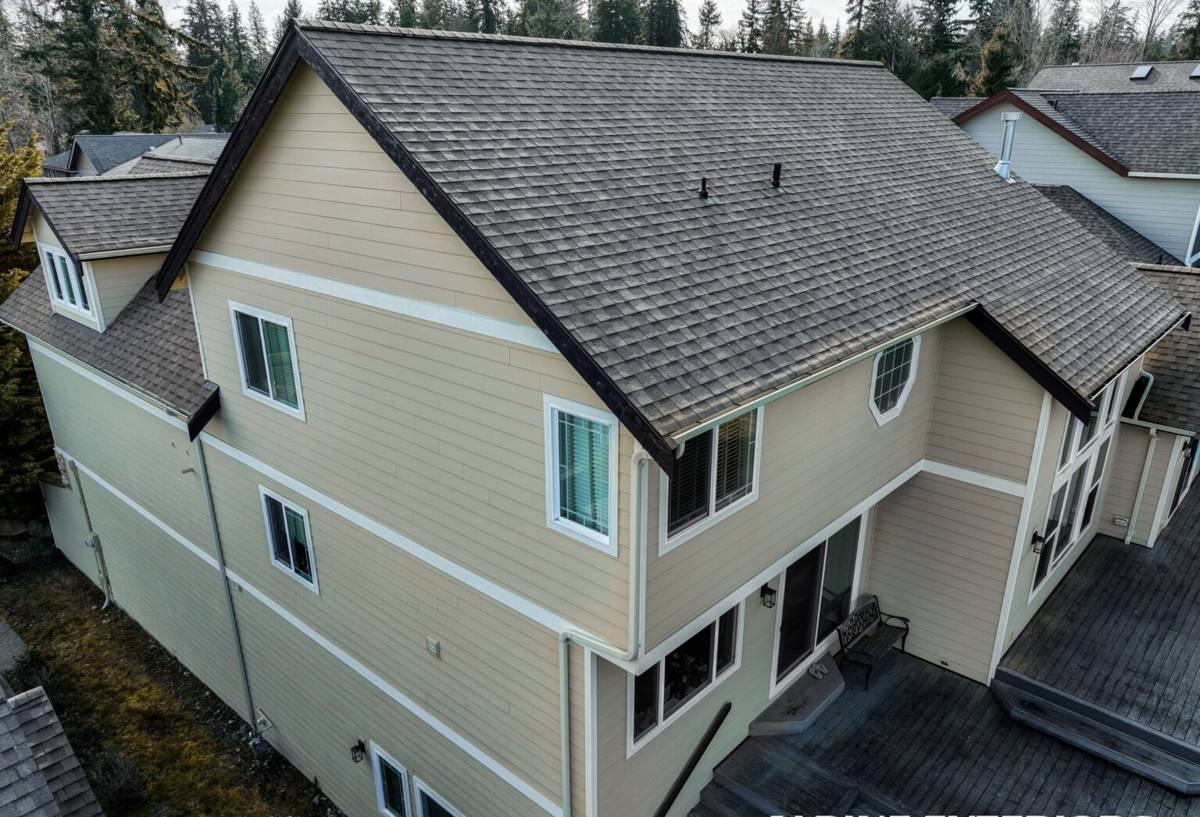
What Whatcom County Weather Does to a Deck
Salt Air and Corrosion
Proximity to Puget Sound means airborne salt is a real factor on fasteners, hardware, and any exposed metal — hinges, post bases, joist hangers, screws. Standard galvanized coatings can start breaking down faster in a salt-air environment than they would further inland, which shows up years later as rust streaks, weakened connections, or a fastener that snaps off when you try to remove it. The fix isn't complicated, but it does mean not defaulting to whatever hardware is cheapest at the yard.
Driving Rain
Rain here doesn't just fall — wind-driven rain gets pushed sideways into ledger boards, under railing posts, and into any gap in flashing that wasn't detailed correctly. A deck ledger attached to the house is one of the most common failure points we see, because water finds its way behind the board and starts rotting the rim joist or sheathing from behind, often invisibly until the deck starts to feel spongy.
A Long Moss Season
Whatcom County's moss season runs long — shaded, north-facing, or tree-covered decks can stay damp for months without a real drying window. Moss and algae aren't just cosmetic; a mossy deck surface is a slip hazard, and moss holds moisture against the board surface longer than bare wood would on its own, accelerating whatever rot process is already underway underneath.
Decking Material Options for This Climate
There's no single "correct" material for every Birchwood deck — the right choice depends on sun exposure, budget, how much upkeep you want to commit to, and how long you want the deck to last before major work is needed. Here's how the common options compare specifically against the conditions described above.
| Material | Moisture / Salt Air Behavior | Moss & Algae Resistance | Maintenance | Relative Cost |
|---|---|---|---|---|
| Pressure-treated lumber | Good if properly sealed and re-coated; end cuts need extra protection | Low — needs regular cleaning and treatment | Annual cleaning, periodic sealing | Lowest |
| Cedar | Naturally moisture- and rot-resistant; softer, can dent | Moderate — still benefits from cleaning in shaded spots | Sealing every 1-2 years to hold color and protection | Mid |
| Composite decking | Very good — doesn't absorb water or rot | Moderate to good, depending on the product's surface texture | Occasional washing; no sealing or staining | Mid-high |
| Tropical hardwoods | Excellent — very dense, naturally resistant | Good, but can still get slick when wet | Periodic oiling to maintain appearance; heavier install requirements | Highest |
We don't push one product on every homeowner. A shaded, moss-prone lot near mature trees is a different conversation than a sunny, exposed backyard — and we'll tell you honestly which material fits your specific site rather than defaulting to whatever's easiest to install.
What a Correctly Built Deck Involves
Footings Sized for the Site
Footings need to be dug to the correct depth and sized for the soil conditions on the lot, not just poured to a minimum spec. Whatcom County's wet ground can shift more than drier soils, and undersized or shallow footings are one of the more common causes of a deck that starts to sag or rack out of square within a few years.
Ledger Attachment and Flashing
Where the deck attaches to the house is the single most important detail on the entire structure. Correct practice means proper flashing that sheds water away from the house sheathing, lag bolts or through-bolts rated for the load (not just nails), and a gap or drainage plane so water doesn't sit trapped against the wall. This is the detail most likely to be rushed on a low-bid job, and it's the one most likely to cause expensive hidden damage later.
Joist Layout and Hardware
Joist spacing needs to match the decking material's span rating — composite boards, for instance, often require tighter joist spacing than solid wood to avoid flexing over time. Joist hangers, post bases, and structural screws should be rated for exterior or coastal exposure, not just whatever's cheapest, given the salt air factor discussed above.
Drainage, Grading, and Keeping Moss Off the Structure
A lot of moss and rot problems trace back to water that has nowhere to go. Under-deck drainage, correct grading away from footings, and gaps between boards that allow airflow underneath all matter more here than in a drier climate. On lower decks close to the ground, we pay particular attention to ventilation underneath — a deck that can't breathe stays damp longer after every rain, which is exactly the condition moss needs to take hold.
Board spacing is a balance: too tight and water sits on the surface and between boards; too wide and the deck can feel less finished and small items can fall through. We set spacing based on the specific material's expansion behavior, since composite and wood move differently with moisture and temperature.
Railings, Fasteners, and Hardware Choices
Railings take direct weather exposure and also see the most hand contact, so both durability and feel matter. For hardware throughout the deck — structural connectors, screws, railing brackets — we use fasteners rated for coastal or wet exposure rather than standard interior-grade hardware. It costs a bit more up front and makes a real difference over the life of the deck, since replacing corroded structural hardware later usually means partially disassembling the deck to get at it.
- Use stainless steel or coated fasteners rated for coastal/wet exposure, not generic exterior-grade hardware
- Confirm joist hangers and post bases are appropriately rated, not just galvanized to a minimum spec
- Flash the ledger board properly and inspect that detail before the deck surface goes on
- Size footings for the actual soil conditions on the lot, not a generic minimum
- Set board spacing to allow drainage and airflow without gaps big enough to lose items
- Choose decking material based on the lot's actual sun/shade exposure, not just preference
Our Process for Birchwood Deck Projects
We start with an on-site conversation, not a phone quote — layout, sun exposure, drainage patterns on the lot, and what you actually want to use the space for all shape the design and material recommendation. From there:
- Site walk-through to assess grading, drainage, and sun/shade exposure
- Design and material discussion based on budget, maintenance preference, and how the space will be used
- Footing layout and structural framing, built to the loads and soil conditions on-site
- Ledger flashing and attachment done to proper detail before any decking goes down
- Decking, railing, and hardware installation using fasteners rated for this climate
- Final walkthrough covering how to care for the specific material you chose
We also stand behind the structural work with a workmanship warranty, and we'll talk through material warranty terms for whatever decking product you choose so you know what's covered and for how long before you commit.
Living With Your Deck: Maintenance for This Climate
No deck in Whatcom County is entirely maintenance-free, even composite. Wood decking needs periodic cleaning and resealing to keep moss from establishing itself, especially in shaded areas. Composite needs less frequent attention but still benefits from an annual wash to keep pollen, moss spores, and organic debris from building up in the surface texture. Gutters and downspouts near the deck should be checked so runoff isn't dumping extra water directly onto or under the structure — a surprisingly common contributor to premature moss and rot problems we see on decks that were otherwise built well.
A quick seasonal habit — clearing leaves and debris off the deck surface and out of the gaps between boards before the wet season sets in — does more to prevent moss buildup than most people expect, and it costs nothing but a little time.
Why a Local Crew Matters for This Project
A deck built to a generic national spec sheet can still fail here in ways it wouldn't in a drier climate, because the failure points — ledger flashing, fastener corrosion, moss-driven moisture retention — are specific to what Whatcom County weather actually does over years, not months. A crew that already works in Birchwood and the surrounding area has seen which details hold up locally and which ones cause callbacks, and builds accordingly from the start rather than learning it on your project.
If you're planning a new deck or replacing one that's showing its age, we're happy to walk the site with you and talk through what makes sense for your specific yard and budget — no pressure, no obligation. Use the form below to request a free estimate.