 Whatcom County
 Deck Repair Built for Birchwood's Climate, Not a Generic Fix
If you own a home in the Birchwood area of Whatcom County, you already know a deck out here doesn't age the way it would somewhere dry and inland. Between salt-laden air, long stretches of driving rain, and a moss season that seems to start earlier every year, decks in this part of Washington take a beating that a lot of national "deck repair" advice simply doesn't account for. A board that looks fine on the surface can be soft underneath. A rail that's still standing can have fasteners rusted down to a fraction of their original strength. We repair decks in Birchwood specifically, which means we're not guessing at what the weather does here — we see the same failure patterns house after house.
This page is about deck repair, specifically, for Birchwood homes. Not a full remodel pitch, not a generic siding company's afterthought service — just what a deck actually needs to hold up in this climate, what a correct repair looks like, and how we approach the job.
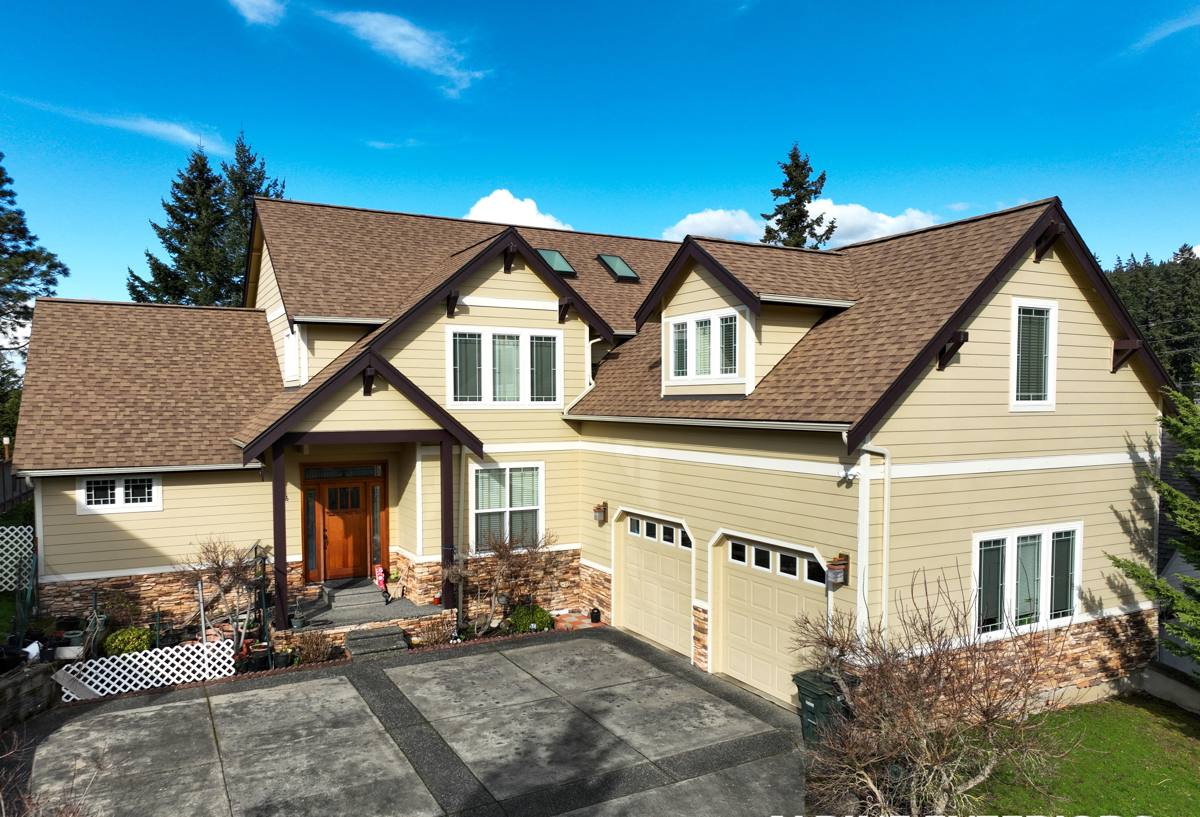
What Whatcom County's Climate Actually Does to a Deck
Salt Air and Metal Fatigue
Homes closer to the water deal with airborne salt that settles on every exposed surface, including the metal holding your deck together. Standard galvanized nails, screws, and joist hangers corrode faster in a salt-air environment than they would inland. The corrosion often isn't visible until a fastener head snaps off during a repair, or a joist hanger has thinned enough that it's no longer doing its job. Salt exposure doesn't ruin a deck outright — it quietly weakens the connections that keep it safe.
Driving Rain and Moisture Intrusion
Whatcom County doesn't just get rain — it gets rain that comes in sideways, which pushes water into joints, ledger connections, and end grain that a vertical-only rain would never reach. This is how rot starts in places you can't see from the top of the deck: where the ledger board meets the house, underneath post bases, and at the ends of joists where flashing was skipped or has failed.
Moss Season
A long, mild, wet stretch of the year is exactly what moss and algae need to take hold. On a deck, moss isn't just cosmetic — it holds moisture against the wood surface for weeks at a time, and a moss-covered board is also a slip hazard on stairs and landings. Decks that don't get enough sun or airflow underneath are especially prone to it, which describes a lot of lots in this area with tree cover.
Common Problems We See on Birchwood Decks
- Soft or spongy decking boards — usually a sign moisture has been sitting on or under the board longer than it should.
- Rot at the ledger board — where the deck attaches to the house, often from missing or failed flashing.
- Corroded or failing fasteners and hardware — screws that shear off, joist hangers with surface rust or thinning metal.
- Loose or wobbly railings — a safety issue as much as a repair issue, often from rotted posts or pulled fasteners.
- Moss and algae buildup — especially on north-facing decks or areas shaded by trees.
- Cupping, splitting, or delaminating boards — common on older wood decking that's been through repeated wet-dry cycles.
- Undersized or non-compliant stair and guardrail details — common on older decks built before current code requirements.
What a Correct Deck Repair Actually Involves
A lot of deck "repairs" are cosmetic — swap a bad board, call it done. That works for a single obviously-broken board, but if a deck has been through several wet seasons without attention, the problem is usually below the surface. A repair worth paying for starts with an honest structural look, not just a visual pass.
Structural Assessment First
Before we replace anything, we check the framing: joists, beams, posts, and the ledger connection to the house. We're looking for soft spots with a probe, checking fastener condition, and confirming the deck's support structure is sound. Replacing decking boards on top of rotted framing just hides the real problem for another season or two.
Ledger Flashing Done Right
The ledger board connection is the single most common source of hidden rot on this style of deck, and it's almost always a flashing problem — missing flashing, flashing installed in the wrong order relative to the house's water-resistive barrier, or flashing that's simply worn through. Correcting this properly means pulling back siding or trim as needed to install flashing that actually sheds water away from the connection, not just caulking over a gap and hoping it holds through the next driving rain.
Matching Fasteners to the Environment
Given the salt air in parts of Whatcom County, we use fasteners and hardware rated for the exposure — typically stainless steel or heavy-duty coated fasteners rather than standard galvanized, especially for anything structural. It costs a little more upfront and saves you from replacing corroded hardware again in a few years.
Code-Compliant Rail and Stair Details
Older decks sometimes have guardrail heights, baluster spacing, or stair stringer conditions that wouldn't pass inspection today. When we're already repairing a rail or stair section, we bring it up to current code rather than reinstalling the same non-compliant detail.
Repair or Replace? How We Help You Decide
Not every deck problem calls for a full rebuild, and not every deck is worth saving as-is. Here's the honest breakdown of what tips the decision one way or the other.
| Factor | Leans Toward Repair | Leans Toward Replacement |
|---|---|---|
| Framing condition | Joists/beams solid, only surface issues | Widespread soft framing or rot at multiple structural points |
| Age of the deck | Under 10-15 years, built to a reasonable standard | Original construction quality was poor or it's well past typical service life |
| Extent of the problem | Isolated to a few boards, one rail section, or one flashing detail | Rot or corrosion found in several unrelated areas |
| Code compliance | Minor rail/stair updates needed | Structure would need major reframing to meet current code anyway |
| Budget goals | Want to extend service life a few more years affordably | Want a longer-term, lower-maintenance result and are ready to invest |
We'll tell you honestly which category your deck falls into. If a repair will genuinely hold up, we'll say so — we don't upsell a rebuild just because it's a bigger job.
Materials: Pressure-Treated Wood vs. Composite for Repairs
When we're replacing boards, framing, or rail sections, homeowners usually ask whether to stick with wood or switch part of the deck to composite. Both are legitimate choices, and the right one depends on what you're trying to solve.
Pressure-treated lumber is the standard for framing repairs and is often the right call for matching existing wood decking, especially for a partial repair. It's less forgiving about long-term moisture exposure and will need regular refinishing to hold up through the wet season, but it's straightforward to source, repair again later, and it matches what's already there.
Composite decking holds up better against moss staining and doesn't need refinishing, which some homeowners find worth the higher material cost — particularly on decks with heavy shade or limited airflow underneath. The trade-off is that composite requires correct spacing and fastening for proper drainage and expansion, and it's not always a clean visual match if you're only replacing part of an existing wood deck. We'll walk you through both options for your specific repair rather than pushing one by default.
Our Repair Process
- On-site inspection. We check framing, ledger connection, fasteners, and surface condition, and probe any suspect boards or posts.
- Honest scope and estimate. You get a clear picture of what actually needs to happen — repair, partial rebuild, or full replacement — and why.
- Repair or replace the affected framing and decking. We don't cover over soft framing with new boards on top.
- Correct the flashing and drainage details at the ledger and any other water entry points we find.
- Install code-compliant rail and stair hardware where those elements are part of the repair.
- Clean up and walk the finished repair with you before we consider the job done.
Keeping a Repaired Deck in Good Shape Through Moss Season
A good repair buys you years, but a little seasonal upkeep buys you more. This is the same list we give Birchwood homeowners after a repair:
- Sweep leaves and debris off the deck regularly, especially in fall — trapped organic matter is what feeds moss growth.
- Rinse or gently brush off moss and algae before it builds up a heavy layer, rather than waiting until it's slick.
- Check that gaps between boards stay clear so water can drain through rather than pooling.
- Reseal or refinish wood decking on the manufacturer's recommended schedule — don't stretch it because the surface still looks okay.
- Look at the ledger connection once a year for any sign of staining, gaps, or peeling caulk.
- Keep nearby vegetation trimmed back so the deck gets some airflow and sun exposure.
Why Hire a Crew That Already Works in Birchwood
Deck repair advice that's written for a dry climate doesn't translate well to Whatcom County. A crew that already works in the Birchwood area knows which details fail first here — the ledger flashing, the fastener corrosion, the moss buildup on shaded decks — because we've opened up enough of them to see the pattern repeat. That means less time spent diagnosing and more time spent on the actual fix, and it means the materials and fastener choices we recommend are based on what holds up here, not what holds up in a climate that doesn't have to deal with salt air and months of driving rain.
If your deck has a soft board, a wobbly rail, or just hasn't been looked at in a few years, we're happy to come take a look. We'll give you a straight answer on what it needs — a targeted repair, a partial rebuild, or something bigger — and a free, no-pressure estimate so you can decide what makes sense for your home and your budget.