 Whatcom County
 Metal Roofing in Birchwood: A Different Set of Rules
Birchwood sits close enough to the water and the drainage patterns of Whatcom County that its roofs take a beating most inland homes never see. Salt-laden air off the bay, long stretches of driving rain in the fall and winter, and a moss season that seems to start earlier every year all work against a roof at the same time. A metal roof handles this combination better than almost any other material available to homeowners here, but only if it's specified and installed correctly for this exact environment. A metal roof installed the way it would be in a dry inland climate is not the same job as one installed for a neighborhood that sees this much moisture and salt exposure.
This page covers what a Birchwood home actually needs from a metal roof, what a correct installation involves, and how we approach the work when we're already familiar with the conditions on the ground.
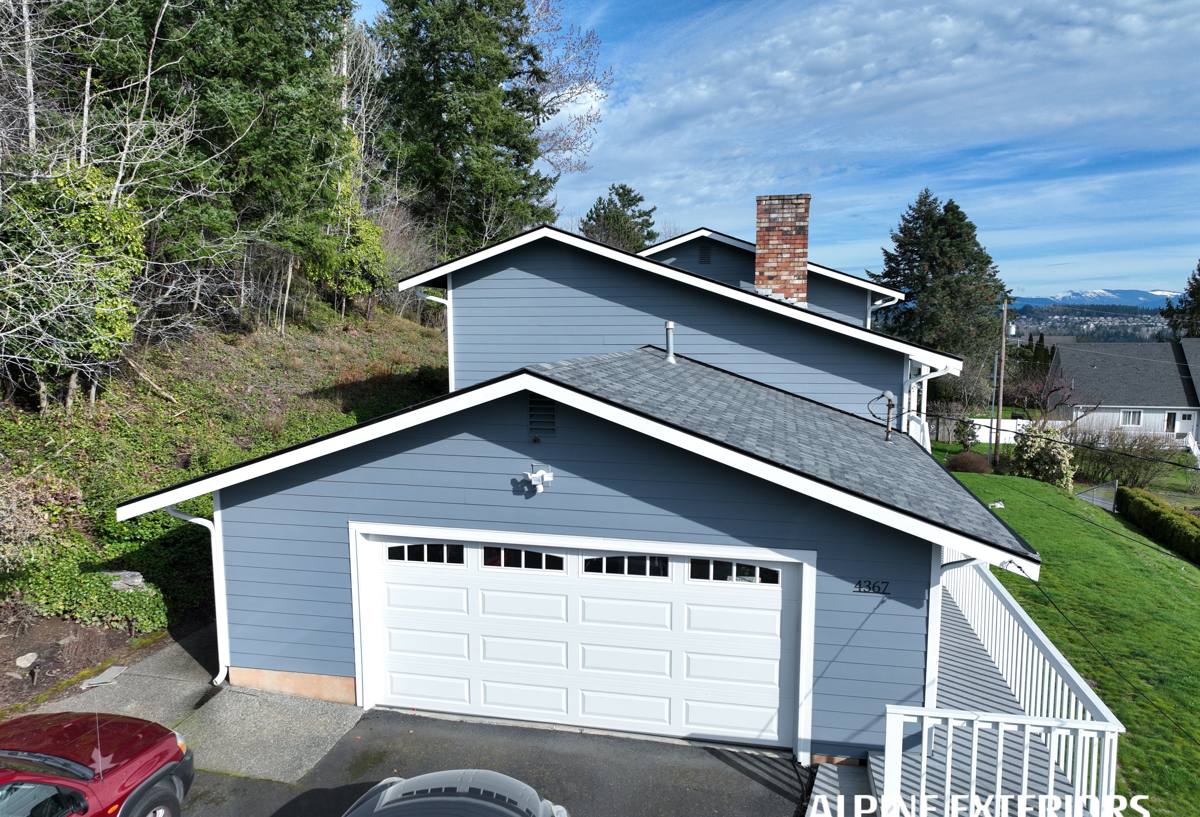
Why Birchwood's Climate Changes the Job
Salt Air and Metal Corrosion
Salt-laden coastal air accelerates corrosion on any exposed metal, but the effect is uneven — it depends heavily on the coating system, the fastener quality, and how cut edges and panel seams are treated during installation. A panel with an inadequate coating, or fasteners that don't match the panel's metallurgy, can start showing white rust or streaking within a few years in a salt-exposed setting. This is a materials and detailing issue, not an inherent flaw in metal roofing — it's why we're selective about which panel and fastener systems we'll put on a home this close to the water.
Driving Rain and Wind-Driven Water
Whatcom County storms don't always drop rain straight down. Wind pushes it sideways and up under laps, ridges, and flashing details that would be fine in a calmer climate. Every seam, valley, and penetration on a Birchwood roof has to be built assuming water will find its way to it from an angle, not just from above.
Moss and Organic Growth
The long damp season here means moss, lichen, and algae get a real foothold on any roof surface that holds moisture or debris. Moss on shingles works into the material and lifts tabs over time. On a properly installed metal roof, moss has a much harder time establishing itself because the surface sheds water fast and there's little organic material for it to root into — but valleys, low-slope sections, and areas shaded by trees still need attention, and a poor installation can create the flat spots and debris traps that give moss an opening.
What a Correct Metal Roof Installation Involves Here
A metal roof is a system, not just a layer of panels. For a Birchwood home, that system needs to account for the conditions above at every stage:
- An underlayment rated for the moisture exposure this area sees, not the minimum code allows
- Fastener and panel metals that are compatible with each other to prevent galvanic corrosion
- Closed or properly vented ridge details that keep wind-driven rain from working uphill
- Valley and flashing work sized generously, since this is where the majority of coastal roof leaks originate
- Attention to any area where moss, needles, or debris from nearby trees could collect and hold moisture
- Ventilation that matches the home's attic setup, so condensation doesn't undermine the roof from underneath
Skipping any one of these doesn't necessarily show up as a problem in year one. It shows up in year five or eight, as a slow leak, a corroding fastener line, or a section of panel that's held moisture long enough to start staining. Metal roofing has a long service life specifically because it tolerates this climate well when it's detailed correctly — the returns on doing it right are much larger here than in a milder climate.
Choosing the Right Metal Roofing System for This Area
Not every metal roofing product is the right fit for a home exposed to salt air and heavy rain. We evaluate panel profile, coating type, and fastening method against the specific exposure of the home — a Birchwood home closer to open water or persistent wind needs a more conservative specification than one tucked behind trees on the inland side of the neighborhood.
| Consideration | Why It Matters in Birchwood |
|---|---|
| Coating system | Determines resistance to salt-driven corrosion over decades, not just years |
| Panel profile (standing seam vs. exposed fastener) | Standing seam sheds wind-driven rain better and has fewer long-term fastener failure points |
| Fastener material | Must be matched to the panel metal to avoid galvanic corrosion in a salt-air environment |
| Slope and valley design | Low-slope or complex-valley roofs need extra flashing attention to handle driving rain |
| Proximity to trees | Affects moss and debris accumulation, and how often maintenance is needed |
We won't put a lower-grade coating or an incompatible fastener system on a home in this area just because it's a lower up-front cost. The maintenance burden and premature corrosion risk aren't worth the short-term savings, and we'd rather explain that trade-off honestly up front than have a homeowner deal with streaking or fastener failure a few years down the road.
Our Process for a Birchwood Metal Roof
1. On-Site Assessment
We walk the roof and the property, not just the roof deck. Tree cover, wind exposure, drainage paths, and how close the home sits to open water all factor into the recommendation. Two homes a few blocks apart in Birchwood can have meaningfully different exposure.
2. Deck and Structure Check
Before any metal goes down, we check the existing deck for soft spots, prior moisture damage, and whether ventilation is adequate. Installing a new roof over an already-compromised deck just hides the problem instead of fixing it.
3. Underlayment and Flashing First
The underlayment and flashing details go in before panel installation gets attention, because these are the layers doing the real work if wind-driven rain gets past the surface. This is also where a rushed installation cuts corners that don't show up until years later.
4. Panel Installation
Panels go down with fastener spacing and sealant details suited to the wind and rain exposure of this specific site, not a generic spec sheet.
5. Final Walkthrough
We go over every penetration, ridge, and valley with the homeowner before calling the job done, and explain what routine maintenance — if any — makes sense given the home's tree cover and exposure.
Maintenance: What Birchwood Homeowners Should Actually Expect
One of the real advantages of a correctly installed metal roof in this climate is how little ongoing maintenance it needs compared to shingle roofs, which need regular moss treatment and tab repair in this environment. That said, "low maintenance" doesn't mean "no maintenance."
- Clear debris from valleys and gutter lines once or twice a year, more often under heavy tree cover
- Check for any moss or organic buildup in shaded, low-slope sections
- Have flashing and penetrations visually inspected every few years, especially after major windstorms
- Watch for any streaking or discoloration near fasteners, which can be an early sign of coating wear
Why Local Experience with Birchwood Matters
A metal roofing crew that hasn't worked in salt-exposed, high-rainfall neighborhoods will often default to a generic installation approach — one built for a drier or more sheltered climate. That's how you end up with premature fastener corrosion, moss accumulation in poorly detailed valleys, or leaks at flashing points that were adequate for a different environment but not this one. We work throughout Whatcom County and understand how exposure varies block to block in a neighborhood like Birchwood — what a home near open water needs versus one set back under tree cover. That local knowledge shapes the material specification and the installation details before a single panel goes on the roof.
What This Means for Your Home
If you're weighing a metal roof for a Birchwood property, the honest answer is that it's one of the better long-term choices for this climate — as long as the coating, fasteners, and flashing details are specified for salt air and driving rain, not a generic installation. We're happy to walk your roof, talk through the exposure specific to your home, and give you a straightforward assessment of what it would take to do the job right.
If you'd like a free, no-pressure estimate for metal roofing on your Birchwood home, fill out the form below and we'll take a look.