 Whatcom County
 Why Blaine's Climate Is Hard on a Roof
Blaine sits right at the edge of the Salish Sea, which means homes here deal with a combination of weather stress that inland Whatcom County properties don't see as intensely. Salt-laden air moves off the water and settles on every exposed surface, including the roof. Add in wind-driven rain that comes in sideways during winter storms, and a roofing system that's merely "good enough" for a drier climate starts showing problems fast — usually corrosion at fasteners, lifted seams, or water finding its way under laps that were never meant to take rain from an angle.
Then there's moss. Whatcom County's mild, wet winters and shaded lots (tree cover is common on Blaine properties near the water and along the county's forested edges) create a long moss season that can run eight months or more. Moss doesn't just look bad — it holds moisture against roofing material, works into seams, and accelerates wear on anything that isn't built to shed water quickly and dry out between rains.
Metal roofing, installed correctly, handles all three of these stressors better than most alternatives — but "installed correctly" is doing a lot of work in that sentence. The material matters less than the details: fastener choice, panel overlap, flashing at every penetration, and how the system handles the transition from a dry day to a driving rain in a matter of hours.
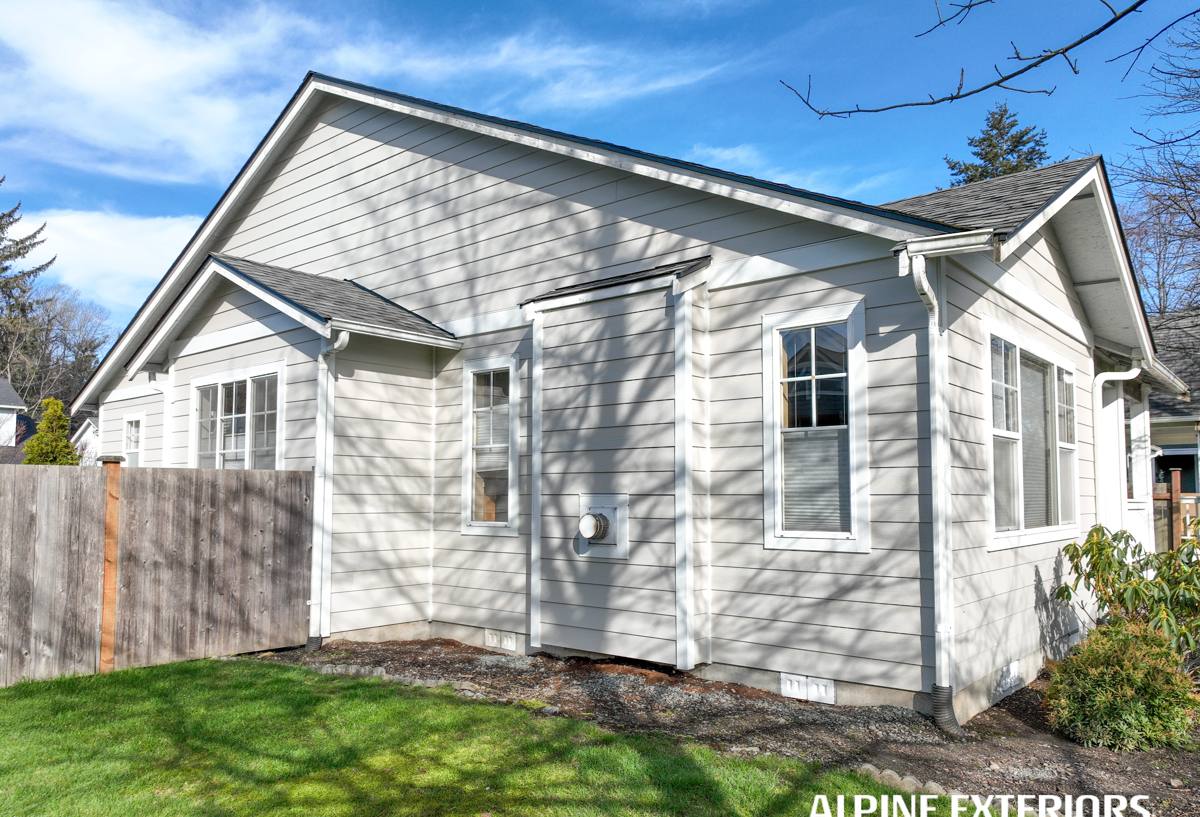
What "Correct" Actually Means on a Blaine Roof
A lot of roofing problems we get called out to fix in this area aren't failures of metal roofing as a product — they're failures of installation choices that didn't account for local conditions. A correct metal roof install in Blaine accounts for the following:
Fastener and Flashing Material
Salt air corrodes lower-grade fasteners and flashing over time, even ones rated for general exterior use. We match fastener and flashing material to the panel system and the site's exposure level, with extra attention on roofs that face open water or prevailing wind. Mixing incompatible metals (galvanic corrosion) is a real issue near saltwater and something we account for at the design stage, not after the fact.
Panel Seams and Overlap
Driving rain doesn't behave like a light shower — it can push water uphill under a seam that would be perfectly fine in calmer weather. Panel overlap, seam type, and slope all need to work together. On lower-slope sections or dormers, we use seam configurations built for wind-driven rain, not just standard exposure.
Underlayment as a Backup System
No roof covering is the only line of defense. A synthetic or self-adhered underlayment underneath the metal gives the roof a second barrier if wind ever forces water past a seam or around a penetration — which matters more in a coastal-influenced climate than in drier parts of the state.
Ventilation
Trapped moisture under a metal roof, especially in a shaded, moss-prone area, leads to condensation issues and premature deck rot. Proper intake and exhaust ventilation keeps the attic or roof assembly dry from the inside, which matters as much as keeping rain out from the outside.
Metal Panel Options for This Area
Not every metal roofing system makes sense for every Blaine property. Slope, budget, and how exposed the roof is to wind and salt air all factor into which system we'd recommend.
| Panel Type | Best For | Trade-Offs |
|---|---|---|
| Standing seam | Homes with direct water exposure, steeper slopes, long-term low-maintenance goals | Higher upfront cost; requires a crew experienced with concealed fasteners |
| Exposed-fastener panels (screw-down) | Outbuildings, garages, budget-conscious re-roofs on simpler rooflines | Fasteners need periodic inspection and eventual replacement as gaskets age |
| Stone-coated steel | Homeowners who want a shingle-like appearance with metal's durability | More installation steps; coating can be damaged by careless foot traffic |
| Aluminum systems | Properties with the highest salt-air exposure, closest to the water | Softer material, more careful handling required during install |
For most Blaine homes with typical residential rooflines, standing seam is our default recommendation because the concealed fastener design removes the long-term weak point (exposed screws) that salt air and freeze-thaw cycles work on hardest. That said, it's not automatically the right call for every roof shape or budget, and we'll tell you honestly if a screw-down system is the more sensible choice for a given structure.
Our Process for a Blaine Metal Roof
- On-site assessment — we look at slope, existing decking condition, ventilation, and how exposed the roof is to wind and water off the Salish Sea.
- Tear-off and deck inspection — old roofing comes off and we check the deck for rot or moisture damage before anything new goes down. This step gets skipped by crews trying to move fast, and it's where hidden problems get caught.
- Underlayment installation — synthetic or self-adhered underlayment goes down as the backup water barrier, with extra attention at valleys, eaves, and any low-slope transitions.
- Flashing at every penetration — vents, chimneys, skylights, and wall transitions all get properly formed and sealed flashing, matched to the panel system.
- Panel installation — panels go on with fastening and seam methods appropriate to the panel type and the roof's wind/rain exposure.
- Ventilation check — intake and exhaust venting is verified or added so the roof assembly can dry properly from underneath.
- Final walkthrough — we go over the finished roof with you, including what routine maintenance (if any) the system needs going forward.
Moss and Salt Air: Ongoing Maintenance
Metal roofing needs less maintenance than most other roofing materials, but "less" isn't "none," especially in a climate like Whatcom County's. A few things we recommend to Blaine homeowners:
- Keep overhanging branches trimmed back — shade and falling debris are the biggest contributors to moss growth on any roof surface.
- Have gutters and downspouts checked seasonally so water isn't backing up against roof edges or fascia.
- Rinse off accumulated debris or moss growth periodically rather than letting organic matter sit and hold moisture against the panels.
- Have fasteners and flashing inspected every few years on screw-down systems, since gaskets and coatings wear over time, especially with salt air exposure.
- Avoid pressure washing directly against seams or fastener heads — it can force water where it isn't supposed to go.
What Drives the Cost
Metal roofing costs more upfront than asphalt shingles, but the gap closes over the life of the roof given how much longer a correctly installed metal system lasts, particularly in a wet, salt-air climate that's harder on shorter-lived materials. The main variables that move the price on a Blaine job:
| Factor | Why It Matters |
|---|---|
| Panel type | Standing seam costs more than exposed-fastener panels due to labor and material |
| Roof complexity | Valleys, dormers, and multiple roof planes mean more flashing work and cut panels |
| Deck condition | Rot or damage found during tear-off adds repair work before new roofing goes on |
| Material grade | Aluminum and higher-grade coatings cost more but hold up better against salt air |
| Accessibility | Steep pitches or difficult site access affect labor time and safety equipment needs |
We give straightforward, itemized estimates so you can see what's driving the number, rather than a single lump figure that leaves you guessing.
Signs Your Blaine Roof Needs Attention
- Rust streaking or discoloration around fasteners or panel edges
- Moss buildup that's been sitting for more than one season without being addressed
- Lifted or separated seams, especially on lower-slope sections
- Water stains on interior ceilings after wind-driven rain events
- Visible daylight or gaps around flashing at chimneys, vents, or skylights
- A roof over 20-25 years old that's never had a full inspection
None of these automatically mean a full replacement is needed — some are simple repairs. But catching them early, before wind-driven rain finds its way past a small gap, keeps a minor fix from turning into deck damage or interior repairs.
Why Local Experience Matters for This Job
Metal roofing installation isn't uniform across regions — a crew used to installing in a dry inland climate will make different (and sometimes wrong) assumptions about flashing detail, fastener material, and underlayment when they show up in a coastal Whatcom County town. Working in Blaine regularly means we've seen how salt air actually behaves on different metal finishes over years, not just on paper, and we adjust our material and installation choices accordingly rather than applying a one-size-fits-all approach borrowed from a different climate.
It also means we understand the practical side of the job locally — typical roof styles in the area, how weather windows work for scheduling a tear-off without leaving a home exposed, and what permitting looks like for this part of the county.
Get a Free, No-Pressure Estimate
If you're weighing a metal roof for a Blaine property — whether it's a full replacement, a re-roof over an aging system, or you just want an honest read on what your current roof needs — we're happy to take a look and walk you through the options in plain terms. Use the form below to request a free estimate, no pressure and no obligation.