 Whatcom County
 Why Blaine Roofs Wear Out Differently Than Roofs Inland
Blaine sits right where the Salish Sea meets Whatcom County's northern border, and that location shapes everything about how a roof ages here. Homes just a few miles inland in Lynden or Bellingham don't deal with the same combination of salt-laden air, near-constant winter rain, and heavy shade-driven moss growth that Blaine roofs face year after year. A roof that would last two decades in a drier, inland climate can show real trouble in half that time here if it wasn't installed with this specific environment in mind.
Salt Air and Fastener Corrosion
Airborne salt from the bay doesn't just affect siding and window frames — it works on exposed metal roofing components too: nail heads, flashing seams, vent boots, and any fastener that isn't rated for coastal exposure. Over time, standard galvanized fasteners can start to rust and weep, staining shingles and eventually loosening the very connections holding the roof deck together. This is a maintenance and material-selection issue, not a reason to avoid metal or steel components altogether — it just means the hardware has to be chosen correctly for a coastal address.
Moss, Shade, and Moisture Retention
Whatcom County's long, wet stretch from fall through spring gives moss every opportunity it needs to establish itself, especially on north-facing slopes and roofs shaded by mature trees. Moss holds moisture directly against the roofing material far longer than open air ever would, which accelerates granule loss on asphalt shingles and can trap rot-causing dampness against wood decking. A roof designed with proper airflow and the right surface treatment handles this far better than one installed without Whatcom County's moss season in mind.
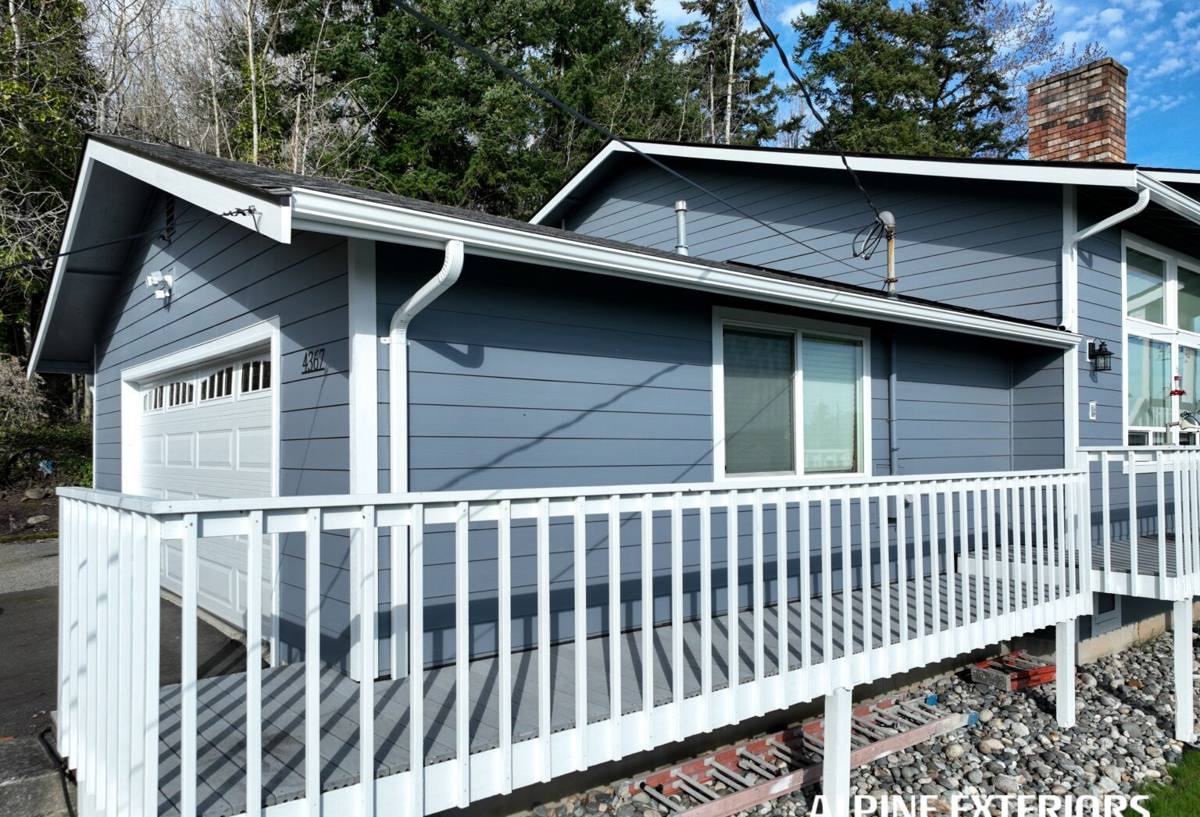
Signs a Blaine Home Needs Full Replacement, Not Another Repair
Not every roofing problem calls for a full tear-off. But there's a point where patching becomes a waste of money, and homeowners in Blaine often reach that point sooner than they expect because of how hard the coastal climate is on aging materials. Here's what tells us a roof has reached the end of its useful life rather than needing another spot repair:
- Shingles that are cupping, curling at the edges, or losing granules in visible patches
- Moss or dark algae streaking that returns within months of cleaning, even after treatment
- Soft or spongy spots underfoot when walking the roof, suggesting deck damage beneath
- Daylight visible through the attic roof boards, or damp insulation after a storm
- Flashing around chimneys, skylights, or vent pipes that's separated, rusted, or repeatedly re-caulked
- A roof that's already 20+ years old and has had more than one round of repairs in recent years
- Rising energy bills tied to poor attic ventilation rather than any other obvious cause
If two or more of these apply, a proper inspection is worth doing before winter's driving rain finds every weak point for you.
What a Correct Roof Installation Actually Involves
A new roof is only as good as what happens underneath the shingles, and this is where corners get cut on rushed jobs. For a Blaine home, we treat these steps as non-negotiable:
Full Tear-Off and Deck Inspection
We remove the old roofing down to the deck rather than layering over it. This is the only way to find rot, soft sheathing, or water damage that's been hiding under the old shingles — problems that are common on older Whatcom County homes where moss and moisture have had years to work on the deck unnoticed. Any damaged sheathing gets replaced before anything new goes down.
Underlayment and Water Barrier Details
Given how much driving rain Blaine gets off the water, we don't treat underlayment as an afterthought. Self-adhering ice-and-water barrier goes in at eaves, valleys, and around every penetration — the spots where wind-driven rain is most likely to find a way in. A quality synthetic underlayment covers the rest of the deck as a second line of defense beneath the shingles or metal panels.
Ventilation That Actually Works
Balanced intake and exhaust ventilation keeps the attic space closer to outdoor temperature and humidity, which does two things: it reduces the condensation that feeds rot and mold, and it slows the freeze-thaw and heat cycling that shortens shingle life. On a lot of older Blaine homes we open up, ventilation was undersized or blocked entirely — a fix that pays for itself over the life of the roof.
Flashing, Not Just Caulk
Caulk fails. Properly formed and layered metal flashing at valleys, chimneys, skylights, and wall intersections is what actually keeps water out over the long run, especially with the wind-driven rain this area sees. We form and install flashing as a permanent water-shedding system, using sealant only to finish the details, never as the primary defense.
Choosing the Right Roofing Material for Whatcom County's Coastal Climate
There's no single "best" roofing material for every home — the right choice depends on your budget, your roof's exposure to shade and wind, and how much long-term maintenance you're willing to take on. Here's how the common options actually perform in a salt-air, high-moss environment like Blaine:
| Material | Typical Lifespan Here | Moss & Moisture Behavior | Coastal/Salt-Air Notes |
|---|---|---|---|
| Architectural asphalt shingle | 20–30 years | Good with proper ventilation and periodic cleaning; algae-resistant granules help slow staining | Performs well; use corrosion-resistant fasteners and flashing near the coast |
| Standing-seam metal | 40–50+ years | Sheds moss and moisture readily due to steep, smooth surface; minimal buildup | Choose coated, coastal-rated panels and fasteners to manage salt exposure long-term |
| Cedar shake | 20–30 years with upkeep | Attractive but holds moisture longer in shaded, damp spots; needs regular treatment to resist rot | Higher maintenance burden in this climate; we're upfront that it demands more ongoing care than asphalt or metal |
Our default recommendation for most Blaine homes is a quality architectural asphalt shingle with proper ventilation, or standing-seam metal for homeowners who want to minimize long-term maintenance and are comfortable with the higher upfront cost. We'll walk through the honest trade-offs for your specific roof rather than pushing one product across the board.
Our Installation Process, Start to Finish
- On-site inspection and estimate: We assess the current roof, deck condition, ventilation, and any problem areas, then give you a written estimate with no pressure to sign on the spot.
- Material selection: We go over shingle, metal, or other options based on your budget, the roof's exposure, and how much upkeep you want to take on.
- Scheduling around the weather: Given how much rain Whatcom County gets, we plan tear-off and dry-in carefully so your home isn't left exposed overnight.
- Tear-off and deck repair: Old roofing comes off, the deck gets inspected, and any damaged sheathing is replaced before we move forward.
- Underlayment, flashing, and ventilation installation: The water-management system goes in first — this is the part of the job that determines how the roof performs in year 10, not just year one.
- Final roofing material installation: Shingles, panels, or shakes go on per manufacturer specification, keeping warranty coverage intact.
- Cleanup and final walkthrough: We clear debris and nails from the property and walk the finished roof with you before calling the job complete.
Why a Crew That Already Works Blaine Matters
Roofing crews that mostly work drier, inland areas sometimes treat coastal jobs as standard installs with no adjustments. A crew that regularly works Blaine and the surrounding Whatcom County coastline already knows to spec corrosion-resistant fasteners as standard, to size ventilation for a genuinely wet climate rather than a mild one, and to recognize moss damage patterns on sight rather than guessing. That familiarity shows up in fewer callbacks and a roof that's actually built for the conditions it has to survive, not just the conditions on a spec sheet.
What Affects the Cost of a New Roof in Blaine
Every roof is priced individually, but the same handful of factors drive most of the variation we see on Whatcom County homes:
| Cost Factor | Why It Matters |
|---|---|
| Roof size and pitch | More square footage and steeper slopes mean more material and labor time, plus added safety measures on steep sections |
| Number of existing layers | Tear-off of multiple old layers takes longer and generates more disposal cost than a single-layer removal |
| Deck condition | Rotted or soft sheathing found during tear-off requires replacement before new roofing can go down |
| Material choice | Asphalt, metal, and cedar carry very different material and installation costs, as reflected in the comparison above |
| Ventilation upgrades | Adding or correcting intake/exhaust venting is a smart long-term investment but adds to the initial project cost |
| Roof complexity | Valleys, dormers, chimneys, and skylights all add flashing work and labor time |
Rather than quoting a broad number that won't reflect your actual roof, we walk the property and give you a written estimate based on what we actually find.
Caring for a New Roof Through Whatcom County's Wet Season
A properly installed roof still benefits from basic upkeep, especially in a climate this wet. Keep gutters clear so water isn't backing up under the shingle edge. Trim back tree limbs that shade the roof and feed moss growth. Schedule a visual check after major windstorms to catch lifted flashing or displaced shingles early, before driving rain finds the opening. None of this is heavy maintenance — it's the kind of periodic attention that lets a well-installed roof reach its full expected lifespan instead of falling short of it.
If your roof is showing its age or you're just planning ahead, we're happy to take a look and give you a straight, no-pressure estimate. Fill out the form below and we'll get back to you with next steps.