 Whatcom County
 Why Roofs Age Faster in Columbia
Columbia sits in the part of Whatcom County where Puget Sound air, near-constant winter rain, and a shaded, moisture-heavy tree canopy all combine against a roof at the same time. None of these factors is unusual on its own for Western Washington. Together, over a decade or two, they shorten the useful life of a roof that was installed without them in mind. A roof replacement done right here isn't just "put new shingles where the old ones were" — it's a set of decisions about materials, flashing, and ventilation that account for what this specific stretch of Whatcom County actually does to a roof deck year after year.
Salt Air and Metal Components
Homes near Bellingham Bay and the broader Whatcom County shoreline sit in a mild but persistent salt-air environment. Salt-laden moisture accelerates corrosion on exposed fasteners, flashing, and any unpainted metal on a roof. It's rarely dramatic — you won't see a roof fail overnight because of it — but over 15-20 years it shows up as rust streaking at nail heads, pitted flashing, and fasteners that back out or lose holding strength faster than the shingle warranty assumes. Material and fastener choice matters more here than it would fifty miles inland.
Driving Rain, Not Just Rain
Whatcom County doesn't just get a lot of rain — a good share of it arrives sideways, pushed by wind off the water. Wind-driven rain finds every weak lap, every under-nailed shingle tab, and every place where flashing was caulked instead of properly integrated. A roof built for a drier climate, or built to a minimum-code standard, can pass ten years of light rain and then leak the first time a real windstorm drives water uphill under a shingle edge.
A Long Moss Season
Between the shade from mature trees common in and around Columbia and the number of damp, low-sun months in the Whatcom County calendar, moss doesn't just appear here — it has months at a stretch to establish itself. Moss holds moisture against the roofing material, lifts shingle edges as it grows, and works into any gap in the surface. A roof that would stay reasonably moss-free in a sunnier, drier climate needs real planning here: exposure, materials, and maintenance all factor in.
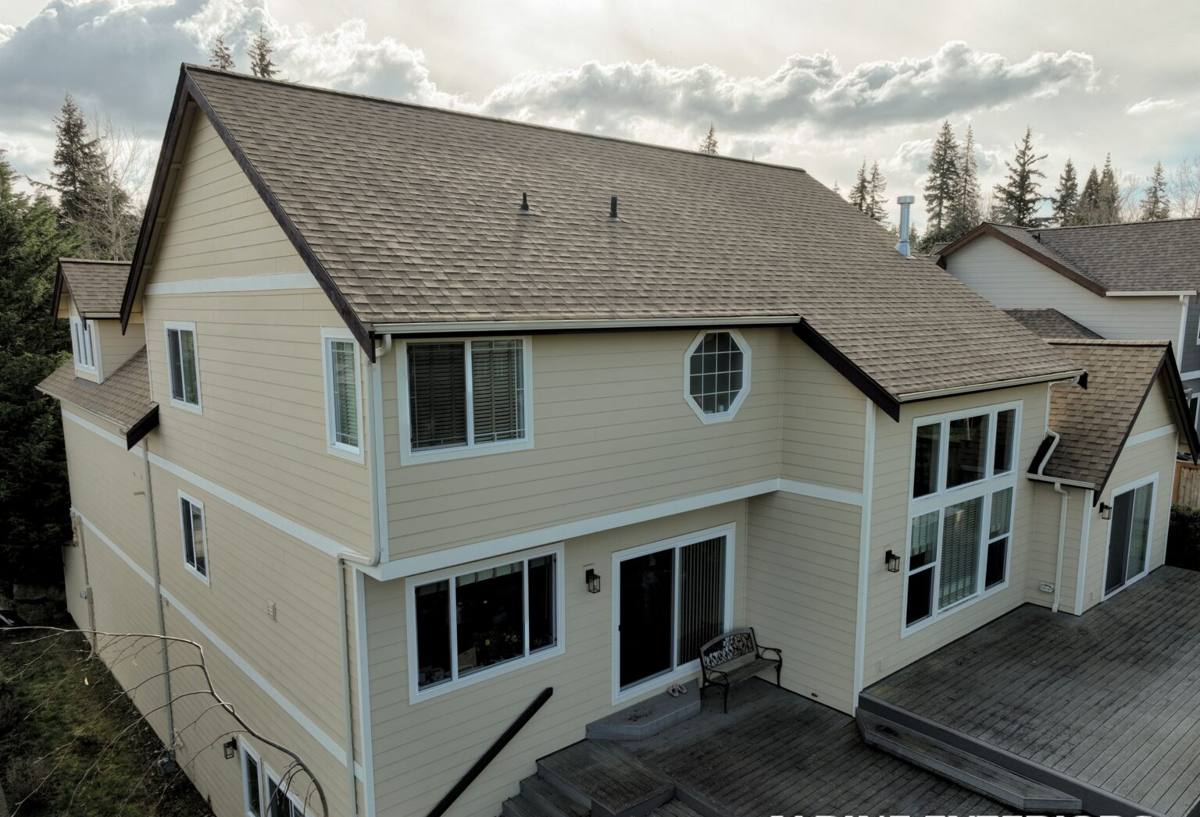
Signs a Roof Needs Replacement, Not Another Repair
Every roof reaches a point where patching a valley or replacing a section of flashing stops making financial sense. In this climate, that point often arrives a little earlier than the shingle's rated lifespan would suggest, because moss, salt air, and wind-driven rain all add wear that a dry-climate warranty schedule doesn't account for. Signs worth taking seriously include:
- Granule loss heavy enough to see bald patches on shingles from the ground, or granules collecting in gutters
- Shingles that are cupping, curling at the edges, or cracking when you look closely
- Moss or algae established across large sections rather than isolated shaded spots
- Daylight visible through the roof deck from inside the attic, or damp insulation after a storm
- Repeated leaks in different spots each winter, rather than one persistent, findable leak
- Flashing around chimneys, skylights, or roof-to-wall transitions that's rusted, lifted, or was clearly caulked as a temporary fix
- A roof approaching or past 20-25 years old for asphalt composition shingles in this climate
One or two of these on their own might mean a repair is enough. Several at once, especially combined with an aging roof, usually means the underlying materials are wearing out faster than the surface damage suggests.
What a Correct Roof Replacement Involves
Full Tear-Off and Deck Inspection
We don't install a new roof over an old one. A full tear-off is the only way to actually see the deck, and in a climate with this much sustained moisture, hidden deck damage is common enough that skipping the inspection isn't worth the shortcut. Soft, delaminated, or water-stained sheathing gets replaced before anything new goes down — building a new roof over a compromised deck just guarantees an early failure.
Underlayment Built for Wind-Driven Rain
Standard felt underlayment is not the right baseline for a roof exposed to Whatcom County's wind and rain pattern. We use synthetic underlayment across the field for its water resistance and tear strength, and self-adhering ice-and-water shield membrane at the vulnerable points — eaves, valleys, and around every penetration — where wind-driven rain is most likely to work its way sideways under the shingle surface.
Flashing That's Actually Integrated
Flashing failure, not shingle failure, is behind most of the leaks we get called out to inspect. Step flashing at wall intersections, proper counterflashing at chimneys, and correctly lapped valley flashing all need to be integrated into the roofing system in the right order — not added afterward and sealed with caulk. Caulk is a maintenance item, not a waterproofing method, and it fails faster than any other part of a roof in this climate.
Ventilation That Matches the Attic
A roof deck that can't breathe traps moisture from below, which shortens the life of both the decking and the new roofing material regardless of how good the shingles are. We check intake at the soffits and exhaust at the ridge or roof vents as part of every replacement, and correct imbalances rather than just replacing what was there — especially on older Columbia-area homes where the original ventilation was undersized by today's standards.
Choosing a Roofing Material for This Climate
There's no single "best" roofing material for every home — the right choice depends on budget, roof pitch, how much shade and moss pressure the roof sees, and how long you plan to own the home. Here's how the common options compare for a Whatcom County property with real salt air and moss exposure:
| Material | Typical Lifespan Here | Moss Resistance | Cost Position |
|---|---|---|---|
| Architectural asphalt shingle | 20-30 years | Moderate — needs periodic cleaning/treatment | Lowest upfront cost |
| 3-tab asphalt shingle | 15-20 years | Lower — thinner profile sheds debris less easily | Lowest of all, shortest life |
| Standing seam metal | 40-50+ years | High — smooth surface, less moss anchoring | Higher upfront, lowest long-term cost |
| Synthetic shake/slate | 30-50 years | Moderate to high depending on profile | Mid-to-high upfront |
We install architectural asphalt shingle roofs most often on Columbia-area homes because they balance cost, appearance, and performance well when installed with the underlayment and flashing details above. For homes with heavy tree cover or owners planning to stay long-term, metal roofing's resistance to moss and its long service life can make the higher upfront cost pencil out. Where we steer clients away from certain products — cedar shake without proper treatment, for example — it's a maintenance and moisture-behavior call: shake demands more upkeep in a wet, mossy climate than most owners want to commit to, not a claim that it can't be installed correctly.
Our Roof Replacement Process
- Inspection and estimate — we walk the roof, check the attic for ventilation and moisture, and give you a written scope and price before any work starts.
- Material selection — we go over the options that fit your budget and your roof's exposure to sun, shade, and moss pressure.
- Scheduling around weather — tear-off and dry-in are timed to Whatcom County's forecast windows so your home isn't exposed to open sky longer than necessary.
- Tear-off and deck repair — old roofing comes off completely, damaged decking is identified and replaced.
- Underlayment, flashing, and ventilation — installed to the standards above, not the code minimum.
- New roofing installation — installed to manufacturer specification so your warranty is actually valid.
- Cleanup and final walkthrough — magnetic sweep for debris, and we walk the finished roof and attic with you before calling the job done.
Moss, Algae, and Keeping a New Roof Looking Right
A new roof in this part of Whatcom County will face the same moss pressure the old one did unless something changes. We can install zinc or copper control strips near the ridge on many roofing systems, which release trace metal ions with the rain and inhibit moss and algae growth down the slope over time — a low-maintenance option worth discussing at the estimate. Beyond that, keeping trees trimmed back from the roofline to reduce shade and debris, and having gutters cleared before the wet season, does more for a roof's long-term appearance and lifespan than any one product.
Why a Local Crew Matters for This Job
Roof replacement is weather-dependent work, and Whatcom County's rain pattern doesn't leave huge blocks of guaranteed dry days. A crew that works this area regularly knows how to sequence tear-off and dry-in to minimize the window your home sits exposed, and knows the difference between a passing shower and a system that means the job should wait. We're also familiar with the moss and salt-air issues specific to homes near Bellingham Bay and the surrounding Whatcom County communities, which means the flashing details, underlayment choices, and ventilation corrections described above aren't guesswork — they're what we do on this kind of roof, in this climate, on a regular basis. Local permitting requirements and inspection expectations are also second nature to a crew that already works in the area, which keeps the project moving instead of stalling on paperwork.
Getting an Honest Estimate
Every roof and every budget is different, and the right answer for a home with heavy moss and tree cover isn't always the right answer for an exposed roof closer to the water. We'd rather walk your roof and give you a straight assessment — repair versus replace, and which materials actually make sense for your situation — than push a one-size answer. If your roof in Columbia is showing wear, or you just want an honest read on how much life is left in it, reach out for a free, no-pressure estimate using the form below.