 Whatcom County
 Why Decks Take a Beating in Sehome
A deck in Sehome doesn't fail the way a deck in a dry climate fails. Out here, the damage is slower and sneakier — it's not one hard freeze or one big storm, it's months of marine air, driving rain that comes in sideways off the water, and a moss season that can run from October clear through May. Add in the shade from mature trees common in this part of Whatcom County, and you've got a deck surface that rarely gets a real chance to dry out between wet spells.
None of that means a deck is doomed. It means decks here need to be built and maintained differently than decks in drier parts of the country, and it means small problems — a soft board, a rusted fastener, a patch of moss at the base of a post — need to get fixed before they become structural ones. That's the gap most deck repair calls in this area are trying to close.
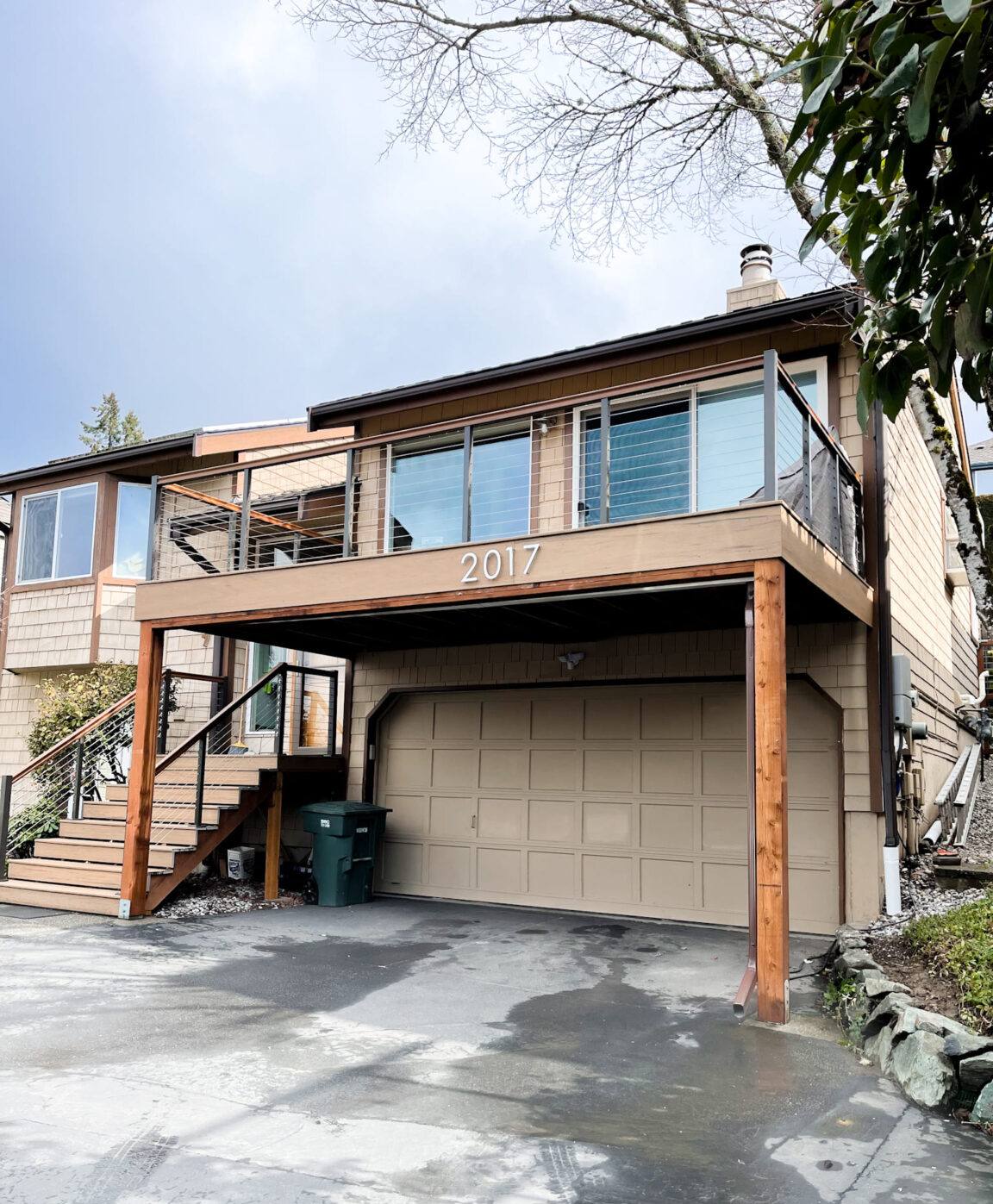
How Local Climate Shows Up as Deck Damage
Salt Air and Metal Fatigue
Homes closer to Bellingham Bay deal with salt-laden air that accelerates corrosion on anything metal — nails, screws, joist hangers, post bases, railing brackets. Corroded fasteners don't just look bad; they lose holding strength, and a deck's structural integrity depends on every one of those connections doing its job. We see this most on older decks built with standard galvanized hardware instead of stainless or heavier-coated fasteners rated for coastal exposure.
Driving Rain and Water Intrusion
Whatcom County rain doesn't always fall straight down. Wind-driven rain gets pushed under railing caps, behind ledger boards, and into any gap where flashing is missing or has failed. Water that gets trapped instead of shedding is the single biggest cause of hidden rot, and it's almost always worse than it looks from the surface.
The Long Moss Season
Moss and algae need moisture, shade, and time — Whatcom County gives them all three for a good chunk of the year. Beyond looking bad, moss holds water against the decking surface and makes boards dangerously slick. Left long enough, it also breaks down wood fibers and finishes faster than plain rain exposure would on its own.
Common Repair Issues We See in This Area
- Soft or spongy decking boards, usually near the edges or wherever water pools instead of draining
- Rot at the ledger board where the deck attaches to the house — often hidden until flashing is pulled back
- Corroded or failing fasteners and hardware, especially on older decks or ones built without coastal-rated hardware
- Loose or wobbly railings and posts from moisture working into post bases over time
- Moss and algae buildup on decking, stairs, and anywhere shade keeps surfaces damp
- Failing or worn-out finishes that no longer shed water the way they did when new
- Undersized or deteriorating footings on older decks that have shifted or settled
What a Correct Deck Repair Actually Involves
A repair that just replaces the boards you can see, without checking what's underneath, is a repair that comes back. We treat every deck repair as two jobs in one: the structure, and the surface.
Structural Assessment First
Before any decking comes off, we check the framing — joists, beams, ledger attachment, and footings — for rot, movement, or fastener failure. This is where the real risk lives on an older deck, and it's the part that's easy to skip if a contractor is just trying to make the top look new.
Flashing and Water Management
If water is getting behind the ledger board or under a railing cap, replacing boards won't fix the underlying problem. Correct flashing details — the kind that actually shed water instead of trapping it — are non-negotiable on any repair we touch, not just new builds.
Hardware Matched to the Environment
Given the salt air and rain exposure in this area, we don't re-use corroded fasteners or replace them with the same grade that failed. Stainless steel or heavy-coated, coastal-rated hardware costs more up front but avoids the same failure showing up again in a few years.
Surface Repair and Finish
Once the structure and hardware are sound, we address the visible damage — replacing rotted or split boards, resetting loose railings, sanding and refinishing where the existing finish is failing, and treating or removing moss growth at the source rather than just scrubbing it off the top.
Repair or Replace? What Actually Drives That Decision
Not every deck problem means a full rebuild, and not every deck is worth patching. The table below covers the factors that actually matter when deciding between the two.
| Factor | Leans Toward Repair | Leans Toward Replacement |
|---|---|---|
| Framing condition | Joists and ledger are solid; damage is isolated | Widespread rot in structural members |
| Age of deck | Under 10-15 years with good original build quality | Older deck nearing the end of its practical life |
| Extent of damage | A handful of boards or a section of railing | Damage spread across most of the deck surface |
| Footings | Stable, code-appropriate footings | Undersized, shifted, or deteriorated footings |
| Hardware | Mostly sound, a few spots need upgrading | Widespread corrosion throughout the structure |
When in doubt, an honest inspection is worth more than a guess — which is exactly why we start every job with one.
Materials: What We Recommend for This Climate
There's no single "right" decking material for every home, but given the rain and moss exposure common in Sehome, we steer homeowners toward products and details that hold up to sustained moisture rather than just looking good on day one.
Wood Decking
Cedar and other naturally rot-resistant woods remain a solid choice when properly finished and maintained, but they do require a real maintenance commitment in this climate — cleaning, sealing, and re-finishing on a schedule, not just when it starts to look tired.
Composite Decking
Composite boards resist rot and moss staining better than wood and need far less upkeep, which is why many homeowners in wetter parts of Whatcom County prefer them. The trade-off is a higher material cost and, on lower-quality products, a plastic look that some homeowners don't love — it's a real trade-off, not a clear win either direction, and we'll walk through it honestly based on your budget and priorities.
Fasteners and Hardware
Whatever the decking material, we treat hardware as the part that determines how long a repair actually lasts. Stainless steel fasteners and coastal-rated structural hardware cost more than standard galvanized, but in a salt-air environment, that's where the money is actually well spent.
Our Process for a Deck Repair
- On-site inspection — we look at the structure, not just the surface, and check flashing, framing, footings, and hardware condition
- Honest diagnosis and written estimate — what's failing, why, and what it will take to fix it correctly, with repair and replacement options laid out if both are reasonable
- Repair work — structural fixes first, then hardware, then decking and railings, then finish
- Water management check — confirming flashing and drainage details are actually shedding water before we call the job done
- Walkthrough — showing you what was found, what was fixed, and what to keep an eye on going forward
Maintenance Checklist for Sehome Homeowners
A deck repair lasts longer when it's paired with a bit of regular upkeep suited to this climate. A few things worth doing on a routine basis:
- Sweep debris and standing water off the deck surface, especially in shaded areas prone to moss
- Check railings and stair posts for looseness once or twice a year
- Inspect the ledger board area where the deck meets the house for signs of water staining
- Re-seal or refinish wood decking on the schedule the product calls for — don't wait until it's visibly failing
- Treat moss and algae early rather than letting it build up over a full wet season
- Keep gutters and downspouts clear so roof runoff isn't draining directly onto the deck
Why Hire a Crew That Already Works in Sehome
Deck problems here aren't generic — they're shaped by this specific combination of salt air, driving rain, and shade-driven moss growth that's typical of Whatcom County. A crew that already works in this area knows what to check first, what hardware actually holds up, and where water tends to sneak in on homes built to this region's older and newer construction standards alike. That's the difference between a repair that solves the problem and one that just covers it up for a season.
If you've got a soft board, a wobbly railing, or a deck that just doesn't feel as solid as it used to, we're happy to take a look. Reach out for a free, no-pressure estimate using the form below — we'll tell you honestly what we find and what it would take to fix it right.