 Whatcom County
 Why Edgemoor Homes Need a Different Approach to Siding
Edgemoor sits close enough to the water that salt air is part of daily life, not an occasional nuisance. Add Whatcom County's driving rain and a moss season that can run half the year, and you have an exterior environment that punishes the wrong siding choice quickly. Paint fails faster near salt spray. Wood-based products absorb moisture and swell. Anything with seams or gaps becomes a foothold for moss and algae within a season or two. We install James Hardie fiber cement siding exclusively, and Edgemoor is one of the clearer examples of why that decision holds up over time.
Fiber cement doesn't rot, doesn't feed mold and moss the way wood-based products do, and it holds paint and factory finish far longer than wood fiber substrates in a salt-air, high-moisture environment. That's not a marketing claim — it's basic material science. Cement, sand, and cellulose fiber don't have the organic sugars that fungus and algae need to get started the way wood-based siding does.
What "Salt Air" Actually Does to Siding Over Time
Airborne salt is corrosive and hygroscopic — it draws moisture in and holds it against a surface. On wood or wood-composite siding, that means the substrate itself stays damp longer after every rain, which accelerates rot at seams, butt joints, and fastener penetrations. On paint film, salt crystals can abrade and degrade the coating faster than inland exposure would. Homes in Edgemoor and similar shoreline-adjacent neighborhoods see this show up first at the lowest courses of siding and around any horizontal trim, where salt-laden moisture collects and dries repeatedly.
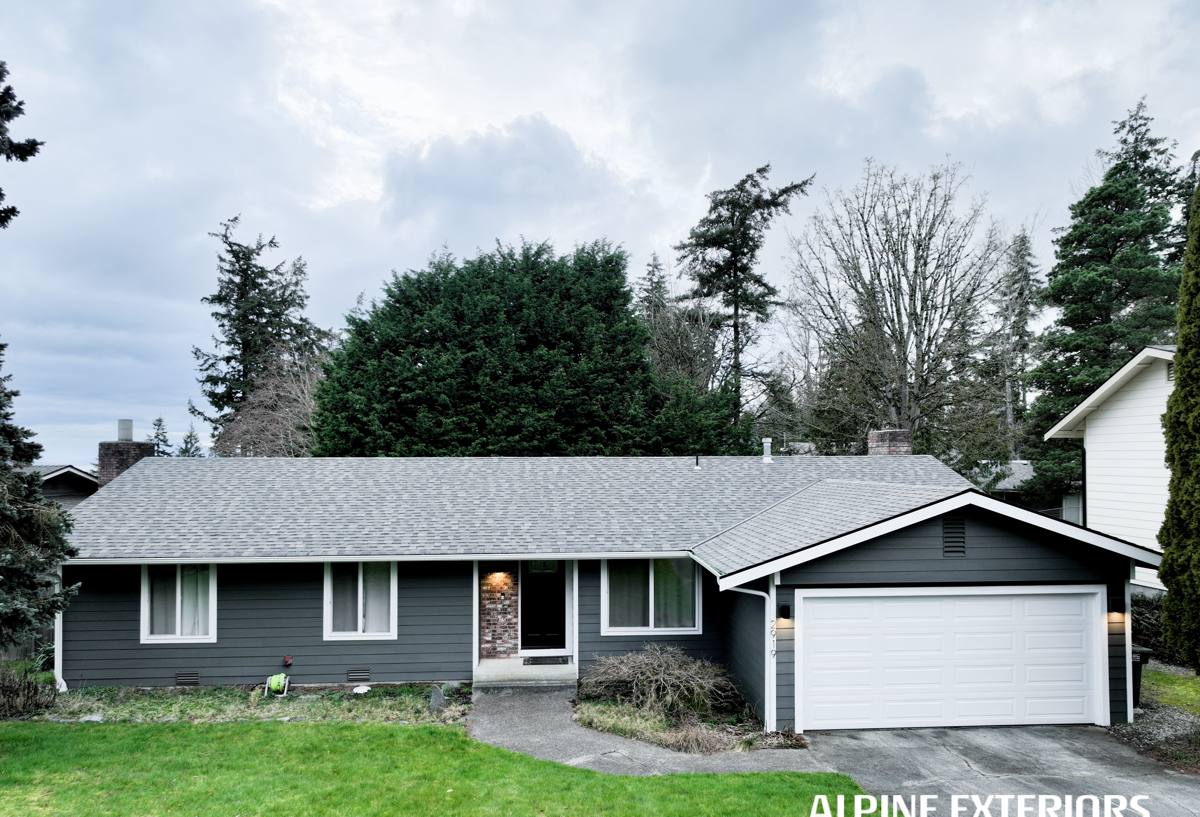
What Correct James Hardie Installation Looks Like Here
James Hardie makes the product line correct for the climate zone; the installer makes it correct for the specific house. Both matter, and skipping either one is where problems start.
Product Selection
James Hardie's HZ10 formulation is engineered for cold, wet, high-humidity climates — which describes western Washington generally and a salt-air neighborhood like Edgemoor specifically. It resists moisture intrusion and freeze-thaw stress better than the HZ5 line built for hot, dry regions. Getting this specification right at the ordering stage isn't optional trivia — it's the difference between siding that performs for decades and siding that's fighting the climate from day one.
Water Management Behind the Siding
Fiber cement is only as good as the drainage plane behind it. On a home exposed to driving, wind-driven rain — which is the normal weather pattern for this part of the county, not an occasional storm — correct installation means:
- A weather-resistive barrier installed shingle-style so every layer drains outward and down
- Rainscreen or furring strips where conditions call for a drainage gap behind the siding, letting incidental moisture escape instead of sitting against the panel
- Properly flashed window and door openings, with head flashing that actually directs water out and away rather than behind the trim
- Kick-out flashing at every roof-to-wall intersection so runoff doesn't dump directly into a siding seam
- Correct fastener placement and caulking at penetrations, following James Hardie's published fastening schedule rather than a generic one
None of this is visible once the job is finished, which is exactly why it has to be done right the first time. A homeowner can't inspect a drainage plane after the siding goes up.
Moss and Algae Resistance
Moss doesn't grow on siding because the material is unhealthy — it grows where organic debris, shade, and standing moisture combine. Correct installation reduces the conditions moss needs: proper flashing so water doesn't pool, adequate clearance from grade and landscaping, and a factory finish (ColorPlus) that doesn't give algae the same foothold a field-applied paint job can over time. It won't make a home moss-proof under a dense tree canopy, but it removes the siding itself as part of the problem.
James Hardie Product Lines Suited to This Area
| Product | Best Use | Why It Fits Edgemoor |
|---|---|---|
| HardiePlank lap siding | Most home exteriors | Classic profile, HZ10 formulation resists cold, wet, salt-influenced climates |
| HardiePanel vertical siding | Accent walls, gables, modern facades | Clean lines with the same moisture and rot resistance as lap siding |
| HardieTrim boards | Corners, window and door trim, fascia | Won't absorb moisture at the joints where water collects most |
| HardieShingle siding | Accent gables, Craftsman-style detailing | Textured look without the maintenance burden of real cedar shingle in a wet climate |
Why We Don't Offer Alternatives to Edgemoor Homeowners
We get asked about vinyl, LP SmartSide, and cedar fairly often, and it's a fair question in a market where those products are common. Here's the honest version of why we standardized on James Hardie instead:
- Vinyl is inexpensive and low-maintenance in mild climates, but it expands and contracts more than fiber cement, can warp under sustained sun and temperature swings, and doesn't hold up as well against wind-driven debris in exposed coastal locations.
- LP SmartSide is a wood-strand product with engineered resistance to moisture, but it's still wood-based at its core — it depends on an intact factory coating and careful field sealing at every cut edge to keep water out. In a salt-air, high-rain environment, that margin for error is thinner than we're willing to install to.
- Cedar looks excellent and has real fans for good reason, but it requires ongoing refinishing, is genuinely vulnerable to moisture and pest damage without diligent upkeep, and that maintenance schedule is harder to keep up with in a climate that stays wet for much of the year.
None of these are bad products in every context. They're products that ask a homeowner to manage more risk — more maintenance, more sensitivity to installation quality, more exposure to moisture-driven failure — than we think makes sense for this specific climate. James Hardie's fiber cement composition, factory-applied ColorPlus finish, and climate-specific HZ engineering line up better with what Edgemoor's weather actually does to a house year after year.
Our Process for an Edgemoor Job
- On-site assessment — we look at existing siding condition, moisture damage, trim condition, and drainage issues specific to the lot (grade, shade, roof-to-wall intersections)
- Product and color selection — HZ10 assemblies, profile choice, and ColorPlus color matched to the home and any HOA or neighborhood expectations
- Tear-off and substrate check — removing old siding reveals sheathing condition; any rot or water damage gets addressed before new siding goes on, not covered up
- Water management installation — weather barrier, flashing, and rainscreen detailing done to spec before a single piece of Hardie siding is hung
- Siding installation — following James Hardie's fastening and clearance specifications exactly, including gaps at grade and hardscape
- Final inspection and walkthrough — checking caulking, trim, and finish quality before we call the job done
Signs an Edgemoor Home May Need Siding Attention Now
- Visible moss or algae staining that returns shortly after cleaning
- Soft spots, bubbling, or discoloration near the base of exterior walls
- Cracked or peeling paint that reappears within a year or two of repainting
- Visible gaps or warping at seams and corner boards
- Water stains on interior walls near exterior corners after heavy rain
Warranty and Longevity
James Hardie backs its siding with a non-prorated, transferable limited warranty, and ColorPlus finishes carry their own separate finish warranty — both meaningful protections when the product is installed to manufacturer specification. That last part matters: warranty coverage assumes correct installation, which is why we install strictly to James Hardie's published requirements rather than shortcuts that might look identical on installation day but change how the warranty holds up later.
For a home in a salt-air, high-rainfall setting like Edgemoor, that combination of a non-combustible, moisture-resistant material and a warranty that survives a change of ownership is a meaningfully different proposition than most alternative sidings offer.
Cost Factors for Edgemoor Projects
| Factor | Why It Affects Price |
|---|---|
| Tear-off and substrate repair | Older siding removal and any rot repair found underneath adds labor before new siding goes up |
| Home size and complexity | More corners, gables, and trim detail mean more cutting, fitting, and flashing work |
| Product line and profile | HZ10 lap siding, panel siding, and shingle-style accents carry different material costs |
| Water management upgrades | Adding or upgrading rainscreen and flashing where the existing assembly is inadequate |
| Color and trim package | ColorPlus finish options and trim board scope affect final material selection |
We don't publish fixed prices because every Edgemoor home is a different scope once we've assessed substrate condition and drainage needs — but we can give a straightforward, honest estimate after an on-site look.
If you're weighing a siding project in Edgemoor and want a straight answer about what your home actually needs, we're glad to take a look. The estimate is free, there's no pressure, and you'll get a clear explanation of what we find — good or bad — before any work is scheduled.