 Whatcom County
 Edgemoor's Siding Takes a Different Kind of Beating
Edgemoor sits close to the water, tucked into tree cover along the Bellingham Bay shoreline, and that combination is hard on exterior siding in ways that inland Whatcom County neighborhoods don't deal with as often. Salt-laden air drifts in off the bay and settles on exterior walls, especially on the sides of a house that face the water or catch the prevailing wind. Add driving rain that comes in sideways during fall and winter storms, plus a long, damp moss season that can run from October well into spring, and you have three separate stresses working on the same wall assembly at the same time.
None of that means Edgemoor homes need constant repair. It means the repairs they do need have specific causes, and fixing them right requires understanding those causes rather than just covering up the visible damage. That's the difference between a patch job and a repair that actually holds up through the next few Whatcom County winters.
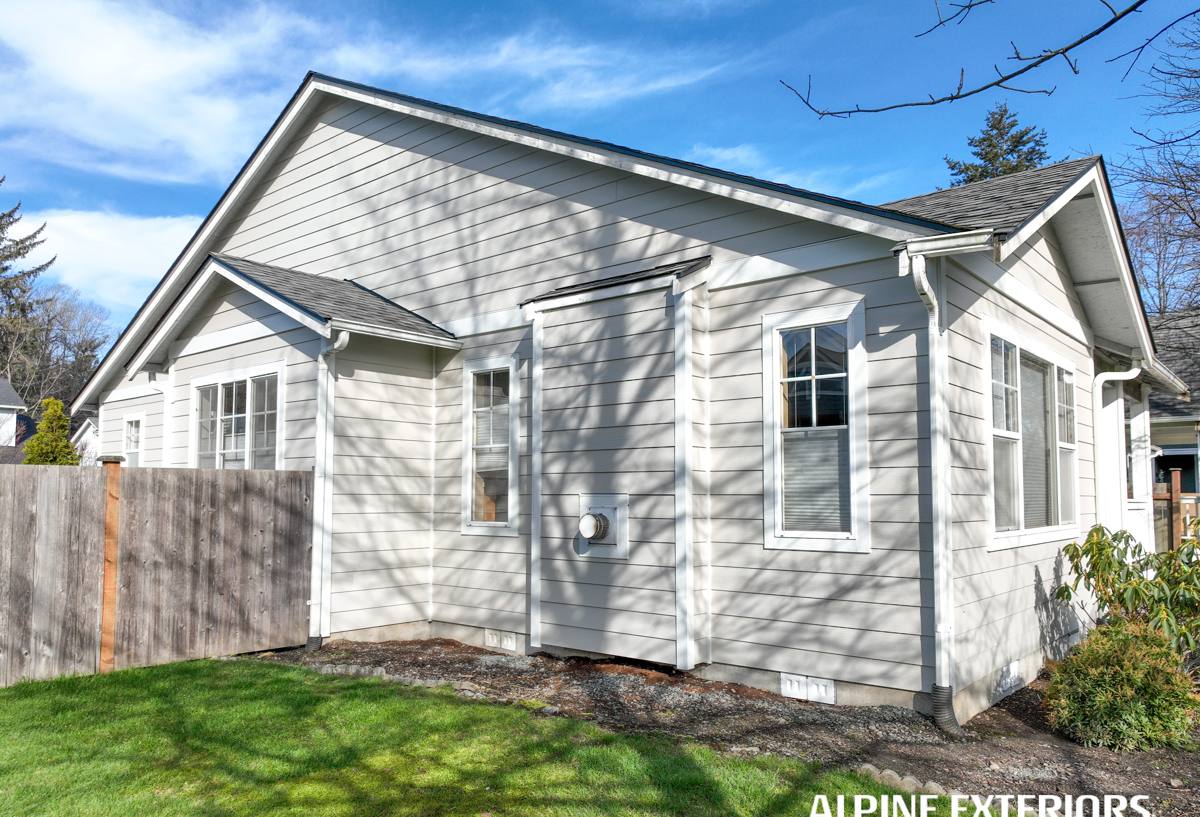
What Correct Siding Repair Actually Involves
A lot of siding repair in this region gets done backwards: someone sees a stained, cracked, or soft-looking section of siding, replaces that one board or panel, caulks the edges, and calls it done. If the underlying cause — trapped moisture, a failed flashing detail, a gap in the house wrap — isn't addressed, the same spot fails again within a season or two, sometimes worse than before.
Signs You Need Repair, Not Just a Repaint
- Soft or spongy spots when you press on the siding, especially near the bottom edge or around window trim
- Dark staining that keeps coming back through paint or returns within weeks of cleaning
- Visible gaps, cracks, or separation at seams, corners, and butt joints
- Persistent moss or algae growth concentrated in one area rather than spread evenly across a wall
- Peeling or bubbling paint that isn't explained by age alone
- A musty smell near an exterior wall on the inside of the house
The Difference Between a Patch and a Proper Repair
A proper repair starts by pulling back enough of the surrounding siding to see what's happening underneath — the house wrap, the flashing at windows and trim, the sheathing itself. If water has been getting behind the siding, patching over the surface just traps it there. Correct repair means drying out or replacing any compromised sheathing, restoring the drainage plane so water can get back out, and only then closing it up with new siding that's properly flashed and fastened.
Common Failure Points We See on Whatcom County Homes Near the Water
Every region has its own typical siding failure pattern, and Edgemoor's is fairly consistent because the causes are consistent: salt air, shade, and moisture that doesn't dry out quickly.
- North- and west-facing walls that stay shaded by mature trees dry out slower after rain, which extends the window for moss and mildew to take hold
- Corrosion at fasteners and trim connectors exposed to salt-carrying air, which can loosen siding attachment points over time
- Caulk failure at butt joints and trim where seasonal expansion and contraction, combined with damp conditions, breaks the seal faster than in a drier inland climate
- Rot at the bottom courses of siding near grade, decking, or planting beds where splashback and moisture sit against the material
- Moss buildup in horizontal laps that holds water against the siding surface long after a storm has passed
How Different Siding Materials Hold Up Under These Conditions
Not every siding material responds to Edgemoor's climate the same way, and that matters when you're deciding whether to repair, patch, or eventually replace a section. Here's a general comparison of how common siding materials tend to behave under sustained salt air, rain, and moss exposure:
| Material | Moisture Behavior | Typical Repair Pattern |
|---|---|---|
| Untreated or primed wood/spruce | Absorbs moisture, swells and checks, feeds moss and mildew growth | Frequent spot repairs, repainting every few years |
| Vinyl siding | Doesn't rot, but can warp, fade, and crack in temperature swings; seams allow moisture behind the panel | Panel replacement rather than true repair; color mismatch on replacement pieces |
| LP SmartSide (engineered wood) | Resists some moisture better than raw wood but is still an engineered wood product sensitive to prolonged edge or end-grain exposure | Repairs concentrated at joints, edges, and areas with poor drainage detailing |
| James Hardie fiber cement | Non-combustible, dimensionally stable, engineered moisture resistance for this climate zone | Repairs are typically isolated to installation or impact damage rather than material breakdown |
This is exactly why we standardized on James Hardie for every job, including repair work: it's the material that best matches what Whatcom County's coastal microclimates actually demand.
Why We Repair — and Rebuild — With James Hardie Only
When we're called to repair siding in Edgemoor, we don't carry vinyl, LP SmartSide, Cemplank, Allura, primed spruce, or cedar on the truck. That's a deliberate standard, not a lack of options. Fiber cement from James Hardie is non-combustible, holds its shape and paint line better through wet-dry cycles, and its ColorPlus factory finish is baked on rather than field-applied, which matters a great deal in a climate where field-painted surfaces are fighting moss, mildew, and salt residue from day one.
James Hardie also builds its HZ product lines specifically engineered for different climate exposures, including the wetter, moisture-heavy conditions common to the Pacific Northwest. Combined with a strong transferable warranty, that engineering is a big part of why repairs on Hardie siding tend to stay isolated and predictable, rather than turning into the kind of recurring, spreading damage we see on some of the softer or more moisture-sensitive materials still on older Edgemoor homes.
Matching Existing Hardie Siding vs. Replacing a Full Wall Section
If a home already has James Hardie siding, a well-executed repair can match the existing plank profile, reveal, and ColorPlus color closely enough that the repaired section isn't obvious. If the damage is on an older wood, vinyl, or engineered-wood home, we'll walk you through both options honestly: a like-for-like patch to buy time, or converting that section — sometimes just one wall, sometimes the whole exterior — to Hardie so future repairs are less frequent and less costly.
Our Repair Process
The steps below are the same whether we're fixing a single damaged section or addressing repair needs across an entire elevation.
- Inspection: We assess the visible damage and check surrounding areas — corners, trim, penetrations — for related issues that haven't shown symptoms yet.
- Moisture check: Where rot or staining suggests water intrusion, we check moisture levels in the siding and sheathing before deciding how far the repair needs to extend.
- Removal: Damaged siding, trim, and any compromised house wrap or flashing are removed carefully to avoid widening the repair unnecessarily.
- Substrate correction: Any damaged sheathing is replaced, and drainage and flashing details are corrected so water sheds properly going forward.
- Reinstallation: New James Hardie material is installed to manufacturer spec — proper fastener placement, clearances, and joint treatment — and matched to existing ColorPlus color where applicable.
- Final seal and cleanup: Caulking, touch-up, and site cleanup complete the job, with a walkthrough so you know exactly what was found and fixed.
What a Siding Repair Typically Costs
Repair costs vary widely depending on how much hidden damage is behind the visible symptom, which is why we won't quote a firm number without an in-person look. In general terms, the factors that move the price are:
| Cost Factor | Why It Matters |
|---|---|
| Extent of hidden moisture damage | Sheathing or framing repair adds labor and material beyond the visible siding |
| Access and elevation | Second-story, steep-slope, or tree-obstructed walls take longer to reach safely |
| Color and profile matching | Matching older ColorPlus runs or discontinued profiles may require more careful sourcing |
| Scope: spot repair vs. full elevation | Isolated patches cost less upfront but may need revisiting sooner if the underlying issue wasn't fully addressed |
As a rough guide, small isolated repairs are a modest expense, while repairs involving hidden rot, multiple wall sections, or trim replacement climb from there. We'll always tell you honestly whether a repair makes sense or whether that section of the house is better off converted to new Hardie siding.
Why It Matters to Hire a Crew That Already Works in Edgemoor
Edgemoor's lots tend to be wooded and often sloped or close to the shoreline, which changes how a repair crew has to stage equipment, protect landscaping, and manage debris. A crew that regularly works this part of Whatcom County already knows how to work around mature trees and tight access without turning a two-day repair into a week-long project, and understands the design expectations common to the neighborhood's older, well-kept homes. That familiarity also means fewer surprises: we've already seen how salt air, shade, and moss behave on homes just like yours, so the diagnosis at the start of the job is more accurate, not a guess.
A Quick Checklist Before You Call Anyone
- Note where the damage is — which side of the house, and whether it's shaded or salt-exposed
- Check if the issue is new or has been slowly getting worse over more than one season
- Look (without pulling anything apart yourself) for soft spots, gaps, or staining nearby
- Ask any contractor you're considering what siding material they actually install and why
- Get a written explanation of whether the fix is a patch or a full correction of the underlying cause
If you're dealing with damaged, stained, or failing siding on an Edgemoor home, we're happy to take a look and give you a straight answer on what's actually going on — no pressure, no obligation. Use the form below to request a free estimate.