 Whatcom County
 Why Everson Decks Take a Beating
A deck in Everson doesn't fail the way one does in a dry climate. It fails from the inside out, usually starting at the joints, the ledger board, and the spots where water sits instead of running off. Whatcom County sits under a steady parade of Pacific storm systems for most of the year, and even here in the Nooksack River valley, well inland from Bellingham Bay, those same weather systems that carry salt-tinged marine air across the county drop most of their load as slow, driving, wind-pushed rain rather than a quick shower that comes and goes.
That kind of rain doesn't just wet the surface of a deck — it gets pushed sideways into seams, under railings, and into any gap where end grain is exposed. Add a moss season that can run from fall through late spring in this part of Washington, and you've got a surface that stays damp for weeks at a stretch. Moss and algae hold moisture against the wood or composite surface long after the rain has stopped, which is exactly the condition that rot, fastener corrosion, and structural softening need to take hold.
None of this means a deck in Everson is doomed. It means a deck built or replaced without accounting for this climate is on borrowed time, and a deck built correctly for it can last decades.
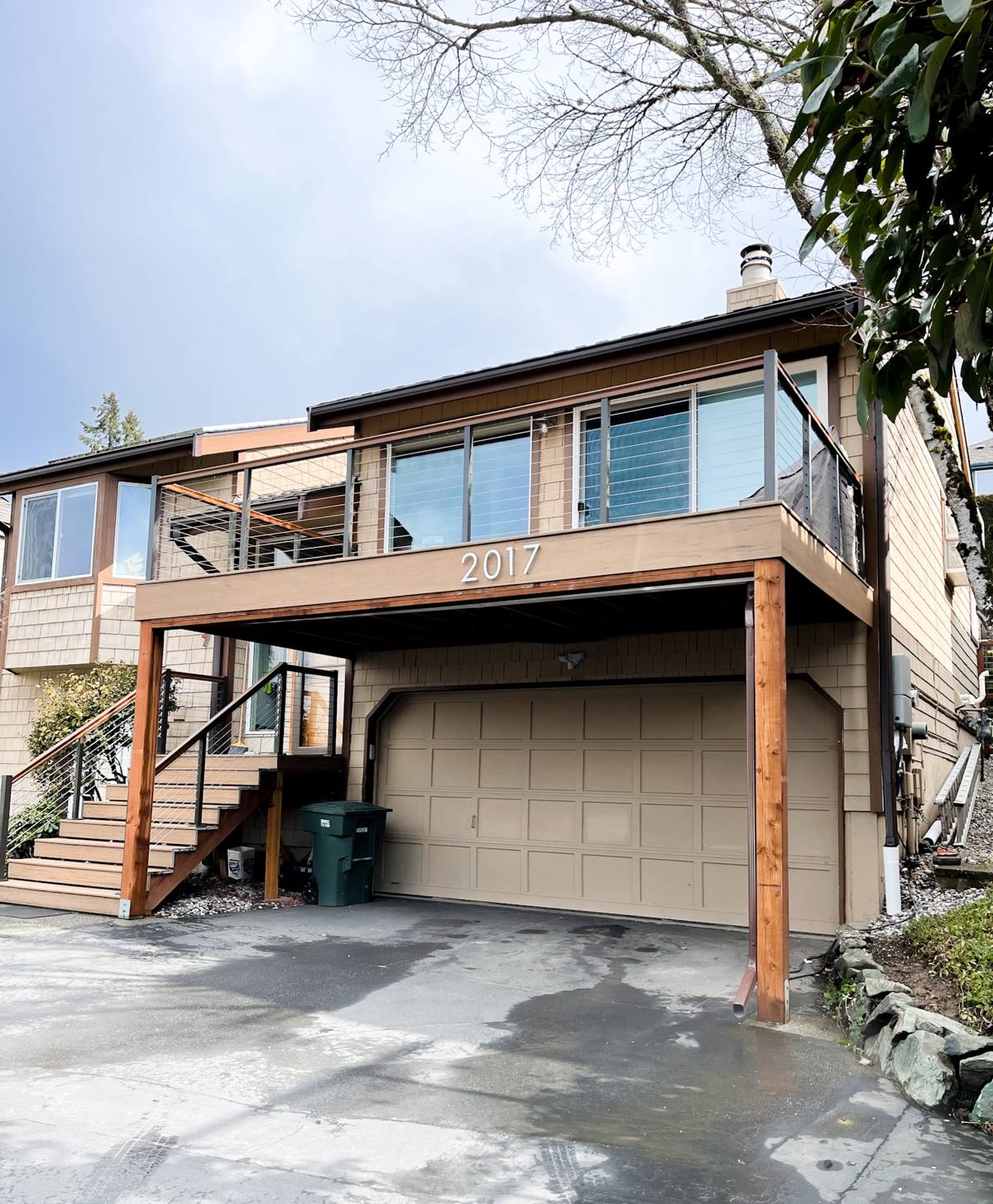
How to Tell a Deck Is Beyond Repair
Not every problem deck needs a full replacement — sometimes a few boards, a repainted rail, or new fasteners buy several more years. But there's a point where patching becomes a waste of money because the structure underneath is compromised. Here's how we tell the difference on a site visit.
Signs that point to full replacement
- Soft, spongy, or bouncy decking boards, especially near the house or in shaded corners
- Visible rot or dark staining where the deck attaches to the house (the ledger board)
- Rusted, black-streaked, or backed-out fasteners across multiple boards
- Posts or footings that have shifted, settled, or feel loose when you push on the railing
- Persistent moss or algae growth that comes back within weeks of cleaning
- Gaps, cupping, or twisting in more than a handful of boards
Signs that usually mean repair is enough
Isolated surface graying, a loose baluster, or one or two damaged boards on an otherwise solid frame are typically repair-level issues. The distinction matters because a new deck surface fastened to a compromised frame just hides the real problem — it doesn't fix it.
What a Correct Deck Replacement Actually Involves
A deck replacement done right in this climate is as much about what's underneath and behind the boards as what you see on top.
Tear-out and inspection
We remove the old decking and railings first, then expose the framing so we can actually see what condition the joists, beams, and ledger connection are in. This is often where hidden rot shows up — damage that wasn't visible from the surface but has been developing for years behind trim boards or under the ledger.
Ledger board and flashing
The ledger board — where the deck ties into the house — is the single most common failure point we see in this region, because it's the joint most exposed to water running down the siding and pooling against the house band. Correct flashing here isn't optional trim; it's the difference between a deck that sheds water away from your home's framing and one that slowly feeds water into it.
Framing and footings
Joist spacing, beam sizing, and footing depth all need to match the decking material and the loads the deck will actually see (furniture, hot tubs, foot traffic). Footings need to be set to the depth and bearing required by local code, not just poured to match whatever was there before — older decks in this area were sometimes built to lighter standards than current code requires.
Decking and fasteners
Fastener choice matters more here than in drier climates. Coated or stainless fasteners resist the corrosion that comes from sustained moisture contact, and hidden fastener systems reduce the number of penetration points where water can work its way into a board.
Choosing Decking Material for Whatcom County's Wet Climate
There's no single "best" decking material — the right choice depends on how much maintenance you're willing to do, your budget, and how much moss and moisture exposure the specific location of your deck will see (a shaded, tree-covered deck behaves very differently than one in full sun).
| Material | Moisture Resistance | Moss/Mold Resistance | Maintenance | Typical Lifespan |
|---|---|---|---|---|
| Pressure-treated wood | Good if sealed regularly | Moderate — needs cleaning | Annual cleaning and resealing | 10–15 years |
| Cedar | Naturally decent, degrades if unsealed | Moderate | Regular sealing to maintain color and resistance | 10–20 years |
| Capped composite | Excellent | Good — capped surface resists staining | Occasional washing | 25–30 years |
| PVC decking | Excellent — no wood fiber to absorb moisture | Very good | Occasional washing | 25–30+ years |
Wood costs less up front but asks for the most ongoing attention in a climate that rarely gives boards a chance to fully dry out. Composite and PVC cost more initially but hold up with far less annual upkeep, which is often the deciding factor for homeowners who are tired of re-sealing a deck every year against Whatcom County's moss and rain cycle.
Our Deck Replacement Process
We keep the process straightforward and communicate at each stage, since a deck replacement disrupts your backyard for a stretch of time and you deserve to know what's happening and when.
- On-site assessment — we inspect the existing deck, ledger connection, and framing to determine what's salvageable and what isn't.
- Design and material selection — we walk through decking options, railing styles, and layout based on how you actually use the space.
- Permitting — we handle the paperwork for projects that require it, so you're not chasing down forms.
- Tear-out and disposal — the old structure comes down and off the property.
- Structural rebuild — footings, framing, and ledger flashing are installed or corrected to current code and to hold up under local moisture conditions.
- Decking, railing, and finish work — surface material and railings go in, with attention to fastener placement and drainage gaps.
- Final walkthrough — we go over the finished deck with you before calling the job done.
Permits and Local Considerations Around Everson
Whether a deck replacement needs a permit generally depends on the deck's height, size, and whether it's attached to the house — rules that are set by the local building jurisdiction covering Everson and the surrounding unincorporated parts of Whatcom County. Rebuilding an existing deck footprint sometimes falls under different rules than expanding it, and setback requirements can come into play if the deck is near a property line. Rather than guess, we check with the applicable building department before work starts and handle that process as part of the job, so you're not left figuring out permit requirements on your own.
What Affects the Cost of a Deck Replacement
Every deck is different, so we won't quote a number without seeing the site, but these are the factors that move the price up or down.
| Factor | Why It Matters | Typical Cost Impact |
|---|---|---|
| Deck size and shape | More square footage and complex angles mean more material and labor | High |
| Decking material chosen | Composite and PVC cost more per square foot than pressure-treated wood | High |
| Condition of the substructure | Rotted framing or footings that need full replacement adds labor | Medium–High |
| Height and stairs | Elevated decks and multi-run stairs add framing and railing complexity | Medium |
| Site access | Tight backyards or limited equipment access slow the tear-out and build | Medium |
| Permit requirements | Larger or attached decks may require inspections and engineered drawings | Low–Medium |
Living With Moss Season: Maintenance That Actually Matters
A new deck built correctly still needs some seasonal attention in this climate — the goal is to keep water moving off the deck instead of sitting on it.
- Sweep leaves and debris out from between boards before fall rains settle in, since trapped organic matter holds moisture and feeds moss growth
- Make sure gutters and downspouts near the deck are directing water away from it, not onto it
- Wash off moss and algae buildup with an appropriate deck cleaner rather than letting it accumulate over multiple seasons
- Check the ledger board flashing and the area where the deck meets the house once a year for signs of water intrusion
- If you have a wood deck, keep up with sealing on the schedule the product calls for — skipping a year in this climate costs more than it saves
- Look over fasteners and connectors periodically for rust streaks or backing out, especially on older hardware
Why Hire a Crew That Already Works in Everson
A deck built for a dry climate contractor's habits doesn't automatically hold up here. Crews who work regularly in Whatcom County know where water tends to collect on a typical lot in this area, how long moss season really runs, and which construction details — like ledger flashing and fastener choice — actually matter versus which ones are just upsells. That local familiarity shows up less in the sales pitch and more in the parts of the job you never see once it's finished: the flashing behind the ledger, the footing depth, the drainage gap under the decking. Those are the details that decide whether a deck lasts ten years or thirty in this climate.
If your deck in Everson is showing its age or you're planning ahead before a small problem becomes a big one, we're happy to take a look. We offer a free, no-pressure estimate — walk us through what you're dealing with and we'll give you an honest read on repair versus replacement, no obligation either way. Use the form below to get started.