 Whatcom County
 Siding Built for South Hill's Weather, Not Just Its Curb Appeal
South Hill homes sit in a part of Whatcom County where the exterior of a house works harder than most homeowners realize. Salt-laden air moving in off the water, long stretches of driving rain, and a moss season that can run half the year all combine to attack siding in ways that don't show up right away. A house can look fine for a few years on cheap or poorly installed siding, then start showing swelling, staining, and soft spots all at once. We install James Hardie fiber cement siding specifically because it's engineered to handle this kind of climate load, and we've built our process around getting every detail right for homes in this area.
This page covers what South Hill homes specifically need from their siding, what a correct Hardie installation actually involves, and how our process works from first call to final walkthrough.
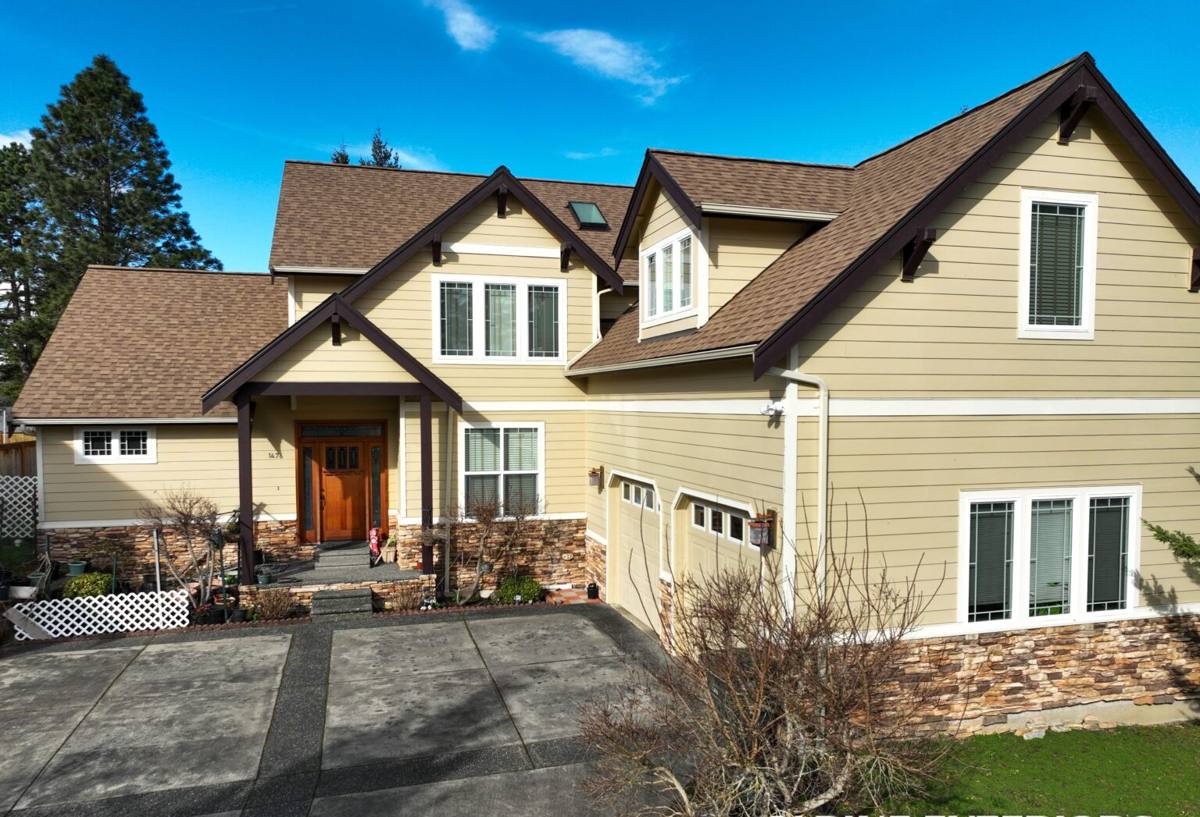
What Whatcom County's Climate Actually Does to Siding
Salt Air
Airborne salt is corrosive to metal fasteners, flashing, and trim — and it also accelerates the breakdown of paint films on wood and some composite products. Over years, salt exposure can pit unprotected metal and leave chalky, faded finishes on siding that isn't rated for coastal-adjacent conditions.
Driving Rain
Wind-driven rain doesn't just fall straight down — it gets pushed sideways into seams, laps, and butt joints. Any siding system with weak water-shedding details (gaps at joints, poor caulking, insufficient overlap) will eventually let water behind the cladding. Once moisture gets behind siding, it's the sheathing and framing that pay the price, not just the siding itself.
Long Moss Season
Shade, moisture, and mild temperatures in this region create ideal conditions for moss and algae growth on north-facing and shaded walls for much of the year. Siding that absorbs moisture or has a porous surface gives moss something to root into; siding with a dense, factory-cured surface gives it far less to hold onto.
Why James Hardie Fits This Climate
James Hardie siding is fiber cement — a mix of cement, sand, and cellulose fibers, autoclaved into a dense, stable board. It doesn't absorb water the way wood-based products can, it won't rot, and it's non-combustible. Hardie's HZ product lines are engineered in different formulations for different climate zones, which matters more in a marine, high-moisture area like Whatcom County than it does somewhere dry.
The factory-applied ColorPlus finish is baked on under controlled conditions, which gives it better adhesion and UV/salt resistance than field-applied paint. That matters here specifically because repainting siding on a home exposed to salt air and constant damp is a recurring cost — ColorPlus is built to go much longer before it needs attention.
| Climate Factor | What It Does to Weak Siding | How Hardie Handles It |
|---|---|---|
| Salt air | Corrodes fasteners/trim, fades finishes early | Dense fiber cement resists corrosion-driven breakdown; factory finish holds color longer |
| Driving rain | Forces water behind poorly lapped siding | Correct lap/joint detailing plus a non-absorbent board resists water intrusion |
| Moss/algae | Roots into porous or absorbent surfaces | Hard, factory-cured surface gives moss less to grip; easier to clean off |
| Temperature swings | Expands/contracts wood and some composites, opening seams | Dimensionally stable board holds tight joints over time |
What a Correct Installation Actually Involves
Hardie siding is only as good as the installation behind it. Most siding failures we see on older homes aren't a product problem — they're a workmanship problem. A correct job includes:
- Proper water-resistive barrier and flashing: house wrap or building paper installed correctly, with flashing at every window, door, and horizontal penetration, lapped to shed water down and out.
- Rainscreen or drainage gap where called for: a small air gap behind the siding lets any incidental moisture drain and dry instead of sitting against the sheathing — especially important in a wet climate like this one.
- Correct fastener spec: Hardie requires specific nail types, spacing, and embedment depth. Using the wrong fastener or over-driving nails is one of the most common causes of premature siding problems.
- Proper clearances: gaps at grade, roofline, and other trim per Hardie's published specs so the board isn't sitting in standing water or trapped moisture.
- Caulked and painted cut edges: any field-cut edge exposes raw fiber cement that needs to be sealed, or it becomes a moisture entry point.
- Joint and seam treatment: butt joints either flashed or caulked per spec, not just butted together and painted over.
Skipping any one of these doesn't usually cause an immediate problem — it causes a problem in year three, five, or eight, after the siding has already done years of quiet damage behind the wall.
Our Process for South Hill Homes
1. On-Site Assessment
We walk the whole exterior, not just the obviously worn sections. We're looking at current siding condition, trim and flashing details, moisture staining, moss buildup patterns, and anything that points to an existing water intrusion issue that needs fixing before new siding goes on.
2. Straightforward Estimate
You get a clear written scope — what's being removed, what's being replaced, which Hardie products and colors are being used, and what the underlying weather barrier and flashing work involves. No vague line items.
3. Prep and Weatherproofing
Before a single piece of siding goes up, we address the water-resistive barrier, flashing, and any sheathing repair needed. This is the step that determines how the house performs in ten years, not just how it looks on install day.
4. Installation to Hardie Spec
Fastener type and spacing, clearances, joint treatment, and cut-edge sealing are all done to Hardie's published installation requirements — which is also what keeps the manufacturer's warranty valid.
5. Final Walkthrough
We go over the finished work with you, point out anything you should know about maintenance, and make sure you're clear on warranty coverage.
Maintenance Expectations for This Climate
Even the right siding installed correctly still needs a little seasonal attention in a climate like Whatcom County's:
- Rinse siding periodically to keep salt residue and grime from building up, especially on sides facing prevailing weather.
- Keep an eye on shaded, north-facing walls for early moss growth and clean it off before it spreads — Hardie's hard surface makes this easier than it is on porous siding.
- Trim back vegetation and maintain gutters so water isn't dumping directly onto siding or pooling at the base of walls.
- Inspect caulking at trim and joints every year or two and re-caulk where it's cracked or pulled away.
Quick Homeowner Checklist Before Committing to a Bid
- Does the bid specify Hardie product lines/HZ rating, not just "fiber cement"?
- Is the water-resistive barrier and flashing scope spelled out, or just "install siding"?
- Does the contractor mention fastener spec and clearances, or gloss over installation details?
- Is there a written manufacturer warranty and a labor warranty, both explained clearly?
- Has the crew installed Hardie in this specific climate before, and can they speak to it directly?
Why a Crew That Already Works This Area Matters
A siding crew that regularly works South Hill and the broader Whatcom County area already knows which walls take the worst weather exposure, how moss behaves on local roof and wall lines through the wet season, and where moisture tends to collect around common regional framing and roofline setups. That local pattern recognition shows up in the details — where extra flashing attention gets paid, which elevations get the closer look during inspection, and what maintenance advice actually applies to this weather versus generic advice that doesn't account for salt air and near-constant rain exposure.
It also means straightforward accountability. A local crew is around for the life of the warranty, not just for the install date.
Why We Only Install James Hardie
We don't install vinyl, LP SmartSide, or other fiber cement alternatives — not because those products have no merit, but because our standard is a siding system with a strong track record in exactly the conditions South Hill homes face: coastal-influenced moisture, salt air, and heavy moss pressure. James Hardie's engineered HZ formulations, factory-cured ColorPlus finish, and manufacturer warranty structure line up with what this climate actually demands. Standardizing on one product also means our crews install it constantly, which keeps the installation details — the part that actually determines long-term performance — consistently right.
If you're weighing a siding project in South Hill or elsewhere in Whatcom County, we're happy to walk your property, look at what your current siding is telling you, and put together a straightforward, no-pressure estimate using the form below.