 Whatcom County
 Asphalt Shingle Roofing Built for Lynden's Weather
Lynden sits in the heart of Whatcom County's farmland, but the roof over a Lynden home deals with the same weather systems that roll off the Pacific and through the Nooksack valley all winter: long stretches of steady rain, short cool summers, and enough shade and moisture in the fall and spring to keep moss and algae in business most of the year. Asphalt shingle roofing remains the most practical choice for the majority of homes here — it's proven, repairable, reasonably priced, and available in enough grades to match almost any budget or roofline. The part that actually determines how well it performs isn't the shingle itself, though. It's the underlayment, the ventilation, the flashing details, and the crew doing the work.
This page is about that one job, done right, for this one area. Not a generic overview of asphalt shingles — what they need to hold up specifically on Lynden roofs.
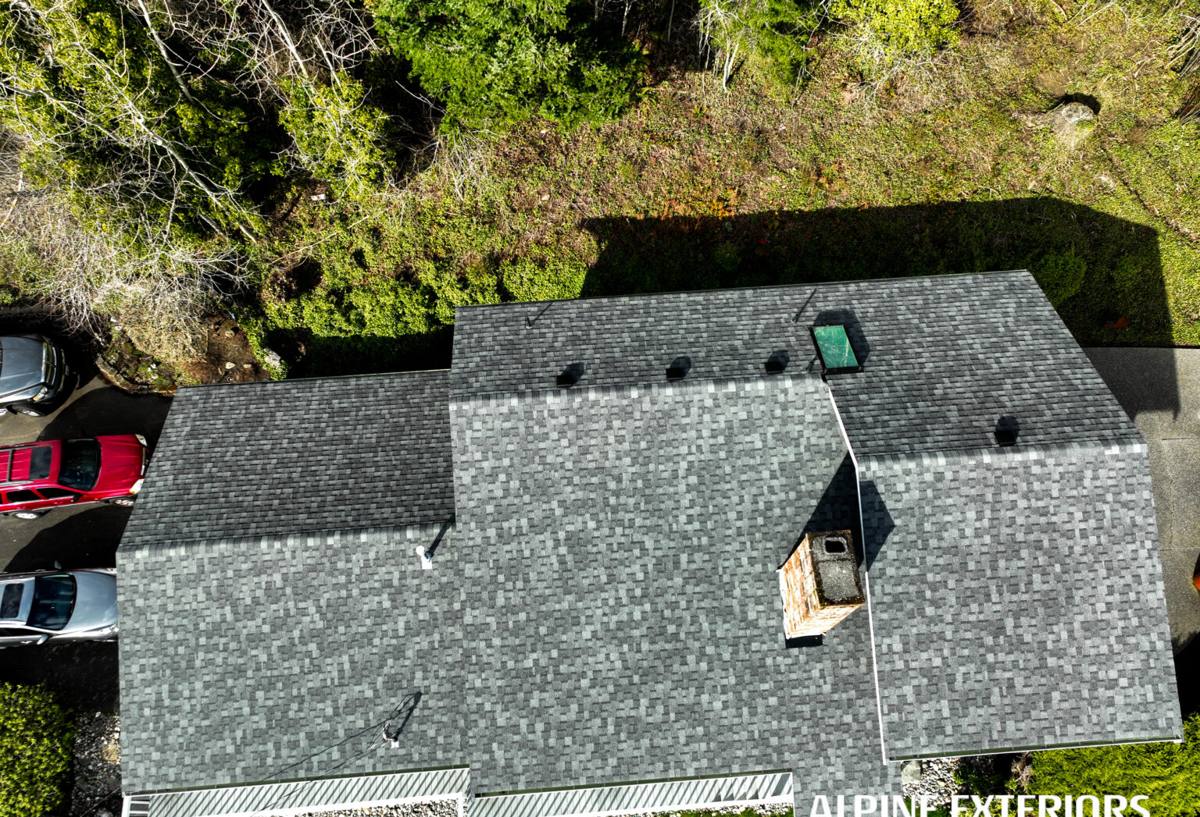
What Whatcom County's Climate Actually Does to a Roof
Every roofing material sold in this region is marketed as weather-resistant. What matters is which specific weather it's resisting, and how long it takes for small problems to become expensive ones.
Driving rain and wind-driven moisture
Storms coming off the Strait of Georgia and Puget Sound don't always fall straight down. Wind pushes rain sideways and up under shingle tabs, into exposed nail heads, and along poorly lapped flashing. A shingle roof that looks fine from the driveway can still be taking on water at the edges, valleys, and any place two roof planes meet.
Moss and algae season
Whatcom County's moss season runs long — cool, damp, shaded conditions for much of the year give moss and algae the time they need to take hold, especially on north-facing slopes and roofs shaded by mature trees, which are common on Lynden lots. Left unchecked, moss lifts shingle edges, holds moisture against the deck, and accelerates granule loss.
Salt air and coastal exposure
Homes closer to Bellingham Bay and the coastline deal with airborne salt that speeds up corrosion on exposed metal — flashing, fasteners, gutter hardware. Lynden is far enough inland that salt exposure is lighter, but the same rain and humidity patterns that carry it also drive the moss and moisture issues every roof in the county has to manage.
Temperature swings and freeze-thaw
Whatcom County doesn't get brutal winters, but it does get repeated freeze-thaw cycles — cold snaps followed by rain and thaw. Water that's worked its way under a shingle or into a crack expands when it freezes, widening the damage a little more each cycle.
Choosing the Right Shingle for This Climate
Not every asphalt shingle is built the same, and the difference matters more here than in a drier climate. We steer Lynden homeowners toward products with algae-resistant granules (usually copper- or zinc-infused) and a wind rating that matches what this area actually sees, rather than the cheapest base-grade option.
| Shingle Type | Typical Lifespan | Moss/Algae Resistance | Best Fit |
|---|---|---|---|
| 3-tab (economy) | 15–20 years | Low unless treated | Budget rebuilds, rentals, short-hold properties |
| Architectural / dimensional | 25–30 years | Good with algae-resistant granules | Most Lynden homes; best balance of cost and durability |
| Premium/designer architectural | 30+ years | Very good | Steeper rooflines, higher-end resale, longer hold periods |
Architectural shingles have become the default recommendation for most of the homes we work on in this area — the thicker profile sheds wind-driven rain better than 3-tab, and the algae-resistant treatment buys real time against the local moss cycle. That said, roof pitch, existing decking condition, and budget all factor into the right call, which is why we walk the roof before recommending a product rather than quoting off a phone call.
What a Correct Installation Actually Involves
The shingle brand printed on the wrapper is the least important variable in how long a roof lasts. What's underneath it and how it's detailed at the edges matters far more.
- Ice and water barrier at eaves and valleys — a self-adhering membrane at the eaves, valleys, and around penetrations, sized to handle wind-driven rain, not just standing water.
- Synthetic underlayment across the field — a continuous secondary water barrier under the shingles, lapped correctly so water is always shed downhill, never trapped.
- Proper nailing pattern — shingles fastened with the correct number and placement of nails for the wind exposure of that roof, not the fastest pattern for the crew.
- Flashing at every transition — chimneys, skylights, sidewalls, and roof-to-wall intersections all need new step and counter-flashing, not caulk smeared over old metal.
- Balanced attic ventilation — intake at the soffits and exhaust at the ridge, sized to match each other, so moisture and heat don't build up under the deck.
- Drip edge on every eave and rake — directs water away from the fascia instead of letting it wick back under the shingles.
Skip any one of these and the shingle warranty on paper won't match what actually happens on the roof. Most premature failures we're called out to inspect in this area trace back to underlayment or ventilation shortcuts, not a bad shingle.
How We Handle a Lynden Re-Roof
1. On-roof inspection, not a drive-by estimate
We get on the roof, check the decking for soft spots, look at existing ventilation, and note anything the ground view hides — moss buildup, valley wear, flashing condition.
2. Full tear-off
We remove the existing roofing down to the deck rather than layering over it. Layering traps moisture and hides deck problems, which is exactly the wrong approach in a climate this damp.
3. Deck repair as needed
Any soft, delaminated, or water-stained decking gets replaced before anything new goes down. This is the point where hidden moisture damage from years of small leaks usually shows up.
4. Underlayment, flashing, and ventilation installed to spec
Ice and water barrier, synthetic underlayment, new flashing, and a properly balanced intake/exhaust system — the parts of the job that determine how the roof performs in year eight, not just year one.
5. Shingle installation
Installed to manufacturer spec and matched to the wind exposure and pitch of that specific roof.
6. Cleanup and magnetic sweep
Job site and yard cleared of debris and old materials, with a magnetic sweep for stray nails.
Ventilation and Moisture: The Part Homeowners Don't See
An asphalt shingle roof doesn't fail from the top down as often as it fails from the inside out. Attics that trap heat and humidity cook shingles from underneath and, in this climate, give condensation a place to collect on cold decking during winter. Poor ventilation also feeds ice and moisture problems at the eaves during freeze-thaw stretches. Correct ventilation isn't an upsell — it's a design requirement that either gets done right during installation or gets fixed later, at more cost and disruption. We size intake and exhaust as a matched system on every project rather than treating a ridge vent as a stand-alone fix.
Moss Control and Maintenance Checklist
A well-installed shingle roof in Whatcom County still needs basic upkeep to hit its full lifespan. This is the routine we recommend to Lynden homeowners, especially on shaded or north-facing roof planes:
- Have moss and debris cleared before it mats down and holds moisture against the shingles — typically once a year, more often under heavy tree cover.
- Keep gutters and downspouts clear so water isn't backing up under the roof edge during heavy rain.
- Trim overhanging branches back to reduce shade, debris, and the moisture that moss needs to establish.
- Check flashing around chimneys and skylights every year or two for lifted edges or failed sealant.
- Address small leaks or lifted shingles right away — in this climate, a small gap has all winter to become a bigger one.
- Avoid pressure washing shingles directly; it strips granules and shortens the roof's life faster than the moss it's meant to remove.
What Drives the Cost of a Shingle Roof in This Area
| Factor | Why It Matters Here |
|---|---|
| Roof size and pitch | Steeper roofs take longer to work safely and use more material per square |
| Number of layers to remove | Multiple existing layers mean more tear-off labor and disposal |
| Decking condition | Moisture damage from prior leaks often means plywood replacement |
| Shingle grade | Architectural and premium lines cost more upfront but resist moss and wind better long-term |
| Ventilation upgrades | Adding proper intake/exhaust where none existed adds labor but prevents future moisture issues |
| Roof complexity | Valleys, dormers, chimneys, and skylights all add flashing detail and time |
We give a firm, itemized quote after the on-roof inspection — not a range guessed from the street — so there are no surprises once the tear-off starts.
Why Hire a Crew That Already Works in Lynden
Roofing crews that mainly work in drier parts of the state sometimes underbuild for this region — lighter underlayment, minimal flashing, ventilation sized for a climate that doesn't get Whatcom County's rain and moss load. A crew that regularly works Lynden and the surrounding county knows which roof orientations get hit hardest by moss, which valleys tend to trap debris, and how to detail flashing for driving rain rather than just vertical rainfall. That local pattern recognition is the difference between a roof that needs attention again in five years and one that goes the full length of its expected life.
If you're weighing a repair against a full re-roof, or just want an honest read on how much life is left in your current shingles, we're happy to take a look. We offer free, no-pressure estimates for Lynden homeowners — use the form below to get one scheduled.