 Whatcom County
 Roofing in Lynden Has to Answer to the Weather
Lynden sits in an agricultural pocket of Whatcom County, close enough to the water and the Cascades foothills to catch the worst of both worlds: long stretches of driving rain off the Pacific, damp salt-laden air moving in from Bellingham Bay, and open farmland that gives wind nothing to slow it down before it hits a roofline. Add a moss season that can run eight or nine months out of the year in the shaded, north-facing sections of a roof, and you have a climate that punishes shortcuts. A roof that would hold up fine in a drier inland county can fail early here if it wasn't built for this one.
That's the lens we use for every new roof installation we quote in Lynden. It's not about installing the fanciest material available — it's about installing the right materials, in the right sequence, with the right ventilation and flashing details, so the roof actually performs through a Whatcom County winter and doesn't need babysitting every spring.
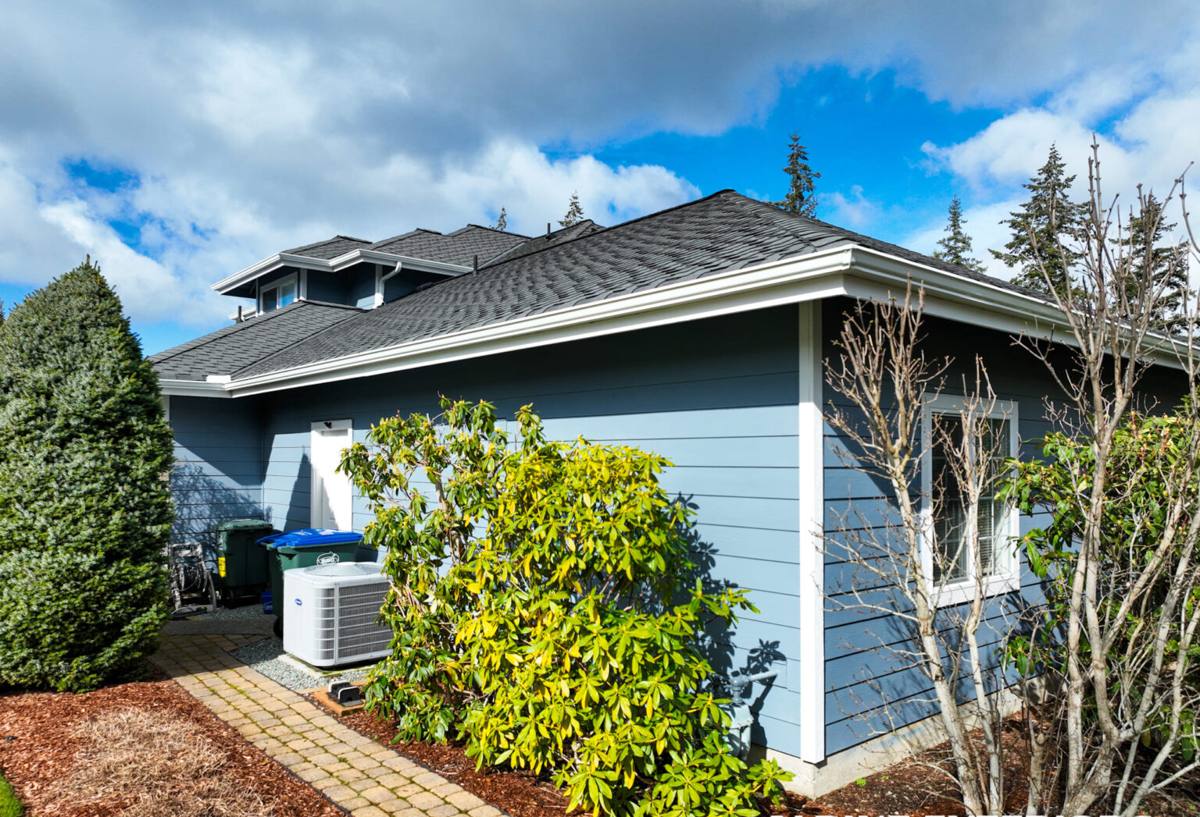
What Local Homes Are Up Against
Driving Rain and Wind-Driven Moisture
Rain here rarely falls straight down. Wind pushes it sideways and up under shingle edges, around chimneys, and into valleys and eaves — the spots where a rushed install shows its weaknesses first. Underlayment quality and flashing detail matter more here than in calmer climates, because the roof isn't just shedding water, it's fighting water that's trying to work its way backward and sideways.
Moss and Constant Dampness
Whatcom County's moss season is long, and moss doesn't just look bad — it holds moisture against the roof surface, lifts shingle edges, and works its way into fastener lines over time. Roofs with poor airflow underneath, or with materials that don't shed moisture well, grow moss faster and age faster. A new roof installed without moss-resistant details or adequate ventilation is fighting an uphill battle from day one.
Salt Air and Metal Fatigue
Being close enough to the Sound to get salt-laden air in the wind means metal components — flashing, fasteners, vents, gutters — corrode faster than they would further inland. That's a material selection issue as much as an installation issue: the wrong fastener or flashing metal can start rusting years before the shingles themselves are due for replacement.
What a Correct New Roof Installation Actually Involves
"New roof" sounds like a simple product swap, but the roof covering itself is only one part of a system. A correct installation addresses every layer:
- Full tear-off to the deck — never a layover on top of old roofing, which traps moisture and hides deck damage
- Deck inspection and repair of any soft, rotted, or delaminated sheathing before anything new goes down
- Ice-and-water shield at eaves, valleys, and around penetrations, sized for our wind-driven rain patterns
- Synthetic underlayment across the full field for a consistent moisture barrier
- Properly lapped and sealed flashing at all roof-to-wall transitions, chimneys, skylights, and valleys
- Balanced intake and exhaust ventilation, sized to the attic volume — not just vents added for looks
- Correct fastener pattern and exposure for the chosen material, matched to our wind exposure
- Final walk-through checking ridge lines, flashing seals, and cleanup of debris and nails
Skip or rush any one of these and the roof may still look right from the ground for a year or two — the problems show up later, as leaks at valleys, premature moss growth, or shingles that lift in the first strong windstorm.
Choosing a Roofing Material for This Climate
There's no single "best" roofing material — there's a best fit for the house, the budget, and how the roof will be maintained. Here's how the common options stack up for a Whatcom County home:
| Material | Typical Lifespan | Moss/Moisture Behavior | Maintenance | Upfront Cost |
|---|---|---|---|---|
| Architectural asphalt shingle | 25–30 years | Good with proper ventilation; benefits from moss-resistant granules | Occasional moss treatment, gutter clearing | Lowest |
| Standing seam metal | 40–50+ years | Sheds water and moss well; smooth surface resists buildup | Low; check fasteners and sealant over time | Highest |
| Synthetic/composite shingle | 30–40 years | Good moisture resistance; less prone to moss than wood | Low to moderate | Mid-to-high |
| Cedar shake | 20–30 years with upkeep | Attractive but holds moisture; needs active moss and rot management | High — regular treatment required | Mid-to-high |
We're upfront with homeowners about cedar in this climate: it can look great, but the maintenance burden in a county with our moss season and rainfall is real, and we'd rather set that expectation clearly than sell a product and let a homeowner discover the upkeep later. For most Lynden homes, architectural asphalt with a moss-resistant option or a synthetic composite gives the best balance of appearance, cost, and how much attention the roof will demand year to year.
Signs a Roof Needs Full Replacement, Not a Patch
Not every roof problem calls for a full tear-off. But there are signs that point toward replacement rather than repair:
- Granule loss heavy enough to see bare patches or find granules pooling in gutters
- Shingles that are curling, cracking, or lifting at the edges in multiple areas, not just one spot
- Daylight visible through the roof deck from inside the attic
- Soft or spongy decking underfoot when walked, or visible sagging along the roofline
- Repeated leaks in different locations after prior patch repairs
- Heavy, persistent moss growth that keeps returning even after cleaning
- The roof is at or past the expected lifespan of its material
If only one or two of these apply and the roof is otherwise sound, a targeted repair may be the honest answer — we'll tell you that instead of pushing a full replacement that isn't needed yet.
How We Approach a New Roof Installation
1. On-Site Assessment
We walk the roof and the attic, not just look at it from the driveway. That means checking decking condition, existing ventilation, flashing points, and any signs of past moisture problems before we ever talk materials or price.
2. A Written Scope You Can Read
The estimate spells out tear-off, decking allowance, underlayment type, flashing work, ventilation plan, and material — so there's no guessing what's included and what would be an added cost if the deck needs more repair than expected.
3. Weather-Timed Scheduling
We plan installations around Whatcom County's weather patterns, not just our calendar. Roofing in a stretch of driving rain is how corners get cut, so we build in flexibility rather than forcing a job through a bad forecast.
4. Tear-Off and Deck Repair
Full removal to the deck, with any damaged sheathing replaced before new underlayment goes down — never covered over.
5. Installation to Manufacturer Spec Plus Local Detailing
We follow manufacturer installation requirements for warranty purposes, and layer in the extra flashing and underlayment detail this climate calls for at valleys, eaves, and penetrations.
6. Final Walk-Through
We review the finished roof with the homeowner, confirm ventilation is balanced, and make sure the site is cleaned up — magnetic sweep for nails included.
What Drives the Cost of a New Roof
| Factor | Why It Matters |
|---|---|
| Roof size and pitch | Steeper roofs take longer to work safely and use more material per square |
| Number of layers to remove | Tearing off multiple old layers adds labor and disposal cost |
| Decking condition | Rotted or soft sheathing found during tear-off requires repair before install continues |
| Material choice | Asphalt, synthetic, and metal carry different material and labor costs |
| Roof complexity | Valleys, dormers, skylights, and chimneys all add flashing work and time |
| Ventilation upgrades | Adding or correcting intake/exhaust venting is a worthwhile add during a full replacement |
We won't quote a number without seeing the roof — anyone who does is guessing, and on an older Lynden home the deck condition alone can change the scope. What we can say is that decking repair is the most common reason a final invoice differs from the initial estimate, and we flag it before we proceed rather than after.
Why a Crew That Already Works Whatcom County Matters
A new roof installed by a crew unfamiliar with this area tends to build to a generic standard — enough to pass in a drier, calmer climate, but light on the flashing and ventilation detail Whatcom County actually needs. A crew that works Lynden and the surrounding county regularly knows:
- Which flashing and fastener materials hold up against the salt air moving inland from the Sound
- How to size ventilation for attics that stay damp for months at a time, not just a few weeks
- Local permitting requirements and inspection expectations for the jurisdiction
- How wind exposure across open farmland affects fastening patterns and material choice
- Which roof details tend to fail first in this specific climate, so they get extra attention up front
That local knowledge doesn't show up as a line item on an invoice, but it's the difference between a roof that needs attention again in five years and one that goes the full distance of its expected life.
After Installation: Keeping a New Roof Performing
A correctly installed roof still benefits from basic upkeep in this climate. Keep gutters clear so water isn't backing up under the eave line, especially during fall and winter storms. Have moss treated at the first sign of regrowth rather than letting it establish. And have the attic ventilation checked periodically — blocked soffit vents or insulation packed against the roof deck can undo the benefit of a well-ventilated install over time. None of this is heavy maintenance, but it's the kind of small attention that lets a new roof actually reach its rated lifespan in a county that doesn't make it easy on a roof.
If you're weighing a new roof for a Lynden home, we're happy to take a look and walk the attic and roofline with you, explain what we find in plain terms, and put together a written estimate with no pressure attached.