 Whatcom County
 Why Bellingham Siding Takes More Punishment Than It Looks Like
Bellingham sits where Puget Sound air, marine rain systems, and heavy tree cover all meet, and that combination is harder on exterior siding than most homeowners realize until they're dealing with a failure. Homes closer to Bellingham Bay pick up salt-laden air that accelerates corrosion on fasteners and trim. Homes tucked under fir and cedar canopy — which describes a lot of Whatcom County lots — stay damp longer after every storm because sunlight and wind never fully dry the wall. And the region's long wet season means siding here isn't dealing with the occasional downpour; it's dealing with weeks of sustained, wind-driven rain that finds every gap in a wall assembly.
None of that is exotic information to anyone who's lived here a while. But it matters enormously for how a siding job should be built, because a product or installation method that holds up fine in a dry climate can fail quietly in Whatcom County — and by the time you see the evidence, it's usually already inside the wall.
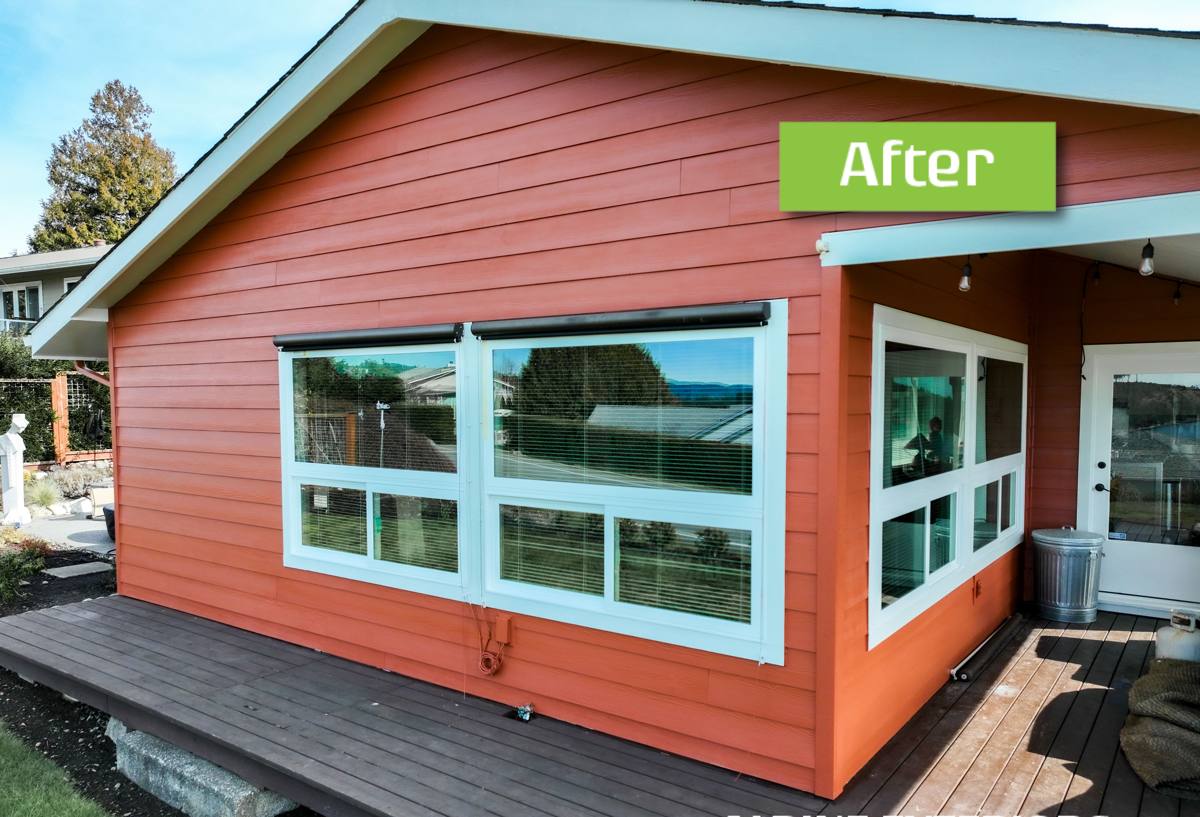
What "Correct" Siding Installation Actually Means in This Climate
A siding installation isn't just fastening boards to a wall. In a marine climate like Bellingham's, the assembly behind the siding does more work than the siding itself. A correct installation includes:
- A continuous weather-resistant barrier (housewrap or building paper) installed shingle-style so water sheds outward, not into seams
- Properly lapped and sealed flashing at every window, door, and roof-to-wall intersection, since these are the highest-failure points on any home
- A rain screen gap or drainable wrap that lets bulk water and moisture vapor drain and dry behind the siding instead of sitting against it
- Correct fastener type, spacing, and penetration depth for the specific siding product being installed
- Proper clearance between the bottom of the siding and grade, decks, patios, and roof lines, so splashback and ponding water don't sit against the material
- Caulking and sealant used only where the manufacturer specifies it — over-caulking a fiber cement installation can trap moisture instead of releasing it
Skip or rush any one of these steps and the siding can look fine from the curb for a few years while the sheathing behind it slowly takes on moisture. That's the failure mode we see most often on older Whatcom County homes: cosmetic siding problems are usually the last symptom to show up, not the first.
The Rain Screen Gap Matters More Here Than in Drier Regions
A ventilated rain screen — a small air gap between the back of the siding and the weather barrier — lets any moisture that does get past the siding dry out instead of staying trapped against the sheathing. In a climate with occasional rain, that gap is a nice-to-have. In Bellingham, where walls can stay damp for days at a time during winter storm cycles, it's close to essential for long-term wall health, especially on shaded or north-facing elevations that never get direct sun to help them dry.
Moss, Shade, and the Long Wet Season
Whatcom County's tree cover is one of its best features and one of its toughest conditions for exterior materials. Shaded walls — especially north- and east-facing sides of a home under mature trees — stay damp far longer after rain than sun-exposed walls, and that extended dampness is exactly what moss and algae need to establish themselves. On some siding materials, that growth isn't just cosmetic; it holds moisture directly against the surface and can accelerate wear over time.
This is one of the practical reasons we standardized on James Hardie fiber cement rather than continuing to install wood-based or engineered-wood products. Fiber cement doesn't feed mold or fungal growth the way wood-based siding can, because there's no organic wood fiber at the surface for it to consume. Moss and algae can still land on any exterior surface in a shaded, wet climate — that's a fact of living under tree cover in Whatcom County, not a claim about any one product — but on Hardie siding it's a surface-level cleaning issue rather than a material-integrity issue.
Why We Only Install James Hardie Fiber Cement
We made a deliberate decision years ago to stop installing vinyl, LP SmartSide, primed spruce, cedar, and other engineered-wood or composite siding products, and to install James Hardie fiber cement exclusively. That wasn't a marketing decision — it came out of watching how different products actually perform on homes in this climate over time.
| Consideration | Wood-based / engineered siding | Vinyl siding | James Hardie fiber cement |
|---|---|---|---|
| Moisture behavior | Can absorb and swell at cut edges and seams if not sealed perfectly | Doesn't absorb water, but seams can allow water behind panels | Cement-based composition doesn't swell or rot; engineered for moisture exposure |
| Combustibility | Combustible, adds fuel load | Can soften, deform, or melt under heat | Non-combustible |
| Moss/organic growth | Wood fiber can support fungal growth if damp long-term | Not organic, but growth can still sit on surface | Not an organic food source; growth stays surface-level |
| Finish durability | Field-applied paint/primer wears and needs recoating | Color molded in but can fade, especially in dark tones | Factory-baked ColorPlus finish, engineered for UV and weather exposure |
| Installation sensitivity | High — gaps, caulking, and priming all have to be right | Moderate — expansion gaps must be correct | Moderate-high — requires correct fastening, clearances, and flashing |
Every product on that table has legitimate strengths, and none of them is a scam or a bad product in general. But we'd rather install one system extremely well than install several products adequately, and Hardie's combination of non-combustibility, factory finish, and long-term dimensional stability is what we're comfortable standing behind on Whatcom County homes specifically.
Our Installation Process in Bellingham
1. On-Site Assessment
We start by looking at the existing wall assembly, not just the visible siding. That means checking for signs of moisture intrusion, evaluating trim and window flashing, and noting shaded or exposed elevations that will need different attention during installation.
2. Tear-Off and Substrate Check
Removing the old siding lets us inspect the sheathing underneath. Any water-damaged or soft sheathing gets identified and addressed before anything new goes up — installing new siding over compromised sheathing just hides a problem instead of fixing it.
3. Weather Barrier and Flashing
We install a continuous weather-resistant barrier and flash every penetration — windows, doors, hose bibs, vents, roof-to-wall transitions — before a single piece of siding goes on. This step is where most long-term water problems are prevented or created.
4. Rain Screen and Fastening
Depending on the wall assembly, we install furring or a drainable wrap to create a ventilation gap, then fasten the Hardie boards per manufacturer specification for this climate zone — correct nail type, spacing, and penetration.
5. Trim, Caulking, and Final Details
Trim goes in to manufacturer spec, caulking is applied only where specified, and all clearances (grade, roofline, decks) are checked before we call the job finished.
6. Final Walkthrough
We walk the finished exterior with the homeowner, point out anything they should know for maintenance, and answer questions about the warranty coverage on both the product and the labor.
Common Problem Spots on Bellingham Homes
Across the homes we've worked on in and around Bellingham, a few patterns show up repeatedly:
- Shaded north walls that stay damp for extended periods and develop moss or discoloration faster than sun-exposed elevations
- Deck-to-wall intersections where siding runs too close to a deck surface and traps splashback moisture
- Window and door flashing installed or sealed incorrectly during a prior remodel, which shows up as staining or soft trim years later
- Grade-level siding installed with insufficient clearance from soil, mulch beds, or hardscaping
- Older caulking that's cracked or failed at seams, allowing water behind the siding in a climate that doesn't give walls much chance to dry out
None of these are unusual or embarrassing — they're just what happens over time in a wet marine climate, especially on homes that weren't originally built or sided with this climate's demands fully in mind.
Maintenance After Installation
James Hardie siding is low-maintenance compared to wood-based products, but "low-maintenance" isn't "no-maintenance," especially in Whatcom County. A simple annual routine goes a long way:
- Rinse the exterior periodically, with extra attention to shaded elevations where moss and algae are more likely to establish
- Keep gutters clear so overflow doesn't run down the siding face repeatedly
- Trim back vegetation and tree limbs that keep a wall section shaded and damp longer than the rest of the house
- Inspect caulking at trim and penetrations every year or two and have any cracked sections addressed before winter rains set in
- Watch for any soft spots, staining, or discoloration near ground level or deck intersections, since those are the areas most exposed to standing moisture
What Siding Installation Costs Depend On
We don't publish flat pricing because every home is different, but the main cost drivers on a Bellingham installation are consistent:
| Factor | Why it affects cost |
|---|---|
| Existing wall condition | Sheathing repair or replacement adds labor and material beyond the siding itself |
| Home size and wall complexity | More corners, dormers, and trim details mean more cutting, flashing, and labor time |
| Siding profile and finish | Lap width, texture, and ColorPlus finish tier affect material cost |
| Tear-off scope | Full removal of old siding versus a simpler re-side affects labor hours |
| Access and site conditions | Steep lots, limited access, or heavy landscaping near the home can add time |
The only reliable way to get an accurate number is an on-site look at the specific home, which is exactly what a free estimate is for.
Why a Local Whatcom County Crew Matters
Siding installation isn't a generic skill that transfers perfectly from one region to another. A crew that works Bellingham and the surrounding county regularly already knows which elevations tend to hold moisture, how local building conditions typically show up during tear-off, and how to sequence a job around the region's rain patterns instead of getting caught mid-installation by a system rolling in off the Sound. That local pattern recognition doesn't replace following manufacturer specifications — it supplements it, and it's part of why the same product installed by two different crews can perform very differently ten years down the road.
Questions to Ask Before Hiring a Siding Contractor
- Are they a certified or factory-trained installer for the specific siding product they're proposing?
- Will they inspect and address the sheathing and weather barrier, not just install new siding over what's there?
- Do they carry manufacturer-backed warranty coverage, and what does it actually cover — material only, or labor too?
- Can they explain how they'll handle flashing at windows, doors, and roof lines before work starts?
- Do they have experience specifically with homes in this climate, not just siding installation in general?
If your Bellingham home's siding is aging, showing moss or moisture issues, or you're planning ahead for a replacement, we're happy to take a look and give you a straightforward, no-pressure estimate — no obligation, just an honest read on what your home actually needs.