 Whatcom County
 Siding Installation Built for Silver Beach's Climate
Silver Beach homes sit in a part of Whatcom County where the weather doesn't let up on a house. Moisture off the water, long stretches of driving rain, and a moss season that can run more than half the year all work on exterior walls in ways drier inland climates never see. Siding here isn't just a look — it's the single biggest factor in whether a home stays dry, holds its paint, and avoids rot damage that's expensive to find and worse to fix.
We install siding in Silver Beach and the surrounding Whatcom County neighborhoods regularly, which means we're not guessing at how this climate behaves. We've seen which details hold up over a decade of wet winters and which ones fail in year three. That experience shapes every bid we write and every install we run.
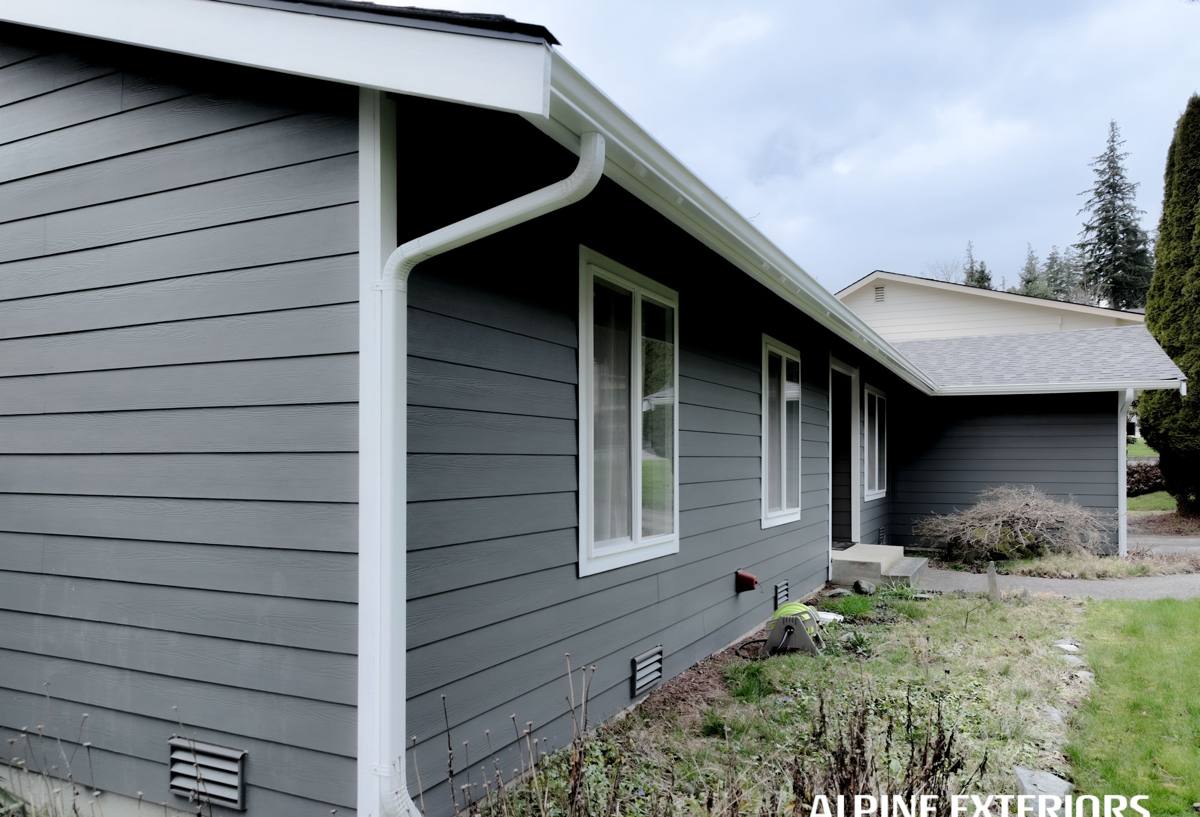
What This Climate Actually Does to a House
Moisture That Doesn't Quit
Whatcom County gets long-duration rain events, not just quick storms. That means siding and the water-resistive barrier behind it are under load for days at a time, not hours. Any gap in flashing, any short-cut in overlap, any fastener in the wrong spot becomes a slow leak path instead of a one-time nuisance.
Salt Air and Corrosion
Homes closer to the water deal with salt-laden air on top of the rain. Salt accelerates corrosion on fasteners, trim, and any metal flashing that isn't rated for it, and it speeds up the breakdown of paint films that aren't built for coastal exposure. Over time this shows up as rust streaks, chalking paint, and fastener heads that back out or corrode through.
Moss and Algae Growth
Shade, moisture, and mild temperatures are exactly what moss and algae need to establish on north-facing walls and anywhere airflow is poor. Once moss gets a foothold on siding, it holds water against the surface far longer than open air would, which is a direct path to rot on materials that aren't moisture-stable.
What Correct Siding Installation Involves
A siding job can look identical from the curb and perform completely differently depending on what's underneath it. In a climate like this, the details that don't show are the ones that matter most.
- Weather-resistive barrier installed correctly shingled top-down, with no reverse laps that catch water
- Flashing at every penetration — windows, doors, vents, hose bibs, light fixtures — integrated with the barrier, not just caulked over it
- Proper starter strip and butt joint placement so water sheds off the wall instead of pooling at seams
- Correct fastener type, spacing, and depth per manufacturer specs, not "close enough"
- Clearance from grade, decks, and roof lines so siding never sits in standing water or gets pinned against a wet surface
- Rain-screen or drainage gap detailing where the wall assembly calls for it, so moisture that does get behind the siding has somewhere to go
Skip any one of these and the siding itself can be flawless material and still fail early. This is why we treat installation as the product — the board is only half the job.
Why We Only Install James Hardie
We standardized on James Hardie fiber cement for every home we side, and we don't install vinyl, LP SmartSide, Cemplank, Allura, primed spruce, or cedar. That's not a marketing position — it's what we settled on after weighing how each material actually performs in a wet, mossy, occasionally salty climate over decades, not just the first few years.
Non-Combustible
Fiber cement doesn't burn, melt, or warp from heat the way vinyl can. That matters for insurance conversations and for peace of mind, especially as wildfire smoke seasons have become a regular part of Pacific Northwest summers even here in Whatcom County.
Moisture-Stable
Fiber cement doesn't swell, cup, or rot when it takes on moisture the way wood-based products can. In a county where siding sits wet for days at a stretch during winter storm systems, that stability is the difference between a wall system that lasts and one that needs board replacement in year eight or ten.
Factory-Applied ColorPlus Finish
Hardie's ColorPlus finish is baked on at the factory under controlled conditions, which gives it better fade and chip resistance than field-applied paint. In a climate that puts real UV, rain, and salt stress on exterior paint, that matters for how the house looks in year ten, not just year one.
Climate-Engineered Product Lines
Hardie makes region-specific HZ product lines engineered for different moisture and freeze conditions. We spec the line appropriate to Whatcom County's climate rather than using a one-size-fits-all board, which is part of why installation quality and product selection have to be decided together, not separately.
A Warranty That Follows the House
Hardie's product warranty is transferable, which protects resale value — a real consideration in a desirable Whatcom County community where buyers and their inspectors ask pointed questions about exterior condition and siding history.
Material Comparison for This Climate
| Material | Moisture behavior | Salt/coastal exposure | Moss/algae resistance | Typical lifespan here |
|---|---|---|---|---|
| James Hardie fiber cement | Dimensionally stable when installed correctly | Handles well with proper fasteners/flashing | Resists moisture retention; cleanable surface | 30+ years with normal upkeep |
| Vinyl | Won't rot, but can warp/crack in temperature swings | Can chalk and become brittle over time | Surface film builds without paint to refresh | Variable; seams are a common failure point |
| LP SmartSide (wood-based) | Vulnerable at cut edges and joints if seals fail | Coating maintenance is critical near salt air | Requires consistent maintenance to prevent buildup | Highly dependent on maintenance discipline |
| Cedar / primed spruce | Natural material; absorbs and releases moisture | Needs frequent refinishing near salt exposure | Prone to growth without regular cleaning/sealing | Shortest without ongoing owner maintenance |
Every material on this list can be installed well or poorly. What separates them in a climate like this is how much they depend on perfect maintenance discipline to avoid trouble — and how forgiving they are when a homeowner falls a year or two behind on upkeep.
Our Process for a Silver Beach Siding Install
1. On-Site Assessment
We walk the home and look at what's actually happening now — moss lines, paint failure patterns, soft spots, flashing condition at windows and rooflines. This tells us whether we're dealing with a straightforward re-side or whether there's underlying sheathing or trim damage to address first.
2. Tear-Off and Substrate Check
Old siding comes off and we inspect the sheathing underneath before anything new goes up. Any soft or water-damaged sheathing gets replaced — covering damaged substrate with new siding just hides the problem instead of fixing it.
3. Weather Barrier and Flashing
This is where most long-term performance is decided. We install and integrate the weather-resistive barrier and flashing to shed water at every penetration before a single piece of Hardie goes on the wall.
4. Hardie Installation to Spec
Boards go up per James Hardie's fastening and clearance specifications — this is what keeps the manufacturer warranty valid and what actually determines how the siding performs in this climate, not just how it looks on install day.
5. Trim, Caulking, and Cleanup
Trim and joints get sealed correctly, job site debris is cleared, and we walk the finished job with the homeowner before calling it done.
Cost Factors for a Silver Beach Home
| Factor | Why it affects cost |
|---|---|
| Extent of existing damage | Rotten sheathing or trim found during tear-off adds repair scope before new siding goes up |
| Home size and wall complexity | More corners, penetrations, and stories mean more flashing detail and labor time |
| Access and site conditions | Slopes, tight lot lines, and limited staging area near the water can affect crew efficiency |
| Trim and accessory selection | Hardie trim boards, soffit, and accessory pieces vary in cost versus using existing trim where sound |
| Product line selection | HZ product lines and ColorPlus color selections carry different material costs |
We give honest, itemized estimates rather than a flat per-square-foot number, because the condition behind the old siding — which you can't see from the street — is often the biggest swing factor in the final price.
Signs a Silver Beach Home May Need New Siding
- Paint that's chalking, peeling, or fading unevenly across the wall
- Soft spots when you press on siding, especially near the bottom courses or under windows
- Persistent moss or algae staining that returns quickly after cleaning
- Visible warping, cupping, or gaps opening between boards
- Rust streaking around fastener heads or trim
- Rising energy bills that suggest the wall assembly is no longer doing its job
Why a Crew That Already Works Silver Beach Matters
Siding installed correctly for a dry inland climate isn't automatically installed correctly for Whatcom County. Crews that don't regularly work this area can underspec flashing details, skip drainage planes that this rainfall pattern actually requires, or choose fastener hardware that isn't up to the salt exposure — all things that won't show up as a problem until a few winters in.
A crew that already works Silver Beach and the surrounding Whatcom County neighborhoods knows the rain patterns, has already seen where moss and moisture cause trouble on homes like yours, and builds the job around that from day one rather than learning it the hard way on your house.
If you're weighing a siding replacement in Silver Beach, we're glad to walk your home, look at what your current siding is telling us, and put together a straightforward, no-pressure estimate — use the form below to get started.