 Whatcom County
 Why Silver Beach Homes Wear Out Siding Faster Than Most
Silver Beach sits close enough to the water that its homes take on a different kind of weather load than houses just a few miles inland in Whatcom County. Salt-laden air corrodes fasteners and finishes over time, driving rain gets pushed sideways into seams and laps during winter storms, and the shaded, damp microclimate near the water keeps moss and algae active for most of the year instead of just a few wet months. None of this is dramatic on its own, but stacked together over a decade or two, it's exactly the combination that exposes weak siding installations and mediocre materials.
We install James Hardie fiber cement exclusively, and on Silver Beach specifically, that decision comes down to how the product and the installation details respond to three specific stresses: salt exposure, wind-driven moisture, and sustained moss growth. A siding job that ignores any one of these will look fine for a year or two and then start showing problems exactly where you'd expect — at corners, laps, and anything facing the prevailing weather.
Salt Air and Corrosion
Salt air doesn't just affect metal flashing and fasteners — it accelerates the breakdown of paint films and cheaper composite products faster than manufacturers' lab testing (done in controlled, non-coastal conditions) tends to predict. Fastener corrosion is one of the most common hidden failure points we find when we tear off old siding near the water: rusted nail heads that have been quietly working loose and letting water behind the cladding for years before anyone notices a problem on the surface.
Wind-Driven Rain
Whatcom County gets plenty of rain, but the difference near Silver Beach is wind direction and exposure. Rain that would simply run down a wall elsewhere gets pushed at an angle here, which means water finds its way into any gap at butt joints, around window and door trim, and at inside corners that weren't flashed correctly. Siding failures in this kind of exposure are almost always installation failures, not product failures — the material can handle the moisture load if the water management details behind it are done right.
Moss and Sustained Dampness
A long moss season means siding stays damp longer between dry spells, especially on north-facing walls and anywhere shaded by trees or neighboring structures. Wood-based products absorb that moisture and can swell, delaminate, or invite rot at the fiber level. Fiber cement doesn't behave that way — it's not organic material, so moss growing on the surface is a cosmetic issue you can rinse off, not a structural one working its way into the substrate.
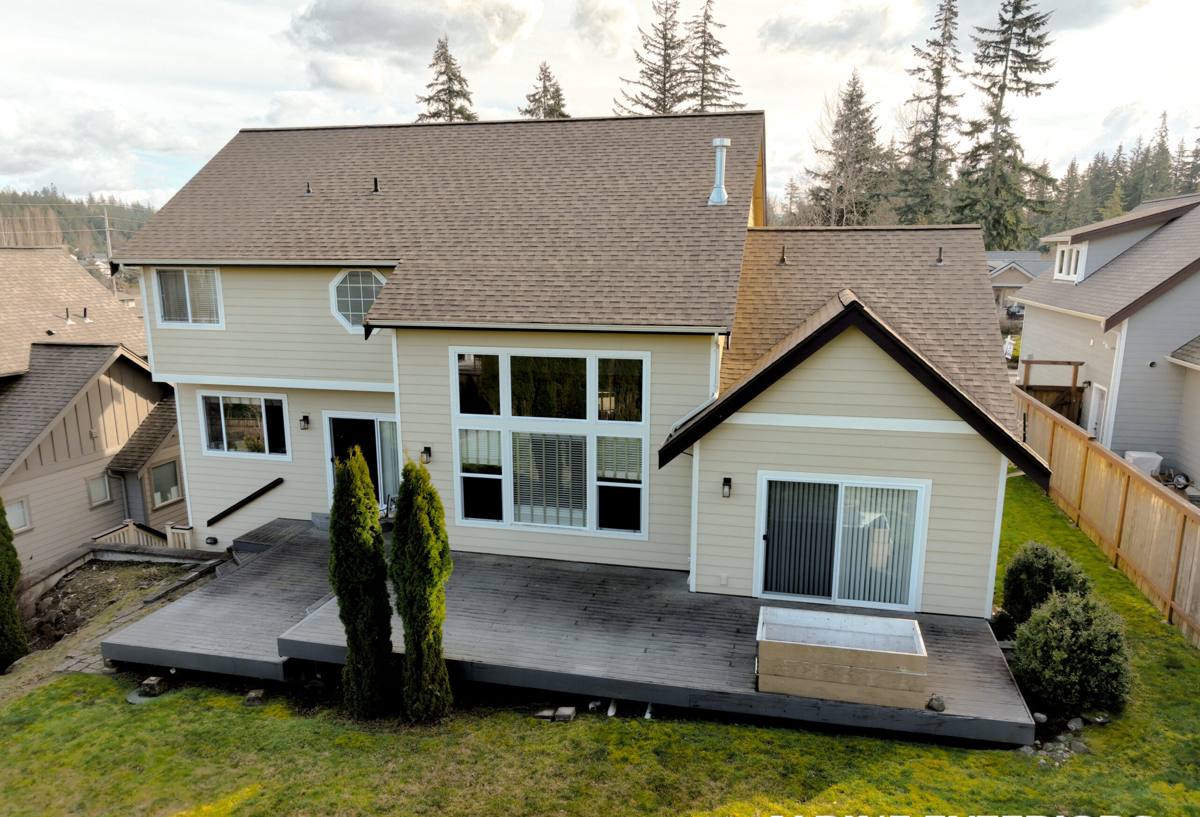
What "Correct" James Hardie Installation Actually Involves
James Hardie makes a good product, but the warranty and the performance both depend on installation matching the manufacturer's published specifications — not just "close enough." This is where a lot of siding jobs quietly go wrong, because fiber cement is less forgiving of shortcuts than vinyl, and the mistakes don't show up until years later.
The details that matter most near the water
- Correct fastener type and spacing — stainless steel or hot-dipped galvanized fasteners rated for the exposure, placed at Hardie's specified intervals, not "whatever's faster."
- Proper clearance and flashing — minimum gaps at grade, roof lines, and decks, plus flashing at every horizontal transition so water sheds outward instead of pooling behind the board.
- Correct caulking at butt joints and trim — sealed where Hardie's install guide calls for sealant, left to breathe where it doesn't; over-caulking traps moisture just as badly as under-caulking.
- House wrap and weather barrier continuity — no gaps, tears, or shortcuts around penetrations, since the siding is the second line of defense, not the only one.
- Panel and plank overlap specs — followed exactly, especially at inside and outside corners where wind-driven rain concentrates.
Skipping any one of these doesn't usually cause an immediate, visible problem. It shows up two, five, or ten years later as a soft spot at a corner, a streaked stain below a poorly flashed joint, or premature paint failure — right when it's expensive and disruptive to fix.
Product Line: Why HZ5 Fits This Climate
James Hardie engineers its HardieZone system for regional climate conditions, and Western Washington falls into the HZ5 zone — formulated for wetter, more moisture-active climates rather than the drier HZ10 formulation used in the Southwest. HZ5 products are engineered with moisture and impact resistance suited to exactly the freeze-thaw cycles, sustained dampness, and wind-driven rain that define a Whatcom County winter. For a Silver Beach home, using the correct climate-engineered product isn't an upsell — it's the baseline, and it's one more reason we don't substitute in a generic fiber cement product from a different manufacturer.
ColorPlus Factory Finish: Why It Matters More Here
A factory-applied ColorPlus finish is baked on under controlled conditions, which gives it better adhesion and more consistent coverage than field-applied paint — and that matters more in a salty, damp environment where field-applied finishes tend to fail first at edges and fastener heads. It also comes with its own finish warranty separate from the substrate warranty, covering fading and peeling under normal conditions. For homeowners who've dealt with repainting a wood or composite exterior every several years because of moss staining and coastal weathering, this is one of the most practical upgrades in the whole package — less maintenance, not just a better color match.
Comparing Siding Options for a Silver Beach Home
We only install James Hardie, but homeowners deserve an honest comparison, not just a sales pitch. Here's how the common options actually perform against the specific conditions this area creates:
| Factor | James Hardie Fiber Cement | Vinyl | LP SmartSide / Wood-Based |
|---|---|---|---|
| Moss and algae resistance | Surface growth only; no substrate damage | Surface growth; can trap moisture behind panels | Absorbs moisture; risk of swelling and rot over time |
| Salt air / coastal exposure | Stable with correct fasteners and finish | Can become brittle and discolor faster near water | Finish and substrate both vulnerable to moisture cycling |
| Wind-driven rain tolerance | Excellent when installed to spec | Depends heavily on seams and fastening | Moderate; edges are the weak point |
| Maintenance burden | Occasional rinse; repaint only if not ColorPlus | Low, but cracks/fades and can't easily be repaired in sections | Regular inspection and recoating needed |
| Fire resistance | Non-combustible | Combustible | Combustible |
Vinyl and engineered wood products both have legitimate uses elsewhere, and we're not going to pretend otherwise — vinyl is inexpensive and low-maintenance in mild climates, and engineered wood siding can look great when it's kept dry and well-maintained. But for the specific combination of salt exposure, wind-driven rain, and prolonged dampness that Silver Beach homes deal with, we've made fiber cement our standard because it's the option that holds up with the least long-term risk.
Our Process for a Silver Beach Project
1. Site Assessment
We walk the home and pay specific attention to exposure — which walls face prevailing wind and rain, where moss and shading are already a problem, and whether there's existing moisture damage behind the current siding that needs to be addressed before anything new goes up.
2. Tear-Off and Substrate Inspection
Removing the old siding is when hidden problems surface — soft sheathing, rusted fasteners, or house wrap that's failed. We flag anything that needs repair before installation continues, rather than covering it up and hoping it holds.
3. Weather Barrier and Flashing
New or repaired house wrap goes on with correct overlap and taping, and flashing is installed at every horizontal transition, window, and door — the step most responsible for how the siding performs in a driving rain years down the road.
4. Installation to Manufacturer Spec
Panels or planks go on with the correct HZ5 product, proper fastener type and spacing, and correct clearances at grade, roofline, and decks — followed to Hardie's published instructions so the warranty stays intact and the wall assembly performs the way it's designed to.
5. Final Walkthrough
We review the finished job with the homeowner, cover basic care, and make sure everything meets both our standard and Hardie's installation requirements before calling it done.
What Actually Drives Cost on a Job Like This
Every home is different, but the factors that move the price on a Silver Beach siding project are consistent:
- Home size and wall complexity — more corners, dormers, and trim details mean more labor and material cuts.
- Existing damage — rotted sheathing or framing found during tear-off adds repair cost that's hard to quote before the old siding comes off.
- Siding profile and accessories — lap width, panel style, and trim choices all affect material cost.
- Finish — factory ColorPlus finish costs more upfront than primed material but eliminates a repaint cycle down the road.
- Access and site conditions — homes close to slopes, water, or with limited staging area can add time.
We won't quote a number without seeing the home, but we'll walk you through which of these apply to your project and why, so the estimate makes sense rather than feeling like a black box.
Maintenance Homeowners Should Actually Expect
Correctly installed James Hardie siding is low-maintenance, not no-maintenance. In a climate like this, a short annual routine goes a long way:
- Rinse the exterior once or twice a year, especially shaded or north-facing walls where moss builds up fastest.
- Walk the perimeter after major storms and check for loose trim, gaps at caulked joints, or debris buildup against the bottom edge of the siding.
- Keep gutters clear so overflow isn't running down the wall face.
- Trim back vegetation that keeps a wall shaded and damp longer than it needs to be.
- Address any small paint or caulk failure early, before water gets behind the siding.
Why a Crew That Already Works Silver Beach Matters
Fiber cement installation is not particularly forgiving of guesswork, and coastal exposure raises the stakes on getting flashing, fastening, and clearances right the first time. A crew that's already worked homes in this specific area knows which walls tend to need extra flashing attention, how moss patterns show up here versus more inland Whatcom County neighborhoods, and what past installation shortcuts tend to fail first when we're doing a tear-off. That's not something you get from a general handyman crew or a contractor pricing the job from a spreadsheet — it comes from having actually done the work here, on homes dealing with the same weather yours does.
If you're weighing a siding replacement or repair on a Silver Beach home, we're happy to take a look and give you a straightforward, no-pressure estimate — including what we'd flag as priorities given your home's exposure and current condition.