 Whatcom County
 Why Silver Beach Homes Go Through Siding Faster Than Most
Silver Beach sits inside one of the wettest, greenest corners of Washington, and that has a direct effect on how long exterior siding lasts. Homes here deal with a longer wet season than most of the state, tree cover that keeps moisture sitting on walls instead of drying off in the sun, and a marine-influenced climate that carries salt-laden air off the water on breezy days. None of that is unusual for Whatcom County — it's just the trade-off for living somewhere this green. But it means siding that was installed without those conditions in mind tends to fail early: paint chalks and peels ahead of schedule, seams open up and let water behind the wall, and moss and algae take hold on north-facing walls and anywhere shade lingers.
When we get called out to a Silver Beach home for a siding estimate, we're rarely looking at siding that just "got old." Most of the time we're looking at siding that was never suited to this climate in the first place, or that was installed correctly for a drier region but not for one with this much sustained moisture. Replacement is the chance to fix both problems at once — put on a product built for wet, shaded, salt-tinged conditions, and install it the way that climate actually demands.
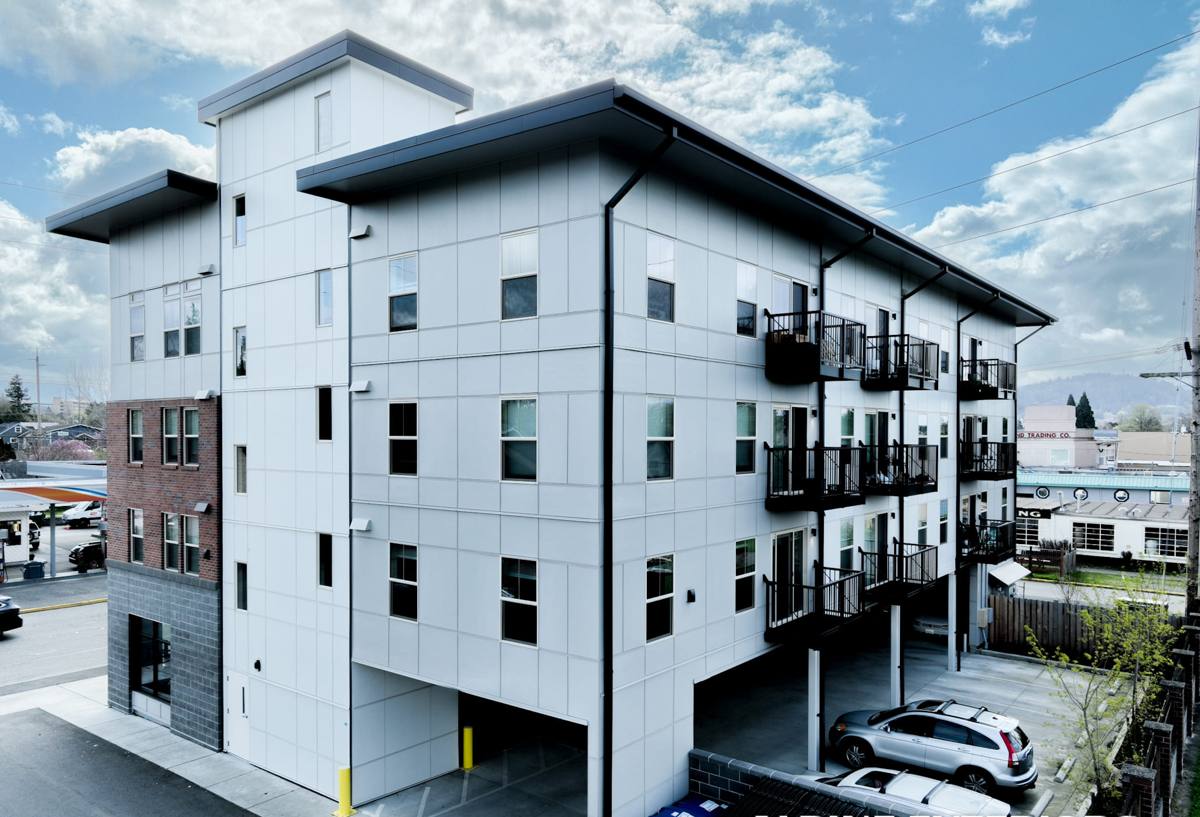
What Whatcom County's Climate Actually Demands From Siding
Salt Air and Slow Corrosion
Whatcom County's proximity to Bellingham Bay and the greater Puget Sound/Georgia Strait marine environment means airborne salt is a real factor for homes throughout the area, not just those with a water view. Salt air accelerates the breakdown of cheap fasteners, thin metal flashing, and painted finishes that aren't rated for a coastal-influenced climate. Over years, that shows up as rust bleed at nail heads, pitted trim, and faster fading on the sun-facing side of the house.
Driving Rain and Wind-Driven Moisture
Storms coming off the water don't just drop rain straight down — wind pushes it sideways into wall assemblies, which is exactly the condition that exposes weak flashing details, gapped seams, and siding that wasn't lapped correctly. A siding system can look fine from the street and still be letting water behind it every time a wind-driven rain event hits.
Moss, Shade, and Trapped Moisture
Long moss seasons are practically a defining feature of living in this part of Washington. Mature trees, cloud cover, and short winter days mean many walls simply don't get enough direct sun to dry out between rains. Moss and algae need that sustained dampness to take hold, and once established, they hold even more water against the siding surface — which is hard on paint, hard on seams, and eventually hard on the wall sheathing underneath if it isn't addressed.
Signs a Silver Beach Home Needs Siding Replacement, Not Just Repair
- Soft or spongy spots when you press on the siding, especially near the bottom courses or around windows
- Paint that's failing evenly across large sections rather than in one isolated spot
- Persistent moss or dark streaking that comes right back within a season of cleaning
- Visible gaps, cupping, or warping in individual boards or panels
- Rising energy bills alongside drafty rooms, which often points to a failing weather barrier behind the siding
- Siding that's original to a home built more than 20-25 years ago and has never been fully replaced
- Any sign of rot, staining, or soft trim at inside corners, butt joints, or around penetrations like hose bibs and vents
One or two of these on their own might be a repair. Several at once, or any sign of moisture reaching the sheathing, usually means the whole wall system needs to come off and be reinstalled correctly rather than patched.
Why We Only Install James Hardie Fiber Cement
We get asked fairly often why we don't offer vinyl, LP SmartSide, or other fiber cement brands as cheaper options. The honest answer is that we've made a standard for the homes we put our name on, and in a climate like this one, the trade-offs of those other products aren't ones we're willing to install and then stand behind.
Vinyl siding is inexpensive and low-maintenance in mild, dry climates, but it expands and contracts with temperature swings, can crack in cold snaps, and its seams and J-channels give wind-driven rain more opportunities to get behind the wall — exactly the failure mode this climate creates. LP SmartSide is an engineered wood product with real strengths, but it's still wood-based, meaning it depends heavily on caulking, paint maintenance, and cut-edge sealing to keep moisture out over time; in a county with this much sustained dampness and moss pressure, that maintenance margin is thinner than we're comfortable with. Other fiber cement brands exist, but James Hardie is the manufacturer with the longest track record, the deepest climate-specific engineering (its HZ5 product line is formulated for exactly this kind of wet, moderate climate), and a factory finish system, ColorPlus, that's warrantied against fading and peeling for far longer than field-applied paint typically holds up.
Fiber cement in general resists moisture, doesn't feed moss and algae the way some wood-based products can, and won't warp or rot. Hardie's version of it comes backed by a strong transferable warranty and a specific engineering approach for our region. That combination is why it's the only siding we put on homes — not because every alternative is a bad product everywhere, but because it's the one we can install here and be confident it will still be doing its job in twenty years.
What a Correct Siding Replacement Job Actually Involves
Full Tear-Off and Sheathing Inspection
A proper replacement starts with removing the old siding entirely, not covering over it. That's the only way to actually see the sheathing underneath — check for rot, soft spots, or water staining, and replace any damaged wood before anything new goes back on. Skipping this step is how new siding ends up installed over a problem that keeps getting worse behind the wall.
Weather-Resistive Barrier and Flashing Details
With this much wind-driven rain, the housewrap and flashing details matter as much as the siding itself. Every window, door, and penetration needs flashing that's lapped correctly — top piece over the one below it, always shedding water downward and outward. This is the part of the job that's invisible once it's finished, and it's also the part most likely to be rushed on a lower-bid job.
Installing James Hardie to Manufacturer Spec
Hardie siding has to be installed to the manufacturer's specific fastening, clearance, and caulking guidelines to qualify for its warranty and to actually perform as designed. That means correct nail placement and spacing, proper gaps at butt joints, ground clearance to keep splash-back off the bottom course, and factory-cut or properly sealed field cuts. In a moss-prone climate, we also pay close attention to keeping trim and flashing details tight enough that shaded walls don't have an easy path to trap water.
Choosing the Right Hardie Line and Finish for a Shaded, Wet Lot
| Consideration | What It Means for a Silver Beach Home |
|---|---|
| HZ5 vs. standard climate zones | HZ5 is engineered for moisture-heavy, moderate climates like ours — the right baseline choice here |
| ColorPlus factory finish | Cures and bonds under controlled conditions, holding up far longer against UV and moisture than field-painted siding on shaded, damp walls |
| Board width and profile | Wider exposures shed water faster and show fewer seams for moss to gather in; profile choice is largely aesthetic but matters on heavily shaded elevations |
| Panel vs. lap siding | Vertical panel systems can suit certain architectural styles but need extra attention to seam sealing on the wettest walls |
None of this is about upselling a homeowner into the most expensive option. It's about matching the specific product line and finish to how much sun, shade, and moisture a given wall actually sees.
Our Process, Start to Finish
- Free on-site estimate and inspection — we look at existing siding, trim, and any visible moisture or moss issues before quoting anything
- Written scope covering tear-off, sheathing repair allowances, flashing details, and the specific Hardie products and colors selected
- Full removal of old siding and trim, with sheathing inspected and repaired as needed
- Weather-resistive barrier and flashing installed or upgraded around every window, door, and penetration
- James Hardie siding and trim installed to manufacturer spec, with attention to clearances and joint sealing
- Final walk-through so you can see the completed work and ask questions before we consider the job done
What Drives the Cost of Siding Replacement
| Factor | Why It Matters |
|---|---|
| Home size and wall complexity | More corners, dormers, and cutouts mean more labor and material waste |
| Sheathing condition | Hidden rot found during tear-off adds repair cost but is far cheaper to fix now than after new siding goes back on over it |
| Trim and detail work | Window and door trim, fascia, and corner boards add both material and installation time |
| Product line and finish | HZ5 lap siding, panel systems, and ColorPlus color choices carry different material costs |
| Access and site conditions | Steep lots, mature landscaping, or limited access around a home affect labor time |
We're not going to publish a one-size-fits-all price on siding replacement — anyone who does is guessing. What we can tell you is that the honest range depends heavily on the factors above, and a real number only comes from actually looking at your home.
Why It Matters to Hire a Crew That Already Works in Silver Beach
Siding installation isn't one-size-fits-all across Washington, let alone across the country. A crew that mostly works drier inland climates may not think twice about flashing details or moss-prone shaded walls, because they've rarely had to. A crew that works Whatcom County regularly has already seen what happens when those details are skipped here — the callbacks, the early failures, the moss coming back within a season — and builds the job differently from day one because of it.
There's also a practical side to it: familiarity with local permitting, typical lot conditions around Silver Beach and greater Whatcom County, and realistic scheduling around this area's wet stretches all come from doing the work here repeatedly, not from a one-off job passing through.
If your siding is showing its age, if moss keeps coming back no matter how often it's cleaned, or if you just want an honest read on where your home stands, we're happy to come take a look. The estimate is free, there's no pressure to move forward, and you'll get a straight answer about what your home actually needs.