 Whatcom County
 Sunnyland's Roofs Work Harder Than Most
Sunnyland is one of Bellingham's older, established neighborhoods, and that means a roofing stock that's seen decades of Whatcom County weather. Salt-tinged air drifting in off the water, driving rain that comes in sideways more often than straight down, and a moss season that can run eight or nine months out of the year all put steady, cumulative stress on a roof. None of these are dramatic, one-time events. They're slow, patient problems, and slow problems are exactly the kind that get ignored until they show up as a stain on a ceiling.
Roof repair in this climate isn't about chasing storm damage after a single bad night. It's about staying ahead of moisture that never really stops trying to get in. A roof that's failing in Sunnyland usually isn't failing because of one big event — it's failing because small weak points were left alone through a few too many wet winters.
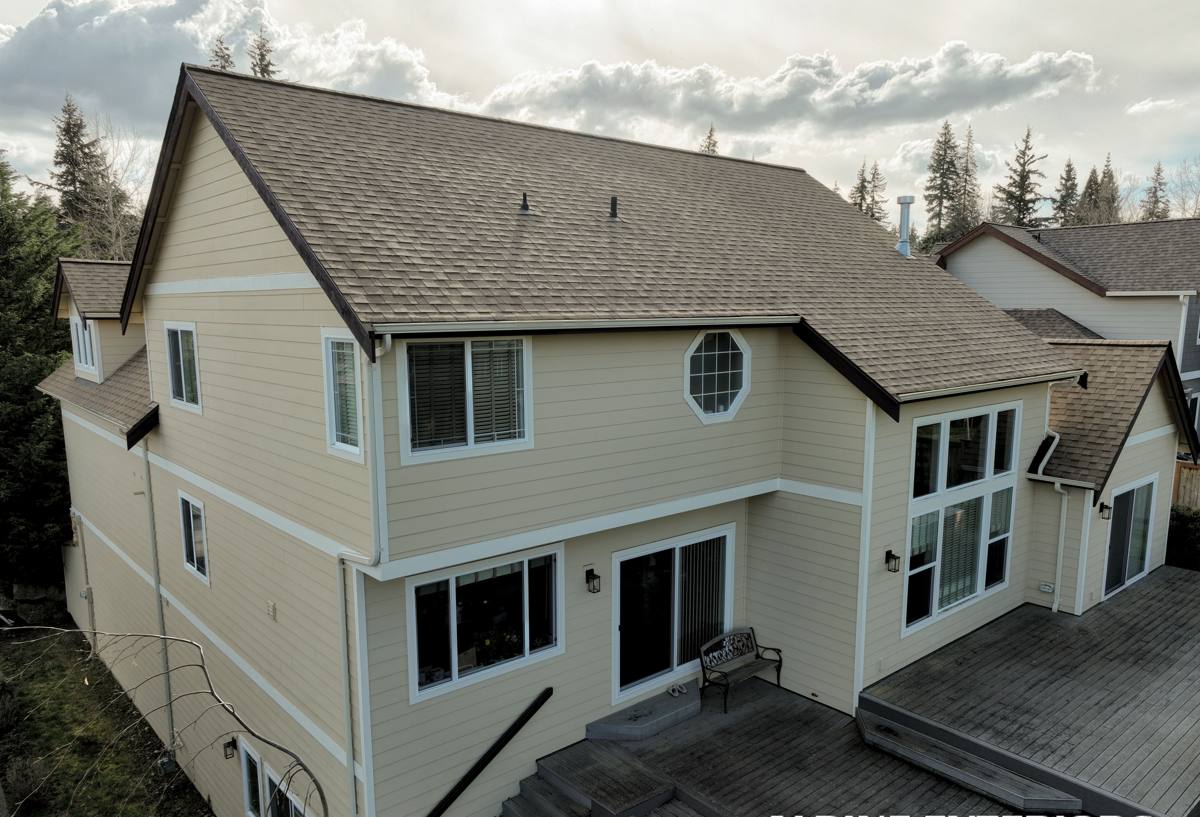
What Actually Wears Out a Roof Here
Moss and Organic Growth
Whatcom County's mild, damp climate is close to ideal for moss, and Sunnyland's mature tree cover only adds to the shade and leaf litter that keep roof surfaces damp longer than they should be. Moss doesn't just look bad — it lifts shingle edges as it grows, holds water against the roofing material, and accelerates granule loss on asphalt shingles. Left alone long enough, it works its way under flashing and starts problems that are invisible from the ground.
Driving Rain and Wind-Driven Water
Rain that comes in at an angle finds every gap a straight-down rain would never reach — under shingle tabs, behind step flashing, around vent boots. This is where most "mystery leaks" actually originate: not a hole in the field of the roof, but a small failure at a transition point that only leaks when wind pushes rain into it.
Salt Air and Metal Fatigue
Being close to Puget Sound means airborne salt is a real factor for anything metal on a roof — flashing, fasteners, gutter hardware, vent caps. Salt exposure speeds up corrosion, and corroded flashing is one of the most common reasons a roof that "looks fine" is actually letting water in at the seams.
Signs a Sunnyland Roof Needs Repair
Most roof problems give warning signs well before they become an emergency. Homeowners in this neighborhood should watch for:
- Dark streaking or thick moss growth, especially on north-facing or shaded slopes
- Granules collecting in gutters or at the base of downspouts
- Shingles that are curling, cupping, or lifting at the edges
- Soft spots or sagging when walked on (a job for a professional, not a DIY check)
- Water stains on interior ceilings or in the attic, even faint ones
- Rust streaks below metal flashing or vent stacks
- Daylight visible through the roof deck from inside the attic
- Missing or damaged shingles after a windstorm
Any one of these on its own might not mean much. Two or three together, especially after a wet winter, usually mean it's worth getting a closer look before the next storm season.
What a Correct Repair Actually Involves
Finding the Real Source, Not Just the Symptom
Water travels. A stain on a bedroom ceiling might trace back to a flashing failure ten feet away, higher up the roof. A proper repair starts with tracing the path of the water, not just patching the spot where it became visible. This is the step that gets skipped when a repair is rushed, and it's the reason "fixed" leaks so often come back.
Matching Materials, Not Just Covering Gaps
A patch that doesn't match the surrounding roofing in type, weight, and age creates a new weak point — different materials expand, contract, and shed water differently. On an older Sunnyland roof, that might mean sourcing a compatible shingle profile or reworking a larger section so the repair blends into the roof's existing drainage pattern instead of fighting it.
Flashing, Underlayment, and the Parts You Don't See
Most of what makes a repair last is invisible once the job is done: correctly lapped underlayment, flashing that's been reset (not just caulked over), and fasteners rated for the exposure. Caulk and sealant have a place, but they're a short-term fix, not a substitute for flashing that's properly integrated with the roofing layers around it.
Dealing with Moss the Right Way
Scraping moss off without addressing what's underneath just clears the view temporarily. A real fix checks for granule loss and shingle damage under the growth, treats the surface to slow regrowth, and looks at whether tree trimming or gutter changes would reduce how much moisture the roof holds onto in the first place.
Repair vs. Replacement: How to Think About Cost
Not every roof problem calls for a full replacement, and not every repair is the cheaper long-term choice. The right call usually comes down to the roof's age, how localized the damage is, and how many separate issues are competing for attention.
| Factor | Favors Repair | Favors Replacement |
|---|---|---|
| Roof age | Under 15-20 years, otherwise sound | Nearing or past expected lifespan |
| Damage location | Isolated to one section or detail (flashing, a valley, a vent) | Spread across multiple slopes |
| Moss/algae condition | Surface growth, shingles still intact underneath | Granule loss and shingle breakdown widespread |
| Underlying deck | Solid, no rot or soft spots | Soft decking or repeated water intrusion found |
| History of repairs | First or second repair on this roof | Third or more repair in a few years |
As a general rule, straightforward repairs run a modest fraction of a full replacement's cost. But a roof that needs a third or fourth repair in a short span is usually telling you something about its overall condition that a patch won't fix.
How Our Repair Process Works
1. On-Site Inspection
We look at the roof itself, not just the spot you're worried about — attic access if available, flashing details, gutter condition, and moss coverage. Most leaks have a story that starts somewhere other than where the water showed up indoors.
2. A Plain-Language Estimate
You get a written scope that explains what's actually wrong, what we'll do about it, and what it costs — no vague line items. If a full section needs rebuilding rather than a spot patch, we'll tell you why, and we'll tell you if a patch is genuinely the right call instead.
3. The Repair Itself
We work the roof in a logical order: address the underlying cause first, then rebuild flashing and underlayment as needed, then match and install roofing material, then treat any moss or organic growth on and around the repair area.
4. Cleanup and a Final Walkthrough
Job sites get cleared of debris and stray fasteners — a magnetic sweep of the ground near the work area is standard practice. We'll walk you through what was done and what to watch for going forward.
Our Standards on Materials
We don't push a single product as the answer to every repair. Instead we match the repair to what's already on the roof and to what actually holds up in this climate, and we're upfront about trade-offs:
- Asphalt composition shingles — the most common material on Sunnyland roofs; repairs are usually straightforward when matching shingle profile and age is done carefully
- Cedar shake — attractive but higher maintenance in a wet climate; repairs need extra attention to ventilation and moisture drainage to avoid trapping dampness
- Metal flashing — we favor corrosion-resistant flashing given the salt air exposure, and we replace rather than re-caulk failing flashing whenever the roof structure allows it
- Sealants and coatings — useful as a supporting detail, never as the primary fix for a structural flashing or underlayment failure
Our standard is durability under this specific climate, not the lowest-cost patch that looks fine for one season.
Why a Crew That Already Works Sunnyland Matters
A contractor who works Bellingham and greater Whatcom County regularly already knows the patterns: which neighborhoods hold moisture longer under tree cover, how the local building department handles roofing permits when they're needed, and what an older Sunnyland roof structure typically looks like under the surface. That familiarity shortens the diagnostic step and reduces the odds of a surprise once work is underway. It also means someone accountable and reachable if a repair needs a follow-up visit, rather than a crew that did one job in the area and moved on.
Keeping a Repaired Roof Healthy
A good repair buys time, but a little upkeep buys more of it. Between service visits, homeowners can help their roof by:
- Clearing gutters and downspouts at least twice a year, more often under heavy tree cover
- Trimming back branches that overhang the roofline to cut down on shade and debris
- Watching for moss regrowth and addressing it early rather than letting it establish
- Checking the attic after major storms for any new signs of moisture
- Scheduling a roof check after any significant windstorm, even if nothing looks obviously wrong
If you're noticing moss buildup, a stain that wasn't there last winter, or you just want an honest read on where your roof stands, we're happy to take a look. Estimates are free, there's no pressure to move forward, and you'll get a straight answer about whether you're looking at a repair or something bigger.