 Whatcom County
 Why Blaine Roofs Take a Different Kind of Beating
Blaine sits right at the water's edge at the top of Whatcom County, which means roofs here deal with a combination most inland homes never see: wind coming straight off the water, driving rain that hits shingles at an angle instead of straight down, and a steady dose of salt air that speeds up corrosion on anything metal. Add in the long, wet moss season that Western Washington is known for, and you've got a roof that's under more or less constant low-grade stress even in a "normal" year.
When an actual storm rolls through — a windstorm off the Strait, or one of the heavy atmospheric river events that dump several inches of rain in a short window — that stress finds the weak points fast. A roof that was quietly losing ground to moss and salt air for two years can fail in a single afternoon once the wind gets under a lifted shingle edge.
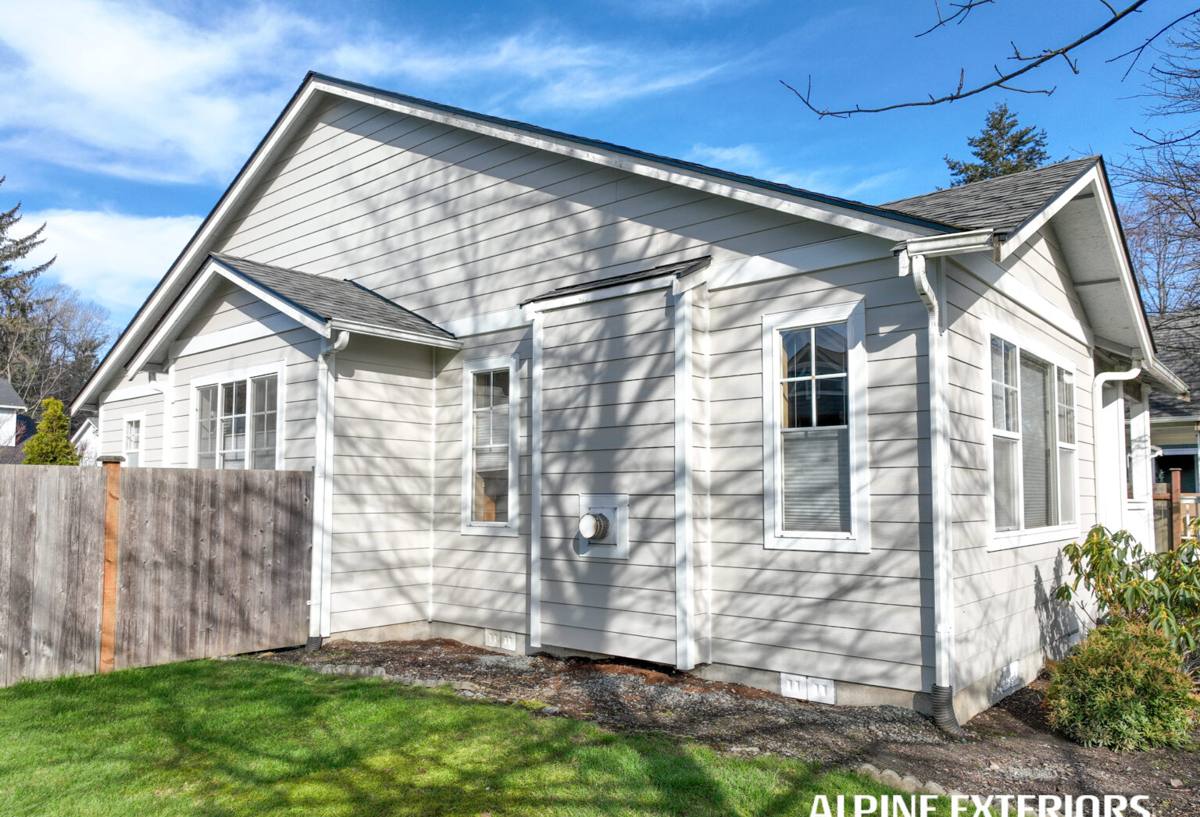
What Storm Damage Actually Looks Like on the Ground
Storm damage in this part of Whatcom County rarely looks like the dramatic hole-in-the-roof scenario people picture. Most of what we get called out for is quieter and easier to miss from the ground:
- Shingles lifted or creased at the tab edges from wind gusts, sometimes without any missing pieces
- Ridge cap shingles cracked or blown loose along the roof's peak
- Granule loss showing up as dark streaking in gutters or downspout runoff after heavy rain
- Flashing pulled away from chimneys, skylights, or wall intersections where wind-driven rain gets a foothold
- Moss mats that held moisture through a storm and accelerated rot in the decking underneath
- Gutter and fascia damage from wind-thrown branches or debris
The tricky part is that a lot of this doesn't cause a visible leak right away. Wind-driven rain can work its way under a lifted shingle and travel sideways along the underlayment before it ever shows up as a stain on a ceiling. That's why a proper storm inspection isn't just a walk-around from the driveway — it means getting on the roof and checking the parts that actually take the hit.
Why Moss Makes Storm Damage Worse
A roof that's carrying a moss load going into a storm is already compromised. Moss holds water against the shingle surface long after the rain stops, which softens the asphalt mat and loosens the granule bond. That same roof, hit by wind, is far more likely to lose shingles or tabs than a clean one. If your roof hasn't been treated or cleared in a couple of years, storm damage tends to be worse and repairs tend to reveal more decking rot than expected.
What a Correct Storm Damage Repair Actually Involves
A repair that's done right isn't just "put a new shingle where the old one blew off." It has to account for what the storm exposed and what's likely to happen the next time wind and rain team up. Here's what we consider standard for a proper job:
- Full damage assessment, not a spot check. We look at the whole roof plane, not just the area you can see damage on, because wind damage often extends past the obvious spot.
- Decking inspection. Any area where shingles were missing or lifted gets checked for water intrusion into the sheathing underneath. Damaged decking gets replaced, not covered over.
- Underlayment repair. If water tracked sideways under the shingle layer, the underlayment in that section needs attention too, not just the visible shingles.
- Flashing detail work. Storm damage often shows up first at flashing points — chimneys, valleys, skylights, wall step-flashing. These get resealed or replaced properly, not just caulked over.
- Matched materials where possible. We try to match existing shingle color and profile so the repair blends in rather than standing out as a patch.
- Documentation. Photos and a written scope of the damage and repair, which matters a great deal if you're filing an insurance claim.
Repair, Partial Re-Roof, or Full Replacement?
Not every storm-damaged roof needs to be replaced, and not every one can be patched and called done. The honest answer depends on the roof's age, how widespread the damage is, and what condition the rest of the roof was in before the storm hit. Here's how we generally think through it:
| Situation | Typical Approach | Why |
|---|---|---|
| Isolated wind damage, roof under 10 years old, good overall condition | Targeted repair | The rest of the roof still has useful life; matching shingles are usually still available |
| Damage spread across multiple planes, roof 12-18 years old | Partial re-roof or full replacement discussion | Repeated repairs on an aging roof rarely make financial sense once damage is widespread |
| Heavy moss history plus storm damage, decking soft in multiple spots | Full replacement likely | Underlying rot usually extends beyond what's visible from a single damaged section |
| Roof near end of its rated lifespan, storm was the tipping point | Full replacement | Patching an old roof to satisfy an insurance claim often costs more over time than replacing it |
We'll tell you honestly which category your roof falls into. If a repair is the right call, we're not going to talk you into a full replacement you don't need — and if the damage genuinely warrants replacement, we'll explain why rather than just quoting the bigger job.
Cost Factors Homeowners Should Understand
Every storm repair is different, so we're not going to throw out a fake price range that doesn't mean anything for your specific roof. What we can tell you is what actually drives the cost up or down:
| Factor | Effect on Cost |
|---|---|
| Roof pitch and access | Steep or multi-story roofs take longer and require more safety setup |
| Extent of decking replacement needed | Rotted plywood or boards found under damaged shingles adds material and labor |
| Shingle availability for matching | Discontinued colors or profiles may require a larger repair area to blend properly |
| Flashing complexity | Valleys, chimneys, and skylights take more time to do correctly than open field shingle |
| Insurance involvement | Claims require documentation and sometimes adjuster coordination, which affects timeline more than price |
Working With Your Insurance Company
Most storm damage claims in this area come from wind and wind-driven rain events rather than something like hail, which is uncommon here. That matters because wind damage can be less obvious to an adjuster who isn't familiar with what a lifted or creased shingle looks like versus one that's just old. This is where thorough photo documentation and a clear written scope of damage make a real difference in how smoothly a claim goes.
We're not a public adjuster and we won't pretend to be one, but we can give you an honest, detailed record of what the storm did to your roof, separate from what was already pre-existing wear. That distinction matters to insurers, and it matters to you — you shouldn't pay out of pocket for storm damage, and you shouldn't expect a policy to cover years of deferred moss and maintenance issues either.
Why Local Experience in Whatcom County Actually Matters Here
A crew that only shows up after a storm, does the repair, and leaves doesn't have much reason to get the details right for the long haul. A crew that already works Blaine and the surrounding Whatcom County area has to live with the roofs it repairs — if a flashing detail fails or moss comes back fast because a repair didn't account for local conditions, that's a callback we'd rather not have.
That local familiarity shows up in a few practical ways:
- Knowing which flashing and fastener materials hold up against salt air versus which corrode faster near the water
- Recognizing the difference between storm damage and ordinary Pacific Northwest wear at a glance
- Understanding how moss timelines work in this climate so repairs include realistic maintenance advice, not generic tips
- Being able to respond quickly after a storm without traveling in from out of the area
- Familiarity with local permitting expectations for reroofing work when a repair turns into something larger
What to Check Before Hiring Anyone for Storm Repair
After a storm, it's common to get door-knockers and out-of-town crews offering fast repairs. Some are legitimate. Many aren't set up to still be around if something goes wrong six months later. A few basic checks protect you either way:
- Confirm active WA contractor licensing and current liability insurance before any work starts
- Get a written scope of work, not just a verbal price
- Ask how decking issues, if found, will be handled and priced — this should be discussed up front, not discovered as a surprise add-on
- Be cautious of anyone pressuring you to sign an insurance assignment or contract on the spot
- Ask for a local address or service history in the area, not just a phone number
Protecting the Repair Going Forward
A good storm repair only stays good if the rest of the roof is maintained around it. In this climate, that mostly comes down to controlling moisture and moss before they undo the work:
- Keep gutters and downspouts clear so wind-driven rain has somewhere to go
- Have moss growth treated or removed on a regular schedule rather than waiting until it's thick
- Check flashing points after any major windstorm, even if nothing looks obviously wrong
- Trim back branches that overhang the roof, since falling limbs are a common secondary cause of storm damage here
- Have the roof looked at after any storm strong enough to cause damage elsewhere in the neighborhood
Get an Honest Look at Your Roof
If a recent storm has you wondering whether your roof took damage, it's worth getting a straight answer before small issues turn into a bigger repair. We'll walk the roof, tell you plainly what we find, and explain your real options — repair, partial work, or replacement — without pushing you toward the most expensive one. Reach out for a free, no-pressure estimate and we'll take it from there.