 Whatcom County
 Roof Replacement Built for Cordata's Climate, Not a Generic Spec Sheet
Cordata sits in north Bellingham, close enough to the water that salt air is part of daily life and far enough into the Pacific Northwest weather pattern that driving rain and a long, wet moss season are just how the year goes. A roof that would hold up fine in a dry inland climate can fail early here if it's installed without accounting for those specifics. Roof replacement in this part of Whatcom County isn't just about swapping old shingles for new ones - it's about building an assembly that sheds constant moisture, resists moss colonization, and stands up to slow, steady corrosion from salt-laden air.
This page is about one job, done right, in one area: full roof replacement for homes in and around Cordata. Not a repair patch, not a generic overview of every roofing option nationwide - what an honest, correctly installed replacement roof looks like for a house that has to survive a Whatcom County winter and summer, year after year.
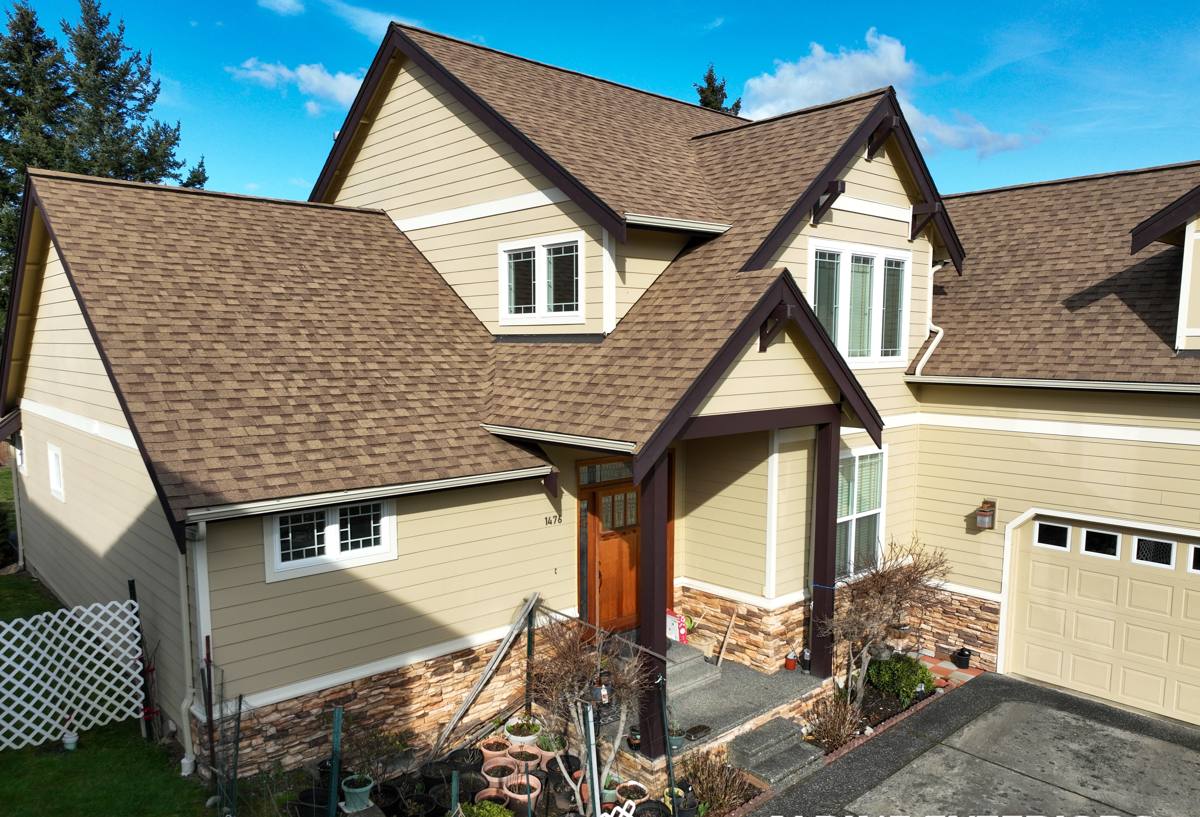
Why Roofs in This Part of Whatcom County Wear Out on Their Own Schedule
Three climate factors do most of the damage here, and they don't act alone - they compound each other.
Driving Rain
Wind-driven rain doesn't just fall straight down and run off - it gets pushed sideways and upward under shingle tabs, around flashing, and into any gap in the underlayment. A roof detailed for a drier climate, with minimal underlayment coverage and loose flashing tolerances, will eventually let water find its way to the decking. Once that happens, the damage is often invisible from the attic side until it's significant.
Salt Air
Being close to the water means airborne salt settles on every exposed surface, including the roof. Salt accelerates corrosion on exposed fasteners, metal flashing, gutter hardware, and vent stacks. Materials that would last decades in a dry inland climate can pit and weaken years earlier here if they're not rated or protected for a marine-influenced environment.
The Long Moss Season
Cool, damp, shaded conditions for much of the year are exactly what moss needs to establish itself. Moss holds moisture against the roofing material far longer than open air would, and as it grows it lifts shingle edges and works its way under laps and flashing. Left unchecked, a mossy roof deteriorates from the inside of the assembly outward, not just from the surface down.
What an Actually Correct Roof Replacement Involves
A roof replacement is only as good as what happens underneath the finished surface. Here's what we treat as non-negotiable on every job, regardless of the material a homeowner chooses.
Full Tear-Off and Deck Inspection
We remove the old roofing down to the deck rather than layering over it. That's the only way to actually see the plywood or plank sheathing underneath. In a climate with this much sustained moisture exposure, soft, delaminated, or rotted decking is common enough that skipping this step means building a new roof on a compromised base - it will show up as sagging, soft spots, or leaks within a few years no matter how good the shingles are.
Underlayment That Matches the Exposure
Given how much wind-driven rain this area sees, we don't treat underlayment as an afterthought. Ice-and-water shield membrane goes at eaves, valleys, and around every penetration - the spots where wind-driven water is most likely to get pushed backward under the roofing material. The rest of the deck gets a synthetic underlayment sized for the actual exposure, not the minimum the material manufacturer allows.
Ventilation That Actually Balances
Attic ventilation matters everywhere, but it matters more in a climate where the air itself carries a lot of moisture much of the year. Balanced intake at the soffits and exhaust at the ridge keeps moist air moving instead of condensing against the underside of the deck. Unbalanced ventilation is one of the most common hidden causes of premature deck rot we find on homes we're asked to look at, especially where a previous remodel closed off soffit vents without adding intake elsewhere.
Flashing and Penetration Detailing
Every place the roof plane is interrupted - chimneys, skylights, plumbing vents, wall-to-roof transitions - is a place water can get in if the flashing is reused, undersized, or installed with the laps running the wrong direction. We install new flashing at every penetration and step-flash every wall intersection, lapped so gravity and wind-driven rain both shed away from the seam rather than into it.
Fasteners and Hardware Rated for the Air Here
Because salt air corrodes exposed metal faster than it would a few miles inland, we use fasteners and flashing metals suited to a coastal-influenced environment rather than the cheapest option that meets code on paper. It costs a little more up front and saves the homeowner from early rust streaking, weakened fastener heads, and flashing that fails before the roofing material around it does.
Choosing a Roofing Material for a Cordata House
There's no single "best" roofing material - there's a right fit for a given roof pitch, budget, and how much long-term maintenance a homeowner wants to take on. Here's how the common options actually compare for a home dealing with this area's rain, salt air, and moss exposure.
| Material | Typical Lifespan Here | Moss/Moisture Behavior | Maintenance Burden | Relative Cost |
|---|---|---|---|---|
| Architectural asphalt shingle | 20-30 years | Good with proper ventilation; benefits from moss-resistant granules | Low to moderate | $ |
| Standing-seam metal | 40-50+ years | Excellent - moss struggles to grip a smooth metal surface | Low | $$$ |
| Synthetic/composite shake | 30-50 years | Good; engineered to resist moisture absorption | Low | $$ |
| Natural cedar shake | 20-30 years with upkeep | Requires active moss/moisture management | High | $$-$$$ |
We'll install any of these when it's the right call for the house and the budget. Our professional standard, though, is to be straightforward about trade-offs rather than just selling whatever has the best margin. Natural cedar shake, for example, can look great, but in a climate with this much sustained dampness it demands consistent cleaning and treatment to keep moss and moisture from shortening its life - a maintenance commitment we make sure homeowners understand before they commit to it, not after.
Moss and Algae: Building Prevention Into the Install
Cleaning moss off a roof after the fact only buys time. The more effective approach is designing moss resistance into the replacement itself.
Zinc or Copper Strips
Installed near the ridge, zinc or copper strips release trace metal ions with every rain that inhibit moss and algae growth down the roof plane below them. It's a small addition at install time that meaningfully extends the interval between moss treatments.
Shade and Airflow Reality
Some roof sections stay damp longer simply because of tree cover or the home's orientation - that's not something a roofing material alone fixes. Where it's relevant, we'll talk through realistic options, including whether some limited tree trimming would do more for roof longevity than any material upgrade.
Ongoing Care After Installation
A correctly installed roof still benefits from periodic moss removal using proper technique - never pressure washing, which can strip granules and shorten shingle life. We can advise on a maintenance schedule appropriate to the material installed.
Our Roof Replacement Process
- On-site inspection and honest assessment - we look at the current roof, the attic, and ventilation before recommending replacement over repair.
- Written estimate with material options - clear pricing and a real comparison of the material choices that make sense for the house.
- Tear-off and deck inspection - full removal down to the sheathing, with any damaged decking identified and priced before it's covered up.
- Underlayment, flashing, and ventilation installed to the exposure - not the bare minimum, the actual conditions this location deals with.
- Final roofing material installation - installed to manufacturer specification so warranty coverage stays intact.
- Walkthrough and cleanup - magnetic sweep for stray fasteners, full site cleanup, and a final walkthrough before we consider the job done.
Signs a Cordata Roof Needs Replacement, Not Another Repair
Not every roof problem calls for full replacement. These are the signs that usually mean it's time to stop patching:
- Shingles that are cupping, curling, or losing granules across large sections rather than one isolated spot
- Moss established in the seams or under shingle tabs, not just on the surface
- Daylight visible through the roof deck from inside the attic
- Soft or spongy spots when walking the roof, indicating deck rot
- Repeated leaks in different locations after previous repairs
- Roof is at or past the manufacturer's rated lifespan for its material and exposure
- Visible sagging along the ridge or roof plane
- Rusted, pitted, or failing flashing and fasteners
Why Hiring a Crew That Already Works in Cordata Matters
A roofing crew that regularly works this part of Whatcom County already knows how this specific climate behaves - which roof orientations hold moss longest, how much underlayment coverage driving rain here actually calls for, and which hardware holds up against salt air instead of failing early. That's knowledge that only comes from doing the work locally and repeatedly, not from a general contractor's checklist written for a different climate.
It also means straightforward logistics: permitting through the correct local jurisdiction, a crew that shows up when scheduled, and a company that will still be around if a warranty question comes up years down the road. For a job as consequential as a roof - the one system protecting everything else in the house - that local track record is worth as much as the material choice itself.
Get a Free, No-Pressure Estimate
If your Cordata home's roof is showing its age, or you just want an honest opinion on whether repair or replacement makes more sense, we're glad to take a look. Use the form below to request a free estimate - no pressure, no obligation, just a straight answer about what your roof actually needs.