 Whatcom County
 Board & Batten Siding in Edgemoor's Marine Climate
Board and batten is one of the most requested siding profiles in Edgemoor, and it's easy to see why. The vertical boards and raised battens give a home the clean, upright lines that suit both the craftsman and farmhouse-style houses common in this part of Whatcom County, and it reads especially well on the wooded, bay-facing lots that make this neighborhood distinct. But board and batten is also one of the least forgiving profiles to install poorly. Every seam between boards is covered by a batten instead of overlapped like lap siding, which means the assembly behind those battens — the drainage plane, the fasteners, the flashing details — is doing more of the work to keep water out of the wall. In a climate that delivers salt-laden air off the bay, wind-driven rain for much of the year, and a moss season that can stretch from fall through spring, that assembly has to be right the first time.
This page is about that one job, done for this one neighborhood: what Edgemoor homes actually need from board and batten siding, what a correct installation looks like, and why the crew doing it matters as much as the material.
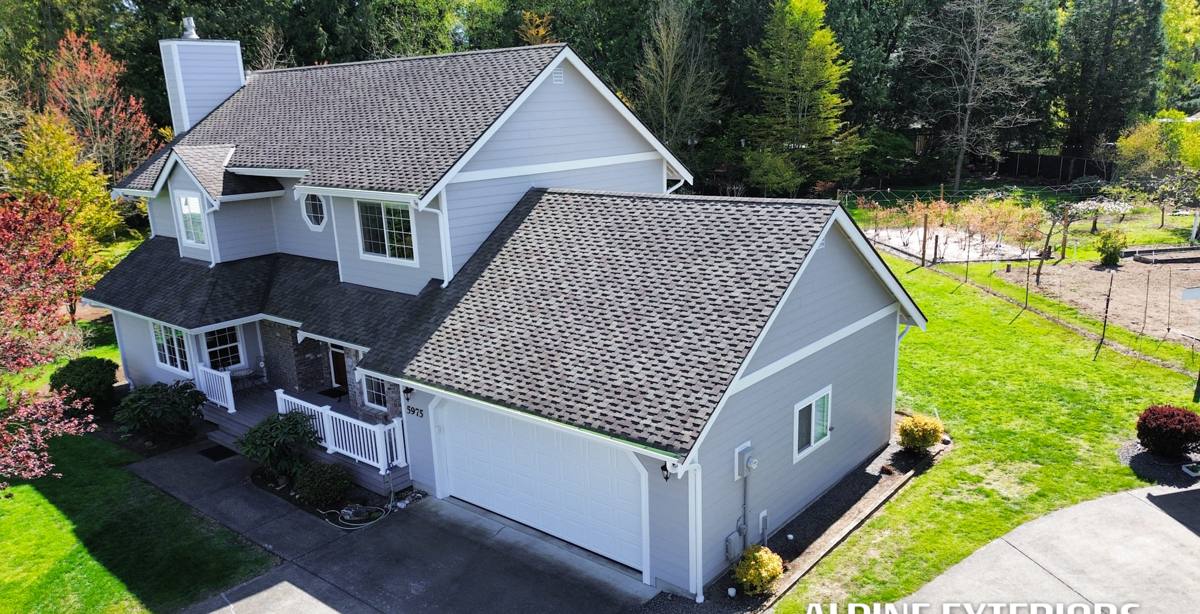
What This Climate Actually Does to Siding
Salt Air
Homes closer to Bellingham Bay pick up a steady, low-level dose of salt-laden air. It's not dramatic, but it's constant, and over years it accelerates corrosion on anything metal that's exposed to it — nail heads, trim flashing, fastener caps. Siding materials that hold a factory finish and fasteners that resist corrosion matter more here than they would on an inland lot.
Driving Rain
Whatcom County doesn't just get rain, it gets wind-driven rain that hits siding at an angle rather than falling straight down. On a lap-siding wall that angled water sheds off each overlapped course. On a board and batten wall, that same water is pushed against vertical seams and battens, which is exactly why the drainage gap and flashing behind those seams has to be installed correctly rather than assumed to be "good enough."
Moss and Long-Term Dampness
Many Edgemoor lots carry mature tree cover, which is part of the appeal of living there but also means siding on shaded elevations stays damp longer after a storm. That extended dampness is what feeds moss and algae growth on siding, trim, and roofing, and it's a near year-round condition here rather than a seasonal nuisance.
What a Correct Board & Batten Installation Involves
A board and batten wall that fails in this climate almost never fails because the boards themselves were bad. It fails because something behind the boards was skipped. The details below are the ones we treat as non-negotiable on every Edgemoor project.
Drainage Gap and Rain Screen
Any moisture that gets past the battens needs somewhere to go. A rain-screen gap between the siding and the water-resistive barrier gives water a path to drain and dry instead of sitting against the wall sheathing. On a high-rainfall, tree-shaded lot, skipping this gap is one of the most common causes of hidden rot behind board and batten siding.
Fasteners and Flashing
Given the salt exposure near the bay, fastener choice isn't cosmetic — it's structural. Corrosion-resistant fasteners, properly flashed window and door openings, and kick-out flashing at every roof-to-wall intersection keep water from finding the one gap in an otherwise correct installation.
Batten Spacing and Board Layout
Board and batten needs consistent expansion gaps and batten spacing set to manufacturer specification, not eyeballed. Too tight, and the boards have nowhere to move seasonally; too loose, and the battens stop doing their job of covering the seam fully in wind-driven rain.
- Water-resistive barrier installed and lapped correctly before any siding goes up
- Rain-screen gap maintained behind the full field of siding, not just at select spots
- Corrosion-resistant fasteners rated for the exposure
- Flashing at every window, door, and roof-wall intersection
- Batten spacing and fastening pattern matched to manufacturer instructions
- Caulking only at joints designed to be sealed, not as a substitute for flashing
The Material We Use: James Hardie Fiber Cement, Not Wood or Engineered Wood
Board and batten can be built out of cedar, engineered wood, or fiber cement, and the choice matters more in this climate than in a dry one. Cedar and engineered wood board and batten both rely on paint or factory coatings to keep moisture out of the wood fiber itself. In a climate with this much sustained dampness and salt exposure, that coating is under constant stress, and once moisture gets into the wood fiber at a seam or cut end, it doesn't dry out quickly under Whatcom County's cloud cover.
We install James Hardie fiber cement exclusively, and for board and batten specifically that means HardiePanel vertical siding paired with battens, or the Hardie Artisan Collection where a more refined, deeper-reveal look is wanted. Both are manufactured in the HZ5 formulation, which is engineered specifically for climates like this one — freeze-thaw cycling, sustained moisture exposure, and coastal air. The ColorPlus factory finish is baked on rather than field-applied, which means the color and the moisture barrier are the same layer, and it holds up to UV and salt air significantly longer than a field-applied paint job on wood. Fiber cement also doesn't provide the food source that wood does for moss and mildew, which matters directly on the shaded, damp lots common in this neighborhood.
We don't install vinyl, LP SmartSide, or cedar board and batten. That's a standard we hold across every job, not a judgment on any one homeowner's taste — it's simply the material we've found holds up correctly, without ongoing maintenance surprises, in this specific climate.
Our Process for Edgemoor Board & Batten Projects
- On-site inspection of the existing wall assembly, looking specifically for moisture damage, rot, or past repairs that need to be addressed before new siding goes on
- Removal of old siding down to the sheathing, with sheathing repair where needed rather than siding over a compromised wall
- Installation of a water-resistive barrier and rain-screen gap across the full wall
- Installation of HardiePanel or Hardie Artisan boards to manufacturer fastening specification
- Batten installation with correct spacing and corrosion-resistant fasteners
- Flashing and sealing at every window, door, corner, and roof-wall intersection
- Final walk-through so you can see the completed detailing before we consider the job done
Moss, Algae, and Long-Term Maintenance
No siding material is immune to moss and algae growth in a climate this wet, but ColorPlus fiber cement gives you a much easier surface to keep clean than raw or painted wood, and it won't feed fungal growth the way wood fiber does. On shaded Edgemoor lots, a little routine attention keeps siding looking like it did on installation day.
- Rinse siding with a garden hose (not a pressure washer aimed directly into seams) once or twice a year, more often on heavily shaded elevations
- Keep tree branches and shrubs trimmed back from siding to reduce trapped moisture and shade
- Keep gutters clear so overflow isn't running down the wall face
- Inspect caulking at trim and penetrations annually and have gaps re-sealed before they become entry points
- Address any moss on adjacent roofing promptly, since roof runoff carries spores onto siding below
Cost Factors for Board & Batten Siding in Edgemoor
| Factor | Why It Matters Here | Typical Impact |
|---|---|---|
| Wall complexity (gables, dormers) | Board and batten requires more cuts and more battens per square foot than lap siding, and Edgemoor's craftsman and farmhouse-style rooflines add gable and dormer surfaces | Moderate to significant increase in labor time |
| Tear-off vs. building over | Correct installation almost always requires full removal to inspect and prepare the wall assembly properly | Added labor, but necessary for a warrantied result |
| Sheathing or framing repair | Trapped moisture behind older siding is common on shaded, tree-covered lots and is only visible once old siding is off | Variable; addressed as found, not guessed at upfront |
| Trim and corner detail | Board and batten uses more linear trim per square foot of wall than lap siding | Higher material and labor cost than an equivalent lap-siding job |
| Site access | Wooded, sloped, or bay-adjacent lots can require additional staging or protection for landscaping | Minor to moderate, depending on the specific property |
Why Hire a Crew That Already Works This Neighborhood
Board and batten installation isn't a job you want a crew learning on your house. The details that keep water out — rain-screen gaps, flashing sequencing, batten fastening patterns — are the same details that are invisible once the job looks finished, which is exactly why they're easy to skip and hard for a homeowner to catch after the fact.
A crew that already works Edgemoor has seen what actually goes wrong on homes in this specific setting: which elevations take the worst of the driving rain, how much shade a given lot's tree cover produces, and what corrosion looks like on fasteners after a few seasons of bay-adjacent air. That's different knowledge than general siding experience, and it shows up in fewer callbacks and a wall assembly that's built for the conditions it actually faces rather than a generic installation spec.
We also only install one material system, which means our crews aren't switching between five different manufacturers' fastening patterns and flashing details from job to job. Every board and batten wall we build gets the same correct detailing, every time.
If you're considering board and batten siding for a home in Edgemoor, we're happy to take a look and walk you through what your specific house needs — no pressure, no obligation. Use the form below to request a free estimate.