 Whatcom County
 Why South Hill Homes Need a Different Approach to Windows
South Hill is one of Bellingham's older, more established neighborhoods, and that comes with a specific set of window problems. Many homes here were built well before double-pane glass was standard, and even the ones that got replacement windows a couple decades ago are often due for another look. The combination of mature tree canopy, hillside exposure, and proximity to Bellingham Bay means windows here take on moisture and temperature stress that newer, more exposed subdivisions in Whatcom County simply don't deal with in the same way.
When we talk about "energy-efficient windows" for a South Hill house, we're not just talking about a sticker on the glass. We're talking about how the window performs through a wet Whatcom County winter, how it holds up against salt-laden air drifting up from the bay, and how well it resists the moss and mildew that thrive in this area's shaded, moisture-heavy microclimate. A window that's rated efficient in a lab doesn't mean much if it's installed poorly or matched to the wrong part of the house.
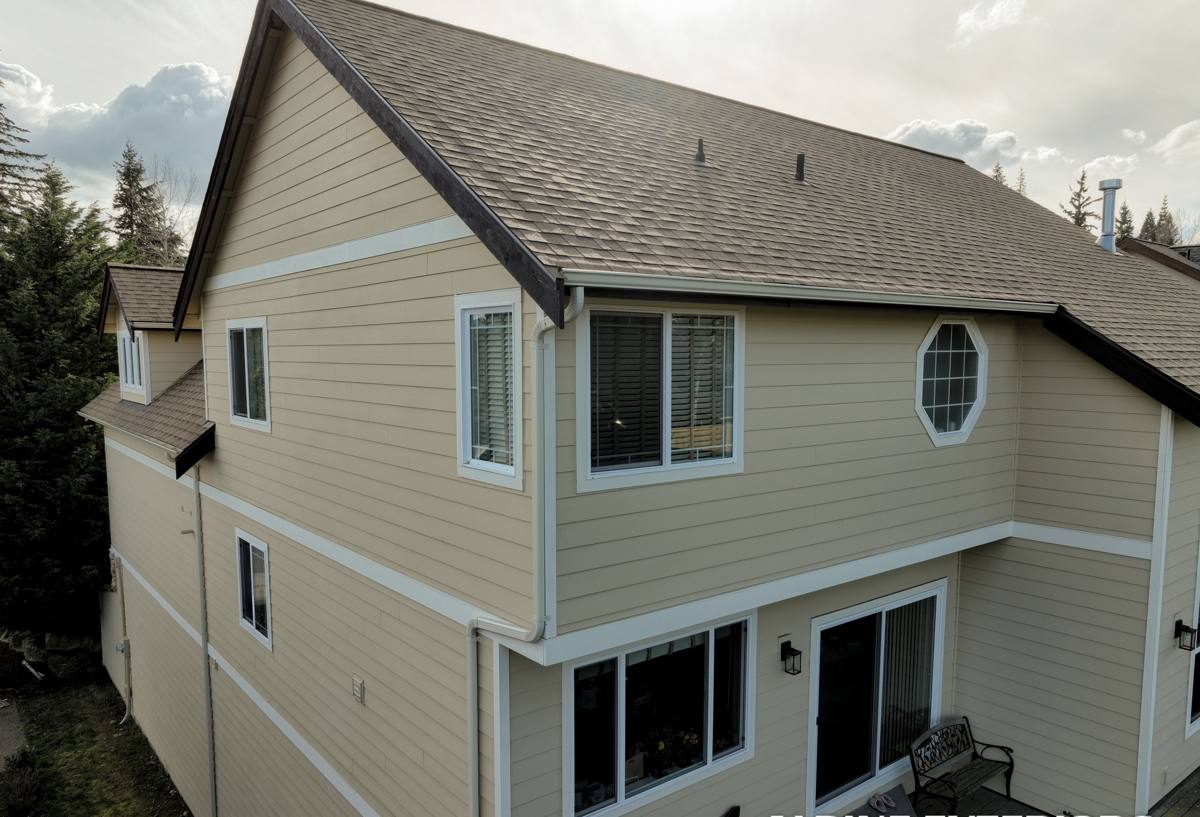
What the Local Climate Actually Does to Windows
Whatcom County sits in a marine climate zone, and South Hill's elevation and tree cover intensify a few specific effects:
- Driving rain: Wind off the Strait and the bay pushes rain sideways during winter storms, testing the seal around every window opening, not just the glass itself.
- Salt air: Homes closer to the water deal with airborne salt that accelerates corrosion on cheaper hardware, fasteners, and aluminum components over time.
- Long moss season: Shaded lots under mature trees stay damp for months at a time, and that moisture works its way into any gap in old trim, caulking, or flashing.
- Condensation: Older single-pane or early double-pane windows fog up and sweat in cooler months, which rots wood sills and frames from the inside out.
None of this is unique to South Hill, but the neighborhood's older housing stock and tree-heavy lots mean these effects show up sooner and more visibly than in newer construction elsewhere in the county.
What a Correct Window Installation Actually Involves
Replacing a window is not just swapping glass into an existing hole. A correct install addresses the whole opening, not just the sash. Here's what we look at on every job:
Frame and Glazing Performance
The frame material and the glazing package (how many panes, what gas fill, what coating) determine most of the window's energy performance. We size these choices to the specific wall — a west-facing wall catching driving rain needs different attention than a shaded north wall that mostly deals with moss and damp.
Flashing and Moisture Management
This is where most bad window jobs fail, and it's invisible once the trim goes back on. Proper flashing tape, sill pans, and weather barrier integration keep wind-driven rain from getting behind the window and into the wall cavity. On an older South Hill home, this step often matters more than the window itself.
Air Sealing
Gaps around the frame — not the glass — are usually the biggest source of heat loss and drafts. Proper low-expansion foam and backer rod around the perimeter, done correctly, closes those gaps without bowing the frame out of square.
Fit to the Opening
Old houses settle and shift. We measure each opening individually rather than assuming uniform sizes across the house, which matters a lot in older South Hill homes where openings have moved slightly over the decades.
Frame Material Comparison for This Climate
| Frame Material | How It Handles Rain & Salt Air | Maintenance | Typical Fit |
|---|---|---|---|
| Vinyl | Good moisture resistance, won't corrode from salt air | Low — no painting or sealing needed | Most budgets, most home styles |
| Fiberglass | Excellent — very stable in wet, temperature-swinging conditions | Low | Higher upfront cost, longest service life |
| Wood-clad | Needs careful detailing at the cladding seams to keep water out | Moderate to high — exposed wood needs upkeep | Historic or character homes where appearance matters most |
| Aluminum | Prone to corrosion near salt air over time; conducts cold, increasing condensation risk | Moderate | Generally not our first recommendation for this area |
We're not against wood-clad or aluminum outright — there are homes, especially older or historic ones, where wood-clad windows are the right call for appearance. But we're upfront about the added maintenance those materials require in a climate this wet, and we make sure the client understands that trade-off before signing off on a product.
Our Process, Start to Finish
- On-site assessment: We walk the exterior and interior of each window opening, checking for existing rot, condensation staining, and how the wall assembly was originally built.
- Measurement and product selection: Each opening is measured individually. We recommend frame material and glazing package based on that wall's sun, wind, and moisture exposure.
- Removal and prep: Old windows come out carefully to expose the rough opening so we can check framing and sheathing condition before anything new goes in.
- Flashing and weatherproofing: Sill pans and flashing tape get installed to current best practice, integrated with the existing weather barrier.
- Installation and air sealing: The window is set, shimmed square, fastened per manufacturer spec, and sealed around the perimeter.
- Trim and finish: Interior and exterior trim is reinstalled or replaced to match the home, with attention to caulking lines that will actually shed water.
- Walkthrough: We check operation, look for square and level, and confirm everything is sealed before we call the job done.
Signs Your South Hill Home Needs New Windows
- Condensation or fogging between the panes (a sign the seal has failed)
- Visible moss or dark staining building up on the sill or lower frame
- Drafts you can feel near the window even when it's fully closed
- Wood sills that feel soft or spongy when pressed
- Windows that are difficult to open, close, or lock properly
- Noticeably higher heating bills compared to similar homes nearby
- Paint peeling or bubbling on interior trim near the window frame
Any one of these on its own might just need a repair. Several of them together, especially on a home built before modern double-pane glass was standard, usually points to replacement being the more cost-effective long-term choice.
Cost Factors to Expect
| Factor | Why It Affects Price |
|---|---|
| Frame material | Vinyl is typically the most affordable; fiberglass and wood-clad cost more upfront |
| Number of window openings | Whole-house replacements bring a lower per-unit cost than one-off replacements |
| Condition of existing openings | Rot or framing damage found during removal adds repair work before the new window can go in |
| Window size and configuration | Large picture windows, bays, or custom shapes cost more than standard double-hung sizes |
| Access and site conditions | Upper-story or hard-to-reach windows on a hillside lot take more labor and equipment |
We give a broad range rather than a fixed number here because every South Hill home is different — a straightforward vinyl replacement on a single-story wall is a very different job from a second-story window on an older Craftsman with rot to address first. A written estimate after we've actually looked at your windows is the only number worth trusting.
Why It Matters to Hire a Crew That Already Works This Neighborhood
South Hill's mix of older housing stock, mature trees, and hillside lots means the right window job here isn't identical to a job in a newer, flatter part of Whatcom County. A crew that's worked this neighborhood before already knows what to expect when a wall gets opened up — where rot tends to hide, how much moss buildup is normal versus a warning sign, and how the salt air and driving rain off the bay tend to age different materials. That local familiarity shows up in fewer surprises mid-project and a more accurate estimate from the start.
It also matters for the long haul. Windows installed correctly in this climate should last decades, but only if the flashing, sealing, and material choices were right for the exposure. We stand behind our installation work, and being a local crew means we're not disappearing after the job is done — we're still working in this same neighborhood next year and the year after.
Ready to Talk About Your Windows?
If your South Hill home has windows that are fogging, drafting, or showing moss and moisture damage, it's worth getting an honest, no-pressure look before deciding what to do. Fill out the form below and we'll set up a time to assess your windows and give you a straightforward estimate — no obligation, no sales pressure.