 Whatcom County
 Why Sehome Roofs Wear Differently Than Roofs Inland
Sehome sits close enough to the water and to the wind patterns coming off Bellingham Bay that roofs here take a different kind of beating than roofs even twenty miles inland. It's not one dramatic event that does the damage — it's the accumulation. Salt-laden air slowly attacks exposed metal fasteners and flashing. Driving rain, pushed sideways by wind off the water, finds every marginal lap and seam instead of just running straight down the slope. And the long, damp moss season we get through fall, winter, and spring keeps roof surfaces wet for weeks at a time, which accelerates granule loss on asphalt shingles and rot in anything wood-based that isn't properly ventilated.
None of that means Sehome needs an exotic roofing system. It means the details — fastener choice, underlayment, ventilation, and moss-resistant surfacing — matter more here than they would in a drier climate, and cutting corners on those details shows up faster in this environment than it would elsewhere in Whatcom County.
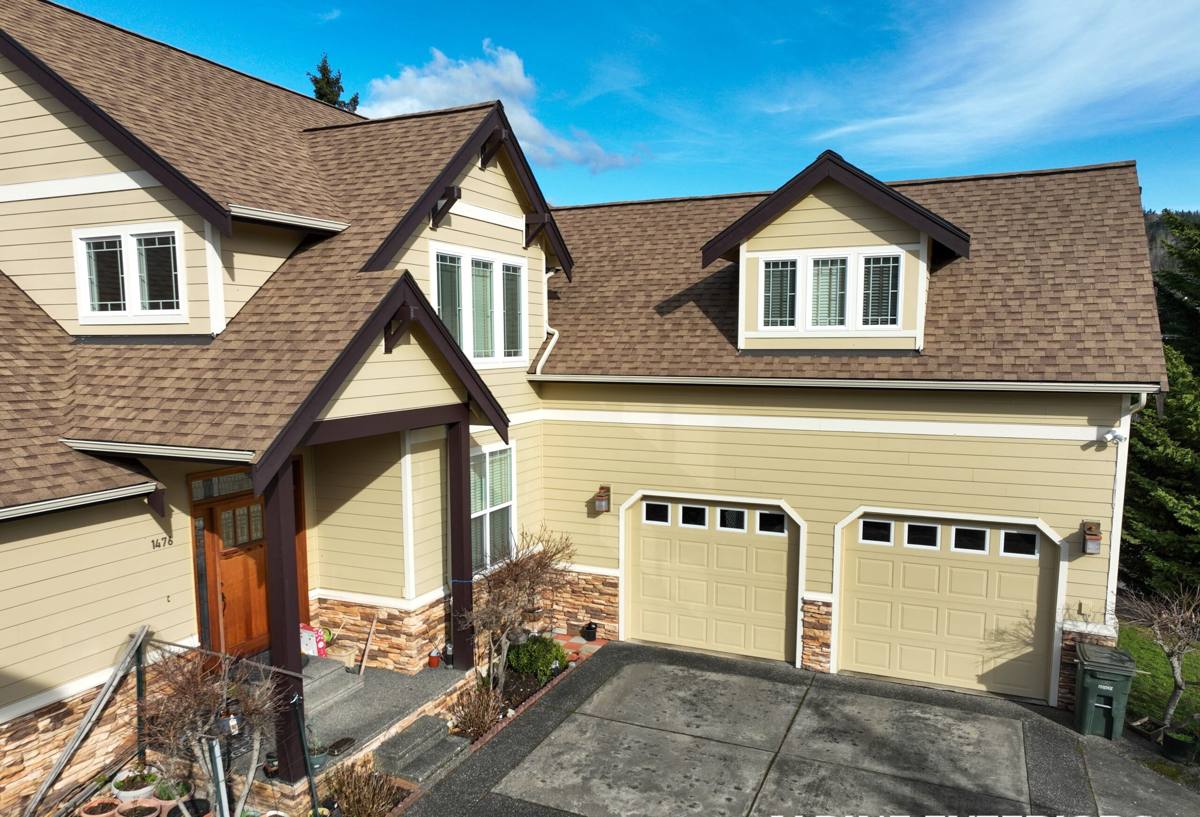
Signs a Sehome Home Needs a New Roof, Not Another Repair
Older homes in and around Sehome often carry roofs that have already had one or two rounds of patch repairs. At some point, patching stops making financial sense. Here's what tells us a full replacement is the honest recommendation instead of another repair:
- Granule loss heavy enough that you can see bare, shiny patches on asphalt shingles, especially on the north and west-facing slopes that stay shaded and damp longest
- Moss or moss staining that keeps coming back within a season or two of cleaning, which usually means the surface underneath is already degraded
- Soft spots or sagging in the roof deck when walked, which points to moisture that's worked its way past the shingle layer
- Multiple past repairs in different areas of the same roof — a sign the whole system, not just one section, is aging out
- Visible daylight or water staining in the attic near flashing points — chimneys, vent stacks, valleys
- A roof approaching or past 20-25 years old (for asphalt) with no recent tear-off, especially if it was installed with minimal underlayment by older standards
If a roof is showing one or two of these, a repair might still buy time. If it's showing three or more, we'll tell you that plainly — we'd rather lose a repair job than have a homeowner spend money patching a roof that needs to come off.
What a Correct Roof Installation Actually Involves
A new roof is more than shingles nailed to plywood. In a climate that sees this much wind-driven rain and sustained damp, the layers underneath the visible surface do most of the real work.
Tear-Off and Deck Inspection
We remove the old roofing down to the deck rather than layering over it. This is the only point in the entire job where the sheathing is visible, so it's the only chance to catch rot, delamination, or soft spots before they're sealed under a new roof for the next two decades. Any damaged decking gets replaced — not patched with a shim or left as-is.
Underlayment
Given how much wind-driven rain Sehome gets, underlayment choice matters more here than in calmer climates. A synthetic, water-resistant underlayment across the full roof, with self-adhered ice-and-water membrane at eaves, valleys, and around every penetration, gives the roof a real second line of defense if wind pushes water past the shingle laps.
Flashing
Chimneys, skylights, sidewalls, and vent stacks are where the majority of roof leaks actually start — not in the open field of shingles. Correct flashing means new metal at every one of these points, properly stepped and lapped, not just caulked over the old flashing to save time.
Ventilation
A roof deck that can't breathe traps moisture underneath it, which is exactly what accelerates rot and encourages moss growth from below as well as above. Balanced intake (soffit) and exhaust (ridge or box vents) ventilation is part of a correct install, not an upsell.
Fasteners and Metal Components
Salt air corrodes standard fasteners faster than it does further inland. We use corrosion-resistant nails and flashing metals suited to a coastal-influenced climate, which costs a little more upfront and saves a homeowner from early rust staining and fastener failure down the road.
Choosing the Right Roofing Material for a Sehome Home
There's no single "best" material — the right choice depends on the home's roof pitch, budget, and how much moss and moisture resistance the homeowner wants to prioritize.
| Material | Typical Lifespan | How It Handles This Climate |
|---|---|---|
| Architectural asphalt shingles | 25-30 years | Good value; needs quality underlayment and periodic moss treatment to hit full lifespan in damp, shaded areas |
| Metal (standing seam or panel) | 40-50+ years | Sheds rain fast, resists moss well due to smooth surface, but requires marine-grade fasteners and coatings near salt air exposure |
| Synthetic/composite shingles | 30-50 years | Resists moisture absorption better than wood-look alternatives; a solid middle-ground option for moss-prone, shaded lots |
| Cedar shake | 20-30 years with upkeep | Traditional look, but higher maintenance burden in sustained damp conditions; needs disciplined moss and moisture management to avoid early decay |
We'll walk through these trade-offs honestly during the estimate rather than steering every homeowner toward the same product. A shaded, north-facing roof under tree cover has different needs than an open, sun-exposed one even a few blocks away.
Our Installation Process for Sehome Homeowners
- On-site assessment. We inspect the existing roof, attic ventilation, and any problem areas (valleys, chimneys, past leak points) before quoting anything.
- Written estimate. A clear scope of work and materials list, so there's no ambiguity about what's included — underlayment type, flashing work, ventilation changes, and cleanup.
- Scheduling around the weather. Given how much rain we get here, we plan installation windows carefully and keep the roof deck protected if weather turns mid-job.
- Tear-off and deck repair. Old roofing comes off, the deck is inspected, and any damaged sheathing is replaced before anything new goes down.
- Underlayment, flashing, and ventilation installed to spec. This is where the climate-specific decisions from earlier in this page actually get executed.
- Final material installation and detail work. Ridge caps, valleys, and edge details finished cleanly.
- Walkthrough and cleanup. We review the finished roof with the homeowner and make sure the property is clear of debris and old material.
Cost Factors That Matter More in This Climate
Roof pricing depends on square footage and material, but in a climate like ours a few additional factors move the number up or down more than homeowners expect:
- Roof pitch and complexity (valleys, dormers, multiple planes) — more transitions mean more flashing work, which matters more where wind-driven rain is common
- Deck condition found at tear-off — this is the one variable that can't be fully known until the old roofing is off
- Ventilation upgrades if the existing attic airflow is inadequate
- Underlayment upgrade to a fully water-resistant system rather than minimum-code felt
- Access and site conditions — tree cover, steep lots, and tight setbacks common in some Sehome properties can affect labor time
We'd rather quote a realistic number that accounts for these than a low number that grows once the tear-off starts.
Moss and Long-Term Roof Maintenance
Even a correctly installed roof needs some ongoing attention in a climate with a moss season this long. Zinc or copper strips near the ridge, periodic gentle cleaning (never pressure washing directly on shingles, which strips granules), and keeping overhanging branches trimmed back all extend a roof's real-world lifespan well beyond what a manufacturer's lab-tested number assumes. We'll go over a simple maintenance routine at the end of every installation so the investment holds up.
Why Local Experience in Sehome Matters
A crew that already works in and around Sehome and the rest of Whatcom County knows which roof orientations hold moss the longest, which older housing stock tends to have underventilated attics, and how much underlayment upgrade is actually worth the cost here versus in a drier region. That's not something a crew traveling in from outside the area picks up on the first job — it's built from repeated work in this specific climate and this specific housing stock.
If you're weighing a repair versus replacement, or just want a straight answer on what your roof actually needs, we're glad to take a look and give you an honest assessment — no pressure, no inflated urgency. Fill out the form below for a free estimate and we'll go from there.