 Whatcom County
 Why Fiber Cement Is the Right Call for Silver Beach
Silver Beach homes sit close enough to the water that the air itself works against the siding, not just the weather. Between salt-laden wind, rain that comes in sideways more often than straight down, and a shade-and-moisture combination that keeps north and west walls damp for weeks at a stretch, this is one of the tougher spots in Whatcom County to keep a house looking good. Fiber cement siding was engineered for exactly this kind of exposure, and it's the only siding material we install on any home, in Silver Beach or anywhere else in the county.
This page isn't a generic rundown of fiber cement siding. It's about what Silver Beach's specific conditions do to a home's exterior over time, what a correctly installed fiber cement system needs to look like to actually hold up here, and why the installation details matter more in this neighborhood than they do a few miles inland.
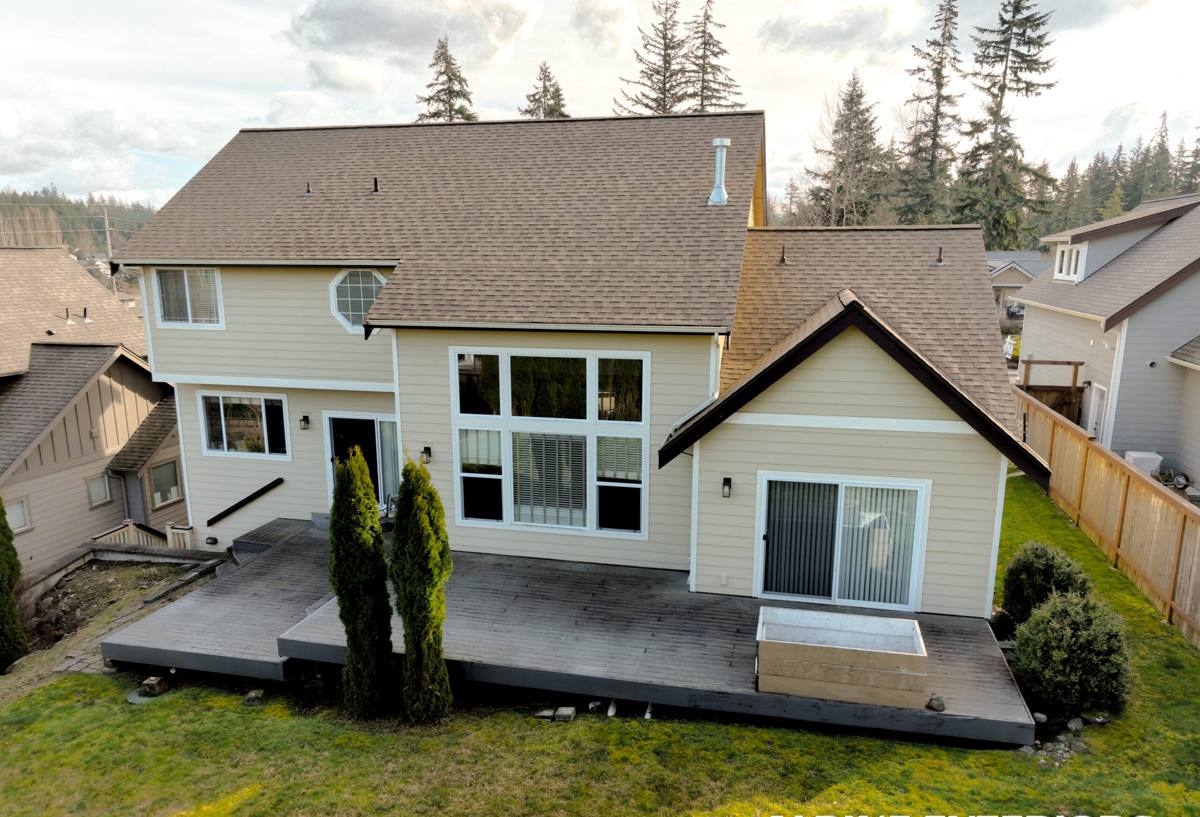
What Silver Beach's Climate Actually Does to Siding
Salt Air
Homes near open water in Whatcom County take on airborne salt that settles into every crevice of an exterior — fasteners, trim joints, caulk lines, and any exposed raw edge of a building material. Over years, that salt exposure accelerates corrosion in metal fasteners and flashing, and it breaks down finishes that weren't formulated to resist it. Paint applied on-site tends to chalk and fade faster near saltwater than it does a few miles inland, and untreated wood trim is especially vulnerable to swelling, splitting, and rot once salt works its way into the grain.
Wind-Driven Rain
Whatcom County gets plenty of rain generally, but wind off the water pushes it into siding laps, trim joints, and window and door openings at an angle straight rain never reaches. That means water intrusion risk in Silver Beach isn't just about how much rain falls — it's about how much of it gets driven sideways into gaps that a home a mile inland would never have to deal with. Flashing details and lap coverage that would be "good enough" in a sheltered location aren't good enough here.
A Long Moss Season
Shaded walls, morning dew, and months of damp air add up to a moss and mildew season that runs longer in this part of the county than it does in drier inland pockets. Moss and algae don't just look bad — they hold moisture against the siding surface for extended periods, which is exactly the condition that causes problems for any material that isn't dimensionally stable or that absorbs water into its core.
Why We Only Install James Hardie in This Kind of Exposure
We don't install LP SmartSide, vinyl, Cemplank, Allura, primed spruce, or cedar. That's not a marketing position — it's a standard we've held to because of exactly the conditions described above. Engineered wood products can perform well in dry climates, but they rely on an intact factory coating to keep moisture out of a wood-based substrate; once that coating is compromised at a cut edge, fastener hole, or damaged corner, water intrusion becomes a real risk in a place that stays damp as long as Silver Beach does. Cedar and primed spruce are natural wood — beautiful, but they need ongoing maintenance to resist rot, and salt air plus a long wet season is a tough combination for any wood product to fight indefinitely. Vinyl is inexpensive and low-maintenance in a general sense, but it isn't dimensionally stable in wind exposure, its seams and butt joints can allow wind-driven rain behind the panel, and it isn't designed to be repainted when a homeowner wants a color change down the road.
James Hardie fiber cement is cement, sand, and cellulose fiber — not wood, so there's no wood substrate to rot, and it's non-combustible. Hardie also makes climate-engineered product lines (its HZ5 line is built for wetter, harsher climates like ours) and finishes each board at the factory with its ColorPlus coating, which is baked on under controlled conditions and holds color and adhesion far more consistently than a field-applied coat ever could. That factory finish matters directly here: it's more resistant to the fading and chalking that salt air and UV accelerate, and it gives us a real, transferable warranty on both the substrate and the finish — something none of the alternatives above offer in combination.
What a Correct Installation Involves Here
Fiber cement siding is only as good as the installation behind it. In a low-exposure location, a few shortcuts might not show up for years. In Silver Beach, they show up fast — usually as staining, a soft spot at a butt joint, or paint failure around a window.
| Detail | Correct for This Exposure | Common Shortcut We Won't Take |
|---|---|---|
| Weather-resistive barrier | Continuous house wrap, properly lapped and taped, with a drainage gap behind the siding | Wrap installed but not detailed at penetrations, or siding fastened tight against it with no drainage plane |
| Flashing at windows/doors | Full flashing system integrated with the wrap so water sheds outward at every opening | Caulk used in place of flashing, which fails long before the siding does |
| Fastener choice | Corrosion-resistant fasteners rated for the exposure, driven to Hardie's specified depth and location | Standard fasteners driven too deep or at the wrong spacing, inviting corrosion and panel movement |
| Butt joints | Joints flashed or backed and sealed per Hardie's published details, kept off unsupported edges | Butt joints simply caulked with no flashing behind them |
| Clearance at grade and roof lines | Manufacturer-specified gap maintained so siding never wicks moisture from soil, decking, or roofing | Siding run tight to grade, a deck, or a roofline with no clearance |
None of this is exotic — it's published in James Hardie's installation instructions. But it takes discipline to follow on every wall, every time, especially on the sides of a house that catch the worst of the wind and rain and are hardest to get back to later.
Our Process for a Silver Beach Project
- Walk-through and assessment — we look at existing siding, trim, and flashing conditions, paying particular attention to north- and west-facing walls and anywhere moss or staining is already showing.
- Tear-off and substrate check — removing the old siding lets us confirm sheathing is sound before anything new goes on; any soft or water-damaged sheathing gets addressed, not covered over.
- Weather-resistive barrier and flashing — house wrap, window and door flashing, and drainage details go in per manufacturer spec, built for the wind-driven rain this location sees.
- Hardie installation — panels or planks installed to correct fastener spacing, clearance, and joint detailing, using the HZ5 product line suited to our climate zone.
- Trim, caulking, and touch-up — factory-finished ColorPlus trim and touch-up product where needed, keeping color-matched, warranty-safe materials throughout.
- Final walk-through — we go over the finished exterior with the homeowner before calling the job done.
Living With Fiber Cement Through Moss Season
Correctly installed Hardie siding is low-maintenance, not no-maintenance. In a spot with as long a moss season as Silver Beach, a little seasonal attention keeps the exterior looking like a new install for years longer.
- Rinse shaded, moss-prone walls (typically north- and west-facing) once or twice a year with a garden hose and soft brush — skip the pressure washer, which can force water behind laps and trim.
- Keep gutters clear so overflow doesn't run down the siding face and feed algae growth.
- Trim back vegetation and tree limbs that keep a wall in shade and hold moisture against it longer than the rest of the house.
- Check caulk lines at trim and penetrations annually; caulk is a maintenance item even on a system that doesn't rely on it structurally.
- Address any paint chip or gouge down to bare substrate promptly, since that's the one place moisture can get a foothold.
Why a Crew That Already Works Silver Beach Matters
A siding crew that mostly works drier, inland parts of Whatcom County can install fiber cement competently and still miss the details that matter most a few blocks from the water — the extra flashing at a west-facing window, the fastener choice that resists salt corrosion, the drainage gap that keeps wind-driven rain from ever reaching the sheathing. A crew that already works this shoreline knows which walls take the worst of it before the first panel goes up, and builds the assembly accordingly instead of treating every wall the same.
Familiarity with local permitting and typical home construction in this part of the county also keeps a project moving — fewer surprises, fewer change orders, and a finished exterior that's built for the specific conditions of this address, not a generic one.
What Drives the Cost
Every Silver Beach home is different, so we don't quote a number until we've seen the house. What we can tell you up front is what actually moves the price.
| Factor | Why It Matters |
|---|---|
| Home size and wall complexity | More square footage and more corners, gables, and dormers mean more material and labor |
| Tear-off scope | Removing and disposing of existing siding down to sheathing adds time versus a bare-wall install |
| Substrate repair | Any water-damaged sheathing found during tear-off needs to be replaced before new siding goes on |
| Siding profile and trim detail | Lap width, panel style, and trim complexity (corner boards, frieze boards, window casing) all affect labor |
| Accessibility | Steep sites, limited staging area, or difficult access near the water can add time to a project |
If you're weighing a siding replacement for a Silver Beach home, we're happy to take a look, walk the exterior with you, and put together a clear, no-pressure estimate — no obligation, just a straight assessment of what your home needs.