 Whatcom County
 Siding That Has to Work in Everson's Climate, Not Just Look Good on Day One
Everson sits in the Nooksack River valley in Whatcom County, and homes here deal with a specific combination of weather that a lot of siding products simply were not built to handle over the long term: long stretches of driving rain, humid air that lingers under tree cover and along the river bottoms, and a moss and algae season that can run most of the year in shaded, north-facing exposures. Add in the broader marine-influenced climate that shapes all of Whatcom County — salt-tinged air moving inland off Puget Sound, freeze-thaw swings in winter, and UV exposure during the drier summer months — and you have an environment that will find every weakness in a siding system within a few years if it was not designed or installed for it.
This is why we install James Hardie fiber cement siding exclusively. We do not offer vinyl, LP SmartSide, Cemplank, Allura, primed spruce, or cedar as alternatives, and we're upfront with Everson homeowners about why: those products each have a real weak point that this climate exploits, whether that's moisture absorption at seams, UV degradation, or a maintenance schedule most homeowners can't realistically keep up with. Hardie's fiber cement formulation and factory-applied finish are built to hold up against exactly the conditions Everson sees.
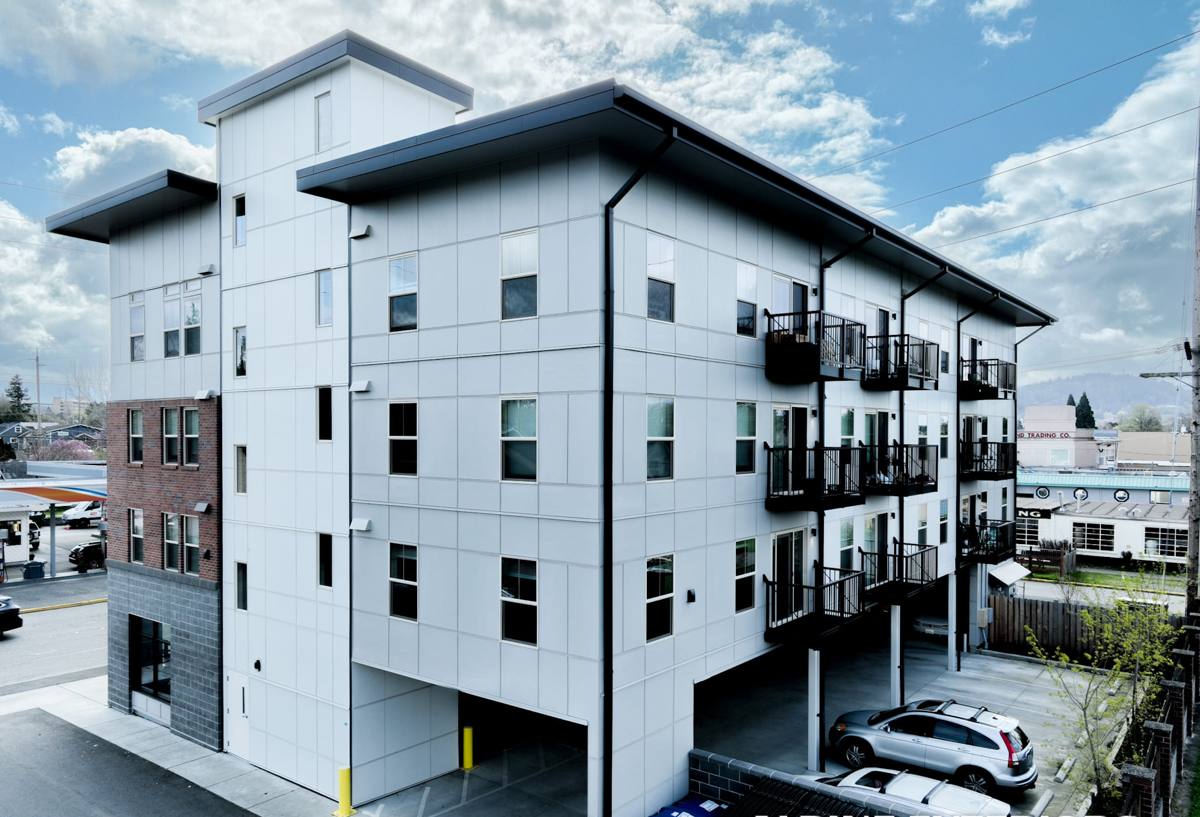
What Everson's Climate Actually Does to Siding
Driving Rain and Wind-Driven Moisture
Whatcom County storms often come with sustained wind, which pushes rain sideways into wall assemblies instead of letting it run straight down. That means siding, flashing, and house wrap all have to work together as a system — not just shed water on a calm day, but resist moisture being forced into laps, seams, and penetrations during a real weather event.
Moss, Algae, and Shade
Everson's mix of mature trees, river-valley humidity, and long shoulder seasons creates ideal conditions for moss and algae growth on north- and east-facing walls, especially anywhere siding sits close to landscaping or stays damp longer than the sun-facing sides of the house. Porous or absorbent siding materials hold that moisture and feed the growth; a dense, factory-finished fiber cement surface gives moss and algae far less to hold onto.
Salt Air and Corrosion
Even inland from the immediate coastline, Whatcom County's marine air carries salt that accelerates corrosion on exposed fasteners, trim, and lower-quality coatings over time. It's a slower process than what a beachfront home sees, but it's cumulative, and it's one more reason we prioritize corrosion-resistant fastening and factory finishes over field-applied paint that starts breaking down the day it's exposed to the weather.
Why We Only Install James Hardie
James Hardie fiber cement is a blend of cement, sand, and cellulose fiber, engineered specifically to resist moisture, fire, pests, and UV degradation in ways that wood-based and polymer-based sidings can't match. A few specific reasons it's the right call for Everson:
- Non-combustible core — Hardie siding does not contribute fuel to a fire, which matters in a region that has seen dry-season wildfire risk increase in recent years.
- Dimensional stability — fiber cement does not expand and contract with moisture and temperature the way wood or some engineered wood products do, which reduces the cracking and warping that opens gaps for water intrusion.
- ColorPlus factory finish — baked-on, not brush-applied, so the color and protective layer are consistent across every board and resist fading and chalking far longer than field-applied paint.
- Climate-engineered HZ product lines — Hardie formulates its boards differently by region (HZ5 for areas with freeze-thaw cycles like ours) so the product is matched to what it will actually face.
- Strong transferable warranty — backed by the manufacturer, and structured to move with the home if it's sold, which protects the investment for the current owner and the next one.
We've made a professional decision to stand behind one system rather than offer a menu of options with wildly different long-term performance. It's a narrower pitch, but it means every job we do, we do with a product we trust in this climate.
What a Correct James Hardie Installation Involves
The material is only half the equation. A large share of the siding failures we see on older Everson homes trace back to installation shortcuts, not the product itself. Correct installation means:
Water Management Behind the Siding
A drainable house wrap or rainscreen assembly behind the siding gives incidental moisture a path to escape instead of getting trapped against the sheathing. This matters more in a climate like ours, where wind-driven rain will find its way past the outer surface eventually — the question is whether it can dry out afterward.
Flashing at Every Penetration
Windows, doors, hose bibs, light fixtures, and vents are all places water can work its way in if flashing is missing or installed wrong. Each one needs proper head flashing and sealant detailing, not just a bead of caulk covering a gap.
Correct Fastening and Clearances
Hardie specifies fastener type, spacing, and placement for a reason — get it wrong and you risk cracked boards, blow-off in high wind, or moisture intrusion at the fastener itself. Board clearance from grade, roofing, and decking also needs to follow manufacturer specs so water isn't wicking up from below.
Caulking and Joint Treatment
Butt joints, corners, and trim intersections need the right sealant, applied correctly, or they become the first place moss gets a foothold and moisture gets in. This is detail work that's easy to rush and hard to fix once the siding is up.
Our Process for an Everson Siding Project
- On-site assessment — we look at your home's specific exposure: which walls face prevailing wind and rain, where shade and moisture collect, and where existing siding or trim shows signs of moss, rot, or fastener failure.
- Sheathing and substrate check — before new siding goes up, we confirm what's underneath is sound. Covering damaged sheathing just hides a problem that gets worse.
- Water management install — house wrap, flashing, and any rainscreen components go in first, sealed and lapped correctly at every seam and penetration.
- Hardie board installation — installed to manufacturer fastening and clearance specs, with attention to the joints and details that determine how the siding performs in year ten, not just year one.
- Trim, caulking, and final detailing — the finish work that protects the seams and corners where most long-term problems start.
- Walkthrough — we go over the finished work with you so you know what was done and what to expect from the product going forward.
Comparing Siding Options for Everson's Conditions
| Factor | James Hardie Fiber Cement | Vinyl | Wood / Primed Spruce / Cedar |
|---|---|---|---|
| Moisture resistance | High — engineered core, factory finish | Moderate — seams and low points can trap water | Low to moderate — absorbent, needs ongoing sealing |
| Moss/algae resistance | High — dense, non-porous finish | Moderate — smooth but can still host growth in shade | Low — porous surface holds moisture and organic growth |
| Finish longevity | Long — baked-on ColorPlus coating | Moderate — color molded in but can fade/chalk | Short — field-applied paint needs repainting cycles |
| Fire resistance | Non-combustible | Combustible | Combustible |
| Maintenance burden | Low — occasional wash, no repainting cycle | Low to moderate | High — recurring sealing, staining, or painting |
| Warranty structure | Strong, transferable manufacturer warranty | Varies widely by manufacturer | Typically limited to material only |
Signs Your Everson Home's Siding Needs Attention
- Persistent moss or algae streaking, especially on shaded or north-facing walls
- Soft spots, bubbling, or visible rot at bottom courses or around trim
- Paint that's peeling, chalking, or needing repainting more often than it used to
- Visible gaps, warping, or cupping in individual boards or panels
- Rusting or corroding fasteners and trim pieces
- Rising energy bills that may point to compromised insulation or air sealing behind aging siding
What to Ask Before Hiring a Siding Contractor in Everson
Not every contractor working in Whatcom County installs to the same standard, and siding is one of those projects where a rushed or under-detailed job doesn't show its problems until years later. A few things worth confirming before you hire anyone:
- Are they a certified or factory-trained James Hardie installer, or general contractors who occasionally do siding?
- Will they detail their water management and flashing plan, or just talk about the board itself?
- Do they carry proper licensing and insurance for exterior work in Washington?
- Can they explain how your home's specific exposure (shade, wind direction, moisture patterns) affects the install plan?
- Is the warranty they're offering the manufacturer's, a workmanship warranty, or both?
Why a Crew That Already Works Everson Matters
Siding performance is local. A crew that works across Whatcom County regularly sees how the same product performs differently on a shaded river-valley lot in Everson versus a more open, wind-exposed property elsewhere in the county. That means fewer surprises during the assessment, a better read on which walls need extra attention to water management, and a realistic sense of how the finished job will hold up through a full Whatcom County winter and the moss season that follows. We're not learning this climate on your house — we've already seen what it does to siding that wasn't built or installed for it.
Get a Straight Answer for Your Home
If you're weighing a siding replacement or repair in Everson, we're happy to take a look, talk through what your home's exposure actually needs, and give you a straightforward assessment — no pressure, no upsell to a product we don't stand behind. Request a free estimate using the form below and we'll get back to you with next steps.