 Whatcom County
 Building a Deck That Actually Holds Up in Bellingham
Bellingham sits right on the water, which is part of what makes it a great place to want a deck in the first place — and part of what makes deck building here harder than it looks. Between the salt air coming off Bellingham Bay, the long stretch of driving rain that defines a Whatcom County winter, and the moss season that follows it, a deck built to a generic national spec starts showing problems within a few years. Fasteners bleed rust, ledger boards trap moisture against the house, and joists that never fully dry out start to soften from underneath before the surface boards show any sign of trouble.
A deck built for this climate isn't more complicated than a deck built anywhere else — it just can't skip steps that other regions get away with skipping. This page covers what that actually means: material choices, framing details, drainage, hardware, and the parts of the build that determine whether a deck lasts eight years or twenty-five.
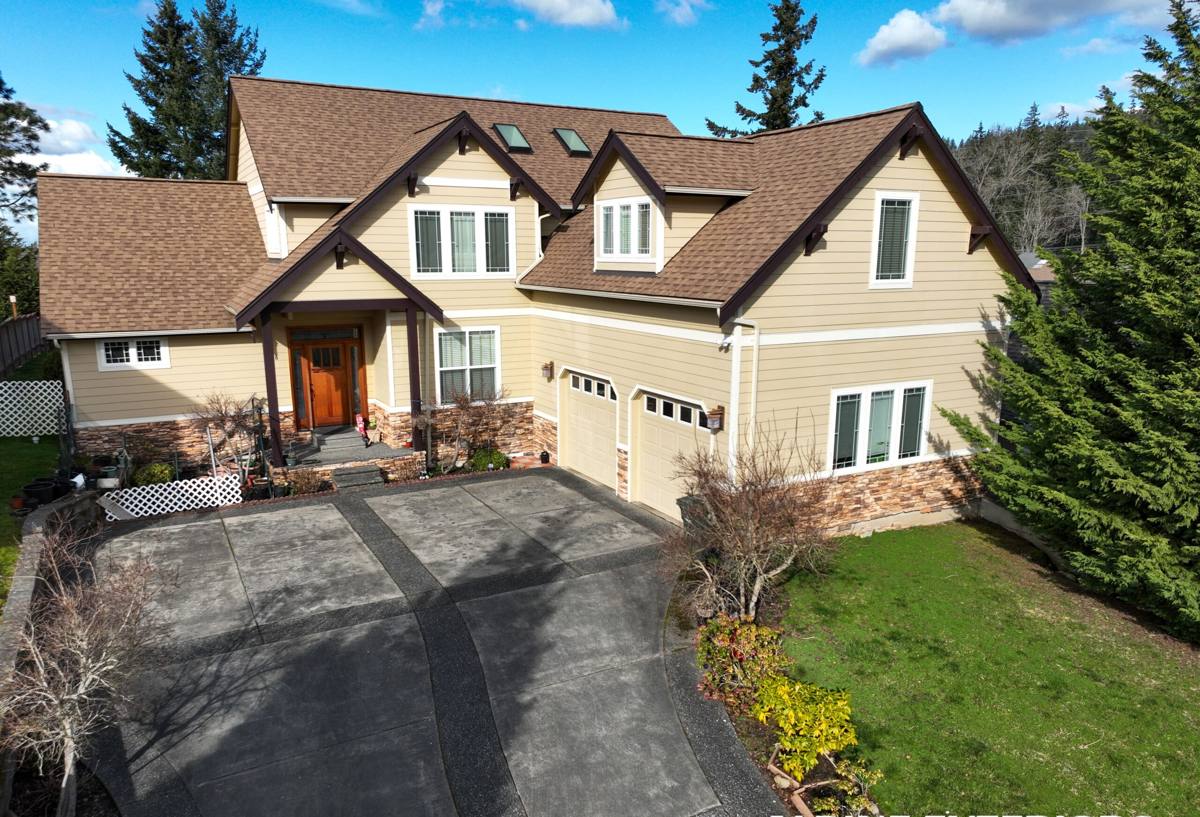
What Bellingham's Climate Does to a Deck Over Time
Three things work against outdoor structures here, and they work together rather than separately.
Salt Air and Corrosion
Proximity to the water means airborne salt settles on exposed metal, accelerating corrosion on fasteners, brackets, and hardware that would last much longer inland. This isn't dramatic — it's slow, and it happens on the underside of the deck where nobody's looking, which is exactly why it matters.
Driving Rain and Saturation
Whatcom County doesn't just get rain, it gets sustained, wind-driven rain that finds its way into gaps and gets pushed sideways into ledger connections and end grain. Wood that's constantly wet and never gets a real chance to dry is the single biggest driver of deck rot.
Moss and Organic Growth
The mild, damp winters that make this region green also make it ideal for moss and algae. On a deck, moss holds moisture against the surface long after a dry-climate deck would have shed water, and it turns boards slick and dangerous underfoot.
None of these individually would end a deck's life quickly. Combined, and left unaddressed in the framing and detailing, they compound each other over a handful of seasons.
Choosing Decking Material for This Climate
There's no single "right" material for every homeowner — budget, maintenance appetite, and appearance preferences all factor in. What matters is picking with eyes open about how each option behaves in a wet, salt-influenced environment.
| Material | How It Handles This Climate | Maintenance | Typical Lifespan Here |
|---|---|---|---|
| Pressure-treated lumber | Resists rot chemically but still absorbs moisture; needs to dry between rain events | Annual cleaning and periodic sealing/staining | 10-15 years with upkeep |
| Cedar | Naturally rot- and insect-resistant, ages to gray if left unfinished | Sealing every 1-2 years to prevent graying and checking | 15-20 years with upkeep |
| Composite decking | Doesn't absorb water into the board itself; still needs surface cleaning to prevent moss buildup | Periodic washing, no staining or sealing | 20-25+ years |
| PVC/capped polymer | Fully sealed surface, best resistance to moisture and organic growth | Occasional washing | 25+ years |
We don't push one product line over another as a matter of house policy. What we do push is honesty about trade-offs: composite and PVC cost more up front but remove the annual sealing chore that wood demands, which matters a lot in a climate where that chore comes around fast. Wood costs less initially and can look great, but only if the maintenance schedule actually gets followed year after year.
A Note on Fastener Compatibility
Whatever decking material you choose, the hardware holding it down needs to be rated for it. Some hidden fastener systems and treated-lumber chemistries react differently with different metals, and mismatched hardware is a common cause of premature failure that has nothing to do with the decking material itself.
Framing and Substructure: Where Real Failures Start
Homeowners tend to judge a deck by its surface boards, but the substructure is what determines whether the deck is still safe in fifteen years. In a climate like ours, three framing details matter more than they would in a drier region.
Ledger Board Attachment
The ledger board — where the deck attaches to the house — is the single most common point of structural failure in decks generally, and wet climates make it worse. Proper flashing behind and over the ledger, with a drainage gap to let water escape rather than pool against the house, is not optional detailing. It's the difference between a deck that's still solid decades from now and one with hidden rot behind the rim joist.
Joist Protection
Joists that sit in standing water or stay damp against untreated cuts rot from the inside before it's visible from below. Joist tape or a comparable protective barrier over the top edge of each joist, plus sealed end cuts, keeps water from soaking into the wood at the exact spots where it's hardest to inspect later.
Footings Below the Frost and Water Table
Footings need to be sized and set to local code depth, and in areas with poor drainage or a high water table, that sometimes means additional gravel or drainage consideration around the footing itself so it isn't sitting in saturated soil year-round.
Drainage and Slope: Keeping Water Moving
A deck that sheds water quickly ages differently than one that holds it. We build in a slight slope away from the house on the decking surface itself, and we think through where water goes once it leaves the deck — not just off the edge, but away from the foundation and out of any low spot where it would otherwise pool under the structure.
For decks over living space or built low to grade, under-deck drainage systems can keep the space below dry and usable, which matters more here than in drier climates simply because that space would otherwise stay damp most of the year.
Fasteners and Hardware for a Salt-Air Environment
This is one of the most overlooked details in deck construction, and it's exactly the kind of thing that separates a deck built by a crew that knows this coastline from one built to a generic spec.
- Stainless steel fasteners and connectors offer the best corrosion resistance for decks with direct exposure to salt air, particularly on structures closer to the water.
- Hot-dip galvanized hardware is a solid, more economical choice for structural connectors like joist hangers and post bases, as long as the coating is rated for the exposure.
- Mixing metals (for example, standard steel screws in an aluminum-flashed ledger) can accelerate corrosion through galvanic reaction — hardware needs to be matched, not just individually "good."
- Fastener heads and connector plates left exposed on the deck surface should be corrosion-rated as well, since they take direct weather exposure, not just moisture from below.
Our Deck Building Process
The steps themselves aren't unusual — what matters is not skipping the ones that don't show up in the finished photos.
- On-site assessment. We look at grade, drainage patterns, sun and wind exposure, and how close the site is to the water, since that changes hardware and material recommendations.
- Design and material selection. We walk through the decking, framing, and hardware options honestly, including cost and maintenance trade-offs for each.
- Permitting. We handle the permit application and coordinate required inspections so nothing gets built out of compliance.
- Footings and framing. This is where the flashing, joist protection, and drainage detailing described above actually get built in — not added later.
- Decking, railing, and finish work. Surface installation, railing per code, and any stairs or lighting.
- Final walkthrough. We go over maintenance expectations specific to the material chosen, so there are no surprises the first wet winter.
Permits and Code Considerations Locally
Deck permitting requirements vary by jurisdiction within Whatcom County, and by details like deck height, size, and whether it's attached to the house. Generally, decks above a certain height off grade require guardrails built to code, and attached decks require an engineered or code-compliant ledger connection regardless of height. Footing depth and spacing depend on soil conditions and local code, which is another reason a generic online plan set isn't a substitute for a permit reviewed against the actual site. We handle this step as part of the build rather than leaving it to the homeowner to sort out separately.
Maintenance That Actually Matters Here
Whatever material you choose, a handful of seasonal habits do most of the work in keeping a deck safe and good-looking through a Whatcom County winter.
- Sweep debris off the deck regularly in fall — trapped leaves hold moisture and accelerate moss growth underneath them.
- Wash the surface at least once or twice a year to remove algae and moss before it gets a foothold, especially on shaded or north-facing sections.
- Check railings and stair connections annually for looseness, which can signal fastener corrosion before it becomes a safety issue.
- Reseal or re-stain wood decking on the schedule the product actually requires — skipping a year in this climate costs more ground than it would somewhere drier.
- Keep gutters and downspouts near the deck clear so runoff isn't dumping extra water directly onto or under the structure.
Why a Crew That Already Works Bellingham Matters
Deck building isn't exotic work, but building one that's still solid after a decade of Whatcom County winters takes judgment that comes from having done it here repeatedly — knowing which hardware actually holds up this close to the bay, which framing shortcuts cause callbacks in this specific climate, and which local permitting details tend to trip up a build partway through. A crew that primarily works drier or milder regions isn't wrong about deck building in general — they just haven't had to solve for salt air and a moss season as a standing condition rather than an occasional one.
We're not going to tell you a deck here is dramatically different from a deck anywhere else. It's the same structure, built with the same principles. The difference is in the details we don't skip, because we've seen what happens when they get skipped in this exact climate.
Cost Factors to Expect
| Factor | How It Affects Cost |
|---|---|
| Decking material | Pressure-treated and cedar generally cost less up front; composite and PVC cost more initially but less over the deck's lifespan |
| Height and footing complexity | Elevated decks and difficult soil conditions require more substantial footings and framing |
| Railing style and code requirements | Cable, glass, or custom railing systems cost more than standard baluster railing |
| Site access and grading | Sloped lots or limited equipment access can add labor time |
| Drainage and under-deck systems | Adding a dry-space system below the deck adds cost but adds usable space and reduces moisture exposure |
Every site is different, and the honest answer to "what will this cost" depends on the specifics above rather than a flat per-square-foot number.
If you're considering a new deck or need to replace one that hasn't held up to Bellingham's weather, we're happy to take a look and put together a free, no-pressure estimate — just fill out the form below.