 Whatcom County
 Sehome's Siding Problem Isn't Like Most of the Country's
Sehome sits close enough to Bellingham Bay that homes here deal with a combination of stresses most siding products were never designed to handle at the same time: airborne salt, near-constant moisture, and long stretches of shade and dampness that keep exterior walls wet far longer than they'd stay wet inland. Any one of those on its own is manageable. Together, over years, they're what separates a siding job that still looks sharp at year twenty from one that's chalking, cupping, or growing moss by year seven.
Salt Air and Corrosion
Proximity to the water means fine salt spray settles on exterior surfaces more often than homeowners realize, especially on walls facing the bay or exposed to prevailing wind. Salt is hard on paint film, hard on caulking, and especially hard on fasteners and trim hardware that aren't rated for coastal exposure. Siding systems that rely on face-nailing with standard fasteners, or trim pieces with unprotected metal components, tend to show rust streaking and finish breakdown well before the siding itself has failed.
Driving Rain, Not Just Rain
Whatcom County doesn't just get a lot of rainfall — it gets a lot of wind-driven rain, which behaves differently against a wall than a straight vertical downpour. Wind-driven rain gets pushed sideways and upward into laps, seams, and trim joints that a system designed only for gravity drainage never has to deal with. A siding assembly that isn't detailed for this — correct lap spacing, proper flashing, a real drainage plane behind the cladding — will eventually let water track behind the siding, where it does damage nobody sees until it's expensive.
A Long Moss Season
Shade, moisture, and mild temperatures are exactly what moss and algae need, and Sehome's tree cover and marine-influenced climate give them a long season to work with. Moss on a roof is a maintenance issue. Moss on siding is worse, because it holds moisture directly against the wall surface and, on the wrong material, can accelerate softening, delamination, or paint failure in exactly the spots it colonizes.
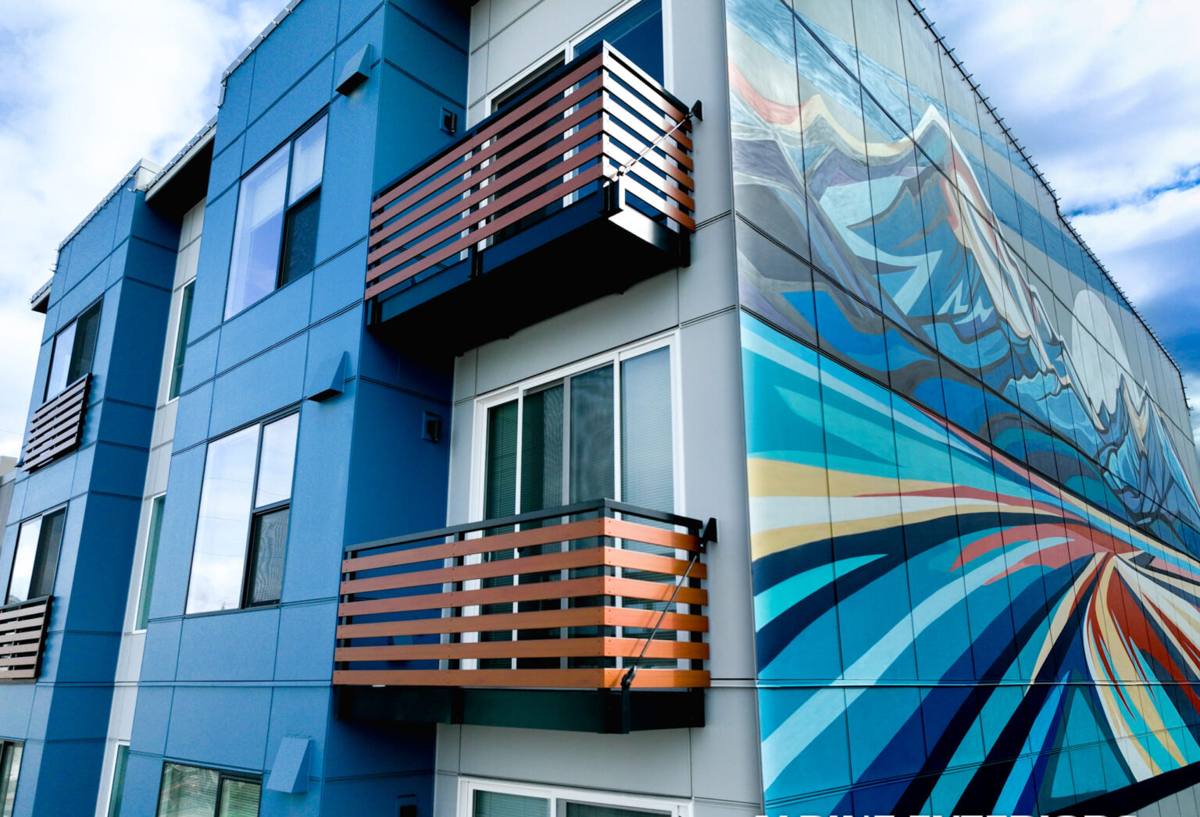
Why We Standardized on James Hardie for This Climate
We install James Hardie fiber cement siding exclusively — not vinyl, not LP SmartSide, not cedar, not any of the other cement-board alternatives on the market. That's not a marketing position; it's the product line we're willing to put our name behind after weighing how each option actually performs in a climate like this one over decades, not just the first few years.
Non-Combustible, Dimensionally Stable
Fiber cement doesn't expand and contract with moisture the way wood-based products do, and it doesn't feed a fire the way wood-based or vinyl products can. In a wet climate, dimensional stability matters more than people expect — siding that swells and shrinks with every wet-dry cycle eventually loosens fasteners, opens joints, and lets water in faster than it can dry out.
Engineered for This Specific Climate
James Hardie doesn't make one siding formulation for the whole country. Their HardieZone system engineers products differently for different climate zones — HZ5 for cold, wet regions like the Pacific Northwest, HZ10 for hot, humid ones. Whatcom County falls squarely in HZ5 territory, and the products specified for this zone are formulated with that freeze-thaw and moisture exposure in mind, not adapted from a formula built for Arizona or Florida.
A Factory Finish That Actually Resists This Environment
ColorPlus factory-applied finish is baked on under controlled conditions and backed by its own finish warranty, which matters directly for moss and salt exposure: a consistent, fully cured finish sheds grime and resists the kind of surface breakdown that gives algae and moss something to grip onto. Field-painted siding, by comparison, is only as good as the weather conditions and prep work on the day it was painted — which is a real limitation in a place where you're lucky to get a clean dry week.
What a Correct Installation Actually Involves
The siding material is maybe half the equation. The other half is whether it's installed to the manufacturer's actual specifications, which is where a lot of jobs — on any brand — quietly go wrong. In a climate that gives water this many chances to get behind a wall, installation details aren't optional extras; they're the difference between a 30-year system and a callback in year six.
Drainage Plane and Weather-Resistive Barrier
Correct installation starts underneath the siding, not with it. A continuous weather-resistive barrier, properly lapped and sealed, combined with a drainage gap that lets any incidental moisture drain and evaporate instead of sitting against the sheathing, is what keeps wind-driven rain from becoming a rot problem. Skipping or shortcutting the drainage plane is one of the most common ways a siding job fails quietly, from the inside, long before it's visible from the street.
Flashing at Every Penetration
Windows, doors, hose bibs, light fixtures, vents — every penetration through the siding is a place water wants to get in. Correct flashing detail at each of these, integrated with the weather-resistive barrier so water sheds outward and downward rather than pooling at the penetration, matters more in a driving-rain climate than almost anywhere else in the country.
Fastening to Manufacturer Spec
James Hardie publishes specific fastener type, spacing, and placement requirements, and they vary by product and by climate zone. Correct fastening keeps the siding tight against the wall without over-driving nails that crack the board edge, and it's also a warranty issue — installation outside of spec can affect coverage if a problem shows up later.
Product Options and Where Each One Fits in Sehome
Not every Hardie product is the right call for every wall. Most Sehome homes end up on a lap siding, but the right accent product on a gable, dormer, or shaded elevation can make a real difference in how the whole house weathers.
| Product | Look | Best Fit for This Climate |
|---|---|---|
| HardiePlank lap siding | Classic horizontal lap, smooth or woodgrain texture | Standard choice for most walls; smooth finish sheds moss and grime more easily on shaded or north-facing sides |
| HardieShingle | Staggered or straight-edge shingle profile | Good for gables and accent areas; more surface texture and joint lines than lap, worth weighing on high-exposure walls |
| HardiePanel | Vertical panel, board-and-batten style | Works well on modern or farmhouse-style facades; needs correct battens and flashing detail given the vertical seams |
| HardieTrim | Corner boards, fascia, window and door trim | Matched fiber cement trim avoids the mixed-material joints where wood trim against fiber cement siding tends to fail first |
How We Approach a Sehome Project
The process doesn't change much house to house, but the details we pay attention to are shaped by what this climate does to a building over time.
- Assessment. We look at existing siding condition, moisture damage at trim and penetrations, and which elevations are taking the worst of the wind, rain, and shade — that shapes both the product recommendation and the tear-off scope.
- Product and color selection. We walk through HardiePlank, HardieShingle, and HardiePanel options and ColorPlus color choices based on the house style and which walls need the easiest-to-maintain finish.
- Tear-off and sheathing check. Once the old siding is off, we inspect the sheathing and framing underneath for moisture damage before anything new goes up — this is often where hidden problems from a prior installation show up.
- Weather-resistive barrier and flashing. Barrier, drainage gap, and flashing at every window, door, and penetration go in before a single piece of Hardie siding is hung.
- Installation to spec. Fastening, lap spacing, and joint treatment follow James Hardie's published requirements for this climate zone, not shortcuts.
- Final walkthrough. We check caulking, trim details, and finish consistency before calling the job done.
Why It Matters That We Already Work Sehome and the Rest of Whatcom County
A crew that only occasionally works this region will size a job the same way they'd size one in a dry inland climate — same fastener spacing, same generic flashing approach, same assumptions about how much drying time siding gets between rain events. A crew that works Whatcom County regularly already knows that assumption doesn't hold here. That shows up in small decisions: choosing a smoother finish for a shaded elevation that's going to fight moss all winter, being more conservative with flashing at penetrations because driving rain is a given, and not treating salt exposure near the bay as an edge case. It also means familiarity with local permitting and inspection expectations, so a project doesn't stall on paperwork a crew unfamiliar with the area might not anticipate.
Living With Hardie Siding in a Marine Climate
Correctly installed James Hardie siding is genuinely low-maintenance compared to wood or vinyl alternatives, but "low-maintenance" isn't "no-maintenance" in a climate like this one. A little attention once or twice a year keeps it looking and performing the way it should for decades.
- Rinse siding annually, focusing on shaded and north-facing walls where salt residue and grime build up fastest
- Keep gutters and downspouts clear so overflow doesn't run down and pool against siding and trim
- Trim back trees and shrubs near the house to improve airflow and let walls dry between rain events, which slows moss growth
- Inspect caulking and flashing at trim, windows, and penetrations once a year and re-caulk any joints that have opened up
- Clean moss and algae gently with a soft wash rather than a high-pressure setting, which can force water behind laps and joints
- Check paint film integrity every few years at corners and high-exposure areas, even though ColorPlus rarely needs touch-up
What Actually Drives the Cost of a Siding Job Here
Every house is different, and we won't quote a number without seeing the home, but the factors that move a project's cost up or down are consistent.
| Factor | Why It Matters |
|---|---|
| Home size and total wall area | More square footage means more material and labor hours, the largest single cost driver |
| Number of stories and access | Multi-story homes or difficult site access require more scaffolding and safety setup time |
| Existing siding removal | Tear-off and disposal of old siding adds labor, especially if multiple layers are found underneath |
| Trim, corners, and architectural detail | Homes with more windows, gables, and trim lines take longer to flash and finish correctly |
| Product line and finish chosen | HardiePlank, HardieShingle, and HardiePanel have different material and labor costs, and colors vary by availability |
| Damage found during tear-off | Rotted sheathing or framing discovered once old siding is off requires repair before new siding can go on |
If your home has moisture damage from a prior siding failure, that repair work gets priced separately and explained clearly before we move forward — it's never buried in a lump-sum number.
Get a Straight Answer on What Your Home Needs
If you're weighing a siding replacement in Sehome, we're glad to take a look and tell you honestly what condition your current siding is in, what a correct James Hardie installation would involve for your specific walls and exposure, and roughly what to expect on cost. There's no pressure and no obligation — just a straight assessment from a crew that installs this one product system, correctly, in this climate, every day. Use the form below to request a free estimate.