 Whatcom County
 Window Replacement in Lynden: Built for the Nooksack Valley
Lynden sits inland in the Nooksack River valley, in the farm country of northern Whatcom County near the Canadian border. Homes here don't take the direct salt spray that waterfront towns in the county see, but they sit inside the same marine-influenced weather system: driving rain that arrives sideways more often than straight down, a moss season that runs most of the year on shaded roof and wall surfaces, and salt air that still works its way up the valley from the Sound. Windows are usually the first place that weather shows up as a real problem, because a window is a manufactured seam in an otherwise solid wall, and a seam is only as good as the installation around it.
Whatcom County Siding replaces windows across Lynden and the surrounding valley, along with siding, roofing, and deck work when a project calls for it. This page is specifically about window replacement — not general repair, not new-construction windows, but the process of taking out an aging, failing, or damaged window and putting in a new one built to last through this climate rather than just look good on install day.
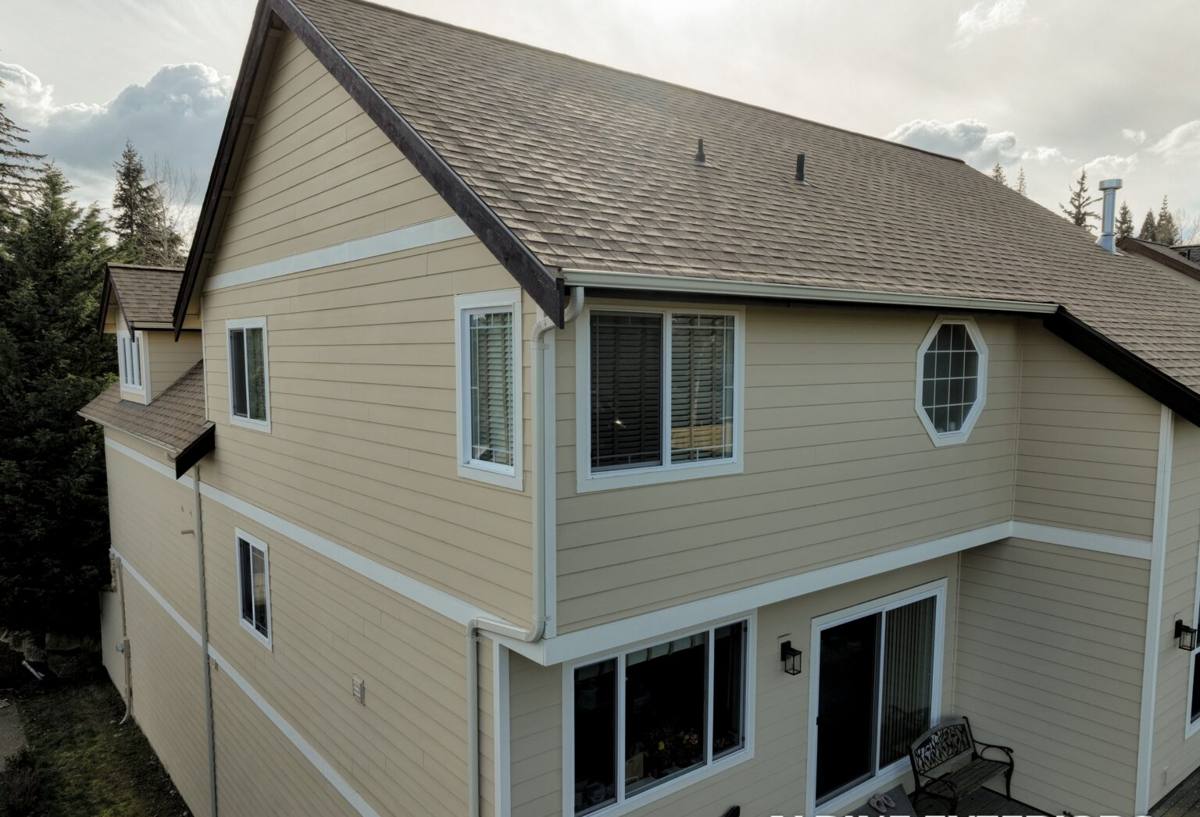
When a Lynden Home Actually Needs Replacement, Not Repair
Not every window problem calls for full replacement, and we won't tell you it does just to sell a bigger job. But there's a point where repair stops being the honest answer, and in a valley with this much sustained moisture, that point tends to arrive sooner than homeowners expect. Signs it's time to talk replacement rather than another repair visit:
- Several windows across the house are failing around the same time, not just one isolated unit
- Original single-pane or early dual-pane windows that are decades old and were never a high-efficiency product to begin with
- Sill or jamb wood that's gone soft or spongy from years of moisture working in around the frame
- Fogged glass between panes on more than a couple of windows, which usually means seals are failing house-wide, not in one spot
- Heating bills that have crept up alongside noticeably drafty rooms near older windows
- Replacement parts for the existing windows are hard to source or no longer made
One or two of these on their own might still be worth a repair conversation. Several at once, especially on a house with original windows, usually means replacement is the more honest long-term answer — and often the more affordable one once you count repeated repair visits against a single, correctly done project.
What a Correct Replacement Job Involves
Replacing a window is not the same job as installing one in new construction. The wall, siding, and trim around the opening already exist, usually with years of prior caulk, paint, and sometimes hidden moisture damage layered into it. A correct replacement in this climate means:
- Removing the old window carefully enough to see the condition of the framing, sheathing, and sill underneath before anything new goes in
- Repairing any rot or moisture damage found during tear-out rather than sealing a new window over a compromised opening
- Building or rebuilding a properly pitched sill pan so water sheds outward instead of pooling under the new frame
- Tying new flashing back into the existing house wrap or building paper, lapped correctly for water to shed down and out
- Matching the new window's dimensions closely enough to the rough opening that trim and siding go back on cleanly, without gaps that invite moisture
That tear-out inspection step is where a lot of the real decisions get made. It's also why we're cautious about quoting a firm price before we've actually opened up an opening or two — what's behind the old window matters as much as what we're putting in.
Full-Frame vs. Insert Replacement
Insert replacement fits a new window into the existing frame and is faster, less invasive to surrounding siding and trim, and appropriate when that existing frame is structurally sound and was flashed correctly to begin with. Full-frame replacement removes everything down to the rough opening and rebuilds the flashing from scratch — it costs more and takes longer, but it's the right call when tear-out reveals rot, when the original flashing was never done properly, or when a window is being resized. A lot of homes in and around Lynden's farm country are older, and their original windows were often installed to a different standard than current best practice. We'll tell you honestly which category your windows fall into once we've had a look, rather than defaulting to whichever option is quicker to sell.
Glass and Performance Packages for Valley Temperature Swings
Lynden's inland position means colder overnight lows and more frequent valley fog than towns right on the water, even though it shares the same overall rainfall and moss pattern as the rest of Whatcom County. That combination of cold, still, moisture-laden air is exactly what drives interior condensation on glass that isn't performing well, especially on clear winter nights. Glass and coating choices matter more here than most homeowners assume:
| Package | What It Does | Where It Makes Sense |
|---|---|---|
| Standard double-pane | Baseline insulation and moisture separation between two sealed panes | Budget-conscious replacements on well-shaded or moderately exposed walls |
| Low-E coated glass | Reflects radiant heat while still letting visible light through, cutting heat loss through the glass | Most Lynden homes; a modest upgrade cost that pays off over cold valley nights |
| Argon or krypton gas fill | Denser gas between panes slows heat transfer more than plain air | Rooms that run noticeably colder or show condensation on interior glass in winter |
| Triple-pane | A third pane and extra gas fill layer for maximum insulation and condensation resistance | Homes with persistent condensation problems or unusually high heating demand |
Most homes don't need to jump straight to triple-pane. A well-installed double-pane window with a Low-E coating handles the valley's normal winter conditions fine. We reserve the heavier packages for rooms and homes that actually show a pattern of condensation or heat loss, rather than upselling every project to the most expensive glass on the shelf.
Our Window Replacement Process
- Walkthrough and measurement. We look at every window being replaced, note its condition and exposure, and take accurate measurements for ordering.
- Product and glass selection. We walk you through frame material and glass package options based on that specific window's exposure and your budget, not one answer for the whole house.
- Careful removal. Old windows come out with attention to what's behind them — framing, sheathing, and sill condition all get checked before anything new goes in.
- Installation. New sill pan, flashing tied into the existing wall assembly, correct fastener placement, and air sealing that doesn't trap moisture against the frame.
- Trim and siding tie-in. Exterior trim and siding get reinstalled or repaired so the finished opening sheds water the way it's supposed to.
- Final walkthrough. We check operation, review the finished exterior detailing with you, and clean up the work area before we leave.
Cost Factors for a Lynden Window Replacement
| Factor | What Drives It | Local Consideration |
|---|---|---|
| Number of openings | More windows means more labor and material, though per-window cost usually drops on larger projects | Older Lynden homes with many original windows sometimes benefit from phasing the project over a couple of seasons |
| Full-frame vs. insert | Full-frame involves more labor, new flashing, and trim work | More common on older homes where tear-out reveals rot or improperly flashed originals |
| Frame material | Vinyl, fiberglass, wood, and aluminum all carry different price points | Choice depends on the home's exposure and how much upkeep you want going forward |
| Glass package | Low-E coatings, gas fill, and triple-pane all add cost over standard double-pane | Worth prioritizing on rooms with a documented condensation or heat-loss pattern |
| Trim and siding repair | Any rot or damage found during tear-out needs repair before the new window goes in | More likely on older, original-window homes than on recent construction |
These are general drivers, not a quote. We walk every property before putting a real number on a project, because what's behind an existing window often isn't visible until it's opened up.
Why a Crew That Already Works in Lynden Matters
A contractor who works this valley regularly knows things that don't show up on a spec sheet: which wall orientations in Lynden take the worst of the driving rain, how much colder certain low-lying or shaded properties run compared to more open ground nearby, and what kind of original windows and construction to expect on the area's older farmhouses versus its newer builds. That familiarity shapes real decisions on a replacement job — how much attention a given sill needs, whether a glass upgrade is actually worth it for a specific room, and when a permit conversation with the local building department is needed before work starts. It also means straightforward answers about scheduling and process from someone who isn't learning this valley's quirks on your project.
Getting Ready for Your Replacement
Once a project is scheduled, a little preparation on your end keeps the day running smoothly:
- Clear blinds, curtains, and anything on interior sills near the windows being replaced
- Move furniture, electronics, and breakables away from the work area
- Secure pets away from doors and open window openings during the workday
- Expect some noise and dust immediately around each window while it's being replaced
- Ask about the plan for overnight security if a full-frame job on any opening won't be finished by end of day
If your Lynden home has windows that are fogging, drafty, hard to operate, or simply past their useful life, we're glad to take a look and give you a straightforward read on whether it's a repair or a replacement job. Reach out using the form below to schedule a free, no-pressure estimate.