 Whatcom County
 Building New in Edgemoor Means Building for the Weather You Actually Have
Edgemoor sits close to Bellingham Bay, wrapped in mature trees and open to weather rolling in off the water. If you're framing a new home here, the windows you choose and how they're installed will do more to determine your long-term maintenance load than almost any other exterior decision. New-construction windows are set into a rough opening before siding, trim, and finish work go on — which means there's no old window or old flashing to work around, but it also means every mistake gets sealed in behind the finish work for years before anyone notices.
This page is specifically about installing windows during new construction in Edgemoor and the surrounding Whatcom County waterfront-adjacent neighborhoods — not about replacing existing windows in a finished home. The two jobs share some skills but very different sequencing, and getting new-construction installs right the first time is a lot cheaper than fixing them later.
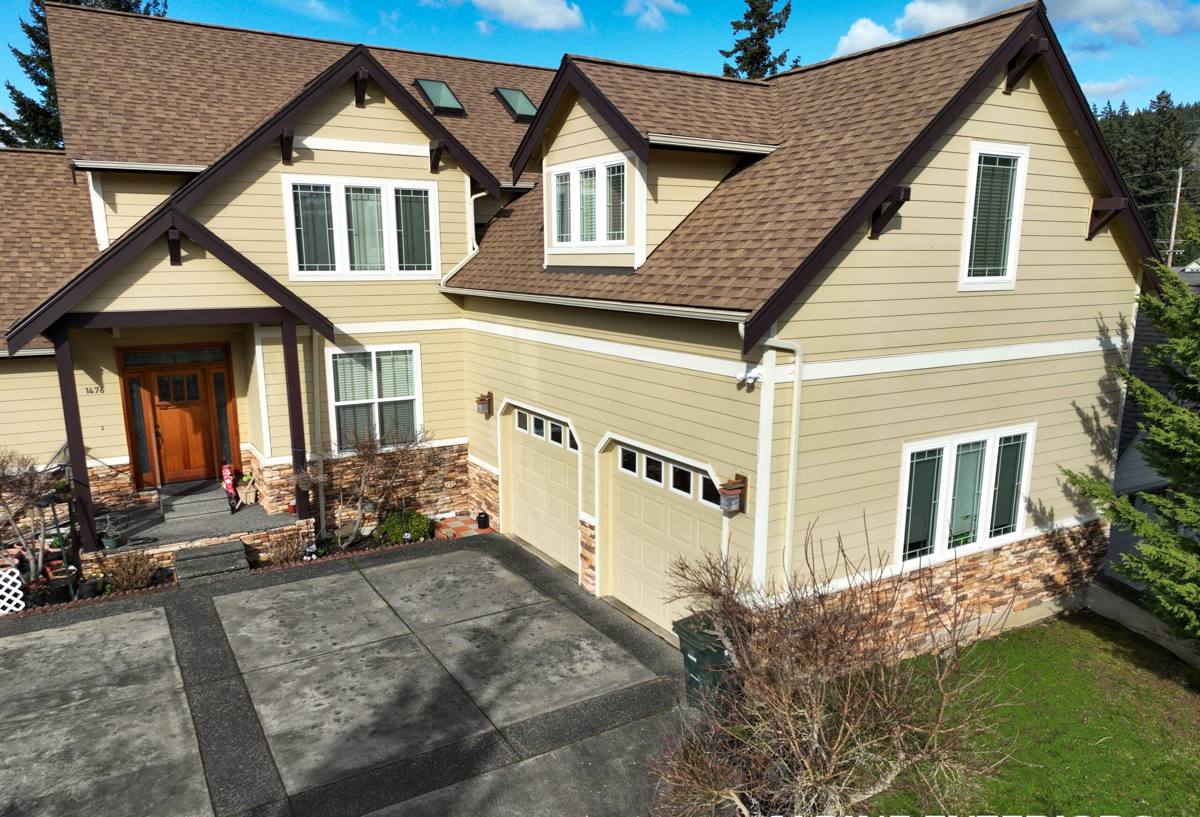
What Edgemoor's Climate Actually Demands from a Window Install
A handful of local conditions show up again and again in Edgemoor and the near-bay parts of Whatcom County, and they shape how we spec and install windows here.
Salt Air
Proximity to Bellingham Bay means a steady, low-level exposure to salt-laden air, even a mile or more inland. Salt air accelerates corrosion on unprotected fasteners, hinges, and hardware, and it can dull or pit lower-grade finishes over time. It doesn't mean every metal component fails — it means hardware and fastener choice matters more here than it would on a home east of I-5.
Driving, Wind-Driven Rain
Whatcom County storms often come with real horizontal push behind the rain, not just straight-down drizzle. That wind-driven rain finds any gap in the water-resistive barrier, flashing lap, or sill pan and pushes water uphill and sideways into places gravity-only details would never see. New-construction windows have to be flashed as a system, not caulked as an afterthought.
A Long Moss and Shade Season
Edgemoor's tree canopy is part of what makes the neighborhood what it is, but it also means many building sites stay damp and shaded for a good stretch of the year. Moss and algae growth on adjacent siding and trim extends the window during which a house stays wet, which raises the stakes on flashing details, sill drainage, and end-dam construction at every opening.
Fewer Extreme Temperature Swings, More Persistent Dampness
Whatcom County doesn't put windows through brutal freeze-thaw cycling the way some inland climates do. The bigger threat here is sustained moisture exposure and slow-building rot or seal failure, which is a durability problem, not just a comfort problem.
Choosing Window Materials and Glass for This Site
There's no single "best" window brand or material for every home — the right choice depends on your budget, your architectural style, and how exposed your specific lot is to wind and salt air. Here's how the common options generally compare for new construction in a coastal-influenced Whatcom County neighborhood like Edgemoor.
| Frame Material | Salt Air / Coastal Behavior | Maintenance | Typical Fit |
|---|---|---|---|
| Vinyl | Resists corrosion well; UV and long-term color stability vary by manufacturer grade | Low | Value-conscious builds, rentals, secondary structures |
| Fiberglass | Very stable dimensionally, holds paint and finish well in damp, shaded settings | Low to moderate | Higher-end new builds wanting durability without wood upkeep |
| Aluminum-clad wood | Good exterior protection if cladding and flashing are detailed correctly; interior wood offers traditional look | Moderate | Architecturally detailed homes, larger openings |
| Bare wood | Highest maintenance burden in damp, shaded, salt-influenced settings; needs disciplined refinishing schedule | High | Historic-style or interior-only wood applications |
On hardware and fasteners, our standard on Edgemoor jobs is to spec corrosion-resistant fasteners and hardware rated for coastal exposure rather than the generic fastener package some window lines ship with. It costs a little more up front and avoids streaking, seizing hardware, and premature fastener failure later. For glass, we generally recommend a low-E coated, argon- or krypton-filled dual-pane (or triple-pane on especially exposed elevations) unit — it's a reasonable standard for this climate and helps with both energy performance and condensation control on cooler, damp mornings.
The Part That Actually Determines Long-Term Performance: Flashing and the Rough Opening
The window unit itself is only part of the system. In new construction, the rough opening, the water-resistive barrier, the flashing, and the sill pan all work together — and it's this assembly, more than the window brand, that determines whether an opening stays dry for the next 30 years.
What a Correct Install Includes
- A sloped or pre-formed sill pan at the rough opening, so any water that gets past the window has a way out instead of pooling on the framing
- End dams at both ends of the sill pan to stop lateral water migration into the wall cavity
- Flashing tape or membrane integrated in the correct shingle-lap order with the water-resistive barrier — head flashing lapped over the barrier above it, jamb flashing lapped over the sill pan
- Proper shimming and fastening so the frame stays square and doesn't rack, which is what causes sash binding and seal failure down the road
- Backer rod and a compatible, weather-rated sealant at the exterior joint — not sealant used as the primary water barrier
- Insulation and air-sealing at the interior gap between frame and rough opening, done without over-compressing the frame
None of this is exotic — it's standard best practice. What matters is that it gets done in the correct order, on every single opening, on a house with a dozen or more windows, in weather that doesn't always cooperate with the schedule.
Our New-Construction Window Process
On a new build, we're typically brought in by the builder or homeowner once framing is enclosed and ready for windows, and we coordinate closely with whoever is running the water-resistive barrier and siding.
- Rough opening check. We verify every opening is square, plumb, and sized correctly before a window ever goes in — catching a framing issue now is far cheaper than after siding is on.
- Sill pan and flashing installation. Sill pans, end dams, and flashing membrane go in per manufacturer instructions and in the correct lapping sequence with the wall's water-resistive barrier.
- Window setting. Units are set, shimmed level and plumb, and fastened per manufacturer specification — not just "close enough."
- Head flashing and integration. Head flashing is lapped over the barrier so water sheds down and out, never into the wall.
- Interior air-sealing and insulation. The gap between frame and framing is sealed and insulated without distorting the frame.
- Exterior sealant and trim prep. Exterior joints are sealed with an appropriate sealant, and the opening is left ready for siding and trim crews.
- Final walkthrough. Every opening is checked for operation, square, and a clean, weathertight perimeter before we sign off.
Mistakes We See on New-Construction Window Jobs
Most of the window problems we get called to diagnose in Whatcom County homes — leaks, staining, rot at the sill — trace back to a handful of repeatable installation shortcuts, not the window product itself. On new builds specifically, watch for:
- Sealant used as the primary water barrier instead of proper flashing and a sill pan
- Flashing lapped in the wrong order, sending water behind the barrier instead of over it
- Windows fastened before verifying the opening is square, leading to racked frames and premature seal failure
- Standard-grade fasteners and hardware used on a salt-air-exposed elevation instead of corrosion-resistant hardware
- No end dams on the sill pan, allowing water to migrate sideways into the wall cavity
- Interior gaps left unsealed or over-packed with insulation, distorting the frame and causing operational issues
Any one of these can look fine on move-in day and still cause a problem three, five, or ten years out — which is exactly why new-construction window installation deserves the same attention as the roof or the foundation waterproofing.
Coordinating With Your Builder and Schedule
New-construction window installation has to happen in the right sequence relative to the water-resistive barrier, siding, and trim crews — install too early or out of order and you create the exact lapping problems described above. We work directly with builders and general contractors on Edgemoor and greater Whatcom County projects to slot into the framing-to-siding sequence correctly, coordinate delivery lead times on the window units themselves, and flag any rough-opening issues before they become expensive change orders later in the build.
Why a Crew That Already Works in Edgemoor Makes a Difference
Edgemoor's mix of mature tree cover, proximity to Bellingham Bay, and a building stock that ranges from established homes to new infill construction means every lot has its own exposure profile. A crew that already does exterior work in this specific part of Whatcom County has a feel for which elevations take the worst of the wind-driven rain, where salt air exposure actually matters versus where it's a non-issue, and how much shade and dampness a given lot is realistically dealing with. That local judgment shapes real decisions — hardware grade, sealant selection, how much margin to build into flashing details — in ways a generic install package doesn't account for.
If you're framing a new home in Edgemoor or elsewhere in Whatcom County and want windows installed correctly the first time, we're happy to provide a free, no-pressure estimate — walk your plans or your framed opening with you, talk through material options, and give you a straightforward, honest read on what your project needs. Fill out the form below to get started.