 Whatcom County
 Edgemoor's Roofs Work Harder Than Most
Edgemoor sits close enough to Bellingham Bay that salt-laden air is a daily fact of life for anything metal on a roof, and it sits inside a stretch of Whatcom County that gets a long, wet, mossy fall-through-spring season most years. Add driving rain off the water during winter storms, and you've got three separate stressors — salt, moisture, and organic growth — all working on the same roof at the same time. A shingle roof built to a generic spec sheet can look fine going up and still start showing problems in year four or five if it wasn't detailed for this specific combination.
This page is about one job, done right, in one neighborhood: asphalt shingle roofing for Edgemoor homes. Not a general overview of shingle types nationwide — what actually matters for a roof that has to survive salt air, sustained rain, and months of shade and moss pressure without babying.
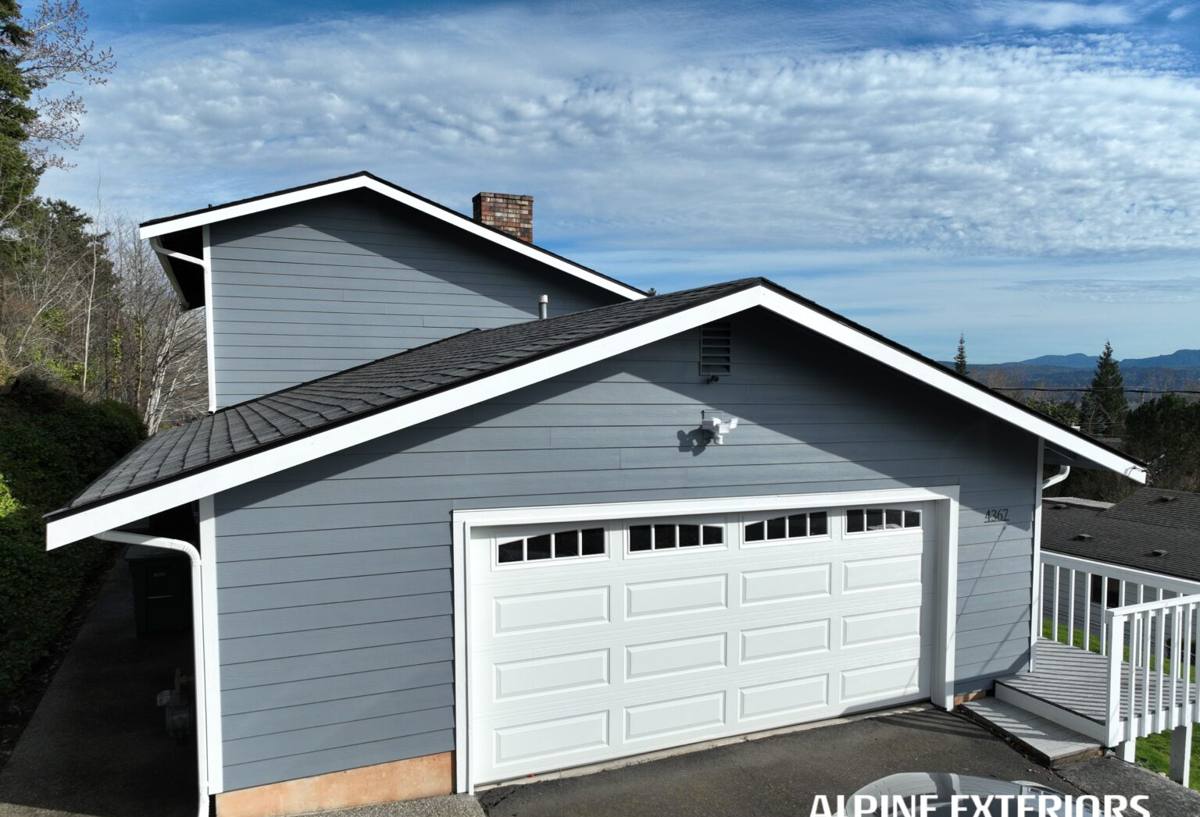
What "Correct" Actually Means for a Shingle Roof Here
A shingle roof is a system, not a single product. The shingles themselves get most of the attention, but in a climate like this, the layers underneath and around them do as much of the protective work.
Underlayment and Water Protection
Synthetic underlayment is standard now, but placement matters more than brand. Eaves, valleys, and any roof-to-wall transitions need self-adhered ice-and-water membrane, not because Edgemoor gets heavy ice damming — it's a maritime climate, so true ice dams are uncommon — but because that same membrane is the best defense against wind-driven rain that gets pushed sideways and up under shingle tabs during winter storms off the bay. Valleys in particular concentrate a huge volume of water in a short run, and that's where a roof either sheds it cleanly or starts feeding a slow leak into the decking.
Flashing
Every place a roof plane meets something else — a chimney, a sidewall, a skylight, a vent pipe — needs step flashing, counter-flashing, or pipe boots sized and lapped correctly. This is the part of a roofing job that's invisible once shingles go down, and it's also the part most likely to be shortcut on a rushed job. Salt air changes the calculus on flashing metal choice, which we cover below.
Ventilation
A balanced intake-and-exhaust system (soffit vents pulling air in, ridge or roof vents letting it out) keeps the attic close to outdoor temperature and moisture level. Without it, warm moist air from the house condenses against the underside of the roof deck, which rots decking from the inside and can void shingle warranties outright. In a climate that's already damp outdoors, an under-ventilated attic just adds a second moisture source indoors.
Fastening
Shingles need to be nailed in the manufacturer's specified nailing zone, with the correct number of nails per shingle (four is minimum, six for high-wind exposure), using ring-shank nails long enough to fully penetrate the decking. Underdriven, overdriven, or misplaced nails are one of the single biggest causes of premature shingle failure and blow-offs, and it's a detail you can't see from the ground after the fact.
Moss, Algae, and the Length of the Wet Season
Whatcom County's wet season runs long — realistically October through May in most years — and shaded, north-facing, or tree-covered roof sections in Edgemoor stay damp for days after a storm rather than drying out in an afternoon. That's exactly the environment moss and algae need.
Moss is the more damaging of the two. It doesn't just sit on the surface — it roots into the granule layer and lifts shingle edges as it grows, which opens a path for water to get underneath. Left long enough, it can work its way into fastener lines. Black algae streaking is mostly cosmetic (it feeds on limestone filler in the granules, not the shingle itself), but a heavily streaked roof also tends to run a few degrees warmer in summer sun, which accelerates aging.
What Actually Reduces Moss Pressure
- Algae-resistant shingles with copper-infused granules, which is now a standard option from major manufacturers and worth the modest upcharge on any shaded or north-facing roof
- Zinc or copper strips installed near the ridge, which release trace metal ions that wash down the roof with every rain and inhibit new moss growth
- Keeping overhanging branches trimmed back so more of the roof sees direct sun and airflow
- Gutters cleared before the fall rains start, so water isn't backing up under the lowest course of shingles
- A soft wash (low-pressure, not power-washing) every couple of years on shaded sections, rather than letting moss establish for a decade
Power washing is worth calling out specifically: high-pressure washing strips granules and can drive water under shingle laps, which does more damage than the moss it's removing. Any moss treatment on a shingle roof should be low-pressure.
Salt Air and What It Does to a Roof
Proximity to Bellingham Bay means airborne salt settles on every exterior surface, roofs included, and it accelerates corrosion on anything ferrous or lower-grade. On a shingle roof, the parts most exposed to that are the metal components, not the shingles themselves — asphalt shingles are largely indifferent to salt air.
Where Corrosion Shows Up First
Standard galvanized flashing and fasteners can start showing rust streaks and pitting well before their inland-rated service life would suggest, especially on roof sections with a direct westerly exposure. Once flashing starts to corrode, it's not just cosmetic — thinning metal eventually perforates, and that's a direct path for water into the structure.
Our practice for coastal-exposed Edgemoor homes is to spec corrosion-resistant materials in these locations as standard, not as an upsell:
- Stainless steel or hot-dip galvanized ring-shank nails instead of standard electro-galvanized
- Aluminum or painted steel flashing with a factory finish rated for coastal exposure, rather than bare galvanized
- Sealed, corrosion-rated pipe boots instead of basic rubber-gasket units that harden and crack faster in salt-air UV exposure
None of this shows up in a photo of a finished roof. It shows up ten years later in whether the flashing is still doing its job.
Choosing the Right Shingle for This Climate
| Shingle Type | Typical Lifespan Here | Wind Rating | Best Fit |
|---|---|---|---|
| 3-tab asphalt | 15–20 years | Lower (60–70 mph) | Budget-driven projects, less wind/rain exposure |
| Architectural (laminate) asphalt | 25–30 years | Higher (110–130 mph rated lines available) | Most Edgemoor homes — better wind and moisture performance |
| Algae-resistant architectural | 25–30 years | Higher | Shaded lots, north-facing slopes, tree-heavy properties |
| Impact-rated (Class 4) architectural | 25–30+ years | Higher, plus impact resistance | Homes wanting maximum durability and possible insurance credit |
For most Edgemoor properties, an architectural shingle with algae-resistant granules is the practical sweet spot: meaningfully better wind performance than 3-tab in a location that catches storms off the water, and the copper-infused granules directly address the moss-and-algae issue this climate creates. Color matters too — lighter, cooler-toned shingles show algae streaking less than dark ones, which is worth factoring in on a shaded roof even before the algae-resistant granules kick in.
Our Installation Process
- Roof and attic inspection. We check the existing deck condition, ventilation setup, and any signs of prior leaks or moss damage before quoting, not after tear-off starts.
- Tear-off and deck check. Old roofing comes off down to the deck, and any soft or delaminated sheathing gets identified and replaced — this is where hidden moss or leak damage usually turns up.
- Drip edge and ice-and-water membrane. Installed at eaves, valleys, and wall transitions before underlayment goes down.
- Synthetic underlayment. Rolled and fastened across the full deck.
- Flashing. Step, counter, and pipe flashing installed with coastal-rated materials at every penetration and transition.
- Shingle installation. Laid to manufacturer nailing pattern and exposure, with attention to valley and hip detailing.
- Ventilation tie-in. Ridge and soffit venting connected so the finished system actually moves air, not just installed for appearance.
- Final walk-through. We go over what was done, what to watch for seasonally, and answer questions before we consider the job finished.
What Drives Cost on a Job Like This
Every roof is different, but the same handful of factors move the price up or down on most Edgemoor projects:
- Roof size and number of planes — more valleys and hips mean more flashing and labor, not just more shingles
- Deck condition — how much sheathing replacement is needed once tear-off exposes the deck
- Pitch and access — steep roofs and tight lot access both add labor time
- Shingle tier — 3-tab versus architectural versus impact-rated
- Ventilation upgrades — adding or correcting soffit/ridge venting if the existing system is inadequate
- Coastal-grade materials — corrosion-resistant fasteners and flashing versus standard-grade
We'd rather walk a roof and give a number based on what's actually there than quote a per-square rate that doesn't hold up once tear-off starts.
Keeping a Shingle Roof Sound Year to Year
A correctly installed roof still needs basic seasonal attention in this climate. A short annual routine catches most problems while they're still cheap to fix:
- Clear gutters and downspouts before the fall rains start
- Trim back branches that overhang the roof or keep sections in constant shade
- Do a visual check from the ground each spring and fall for lifted shingles, moss patches, or granule buildup in gutters
- Have any moss soft-washed before it spreads, rather than waiting until it's visible from the street
- Check attic ventilation isn't blocked by insulation at the soffits
- Get flashing and pipe boots inspected every few years, since sealant and gaskets age faster in coastal UV and salt exposure
Why a Crew That Already Works Edgemoor Matters
Roofing crews that mostly work inland don't build the habit of specifying coastal-grade fasteners and flashing, because most of their jobs don't need it — and that habit gap is exactly where corrosion problems start five or ten years down the line. A crew already working Edgemoor and the surrounding Bellingham Bay shoreline treats salt-air detailing and moss-season prep as the default, not an add-on someone has to ask for. That familiarity also means fewer surprises during tear-off — we've seen what this specific combination of exposure and climate does to a deck and to flashing over time, and we know what to check for before it becomes a bigger repair.
If you're weighing a repair versus a full replacement, or just want a straight read on the condition of your current roof, we're glad to take a look. Reach out for a free, no-pressure estimate using the form below.