 Whatcom County
 Roofing for a Silver Beach Climate, Not a Generic One
Silver Beach sits in a part of Whatcom County where roofs work harder than they do in drier climates. Between the marine-influenced weather rolling off the water, long stretches of steady rain through fall and winter, and shaded, tree-lined lots that stay damp well after a storm passes, an asphalt shingle roof here is dealing with conditions most manufacturers' warranty language never quite accounts for. A roof that would coast along fine in a dry inland climate can start showing moss, granule loss, and soft decking within a few years in this neighborhood if it wasn't installed with that reality in mind.
That's the difference between a roof that's simply "installed to code" and one that's actually built for Silver Beach. The materials, the underlayment choices, the ventilation, and the flashing details all need to account for salt-tinged air, driving rain that gets pushed sideways under poorly lapped shingles, and a moss season that in this part of Whatcom County can run most of the year.
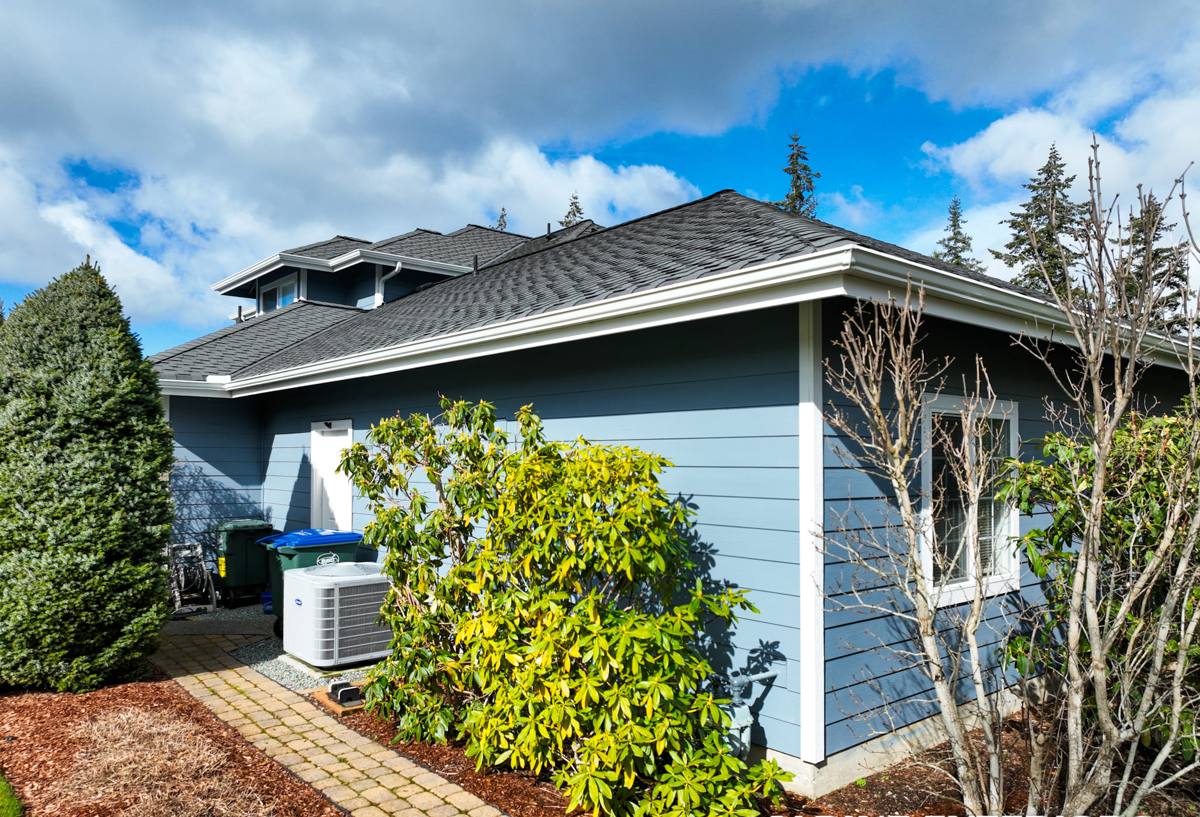
What Local Homes Are Up Against
A handful of climate factors show up again and again on Silver Beach roofs we're called out to inspect or repair:
- Moisture load: Frequent rain keeps roof surfaces wet for extended periods, which slows drying and gives moss, moss spores, and algae time to establish.
- Salt-tinged, humid air: Proximity to the water means metal flashing, fasteners, and vents are exposed to more corrosive conditions than an inland roof would see, which accelerates rust if lower-grade materials are used.
- Tree cover and shade: Many Silver Beach lots have mature trees nearby. Shade keeps roof sections from drying out fully between rains, and falling needles and debris collect in valleys and against shingle tabs.
- Wind-driven rain: Storms off the water can drive rain at an angle, which tests whether shingles, underlayment, and flashing were installed with enough overlap and sealant to resist wind-driven intrusion, not just straight-down rain.
None of these factors alone will destroy a roof overnight. The problem is cumulative — years of moisture retention, granule wear, and moss root intrusion add up faster here than in a drier climate, which is why roof lifespan and maintenance needs in Silver Beach look different from a textbook estimate.
What a Correct Asphalt Shingle Roof Involves Here
Underlayment and Water Management
In a climate with this much sustained moisture, the underlayment matters as much as the shingle itself. We use synthetic underlayment rather than older felt products in most cases, because it holds up better to repeated wetting and drying cycles and resists tearing during install. Ice-and-water shield membrane goes down at eaves, valleys, and any roof-to-wall transitions — the spots where wind-driven rain and ice damming (on the colder days Whatcom County does get) are most likely to force water backward under the shingle line.
Ventilation
A roof deck that can't breathe traps moisture from inside the house against the underside of the shingles, which shortens shingle life and can lead to sheathing rot that isn't visible from the ground. Balanced intake (soffit) and exhaust (ridge or box vents) ventilation is not optional on a damp-climate roof — it's one of the biggest factors in how long a shingle roof actually lasts here versus its rated lifespan on paper.
Flashing and Penetrations
Chimneys, plumbing stacks, skylights, and roof-to-wall junctions are where the overwhelming majority of leaks start — not the open field of shingles. Correctly installed step flashing, counterflashing, and pipe boots, sealed with materials rated for continuous damp exposure, are what actually keep a Silver Beach roof dry through a wet winter.
Shingle Installation Itself
Proper nailing pattern, correct exposure, and starter strip placement all affect wind resistance and how well the roof sheds driving rain. Rushed or improperly nailed shingles are one of the most common causes of early failure we find when re-roofing homes that had a lower-quality install just years before.
Signs a Silver Beach Roof Needs Attention
Because moss and moisture-related wear can progress quietly, it helps to know what to look for from the ground:
- Moss growth along shingle edges, in valleys, or on north-facing slopes that stay shaded most of the day
- Dark streaking or algae staining across shingle faces
- Granules collecting in gutters or downspouts, which signals shingle surface wear
- Curling, cupping, or lifted shingle tabs, especially after a windy storm
- Soft spots, sagging, or visible daylight in the attic where there shouldn't be any
- Water stains on interior ceilings, especially near chimneys, skylights, or exterior walls
Any one of these on its own isn't necessarily an emergency, but they're worth a professional look before the next wet season, since problems caught early are almost always cheaper to fix than problems caught after they've reached the decking.
Our Process for Silver Beach Roofing Projects
- On-site inspection: We look at the whole system — shingle condition, decking, flashing, ventilation, and gutter drainage — not just the obvious problem area.
- Honest assessment: We'll tell you plainly whether you're looking at a repair, a partial re-roof, or a full replacement, and explain the reasoning so you can make an informed call rather than a rushed one.
- Written scope and estimate: Materials, underlayment, ventilation work, flashing detail, and cleanup are spelled out before any work starts — no surprise add-ons mid-project.
- Install with climate-appropriate materials: Synthetic underlayment, ice-and-water membrane at vulnerable points, corrosion-resistant flashing and fasteners, and shingles rated for algae and moss resistance where the budget allows.
- Final walkthrough: We review the finished roof with you, including ventilation and any maintenance recommendations specific to your lot's sun and tree exposure.
Choosing the Right Shingle for This Climate
Not every asphalt shingle product performs the same way in a damp, shaded, moss-prone environment. Here's how the common tiers generally compare for a Silver Beach application:
| Shingle Type | Typical Lifespan Here | Moss/Algae Resistance | Best Fit |
|---|---|---|---|
| Standard 3-tab | Shorter end of range in wet, shaded lots | None built in | Budget-conscious projects, sun-exposed roof planes |
| Architectural (laminate) | Longer than 3-tab under the same conditions | Better shedding due to profile, but no inherent algae resistance | Most Silver Beach homes; good balance of cost and durability |
| Algae-resistant architectural (copper/zinc-infused granules) | Comparable to standard architectural, but holds appearance longer | Built-in resistance to algae staining; helps but doesn't eliminate moss on shaded slopes | Heavily shaded lots, north-facing roof planes, homes near mature trees |
Algae-resistant granules help slow staining, but they're not a substitute for good ventilation, sun exposure where possible, and periodic maintenance — no shingle product fully solves a moss problem created by a shaded, damp roof deck on its own.
Moss, Algae, and the Long-Term Maintenance Picture
Moss isn't just cosmetic. Left unchecked, moss roots work under shingle tabs and granules, lift them slightly, and create channels for water to get underneath — which is how a moss problem eventually becomes a leak problem. Regular soft-washing (not pressure washing, which strips granules and shortens shingle life) and clearing debris from valleys and gutters go a long way. On lots with heavy tree cover, we sometimes recommend zinc or copper strips near the ridge, which release trace metal ions with rainfall that inhibit moss regrowth over time.
How often maintenance is needed depends heavily on how much shade and moisture a particular roof plane sees — a sun-exposed south slope in Silver Beach might go years without issue, while a shaded north slope under trees may need attention annually.
Cost Factors on a Silver Beach Project
Roofing costs vary by roof size, pitch, accessibility, and existing condition, but a few local factors tend to move the number more than homeowners expect:
| Factor | Why It Matters Locally |
|---|---|
| Roof pitch and access | Steeper roofs and lots with limited equipment access take longer and require different safety setups |
| Existing deck condition | Moisture-related rot found once old shingles come off can add material and labor costs |
| Ventilation upgrades | Older homes often need added intake or exhaust venting brought up to a standard that suits this climate |
| Tear-off layers | Removing multiple layers of old roofing costs more in labor and disposal than a single-layer tear-off |
| Shingle tier chosen | Algae-resistant and heavier architectural shingles cost more upfront but can reduce staining and maintenance calls |
A Homeowner's Pre-Project Checklist
- Ask for a written scope that includes underlayment type, flashing details, and ventilation plan — not just "shingle replacement"
- Confirm whether decking replacement, if needed, is priced separately or included as an allowance
- Ask how moss and shaded areas on your specific roof will be addressed differently than sun-exposed sections
- Get manufacturer warranty terms in writing, and understand what voids them (improper ventilation is a common one)
- Clarify cleanup and gutter-clearing as part of the job, not an afterthought
Why Local Experience in Silver Beach Matters
A crew that already works this part of Whatcom County has seen how this specific combination of rain, shade, and salt-influenced air actually wears down a roof over time — not just what a manufacturer's spec sheet says should happen. That shows up in small decisions: where extra ice-and-water membrane goes, which flashing details get reinforced, how ventilation is sized for a shaded lot versus a sun-exposed one, and which maintenance schedule actually fits a given roof's exposure. Those are judgment calls built from doing this work repeatedly in this exact climate, not something that transfers cleanly from a crew used to a drier region.
If you're weighing a repair, a partial replacement, or a full re-roof for a Silver Beach home, we're happy to take a look and give you a straight answer about what your roof actually needs — no pressure, no upsell. Reach out for a free estimate using the form below.