 Whatcom County
 Building Decks That Actually Last in Barkley
Barkley sits close enough to the water and the tree line that its decks take a beating most inland neighborhoods never see. Salt-tinged air off the bay corrodes fasteners and hardware faster than manufacturers' warranties assume. Driving rain off Puget Sound blows sideways under railings and against ledger boards. And a long, damp moss season keeps every horizontal surface wet for months at a stretch. A deck built to a generic national spec will show its age here in a fraction of the time it would somewhere drier. A deck built for Whatcom County conditions won't.
We build and replace custom decks for homes throughout Barkley and the surrounding Whatcom County area, and the design choices we make are shaped directly by what this climate does to wood, fasteners, and framing over time. This page covers what that actually means in practice — not marketing language, just the decisions that separate a deck that lasts fifteen-plus years from one that starts failing at year five.
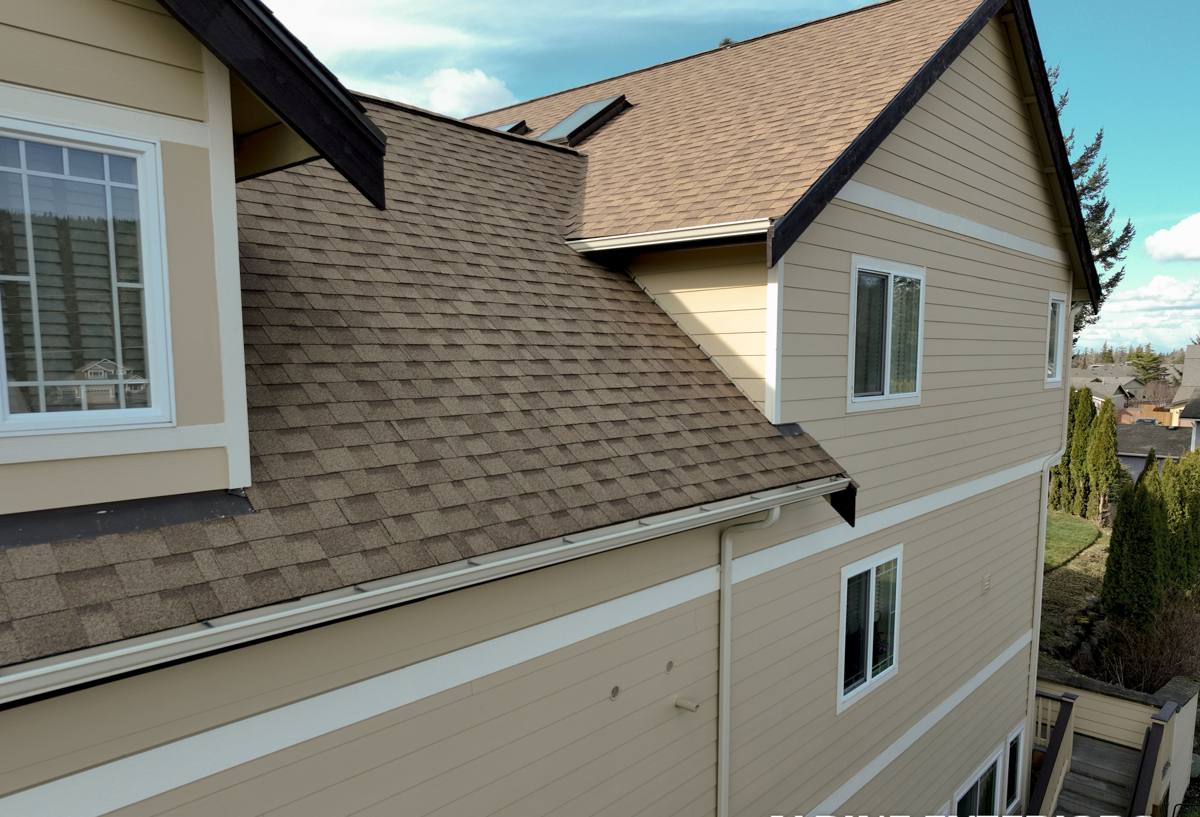
What Whatcom County Weather Does to a Deck
Salt Air and Corrosion
Homes closer to Bellingham Bay deal with airborne salt that accelerates corrosion on anything metal — screws, joist hangers, post bases, railing brackets. Standard electro-galvanized fasteners can start rusting within a couple of seasons in this environment. That rust doesn't stay cosmetic; it weakens the connection points that hold the whole structure together.
Driving Rain and Water Intrusion
Rain here rarely falls straight down. Wind-driven rain gets pushed under rail caps, behind fascia boards, and into any gap in the ledger flashing. A deck that isn't detailed for lateral water movement will develop rot at the house connection long before the decking itself shows wear — and that's the failure point that causes the most expensive repairs.
Moss, Algae, and Prolonged Moisture
Whatcom County's moss season isn't a two-week nuisance — it's a months-long condition where decking stays damp, shaded areas never fully dry out, and organic growth gets a foothold on any surface with poor drainage or airflow. Moss and algae hold moisture against the board surface, which is what actually causes premature decay, not the rain itself.
What a Correct Deck Build Involves Here
A deck is only as good as what's underneath it. For Barkley homes, we pay particular attention to a handful of details that get skipped on lower-bid jobs but matter enormously over the life of the structure.
- Ledger flashing: A properly integrated ledger flashing system — not just caulk — keeps wind-driven rain from tracking behind the board where the deck meets the house.
- Fastener grade: Stainless steel or high-grade coated fasteners and hardware rated for coastal/marine exposure, not standard interior-grade hardware that corrodes quickly in salt air.
- Joist protection: Joist tape or an equivalent moisture barrier on top of every joist so standing water doesn't sit directly against exposed framing lumber.
- Drainage and airflow: Proper board spacing and substructure ventilation so the deck can actually dry out between rain events instead of staying damp for weeks.
- Post base isolation: Post bases that keep wood off the concrete or ground surface, since ground contact combined with constant moisture is one of the fastest paths to rot.
- Grading and drainage below: Making sure water shed off the deck has somewhere to go, rather than pooling against the foundation.
Choosing the Right Decking Material
There's no single "best" decking material — the right choice depends on your budget, how much upkeep you're willing to do, and how much sun exposure the deck gets. Here's how the common options actually compare for this climate, in plain terms.
| Material | Moisture Behavior | Maintenance | Typical Lifespan Here |
|---|---|---|---|
| Pressure-treated lumber | Resists rot when sealed regularly; end grain and cut edges are vulnerable if not re-treated | Annual cleaning and re-sealing recommended | 15–20 years with upkeep |
| Cedar | Naturally rot- and insect-resistant, but greys and can develop moss in shaded, damp spots without cleaning | Periodic cleaning and staining/sealing | 15–25 years with upkeep |
| Composite / capped composite | Doesn't absorb water like wood; capped varieties resist mold and algae staining better than uncapped | Occasional washing; no staining or sealing | 25–30+ years, manufacturer-dependent |
| Untreated or budget softwood | Poor moisture resistance; not a fit for this climate | High maintenance, short-lived regardless | Not recommended for Whatcom County exposure |
We're upfront with Barkley homeowners about trade-offs. Composite decking costs more up front but largely eliminates the sealing and staining cycle that wood requires — which matters when your deck spends a third of the year wet. Cedar and quality pressure-treated lumber can absolutely hold up here, but only if the homeowner keeps up with cleaning and sealing on a real schedule, not an occasional one.
Our Process for a Barkley Deck Project
1. On-Site Assessment
We look at sun exposure, shade patterns, grade and drainage around the house, and how close the site is to prevailing wind and rain direction. That tells us how aggressive the moisture protection details need to be.
2. Design and Material Selection
We walk through material options honestly, including cost ranges and realistic maintenance expectations, so you're choosing based on what fits your budget and how much upkeep you actually want to do — not based on which product has the flashiest name.
3. Permitting
Most custom deck builds and many replacements require a permit through the local jurisdiction, especially for elevated structures or anything attached to the house. We handle that process as part of the project.
4. Framing and Flashing
This is where the work that no one sees happens — ledger flashing, joist protection, correct fastener selection, and proper post footings. It's also the stage that determines whether the deck is still solid in fifteen years.
5. Decking, Railing, and Finish
Board installation, railing systems, and any stairs or finish trim go in last, with attention to spacing and drainage so the finished surface can shed water and dry out properly.
6. Walkthrough
We go over basic care for whatever material you chose — cleaning schedule, what to watch for, and when re-sealing (if applicable) makes sense.
Cost Factors to Expect
Every deck is different, but the main variables that move the price for a Barkley project are consistent:
| Factor | Why It Matters |
|---|---|
| Size and footprint | Square footage is the base driver of material and labor cost |
| Height off grade | Elevated decks need more substantial framing, footings, and often stairs or railing code requirements |
| Material choice | Composite runs higher up front than wood but lowers long-term maintenance cost |
| Site access and grading | Sloped or hard-to-access lots add labor for footings and material transport |
| Railing and stair complexity | Custom railing designs or multiple stair runs add both material and labor |
| Permit requirements | Elevated or attached structures typically require permitting, inspection, and associated fees |
We'll walk through a firm, itemized quote before any work starts — no surprise add-ons partway through the build.
Maintenance That Fits Whatcom County
Whatever material you choose, a few habits go a long way toward getting the full lifespan out of a Barkley deck:
- Clean moss and algae off the surface at least once a year, ideally before it establishes in shaded corners.
- Keep gutters and downspouts near the deck clear so runoff isn't dumping directly onto or under the structure.
- Check railing and stair hardware annually for early rust, especially if you're closer to the bay.
- Reseal wood decking on the schedule the product actually calls for, not "whenever it looks dry" — coastal moisture cycles wear finishes faster than inland conditions.
- Keep planters and furniture legs off the boards directly; use pads or risers so water doesn't trap underneath them.
Why Local Deck-Building Experience Matters
A crew that builds decks in Arizona or inland Washington and a crew that builds them in Barkley are solving different problems, even if the blueprint looks the same on paper. The flashing details, fastener grade, and drainage planning that hold up against salt air and driving rain aren't optional upgrades here — they're the difference between a deck that needs board replacement in year six and one that's still solid at year twenty. Working Whatcom County regularly means we've seen which shortcuts fail first in this specific climate, and we build around them from the start rather than learning that lesson on your project.
If you're planning a new deck or replacing one that's showing its age, we're happy to come take a look and talk through honest options for your home. Reach out for a free, no-pressure estimate using the form below.