 Whatcom County
 Windows Built for Where Samish Sits
Samish homes take a different kind of weather beating than houses ten miles inland. Sitting close to the water in Whatcom County means near-constant humidity, salt-laden air rolling off the bay, and rain that doesn't just fall straight down — it drives sideways into window frames for months at a time. Add a long moss season where everything north-facing stays damp longer than it should, and you have a climate that finds every weak point in a window installation within a few years, not a few decades.
Window installation done right in this area isn't the same job as window installation in a dry inland subdivision. The flashing details, sealant choices, and frame materials all have to account for salt exposure and sustained moisture. This page covers what that actually looks like for Samish homes specifically.
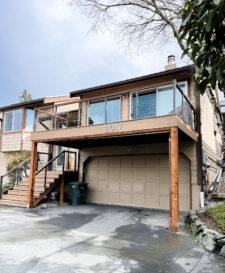
What Salt Air, Driving Rain, and Moss Do to Windows
Salt Air
Airborne salt accelerates corrosion on metal window components — hardware, screen frames, and especially older aluminum sashes. It also degrades certain sealants and finishes faster than a standard product warranty accounts for. Homes closer to open water see this show up first, usually as pitting on hardware or a chalky residue on frames that won't wipe clean.
Driving Rain
Wind-driven rain doesn't respect a window's face — it gets pushed sideways and upward into any gap in the flashing or trim. A window that's watertight in a light straight-down rain can still leak during a wind-driven storm if the flashing and sill pan weren't detailed for that specific load. This is one of the most common causes of hidden rot we find behind older window installations in this area.
Moss and Sustained Moisture
Shaded and north-facing walls in Whatcom County stay damp for extended stretches, and moss doesn't need much of a foothold — a rough-cut trim edge or a hairline gap in caulking is enough. Once moss establishes itself around a window opening, it holds moisture against the wood and sheathing behind it, which is exactly the condition that leads to slow, hidden rot.
Signs a Samish Home's Windows Need Attention
- Soft or spongy trim around the window frame when pressed
- Fogging or condensation between the panes of a double-pane window
- Visible gaps between the frame and siding, or cracked/missing caulk
- Moss or dark staining building up on the sill or lower trim
- Windows that feel drafty even when fully latched
- Difficulty opening, closing, or locking a window that used to operate smoothly
- Paint bubbling or peeling near the frame, which often signals moisture trapped underneath
Any one of these on its own isn't necessarily an emergency, but two or more together — especially soft trim plus moss staining — usually means water has already gotten past the surface and into the wall assembly.
What a Correct Window Installation Actually Involves
A window looks the same from the curb whether it was installed correctly or not — the difference is entirely in details you can't see once the trim goes back on. For a coastal Whatcom County property, we treat these as non-negotiable:
Sill Pan Flashing
A sloped, sealed sill pan under the window opening gives any water that does get past the window a way out instead of a way in. This is one of the most skipped steps in budget installations, and it's the single biggest factor in whether a window leaks during a wind-driven rain event.
Proper Flashing Sequence
Flashing tape and building paper have to be layered so water always sheds downward and outward — over the layer below, under the layer above. Get this order backward anywhere around the opening and you've built a funnel instead of a barrier.
Sealant Selection and Placement
Not every exterior sealant holds up to salt air and UV exposure the same way. We use sealants rated for sustained moisture and marine-adjacent exposure at the joints that matter, and we leave the manufacturer's specified weep points clear so the window can drain the way it was designed to.
Insulation Without Over-Packing
The gap between the window frame and the rough opening needs to be insulated, but over-packing it with expanding foam can bow the frame and cause the sashes to bind. This is a small detail that affects both energy performance and how smoothly the window operates for years afterward.
Our Window Installation Process
- On-site assessment — We look at the existing window openings, check for hidden moisture or rot behind trim, and measure for accurate fit rather than assuming standard sizing.
- Product selection — We walk through frame material, glass package, and hardware options suited to a near-water location, with honest tradeoffs for each.
- Removal and opening prep — Old windows come out carefully, and we inspect and repair any sheathing or framing damage before a new window ever goes in. Installing a new window over a rotten opening just hides the problem.
- Flashing and sealing — Sill pan, flashing tape, and sealant go in following the sequence above, not shortcuts based on what's fastest.
- Setting and shimming — The window is leveled, plumbed, and shimmed so it operates smoothly and seals evenly on all sides.
- Insulation and interior/exterior trim — Gaps are insulated appropriately, then trim is reinstalled or replaced to match the home.
- Final inspection and walkthrough — We test operation, check the seal, and walk the homeowner through anything they should watch for in the first year.
Choosing a Frame Material for This Climate
There's no single "best" window material for every home — it depends on budget, how exposed the home is to salt air, and how much upkeep an owner wants to take on. Here's how the common options actually compare for a Samish-area property:
| Frame Material | Salt Air / Moisture Behavior | Maintenance | Typical Cost Range* |
|---|---|---|---|
| Vinyl | Won't corrode or rot; performs well in salt air | Low — occasional cleaning | Lower |
| Fiberglass | Excellent stability in moisture and temperature swings; very salt-tolerant | Low | Mid to upper |
| Aluminum | Prone to corrosion and pitting near open water unless specially coated | Moderate to high in this environment | Lower to mid |
| Wood / Wood-Clad | Attractive but sensitive to sustained moisture; needs vigilant sealing | High — regular inspection and finish upkeep | Upper |
*Cost ranges vary by size, glass package, and quantity — we give exact numbers only after seeing the actual openings.
For homes closer to the water, we generally steer clients toward vinyl or fiberglass for the frame itself — not because wood or aluminum can't be made to work, but because both require more diligence in a salt-air environment to avoid the maintenance burden and moisture risk that comes with the territory. If a homeowner wants a wood-clad look, that's still an option; it just comes with a clear conversation about the upkeep involved.
Glass Package Considerations
Double-pane, low-E glass is the practical baseline for this climate — it cuts heat loss and reduces condensation on the interior pane during cold, damp stretches. Triple-pane adds further insulation value and is worth considering on north-facing or particularly exposed walls, though it comes at a higher cost and added weight on the frame and hardware.
Why Local Installation Experience Matters Here
A crew that only installs windows in dry inland climates will often default to a generic install method — one that's fine in a lot of the country but leaves gaps in a place like Samish. Working regularly in Whatcom County's coastal conditions means knowing:
- Which sealants actually hold up long-term against salt air and UV, versus which ones look fine for a year and then fail
- How to detail flashing for wind-driven rain, not just vertical rainfall
- Where moss and moisture tend to concentrate on a given home's exposure, so those areas get extra attention
- How to spot hidden rot behind trim before it's covered up by a new window
None of this is exotic knowledge — it's the difference between a crew that's installed a handful of windows near the water and one that treats it as the standard job.
Maintaining Your Windows After Installation
A correct installation gets you most of the way there, but a little seasonal attention extends the life of any window in this climate:
- Rinse salt residue off frames and glass a few times a year, especially after storms
- Check caulking annually for cracks or gaps and re-seal before the wet season starts
- Clear moss or debris from sills and tracks before it has a chance to hold moisture
- Keep weep holes at the base of the frame clear so water can drain out
- Operate each window a few times a season so hardware doesn't seize up from disuse
Get a Straight Answer for Your Samish Home
Every home near the water ages a little differently depending on exposure, shade, and how the previous windows were installed. We're glad to take a look, tell you honestly whether you're looking at a full replacement or a repair, and walk through material options that fit your budget and your home's exposure. Request a free, no-pressure estimate below and we'll get you straight information — no upsell, no guesswork.