 Whatcom County
 Why Decks in Barkley Wear Out Faster Than People Expect
Barkley sits in a part of Whatcom County that gets the full package: salt-laden air moving in off the water, long stretches of driving rain through fall and winter, and a moss season that can run from October well into spring. None of those things are dramatic on their own, but stacked together year after year, they're hard on a deck. Salt air accelerates corrosion on fasteners and hardware. Driving rain finds its way into any gap in flashing or decking that isn't detailed correctly. And moss doesn't just look bad — it holds moisture against wood and composite surfaces long after the rain has stopped, which is exactly the condition that rot and premature wear need to take hold.
A deck built or repaired without those specifics in mind might look fine for a season or two. The problems usually show up underneath — at the ledger board, the footings, and the framing — long before they're visible on the surface. That's the gap we're hired to close: building or replacing a deck so it's still solid and safe well past the point where a corner-cut job would have failed.
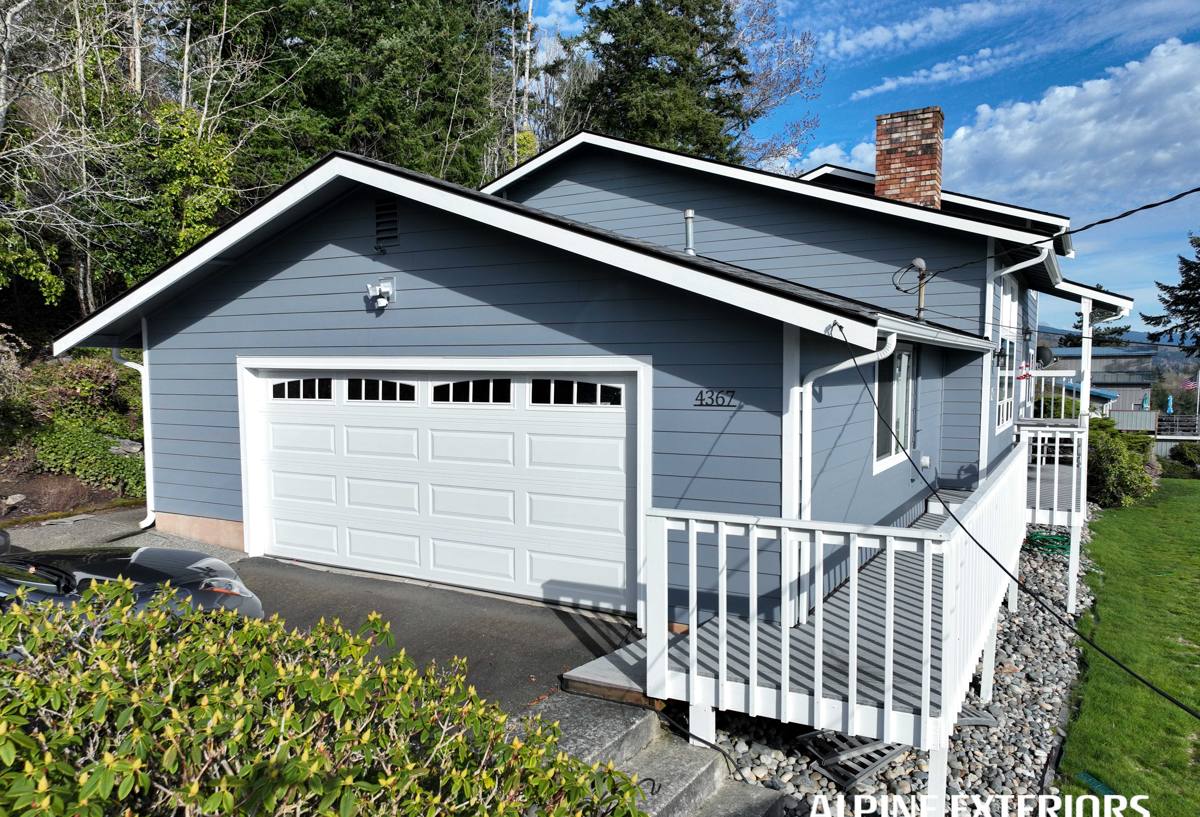
Signs a Deck Needs Replacement, Not Just Repair
Not every tired-looking deck needs to come out. But there's a point where patching boards or re-staining is just delaying a bigger problem, and it's worth knowing the difference before you spend money on the wrong fix.
- Soft, spongy, or bouncy spots in the decking or framing when you walk across it
- Visible gaps, staining, or soft wood where the deck attaches to the house (the ledger board)
- Rust streaks or corroded fasteners, especially near the perimeter or stairs
- Posts that wobble, or footings that look cracked, heaved, or undersized
- Persistent moss or algae growth that comes back within weeks of cleaning
- Railings that flex more than a firm push should cause
- A deck that's more than 15-20 years old and has never had the structure inspected
If you're seeing more than one or two of these, it's worth having someone look at the framing before deciding whether repair or replacement makes sense. Surface problems are cheap to fix. Structural problems get more expensive the longer they sit.
What a Correct Deck Replacement Actually Involves
It Starts Underneath, Not With the Decking Boards
The decking material — whatever you choose — is the last thing installed, not the first thing to think about. A deck replacement done right starts with the structure: the ledger board connection to the house, the posts and footings, the joists, and how water is directed away from all of it. In a climate that sees as much rain as Whatcom County, the flashing detail at the ledger board is one of the most important — and most commonly rushed — parts of the whole job. Water intrusion at that single connection point is the most common cause of hidden rot we find when we open up an older deck.
Footings and Framing Sized for the Load
Footings need to be sized and set below frost depth, and posts need to be properly connected top and bottom — not just resting in a bracket. Joist spacing and beam sizing depend on the span and the decking material you're planning to install, so this isn't a one-size-fits-all calculation. Undersized framing is one of the more common shortcuts we see on older decks, and it's not something you can fix after the decking is down.
Fasteners and Hardware That Match the Environment
With salt air in the mix, hardware matters more here than it does in a lot of inland areas. Stainless steel or high-grade coated fasteners and structural connectors cost more up front than standard galvanized hardware, but they hold up to corrosion in a way that standard hardware doesn't over a 15-20 year lifespan. Cutting corners here is the kind of thing that doesn't show up as a problem for a few years — and then shows up all at once.
Decking Material Options for This Climate
There's no single "best" decking material — it depends on your budget, how much maintenance you're willing to do, and how the deck will be used. Here's how the common options actually perform under Whatcom County's rain and moss conditions.
| Material | Moss/Moisture Behavior | Maintenance | Typical Lifespan |
|---|---|---|---|
| Pressure-treated lumber | Moisture-resistant chemically, but surface holds moss without regular cleaning | Annual cleaning, periodic staining/sealing | 10-15 years before boards need attention |
| Cedar | Naturally resists rot but softer surface, moss takes hold if not maintained | Regular cleaning and refinishing to keep its look | 15-20 years with upkeep |
| Composite decking | Doesn't absorb water like wood, but moss and algae can still grow on the surface film in shaded, damp spots | Occasional washing, no staining or sealing | 25-30+ years, manufacturer-warrantied |
| PVC decking | Fully non-absorbent surface, most resistant to moisture-driven damage | Lowest maintenance of the group | 25-30+ years, manufacturer-warrantied |
We don't push one material over another as a default — we walk through the trade-offs with you. Wood costs less up front but asks for more of your time every year. Composite and PVC cost more up front but ask almost nothing of you after installation, which matters if the deck sits in a shaded, damp spot where moss is a recurring fight. Whatever you choose, the framing underneath needs to be built correctly — the decking material doesn't fix bad structure, and good structure doesn't make a poor decking choice perform better than it will.
Our Deck Replacement Process
- On-site assessment. We look at the existing deck's framing, footings, and ledger connection — not just the surface — to see what's actually driving the need for replacement.
- Honest scope and options. You get a clear breakdown of what needs to be replaced structurally versus what's a material choice, with straightforward pros and cons for each decking option.
- Demolition and disposal. The old deck comes out, including checking what condition the ledger board and rim joist are in behind it — this is often where hidden rot from the old ledger flashing shows up.
- Structural rebuild. Footings, posts, beams, and joists are built to current code for the deck's size, height, and intended use, with corrosion-resistant hardware throughout.
- Flashing and water management. Proper ledger flashing and drainage detailing go in before any decking is installed — this step is what protects the house itself, not just the deck.
- Decking, railing, and stairs. Installed to the manufacturer's specifications if it's a proprietary composite or PVC system, since improper installation can void those warranties.
- Final walkthrough. We go over the finished deck with you, including what maintenance (if any) the material you chose will need going forward.
Permits and Code Considerations in Whatcom County
Most deck replacements that involve structural work — new footings, changes to height or footprint, or attachment to the house — require a permit. This isn't paperwork for its own sake: it's what ensures the footings, framing, and railing heights meet current code, which matters for insurance, resale, and simple safety, especially on elevated decks or stairs. We handle the permitting process as part of the job rather than leaving it for you to sort out, and we build to pass inspection the first time rather than treating code minimums as a target to hit exactly and no further.
Maintenance That Actually Extends a Deck's Life Here
Whatever material you choose, a little seasonal attention goes a long way in this climate. This is the routine we recommend to homeowners after installation:
- Clear leaves and debris from between boards and off ledges before fall rains set in — trapped debris is where moss gets its start
- Rinse the deck surface periodically through the wet months to keep moss and algae from establishing
- Check that gutters and downspouts near the deck aren't dumping extra water onto or under it
- Inspect railings and stair connections once a year for looseness
- For wood decking, plan on cleaning and re-sealing on the schedule the product calls for — skipping a cycle lets moisture in faster than most people expect
- Keep planters and other items that trap moisture off the decking surface, or move them periodically
What Drives the Cost of a Deck Replacement
Every deck is different, so we don't quote a number without seeing the site, but the main cost factors are consistent from job to job:
| Factor | Why It Matters |
|---|---|
| Deck size and shape | More square footage and more complex angles or levels increase material and labor |
| Height off grade | Elevated decks need more substantial framing, footings, and stair/railing work |
| Decking material | Composite and PVC cost more upfront than wood but need far less long-term upkeep |
| Structural condition found underneath | Hidden rot at the ledger or framing, common in older decks here, adds scope once uncovered |
| Railing and stair complexity | Custom railing systems and multi-level stairs add both material and labor time |
As a rough guide, a straightforward deck replacement typically lands in the low-to-mid five figures, with composite or PVC materials and more complex structures pushing toward the higher end. We'd rather walk your specific deck and give you real numbers than have you plan around a generic estimate that doesn't reflect what's actually there.
Why a Crew That Already Works Barkley Matters
A deck replacement isn't just a materials choice — it's a structure that has to hold up to this specific stretch of Whatcom County weather for decades. A crew that's already worked on decks in and around Barkley has seen firsthand where the ledger flashing tends to fail, which decking materials hold up against the moss season without a fight, and how the salt air and rain patterns here differ from a generic manufacturer spec sheet written for a drier climate. That's not something you get from a crew passing through the area for one job. It shows up in the small decisions — hardware grade, flashing detail, drainage slope — that don't cost much more to get right the first time, but cost a lot to fix later.
If your deck is showing its age, or you're just not sure whether it needs repair or full replacement, we're happy to take a look and give you a straight answer. Reach out for a free, no-pressure estimate using the form below.