 Whatcom County
 Decking Built for How Cordata Actually Weathers
Cordata sits far enough inland to avoid the worst of the coastal wind, but it still gets the same wet, gray stretch that defines a Whatcom County winter — weeks of low clouds, driving rain, and damp air that never quite dries out between storms. Add in the salt-laden air that drifts in off Bellingham Bay and the moss season that can run from October into April, and a deck here takes a different kind of beating than one in a drier climate. Wood decking in this environment needs constant upkeep — sanding, staining, sealing — or it starts graying, splintering, and hosting moss within a couple seasons. Composite decking, installed correctly, is built to shrug most of that off.
This page covers what a composite deck actually needs to hold up in Cordata's climate, what a correct installation looks like underneath the boards where you can't see it, and why hiring a crew that already works this neighborhood matters more than picking a brand off a shelf.
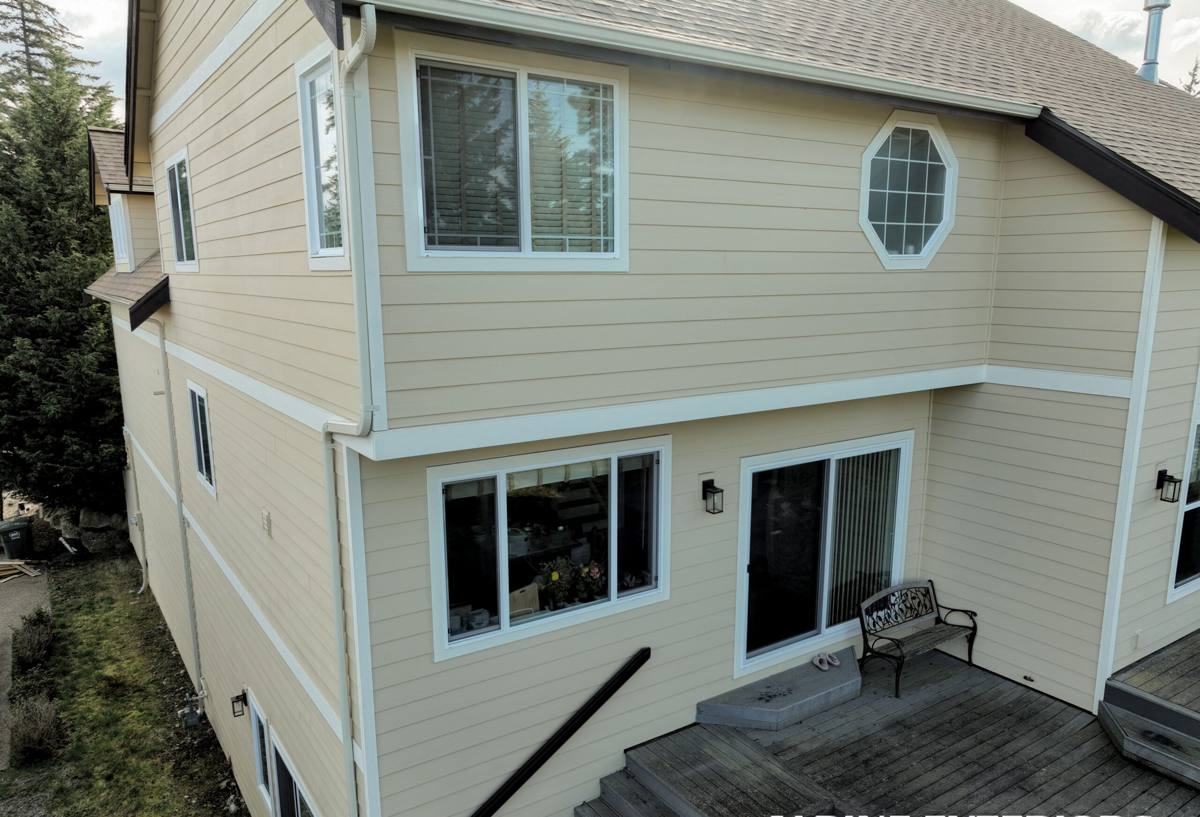
What Whatcom County's Climate Does to a Deck
Before talking about materials, it helps to understand what's actually working against your deck year-round:
- Sustained moisture: Long stretches of rain mean wood fibers stay saturated for days at a time, which is exactly when rot and fungal growth take hold.
- Moss and algae: Shaded areas under trees or on the north side of a house rarely dry out fully, giving moss and algae a long runway to establish on any surface with texture or grain.
- Salt air: Even inland from the water, airborne salt accelerates corrosion on exposed fasteners, hinges, and hardware — a slow process that shows up as rust streaks and loosening connections over a few years.
- Freeze-thaw cycling: Whatcom County doesn't get deep freezes often, but the occasional cold snap after a wet spell can crack water-saturated wood fibers at the surface.
- UV in the gaps between storms: When the sun does come out, it's often intense enough to fade and dry out whatever moisture-swollen wood fibers were left behind, adding a second stress cycle on top of the wet one.
None of this is unique to Cordata — it's the reality across Whatcom County — but it's worth stating plainly because it's the reason composite decking has become the practical choice for homeowners who don't want a deck that demands a weekend of maintenance every spring.
Why Composite Holds Up Better Here
Composite decking is made from a blend of wood fibers and recycled plastics, capped (in most modern boards) with a protective polymer shell. That shell is what does the real work in a climate like ours:
Moisture resistance without the maintenance cycle
Capped composite boards don't absorb water the way solid wood does, so they don't swell, cup, or split from repeated wet-dry cycles. You're not staining or sealing anything on a schedule — the surface is doing its job without upkeep.
Moss and algae don't get a foothold as easily
The capped surface is smoother and less porous than wood grain, which gives moss and algae spores less to grip onto. It doesn't make a deck moss-proof — anything left wet and shaded long enough can grow something on it — but it dramatically cuts down how fast and how deep growth sets in, and it wipes off easier when it does.
Fade and color stability
Quality composite boards are engineered to resist UV fading far longer than a wood stain job, which matters when the deck spends half the year damp and the other half getting hit with strong seasonal sun.
Structural stability over time
Wood decking can warp, twist, or crown as it dries unevenly after a wet season. Composite boards are dimensionally stable, so the surface stays flat and the gaps stay consistent — which also matters for drainage, covered next.
What a Correct Installation Actually Involves
The board itself only does half the job. Most composite deck failures we get called out to inspect aren't a material problem — they're an installation problem, usually something wrong in the framing or drainage that was never designed for a wet climate in the first place. A correct job includes:
Framing and ledger board
The ledger board (where the deck attaches to the house) needs proper flashing to keep water from working its way behind the siding and into the wall assembly. This is one of the most common failure points we find on older decks — a ledger that was face-nailed without flashing, quietly rotting the rim joist behind it for years before anyone notices.
Joist protection
Composite boards resist moisture, but the wood joists underneath them don't unless they're protected. Joist tape or a comparable moisture barrier on top of every joist keeps water from wicking into the framing at the screw points, which is where untreated joists rot first.
Drainage and airflow underneath
A deck built tight to the ground, or without a slight slope away from the house, traps moisture underneath where it has nowhere to go. In a climate that stays wet for months, that trapped moisture is what feeds mold and accelerates hardware corrosion. Proper spacing, slope, and ventilation underneath the deck matter as much as the boards on top.
Fastener selection
Hidden fastener systems keep the deck surface clean and reduce the number of penetration points where water can sit, but the fasteners themselves need to be corrosion-resistant hardware rated for coastal or high-moisture environments — not standard hardware that starts rusting and staining boards within a year or two of salt air exposure.
Board spacing
Composite boards expand and contract slightly with temperature. Gaps that are cut too tight will bind and buckle; gaps that are too wide look sloppy and collect debris. Manufacturer spacing specs exist for a reason and should be followed board by board, not eyeballed.
Our Process for a Cordata Composite Deck
- On-site assessment: We look at existing framing (if it's a rebuild), grade, drainage path, sun/shade exposure, and how the deck ties into the house.
- Material selection: We walk through board lines, colors, and price tiers based on your budget and how the space gets used — a shaded, moss-prone side of the house may call for a different color or texture than a sun-exposed deck.
- Framing repair or build-out: Any rot, undersized joists, or missing flashing gets addressed before a single composite board goes down. This step is non-negotiable — a beautiful deck surface on a compromised frame is a problem deferred, not solved.
- Moisture barrier and fastener install: Joist tape, proper ledger flashing, and corrosion-resistant hardware go in as standard, not as an upsell.
- Decking install: Boards go down with correct spacing and hidden fasteners, working around posts, stairs, and any transitions cleanly.
- Final walkthrough: We check for level, gap consistency, secure railings, and clean edges before calling the job done.
Composite Tiers: What Changes With Price
| Tier | What You Get | Best For |
|---|---|---|
| Entry-level composite | Basic capped board, solid moisture resistance, fewer color/texture options | Budget-conscious rebuilds, smaller decks, rental properties |
| Mid-range composite | Deeper wood-grain texture, wider color range, stronger fade resistance, longer warranty | Most primary residences — the balance point for cost and longevity |
| Premium composite | Highest fade/stain resistance, most realistic wood-look finishes, longest warranty coverage | High-visibility decks, homes prioritizing long-term low maintenance |
Every tier we install is capped composite — we don't recommend uncapped boards for this climate. Uncapped composite absorbs more moisture at the surface, which in a region with Whatcom County's rainfall and moss pressure tends to shorten the useful life of the deck and show algae staining sooner than capped product does.
Maintenance: What Composite Still Needs
"Low-maintenance" doesn't mean "no-maintenance." A composite deck in Cordata still needs some seasonal attention:
- Sweep debris (leaves, needles, moss spores) off the surface regularly, especially in fall and winter, so nothing sits wet against the boards.
- Rinse with a garden hose or wash with mild soap and a soft brush a couple times a year — avoid pressure washers on close settings, which can damage the cap layer.
- Check the area underneath the deck occasionally for standing water or blocked drainage paths.
- Inspect railings, stair connections, and any exposed hardware once a year for looseness or corrosion.
- Trim back overhanging branches or shrubs that keep sections of the deck shaded and slow to dry — this is the single biggest thing homeowners can do to reduce moss.
Why a Crew That Knows Cordata Matters
Composite decking is sold the same way nationwide, but installing it correctly depends entirely on local conditions — grade, drainage, sun exposure, and what a given lot does with rainwater. A crew that works Whatcom County regularly already knows which framing details tend to fail first in this climate, how much slope a deck needs given our rainfall totals, and which fastener and flashing choices actually hold up against a coastal-influenced, high-moisture environment year after year. That's the difference between a deck that looks good for one season and one that still looks good in year eight.
Get a Straight Answer for Your Deck
If you're weighing a rebuild or a new composite deck for your Cordata home, we're happy to take a look, walk you through what your specific site needs, and give you a straightforward, no-pressure estimate. Fill out the form below and we'll get back to you.