 Whatcom County
 Why Ferndale Siding Has to Work Harder Than the Catalog Says
Ferndale sits close enough to the water that salt-laden air is a real factor on siding, trim, and fasteners, not a theoretical one. Add Whatcom County's long wet season, wind-driven rain off the Strait, and the shade and dampness that keep moss thriving on north- and west-facing walls for months at a time, and you've got a climate that punishes any siding product installed to a "good enough" standard. We install James Hardie fiber cement specifically because it holds up to that combination better than the alternatives we've chosen not to carry, and because a correctly detailed Hardie installation gives Ferndale homeowners something they don't have to think about again for a long time.
This page is about one thing: fiber cement siding on Ferndale homes specifically, what the local climate demands from it, what a correct installation actually involves, and why a crew that already knows this area's failure points matters more here than in a drier, calmer climate.
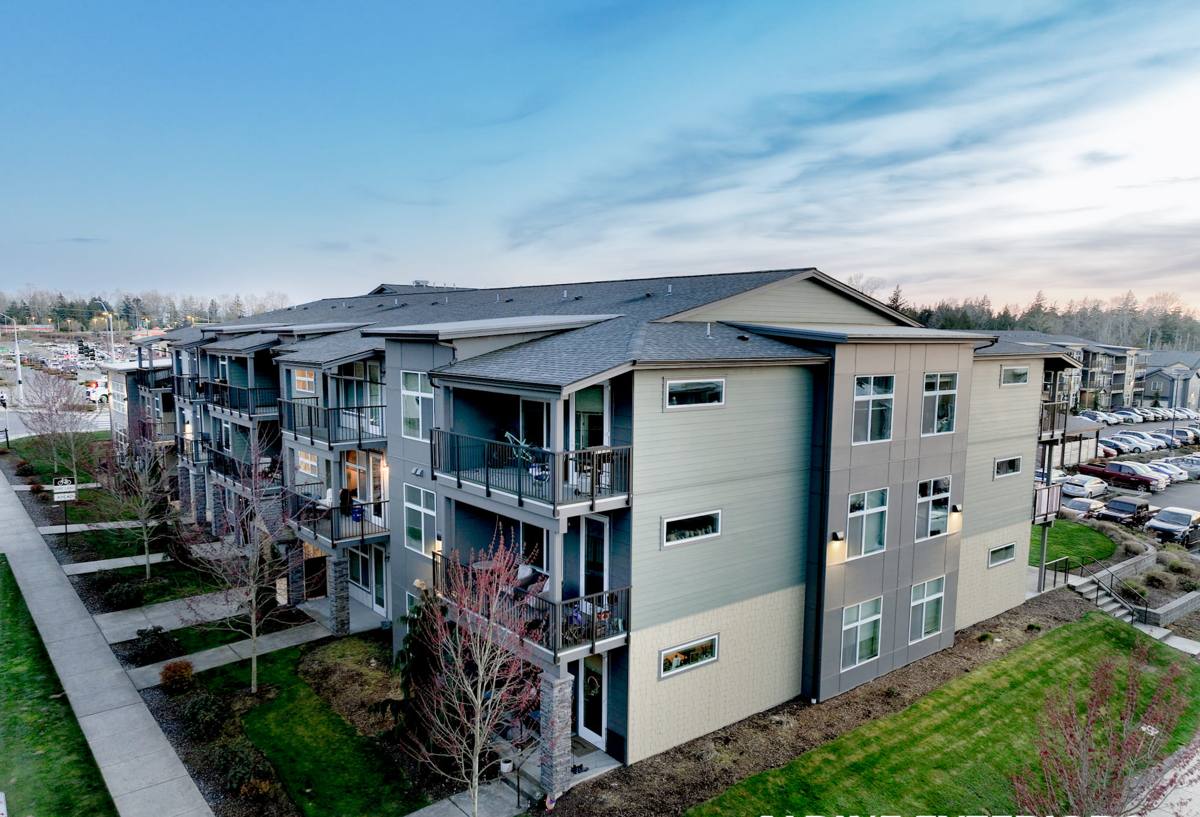
What Salt Air, Driving Rain, and Moss Actually Do to Siding
Salt Air
Airborne salt is corrosive to fasteners and metal flashing, and it accelerates the breakdown of paint films and cheaper composite products over time. Fiber cement itself is inert to salt — it doesn't rust or corrode — but the fasteners, trim caps, and flashing details around it absolutely can if the wrong materials are used. This is a detailing issue as much as a material issue.
Driving Rain
Whatcom County rain rarely falls straight down. Wind pushes it sideways into wall assemblies, which means every horizontal joint, window head, and butt seam is a potential entry point if it isn't flashed and caulked correctly. Siding that looks fine from the driveway can be feeding water behind itself for years before anyone notices rot in the sheathing.
Moss and Prolonged Dampness
Shaded, damp wall sections in Ferndale — especially north-facing walls near mature trees or tight side yards — stay wet longer than the rest of the house. Moss and algae take hold on porous or textured surfaces and hold moisture against the wall even longer, which is a slow but steady stress on any siding material and its finish.
Why We Only Install James Hardie Fiber Cement
We don't install vinyl, LP SmartSide, primed wood, or other fiber cement brands. That's a deliberate standard, not a sales pitch. Here's the honest reasoning specific to a climate like Ferndale's:
- Non-combustible core: Hardie's fiber cement doesn't provide the fuel that wood-based or vinyl products do, which matters everywhere but is a real plus given regional wildfire smoke seasons and general fire-risk awareness.
- Moisture-resistant by composition: Fiber cement doesn't absorb and swell the way engineered wood products can when a joint fails and water gets behind the panel — a meaningful difference in a driving-rain climate.
- ColorPlus factory finish: A baked-on finish resists fading and holds up to the UV and moisture cycling better than field-applied paint, which means fewer repaint cycles over the life of the siding.
- HZ5 engineering: Hardie's HZ5 product line is engineered for cold, wet, freeze-thaw climates like the Pacific Northwest — it's not a generic national product, it's built for exactly this kind of weather.
- Warranty structure: Hardie backs its products with a long, transferable limited warranty, which adds real value if you sell the home down the road.
We're not going to tell you other products are junk — vinyl is cheap and easy to install, LP SmartSide has real fans, and cedar has a look people love. But we've made a professional call that fiber cement, installed correctly, is the better long-term bet for this climate, and we'd rather turn down work than install something we don't believe holds up here.
What a Correct Fiber Cement Installation Involves in Ferndale
The material is only half the equation. A Hardie installation that's actually built for Ferndale's climate needs specific attention in a few places most crews rush past:
Rainscreen or Proper Drainage Gap
Given how much wind-driven rain this area sees, a drainage gap behind the siding — even a minimal furring strip approach — gives incidental moisture somewhere to go instead of sitting against the sheathing. This is one of the most overlooked details in budget installs.
Flashing at Every Horizontal Transition
Window heads, door heads, deck ledgers, and any place siding meets a horizontal surface need proper metal flashing, not just caulk. Caulk fails; flashing sheds water by design and lasts far longer.
Fastener Selection for Salt-Air Exposure
Corrosion-resistant fasteners matter more here than in an inland climate. We use fasteners rated for the exposure, not whatever's cheapest at the yard.
Proper Clearances
Hardie specifies minimum clearances from grade, roofing, and decking surfaces for a reason — those gaps keep splashback and standing moisture off the bottom edge of the siding, which is exactly where moss and rot tend to start.
Caulking and Joint Treatment
Butt joints and panel seams need to be treated per Hardie's spec, not just caulked over generically. Done wrong, this is where driving rain finds its way in first.
Our Process for a Ferndale Fiber Cement Project
- On-site assessment: We walk the home, check current siding and sheathing condition, note shaded/damp wall sections prone to moss, and identify any existing moisture or rot issues before we talk product.
- Product and color selection: We go through the relevant Hardie lines and ColorPlus options that fit the home and the neighborhood.
- Detailed written estimate: Scope, product, and pricing in writing — no surprise add-ons mid-project.
- Prep and moisture check: Any water damage or compromised sheathing found during tear-off gets addressed before new siding goes up — covering a problem is worse than finding it.
- Installation to spec: Drainage gap, flashing, fastening, and clearances handled per manufacturer specification, not shortcuts.
- Final walkthrough: We go over the finished job with you before calling it done.
Why a Locally Experienced Crew Matters Here
A siding crew that mostly works drier, inland climates can install Hardie technically correctly and still miss the details that matter specifically in a place like Ferndale — the shaded wall that needs a bit more drainage attention, the window that catches wind-driven rain from the water side of the house, the fastener spec that should be upgraded for salt exposure. A crew that already works Whatcom County has usually already seen these failure points on other homes and builds around them by default, rather than learning it on your project.
Fiber Cement vs. the Alternatives: A Ferndale-Specific Look
| Factor | James Hardie Fiber Cement | Vinyl | LP SmartSide / Engineered Wood |
|---|---|---|---|
| Salt air resistance | Inert material; detailing protects fasteners/trim | Can become brittle and discolor over time | Vulnerable if moisture gets behind the panel |
| Driving rain tolerance | Strong when flashed/joints treated to spec | Prone to water intrusion at seams over time | Swells/deteriorates if water penetrates coating |
| Moss/algae exposure | Durable surface, factory finish resists buildup effects | Can trap moisture behind panels | Wood-based core is moisture-sensitive |
| Fire resistance | Non-combustible | Combustible | Combustible |
| Finish longevity | Baked-on ColorPlus finish, long repaint interval | Color molded in, but can fade/chalk | Field-applied or factory finish, shorter interval typically |
Cost Factors for a Ferndale Fiber Cement Project
Every home is different, but the main variables that move the price are consistent:
- Total square footage and number of stories
- Current siding type and whether tear-off reveals sheathing or moisture repairs
- Amount of trim, corner detail, and architectural features
- Product line and profile selected (lap width, panel vs. plank, ColorPlus vs. field-painted)
- Site access — tight side yards and difficult staging areas do add labor time
We don't publish blanket per-square-foot pricing because it's genuinely dependent on these factors, but we'll walk your home and give you a clear, itemized number before any work starts.
A Simple Pre-Project Checklist for Ferndale Homeowners
- Note any wall sections that stay damp or grow moss longer than the rest of the house
- Check for soft spots, staining, or bubbling paint near windows and roof lines — signs of existing moisture intrusion
- Ask any contractor you're vetting whether they detail for drainage gap, flashing, and fastener corrosion resistance specifically — not just "we install Hardie"
- Get the product line, color, and warranty terms in writing before signing
- Confirm whether tear-off and sheathing repair (if needed) are included in the estimate or billed separately
If your Ferndale home's siding is showing its age, or you're planning ahead for a replacement, we're happy to walk the property and give you a straight, no-pressure estimate — fill out the form below to get started.