 Whatcom County
 Why Roofs in Barkley Wear Differently Than Roofs Inland
Barkley sits close enough to Bellingham Bay and the Puget Sound shoreline that homes here deal with a mix of weather stresses that inland Whatcom County neighborhoods don't see in the same combination. Salt-laden air moving in off the water accelerates corrosion on exposed metal fasteners, flashing, and vent components. Add in the long stretches of driving rain that come through in fall and winter, plus the shaded, tree-lined lots common around Barkley that keep roof surfaces damp and cool for days at a time, and you've got a roof environment that ages faster than the shingle manufacturer's brochure suggests.
None of this means a roof in Barkley needs to be exotic or overbuilt. It means the installation details that get skipped or done cheaply elsewhere — flashing quality, fastener choice, underlayment coverage, and ventilation — matter more here, not less. A roof that's installed correctly for this climate will hold up for its full expected life. One that isn't will show problems years ahead of schedule, usually starting with moss, granule loss, or soft decking around valleys and penetrations.
The Moss Problem Is a Roof Problem, Not Just a Cleaning Problem
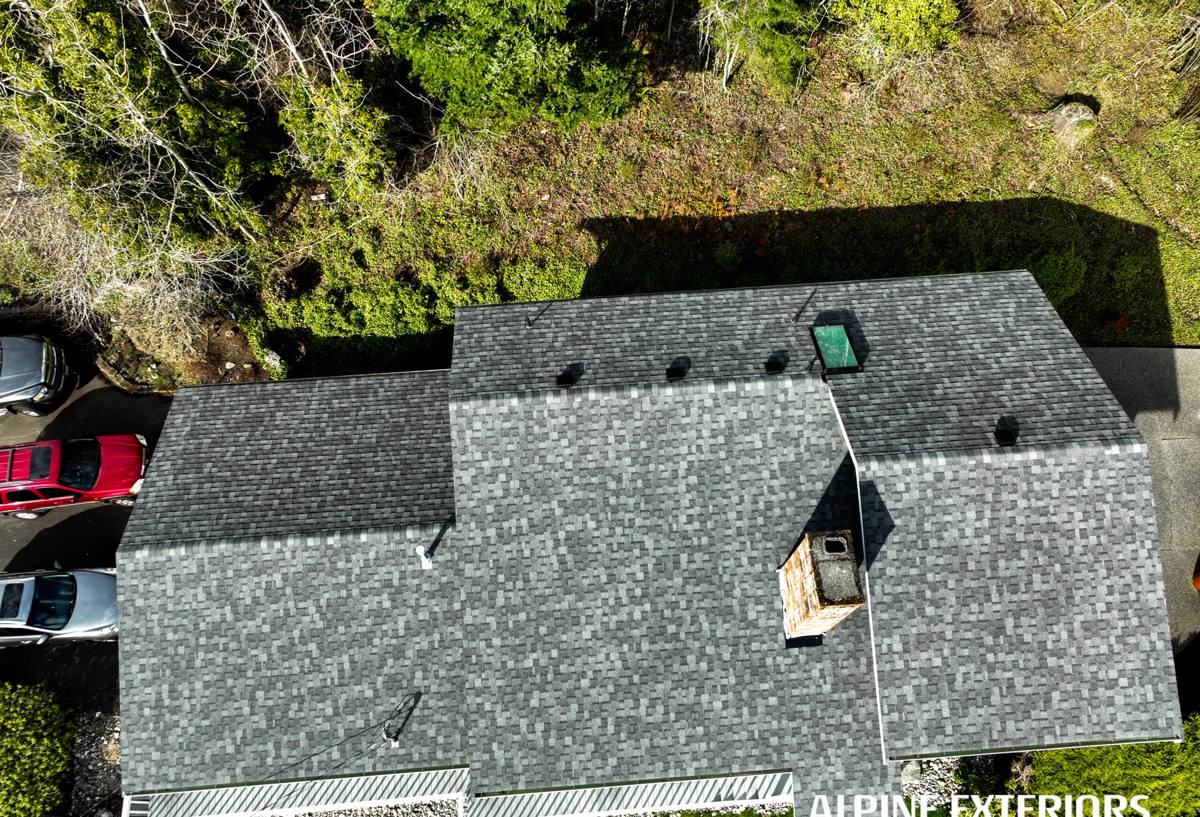
Whatcom County's moss season runs long — realistically most of the year on shaded, north-facing, or tree-covered roof slopes. Homeowners often treat moss as a cosmetic issue to be power-washed or scraped off, but moss holds moisture against the roofing material for extended periods, works its way under shingle edges and tabs, and can lift granules and shingles as it grows. On an aging roof, heavy moss is frequently a sign that the roof is retaining more water than it should, which points to a ventilation or underlayment issue underneath, not just an algae problem on top.
When we install a new roof in Barkley, we treat moss resistance as a design consideration, not an afterthought. That includes material selection, zinc or copper strips where appropriate, and making sure valleys and low-slope sections are detailed to shed water quickly rather than let it sit.
Signs a Barkley Home Needs a New Roof, Not Another Repair
Repairs make sense when a roof has isolated damage and years of usable life left. A full replacement makes sense when the underlying materials are failing broadly. Here's how to tell the difference:
- Granules collecting in gutters or at downspout outlets in noticeable amounts, season after season
- Shingles that are curling, cupping, or cracking across multiple slopes, not just one isolated spot
- Soft or spongy decking felt underfoot in the attic, especially near valleys, chimneys, or plumbing vents
- Persistent moss or dark streaking that returns within a few months of cleaning
- Daylight visible through the roof deck from inside the attic
- A roof already past 20-25 years old (composition shingle) with no major work done
- Multiple past repairs to different areas rather than one recurring leak point
If you're only seeing one or two of these, a repair or a partial section may still be reasonable. If several apply at once, it's usually more cost-effective to replace than to keep patching a roof that's failing broadly.
What a Correct New Roof Installation Actually Involves
A new roof is more than laying down new shingles over what's there. Done right, the process addresses everything underneath the visible surface, since that's what determines whether the roof performs well through a Whatcom County winter.
Full Tear-Off and Deck Inspection
We remove the existing roofing down to the deck rather than layering over it. This lets us inspect the sheathing for rot, delamination, or soft spots — common where past leaks went unnoticed — and replace only the sections that need it, rather than guessing at what's underneath a second layer of shingles.
Underlayment and Water Barrier
Given how much driving rain and wind-driven moisture this area sees, we pay close attention to underlayment coverage, especially at eaves, valleys, and around penetrations, using ice-and-water membrane in the areas most prone to backup and wind-driven infiltration.
Flashing
Flashing around chimneys, skylights, sidewalls, and roof-to-wall transitions is where most leaks actually originate — not in the open field of shingles. We install new flashing rather than reusing old pieces, and we choose materials that hold up to salt air rather than corroding within a few seasons.
Ventilation
Proper intake and exhaust ventilation keeps the attic dry and temperature-balanced, which reduces moss growth from below, prevents condensation damage to the deck, and helps the shingles themselves last their full rated life. This is one of the most commonly overlooked parts of a roof installation.
Fasteners and Hardware
In a salt-air environment, the grade of nails, screws, and metal hardware used matters. We use corrosion-resistant fasteners rather than standard-grade hardware that can rust and weaken years before the shingles themselves wear out.
Choosing a Roofing Material for Barkley's Conditions
There's no single "best" roofing material for every home — the right choice depends on your roof's pitch, sun/shade exposure, budget, and how long you plan to stay in the home. Here's how the common options compare for this specific climate:
| Material | Performance in Salt Air / Rain / Moss | Typical Lifespan | Considerations |
|---|---|---|---|
| Architectural asphalt shingle | Good with proper underlayment and ventilation; moderate moss resistance | 25-30 years | Best value; wide color/style range; needs periodic moss maintenance on shaded slopes |
| Standing seam metal | Excellent water shedding; needs corrosion-resistant coating/fasteners near salt air | 40-50+ years | Higher upfront cost; sheds moss and moisture very effectively due to slick surface |
| Synthetic/composite shake | Good moisture resistance; mimics cedar look without the moisture uptake of real wood | 30-40 years | Higher cost than asphalt; low maintenance burden |
| Cedar shake (natural wood) | Attractive but absorbs moisture and is more vulnerable to moss and rot in this climate | 15-25 years realistic in wet climates | We're upfront that natural cedar carries a higher maintenance burden here — it can be the right look for the right homeowner who's willing to keep up with treatment, but it's not our default recommendation for shaded Barkley lots |
For most Barkley homes, a quality architectural asphalt shingle with correct underlayment and ventilation is the practical, cost-effective choice. Metal roofing is worth serious consideration on homes with heavy tree cover or persistent moss problems, since its smooth surface sheds debris and moisture far more effectively than a textured shingle.
What Drives the Cost of a New Roof
We don't quote prices without seeing the roof, but these are the factors that move the number up or down on any project in this area:
| Factor | Why It Matters |
|---|---|
| Roof size and number of planes | More square footage and more valleys/hips mean more material and labor time |
| Pitch and accessibility | Steep or hard-to-access roofs require more safety setup and slow the work down |
| Layers to remove | Tearing off two layers of old roofing costs more than removing one |
| Deck condition | Rotted or delaminated sheathing found during tear-off requires repair or replacement before new roofing goes on |
| Material choice | Asphalt, metal, and synthetic products carry different material and installation costs |
| Ventilation and flashing upgrades | Bringing older ventilation or flashing up to current standards adds work but pays off in roof longevity |
Our Process, Start to Finish
- On-site inspection: We walk the roof and attic, check the deck, ventilation, and flashing, and note anything a photo or drone pass would miss.
- Written estimate: A clear breakdown of material, labor, and any deck or ventilation work identified during inspection — no vague allowances.
- Scheduling around weather: We plan installation around Whatcom County's rain patterns and stage materials so the roof deck isn't left exposed longer than necessary.
- Tear-off and deck repair: Old roofing comes off, the deck is inspected, and any damaged sheathing is replaced before anything new goes down.
- Installation: Underlayment, flashing, ventilation, and the finish roofing material are installed to manufacturer specifications and local conditions.
- Final walkthrough and cleanup: We inspect the completed roof with you, clear debris and old materials from the property, and check gutters for roofing debris.
Why Hiring a Crew That Already Works in Barkley Matters
A crew that regularly works in and around Barkley and greater Whatcom County already knows which details tend to get skipped by out-of-area or fly-by-night installers — corrosion-resistant fasteners, adequate ice-and-water coverage at eaves, and ventilation sized for a wet, shaded climate rather than a dry one. That local pattern recognition shows up in fewer callbacks and a roof that performs the way it's supposed to through its first few wet winters, which is when installation shortcuts usually reveal themselves.
It also matters for permitting and code familiarity specific to the county, and for simply being reachable if a question comes up after the job is done, rather than a crew that's moved on to a different region entirely.
Questions to Ask Before You Hire
- Do you tear off down to the deck, or install over existing layers?
- What underlayment and ice-and-water coverage do you use at eaves and valleys?
- Are flashing components replaced or reused?
- How do you size and balance attic ventilation for this roof?
- What's covered under workmanship warranty versus manufacturer material warranty, and for how long?
- Can you provide proof of licensing and insurance specific to roofing work?
If your Barkley roof is showing its age or you're just weighing your options, we're happy to take a look and walk you through what we find — no pressure, no obligation. Fill out the form below for a free estimate.