 Whatcom County
 Why Bellingham Windows Take a Different Kind of Beating
Bellingham sits right where Puget Sound marine air, Whatcom County's heavy annual rainfall, and a moss season that can run eight months or more all converge on the same house. Windows are one of the first things to show it. Salt-laden air off the bay accelerates corrosion on hardware and fasteners. Driving rain, pushed sideways by wind off the water, tests every seal and flashing detail a window has. And the shade, moisture, and mild temperatures that make this region green also make it ideal for moss, algae, and mildew to colonize sills, tracks, and trim.
None of that is exotic — it's just what this climate does, year after year, to every window on the wall. A window that would perform fine in a dry inland climate can fail early here if it wasn't chosen and installed with these specific conditions in mind. That's the difference between a window job that looks right on installation day and one that's still watertight and operating smoothly a decade later.
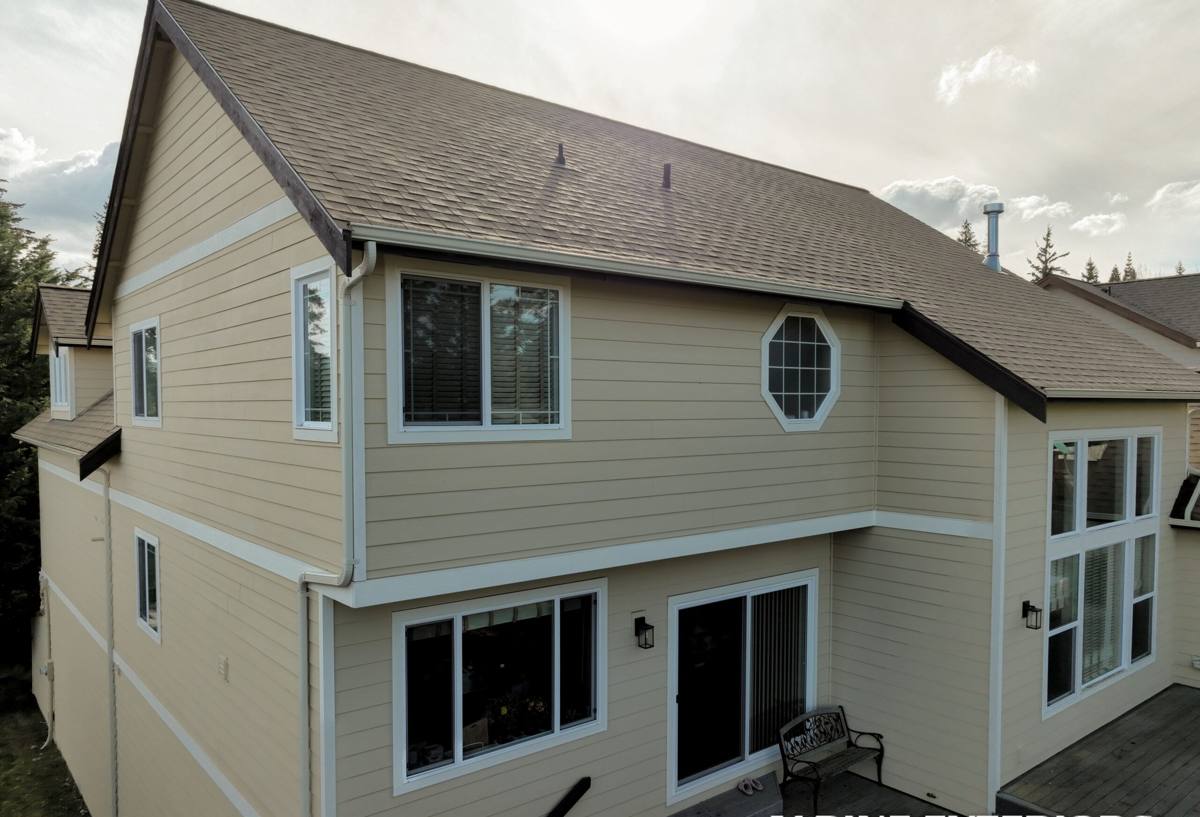
What "Custom" Actually Means for a Window Job
"Custom windows" doesn't necessarily mean unusual shapes or premium finishes, though it can include those. In practice, on most Bellingham homes it means the window is specified and built to fit an exact rough opening, an exact wall assembly, and an exact exposure — rather than forcing a stock size into a space and patching around it.
Where custom sizing matters most
- Older Bellingham homes with settled or slightly out-of-square openings, common in older neighborhoods with original wood-frame construction
- Additions or remodels where the opening doesn't match a standard manufacturer size
- Replacing a single unusual window (bay, picture, or odd-height unit) without rebuilding the whole wall
- Matching sightlines and trim profiles across a home so new windows don't look bolted-on next to originals
Custom does not mean more failure points, more maintenance, or a fundamentally different way of building the wall around it. It means the window and the opening agree with each other from the start, which is exactly what keeps water out over the long run.
Signs Your Current Windows Are Losing the Fight
Homeowners in Whatcom County usually don't notice window failure as a dramatic leak. It shows up gradually, and it's worth catching early before it reaches the framing.
- Fogging or a permanent haze between panes — the seal on an insulated glass unit has failed
- Soft or discolored wood on the sill, jamb, or interior trim
- Green or black growth building up in the tracks or on the exterior sill faster than you can keep it clean
- Drafts or a noticeable temperature difference near the window on windy days
- Hardware that's stiff, corroded, or won't latch tight anymore
- Paint or finish that's bubbling or peeling specifically around the window opening, not the rest of the wall
Any one of these on its own might just mean it's time to service that window. Several at once, especially on a wall that takes direct wind and rain, usually means the window and its flashing are due for replacement rather than repair.
Frame and Glass Options: What Actually Holds Up Locally
There's no single "best" window material for every home — it depends on exposure, budget, and how the house is built. Here's how the common options compare specifically for Bellingham's marine, wet, moss-prone conditions.
| Frame Material | How It Handles Salt Air & Rain | Maintenance Load | Typical Trade-Off |
|---|---|---|---|
| Vinyl | Won't corrode or rot; handles moisture well | Low — occasional cleaning | Fewer color/profile options than wood or fiberglass |
| Fiberglass | Very stable in wet, temperature-swinging conditions; resists corrosion | Low | Higher upfront cost than vinyl |
| Wood (clad exterior) | Good if the exterior cladding and flashing are done correctly; exposed wood is the risk | Moderate to high on exposed faces | Best look for period-correct homes, but sensitive to installation quality |
| Aluminum | Conducts cold and can corrode near salt air unless properly finished | Moderate | We generally steer clients away from bare aluminum on exposed Bellingham walls for this reason |
When we don't recommend a particular product for a specific wall, it's about matching material behavior to that wall's real exposure — not a knock on the manufacturer. A bare aluminum frame facing prevailing wind and rain off the bay is simply a harder maintenance commitment than a vinyl or fiberglass unit in the same spot, and we'd rather tell a homeowner that upfront than let it become a callback in three years.
How We Approach a Window Job on a Bellingham Home
1. Site assessment and exposure check
Before we talk product, we look at which walls take direct weather, which are sheltered, whether there's existing moss or moisture staining, and how the current windows were flashed. This tells us where to spend extra attention and where standard detailing is sufficient.
2. Precise measurement and ordering
We measure the actual opening, not a nominal size, and account for any out-of-square condition common in older framing. Custom units are ordered to that exact opening rather than shimmed to fit a stock size.
3. Removal without collateral damage
Old units come out carefully so we can inspect the framing, sill, and sheathing underneath before anything new goes in. This is where hidden rot or old flashing mistakes usually surface — and it's much cheaper to catch here than after a new window is sealed over the same problem.
4. Framing and sheathing repair, if needed
Any soft wood, failed sheathing, or compromised weather-resistive barrier gets repaired before the new window goes in. Installing a good window over a bad opening just delays the same failure.
5. Flashing and water management
This is the step that determines whether the window survives driving rain, and we treat it as the most important part of the job, not an afterthought — more on this below.
6. Setting, shimming, and sealing
The window is set plumb and square, shimmed correctly so it isn't racked or under stress, and sealed with the right products at the right layers — not just a bead of caulk around the outside trim.
7. Interior and exterior finish
Trim, sill, and any siding or cladding tie-in are finished to match the surrounding wall so the new window doesn't stand out or leave a weak transition point.
Flashing and Sealing: Where Driving Rain Actually Gets In
Most window leaks in this region aren't from the glass or the sash — they're from water finding a path around the frame, behind the trim, or under the sill. Correct flashing means water that gets behind the exterior cladding is directed back out, layered like shingles from the bottom up, rather than trapped where it can soak into framing.
What a correct flashing sequence includes
- Sill pan flashing that slopes water out and away from the framing, not just a flat bead of sealant
- Weather-resistive barrier integrated with the flashing in the correct shingle-lap order
- Head flashing that sheds water over the window rather than letting it pool against the top of the frame
- Sealant used at the right joints only — over-sealing every gap can trap moisture instead of letting it drain
Given how much driving rain this area gets off the water, a flashing shortcut that might get away with it in a drier climate tends to show up as a stain on the interior wall within a season or two here.
Moss, Algae, and the Long Wet Season
Whatcom County's moss season isn't just a roof problem. Shaded walls, north-facing exposures, and window sills that stay damp for days after a storm are exactly where moss and green algae take hold. Left alone, that growth holds moisture against the frame and finish, which shortens the life of both.
A few details in the original installation make ongoing moss control much easier: sills sloped to shed water rather than pool it, drip caps that keep water moving away from the frame, and trim details that don't create flat ledges where organic growth can establish. None of this requires exotic materials — it's about detailing the job so water doesn't sit still anywhere near the window.
What Windows Typically Cost — And What Drives the Range
Every home is different, so we don't quote a flat price without seeing the openings, but these are the factors that move the number up or down on most Bellingham jobs.
| Factor | Effect on Cost |
|---|---|
| Frame material (vinyl vs. fiberglass vs. clad wood) | Fiberglass and wood-clad generally cost more than vinyl for a comparable size |
| Custom sizing vs. standard stock size | Custom units cost more than off-the-shelf sizes due to manufacturing lead time and precision |
| Condition of the existing framing and sheathing | Rot or moisture damage found during removal adds repair cost before the new window goes in |
| Number of windows done at once | Bundling multiple windows in one visit typically reduces the per-window labor cost |
| Exposure and flashing complexity | Walls with heavy wind-driven rain exposure warrant more careful (and slightly more time-intensive) flashing work |
Anyone quoting a whole-house window replacement over the phone without seeing the openings is guessing. A proper estimate should include a walk-through of each opening.
Why Hiring a Crew That Already Works in Whatcom County Matters
Window installation isn't uniform across the country, and it isn't uniform across Washington either. A crew that mainly works drier inland climates may not default to sill pan flashing or moss-conscious detailing, simply because their usual jobs don't demand it. A crew that works Bellingham and the rest of Whatcom County regularly builds those habits into every job, because the walls here don't forgive shortcuts.
Local familiarity also means knowing which neighborhoods sit in more exposed wind corridors, which older housing stock tends to have out-of-square openings or original single-pane wood windows, and what permitting or inspection expectations apply locally. That's knowledge that comes from doing the work here repeatedly, not from a general contractor's checklist.
Keeping New Windows Performing for the Long Haul
A correctly installed window still needs some homeowner upkeep to get its full lifespan out of Bellingham's climate. A simple seasonal routine goes a long way.
- Clear debris and organic growth from sills and tracks a few times a year, especially after fall leaf-drop
- Check exterior caulking annually for cracking or separation, particularly on walls facing prevailing wind
- Operate hardware periodically through the wet season so locks and hinges don't seize from corrosion or disuse
- Watch for early fogging between panes, which signals a seal failure worth addressing before it worsens
- Keep gutters and downspouts clear so overflow isn't running down the wall and pooling at window heads
Get a Straight Answer on Your Windows
If you're not sure whether your current windows need repair, resealing, or full replacement, an honest assessment is the right first step before spending money in the wrong place. We offer free, no-pressure estimates for Bellingham homeowners — we'll look at your actual openings, explain what we see, and give you options that fit both your home and this climate.