 Whatcom County
 Decks Built for Nooksack's Weather, Not Just Its Views
Nooksack sits in a part of Whatcom County where the weather does more work on an outdoor structure than most homeowners expect. You get a long wet season with driving rain that comes in sideways more often than straight down, a stretch of the year where everything outside grows a green film if it isn't cleaned or built to shed water, and enough proximity to marine air moving up from the coast and the Sound that metal hardware corrodes faster here than it would inland. A deck that isn't specifically built with those three things in mind — rain, moss, and salt air — will show problems within a few seasons: soft boards, rusted fasteners, slick surfaces, and rot starting at the joints you can't see until it's already spread.
This page is about custom decks specifically for Nooksack and the surrounding area, not a general "why decks are great" pitch. It covers what actually holds up here, what a correct build looks like from the framing up, and what our process looks like when we come out to your property.
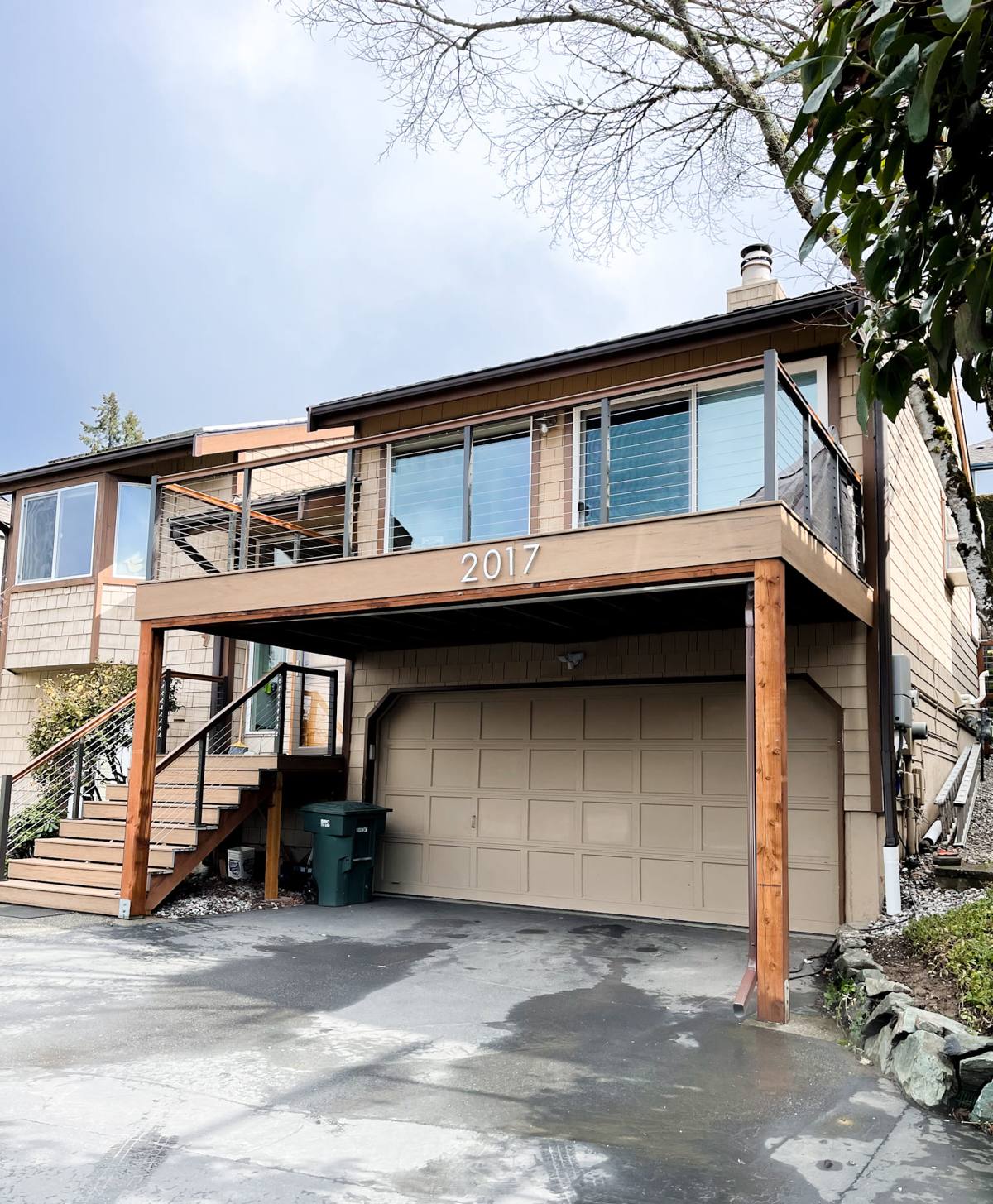
What Nooksack Homes Actually Need From a Deck
Most of the deck failures we get called out to inspect in this area trace back to the same handful of causes, and they're almost all climate-related rather than random bad luck:
- Moss and algae buildup on decking surfaces, especially on the north or shaded side of a house, or under tree cover — this makes boards slick and holds moisture against the wood far longer than open sun exposure would.
- Fastener corrosion from a combination of treated-lumber chemicals and damp, salt-tinged air, which shows up as rust streaking and eventually loosened connections at the ledger and joist hangers.
- Ledger board rot where the deck attaches to the house — this is the single most common structural failure point we see, usually from missing or improperly installed flashing that let years of rain wick into the rim joist.
- Standing water on the surface from decking installed dead flat instead of with a slight pitch away from the house, which turns every rain event into a shallow pool that never fully dries between storms.
None of these are exotic problems. They're the predictable result of building a deck the same way you'd build one somewhere drier and sunnier, and then leaving it to Whatcom County's actual weather. A correctly built deck accounts for all four from day one.
Choosing Decking Material for a Wet, Mossy Climate
There's no single "best" decking material — there's a best material for your budget, your maintenance appetite, and how much shade your yard gets. Here's how the common options actually perform in a climate like this one:
| Material | How it handles rain and moss | Maintenance | Typical lifespan here |
|---|---|---|---|
| Pressure-treated fir/hem-fir | Sheds water fine if sealed; moss grows readily on the surface without regular cleaning | Annual cleaning and re-sealing recommended | 15-20 years with upkeep |
| Cedar | Naturally rot-resistant and handles damp conditions well; still grows moss without cleaning | Periodic cleaning, occasional oil/stain | 20-25 years with upkeep |
| Composite (capped) | Doesn't absorb water or rot; some composite surfaces still get slick with algae film in deep shade | Occasional wash, no sealing needed | 25-30+ years, manufacturer-warrantied |
| PVC decking | Fully waterproof, most moss-resistant surface option, but can be slicker underfoot when wet | Lowest maintenance of the group | 30+ years, manufacturer-warrantied |
We don't push one product line over another as a blanket rule — we walk the site with you, look at how much sun and tree cover the deck location actually gets, and talk through the honest maintenance trade-off. A shaded, north-facing deck near mature trees is a very different decision than one that gets full afternoon sun.
A Note on Slip Resistance
In a climate where moss and algae are a near-constant seasonal issue, surface texture matters as much as the material itself. Grooved or textured composite and PVC boards, and cedar with a properly applied non-slip finish, all outperform smooth-faced boards once things get damp — which in this area is most of the year.
Framing and Structure: Where Decks Actually Fail First
The decking surface is what you see, but the framing underneath is what determines whether the deck is still safe in ten or fifteen years. A correct build in this climate includes:
Ledger Attachment and Flashing
Where the deck ties into the house, we install proper metal flashing integrated with the house's existing weather barrier, not just caulk over the ledger board. This is the detail that prevents the slow, hidden rot that eventually requires tearing a deck off the house entirely.
Joist Hangers and Fasteners
Given the salt-air exposure inland from the coast and the near-constant dampness, we use corrosion-resistant hardware rated for treated lumber contact — stainless steel or heavy hot-dip galvanized, not the standard-coated fasteners that streak with rust within a year or two out here.
Footings and Post Bases
Whatcom County's frost depth and drainage-heavy soils mean footings need to be set to the correct depth and the post bases need to sit above grade, off the wet soil, on proper post base hardware rather than buried directly in concrete where they'll wick moisture upward.
Deck Board Spacing and Pitch
Boards get gapped correctly for drainage and airflow underneath, and the whole surface is built with a slight pitch away from the house so water sheets off instead of pooling — a detail that's invisible once finished but makes a real difference every time it rains.
Cost Factors: What Actually Moves the Price
Every deck quote is different, but the variables that drive cost up or down are consistent. Understanding them helps you make decisions that fit your budget instead of guessing:
| Factor | Why it matters |
|---|---|
| Decking material | Pressure-treated lumber is the lowest upfront cost; composite and PVC cost more per square foot but reduce maintenance and repainting/sealing over the deck's life |
| Height and stairs | A ground-level deck needs far less structural framing than an elevated deck with stairs, landings, and guardrails |
| Site access and grading | Sloped lots, limited equipment access, or removing an old deck first all add labor time |
| Railing and guard system | Cable rail, glass panel, and custom metal railings cost more than standard wood or composite balusters |
| Ledger and flashing complexity | Older homes sometimes need siding removed and weather barrier repaired before a proper ledger attachment can go in |
We give straightforward, itemized estimates so you can see where the money is going and adjust scope if needed, rather than a single bottom-line number with no explanation.
How Our Process Works
- Site visit and assessment. We walk the property, look at sun/shade exposure, existing structure (if replacing a deck), soil and drainage conditions, and talk through how you'll actually use the space.
- Design and material selection. We go over material options honestly, including maintenance trade-offs specific to your site's exposure, and put together a design that fits the house and the lot.
- Written, itemized estimate. No vague lump-sum numbers — you see what's driving the cost so you can make informed choices.
- Permitting. We handle the permit process for structural work that requires it, including the required inspections along the way.
- Build. Demo of any old structure (if applicable), footings, framing with corrosion-resistant hardware, decking, railing, and finish work.
- Final walkthrough. We go over the finished deck with you, including basic care guidance specific to your site's sun and shade exposure.
Maintaining a Deck Through Whatcom County's Wet Season
Even a correctly built deck needs some seasonal attention in this climate — the difference is that a well-built deck needs far less of it, and none of it is structural. Here's a practical checklist for keeping a deck in good shape year-round in this area:
- Sweep debris and standing leaves off the surface regularly through fall — trapped organic matter is what feeds moss growth
- Clean the deck surface at least once a year (more often in heavy shade) with a deck-safe cleaner to remove algae and moss film before it gets slick or stains the surface
- Check and re-seal wood decking on the manufacturer's recommended schedule; composite and PVC don't need sealing but benefit from an annual wash
- Inspect fasteners and hardware for rust streaking or loosening, particularly at the ledger and stair connections
- Keep gutters and downspouts near the deck clear so runoff isn't dumping extra water directly onto or under the structure
- Trim back overhanging branches to reduce shade-driven moss growth and keep debris off the surface
Permits and Guardrail Requirements
Most elevated decks in Whatcom County require a building permit, and any deck above a certain height needs a code-compliant guardrail and baluster spacing to pass inspection. Requirements vary depending on the specific jurisdiction within the county, so we confirm the applicable requirements for your property before finalizing a design rather than assuming a one-size-fits-all standard. Handling this correctly up front avoids delays or having to modify a finished structure to pass inspection.
Why a Crew That Already Works This Area Matters
A deck built by a crew that hasn't worked much in Whatcom County will often build it the way they'd build one in a drier climate — and it'll look fine on completion day. The problems show up two or three winters later, once the moss season and driving rain have had time to find every weak point in the flashing, fastener choice, and drainage details. A crew that already works Nooksack and the surrounding area isn't guessing at how the site will behave through a wet winter; we've already seen what holds up and what doesn't on decks just like the one going on your property, and we build accordingly from the first footing.
If you're planning a new deck or replacing an aging one in Nooksack, we're happy to come take a look and give you a straightforward, no-pressure estimate — just fill out the form below.