 Whatcom County
 Windows in Barkley Face a Different Set of Problems
Barkley sits close enough to the water and the surrounding wetlands that its homes deal with a specific combination of weather stress: salt-laden air moving in off Bellingham Bay, long stretches of driving rain through fall and winter, and a moss and mildew season that can run eight months out of the year in shaded, north-facing exposures. None of that is dramatic on its own, but it's relentless. Old aluminum-frame windows corrode from the inside out. Wood sashes swell, stick, and eventually rot at the sill. Single-pane glass fogs up on cold mornings and does nothing for a heating bill. Vinyl windows installed with shortcuts around the flashing start letting water into the wall cavity long before anyone notices a problem from the inside.
Window replacement in a climate like this isn't just about upgrading appearance or energy efficiency, though both matter. It's about closing the specific pathways that Whatcom County weather uses to get into a house. A window that's correctly flashed, correctly sealed, and rated for this kind of exposure will outlast one installed to a lower standard by decades, even if the two look identical on installation day.
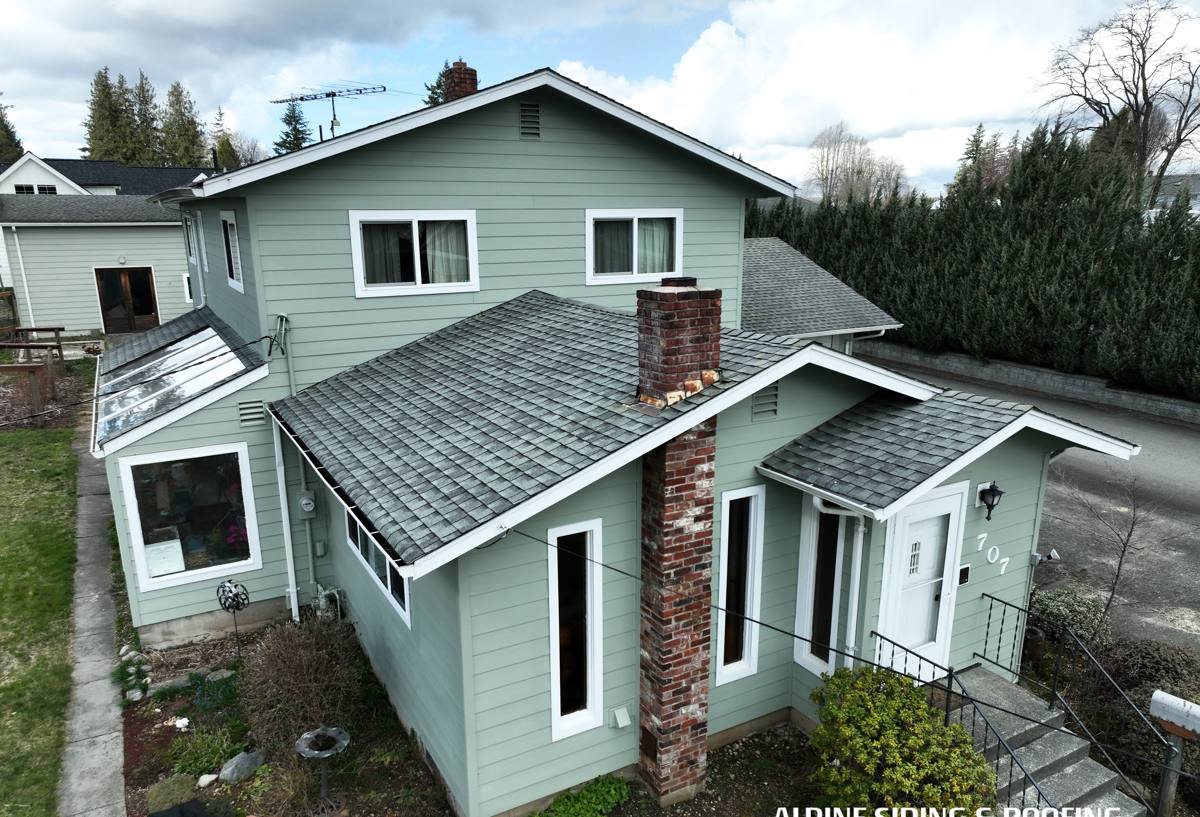
Signs a Barkley Home Needs Window Replacement
Most homeowners don't think about their windows until something forces the issue. Here's what we look for, and what you can check yourself before calling anyone out.
- Visible condensation or fogging between panes of double-pane glass (a sign the seal has failed)
- Wood trim or sills that feel soft, spongy, or show dark staining
- Windows that are hard to open, close, or lock, especially after damp weather
- Noticeable drafts near the frame even when the window is fully closed
- Visible corrosion or pitting on aluminum-framed windows
- Moss or dark streaking building up on the exterior sill or below the window
- A jump in heating costs without any other explanation
- Peeling paint or bubbling siding immediately around the window opening
Any one of these on its own might not mean much. Two or three together, especially on the same window, usually means water has already found a way in and it's worth having someone look before it becomes a framing repair instead of a window replacement.
Why Older Barkley Homes Are More at Risk
A lot of the housing stock in and around Barkley spans several decades of building practice, and window and moisture detailing has changed a lot over that time. Homes built before modern flashing tape and weather-resistive barriers became standard often relied on caulk alone to keep water out around the window opening. Caulk fails. It's a maintenance item, not a permanent seal, and once it cracks, driving rain off the bay has a direct path behind the trim.
What a Correct Window Replacement Job Actually Involves
There are two basic approaches to replacing a window, and the right one depends on the condition of the existing frame and the wall around it.
Insert (Pocket) Replacement
This method keeps the existing exterior frame in place and installs a new window unit inside it. It's faster, less invasive to siding and interior trim, and appropriate when the old frame is still structurally sound and properly flashed. It is not appropriate when there's any sign of rot or water intrusion behind the existing frame, because an insert replacement seals over that problem instead of fixing it.
Full-Frame Replacement
This method removes the window down to the rough opening, including the old frame, exposing the wall structure underneath. It's more work, but it's the only way to actually inspect and repair any hidden water damage, and it's the only way to install new flashing correctly rather than working around what's already there. In a climate that pushes this much moisture at a house, we lean toward full-frame replacement whenever there's any doubt about what's behind the existing trim.
The Details That Actually Determine Whether a Window Leaks
- Flashing installed in the correct shingle-lap order so water sheds outward and down, never inward
- A sloped sill pan under the window opening, not just a flat surface
- Proper backer rod and sealant at the exterior trim joint, not caulk stretched to fill a gap
- Insulation packed correctly around the frame, without over-compressing it or leaving voids
- Interior air sealing so conditioned air isn't leaking out around the frame
None of this is visible once the trim goes back on. It's also exactly why two window replacements that look the same on the outside can perform completely differently five years later.
Choosing Materials That Hold Up to Salt Air and Rain
We install a range of window materials, and the right choice depends on budget, the style of the home, and how exposed the window location is to weather. Here's how the common options compare for a Whatcom County setting.
| Material | Performance in Salt Air & Rain | Maintenance | Typical Lifespan |
|---|---|---|---|
| Vinyl | Good — won't corrode or rot; seams and hardware quality vary by manufacturer | Low — occasional cleaning | 20-30 years |
| Fiberglass | Excellent — dimensionally stable, resists warping in wet-dry cycles | Low | 30-40+ years |
| Wood (unclad) | Poor without diligent upkeep — prone to rot and swelling near the coast | High — repainting, sealing every few years | Varies widely with maintenance |
| Aluminum-clad wood | Good exterior protection, warm interior look | Moderate | 25-35 years |
| Bare aluminum | Poor — corrodes and pits in salt-influenced air over time | Moderate | 15-25 years, shorter near the bay |
As a matter of our own professional standard, we steer clients away from bare aluminum frames and unclad wood on homes with significant coastal or wind-driven rain exposure — not because those products can't work anywhere, but because they demand a level of upkeep most homeowners don't want to sign up for, and the failure mode when maintenance lapses is expensive to fix. Vinyl and fiberglass, from manufacturers with a solid warranty structure, give most Barkley homeowners the best balance of cost, performance, and low maintenance.
What Drives the Cost of a Window Replacement Project
| Factor | How It Affects Cost |
|---|---|
| Insert vs. full-frame replacement | Full-frame costs more upfront but avoids covering up hidden damage |
| Window count and size | Larger openings and specialty shapes cost more per unit |
| Material and glass package | Fiberglass and upgraded low-E, argon-filled glass cost more than base vinyl |
| Existing rot or water damage | Framing repair adds cost but is far cheaper to address now than later |
| Access and second-story work | Staging and equipment needs can add to labor cost |
| Trim and siding tie-in | Matching existing trim profiles or siding can add finish work |
We give homeowners a broad honest range up front and a firm number once we've actually looked at the openings — quoting sight-unseen for full-frame work is how change orders happen, and we'd rather avoid that entirely.
Our Process, Start to Finish
- Free on-site estimate — we walk the exterior and interior of each window, check for existing water damage, and talk through material and budget options.
- Written proposal — a clear scope, material selection, and price, with insert vs. full-frame recommended based on what we found.
- Scheduling — we plan around weather where we can, since a dry stretch makes for a cleaner, faster install and a better seal.
- Removal and inspection — old windows come out, and any hidden rot or framing issues get flagged and addressed before the new unit goes in.
- Installation — proper flashing, sill pan, insulation, and air sealing, in that order, before trim goes back on.
- Walkthrough — we go over the finished work with you, operate each window, and answer questions before we consider the job done.
Cleanup and Respect for Your Property
Window replacement generates debris — old glass, cut trim, packaging. We haul it off site rather than leaving it for the homeowner to deal with, and we protect flooring and landscaping around each work area for the duration of the job.
Why Local Experience in Barkley Matters
A crew that works regularly in and around Barkley and the rest of Whatcom County isn't guessing at what these windows are up against — they've already seen what happens to a poorly flashed window after five winters of driving rain off the bay, and what moss buildup does to a sill that isn't sloped correctly. That experience shows up in small decisions on the job: how tight to pack insulation around a frame, which sealant actually holds up through repeated wet-dry cycles here, and when a window that looks fine from the curb needs a full-frame approach instead of a quick insert swap. It also means we're not learning on your house — we're applying what we've already confirmed works in this specific climate.
Get a Free, No-Pressure Estimate
If your windows in Barkley are fogging, sticking, drafting, or just showing their age, it's worth having a second set of eyes look at them before winter rain finds a way in. Use the form below to request a free estimate — we'll walk the windows with you, give you an honest read on what's actually going on, and lay out your options with no pressure to decide on the spot.